The $62M Controversy: How Two Groups Transformed Minnesota
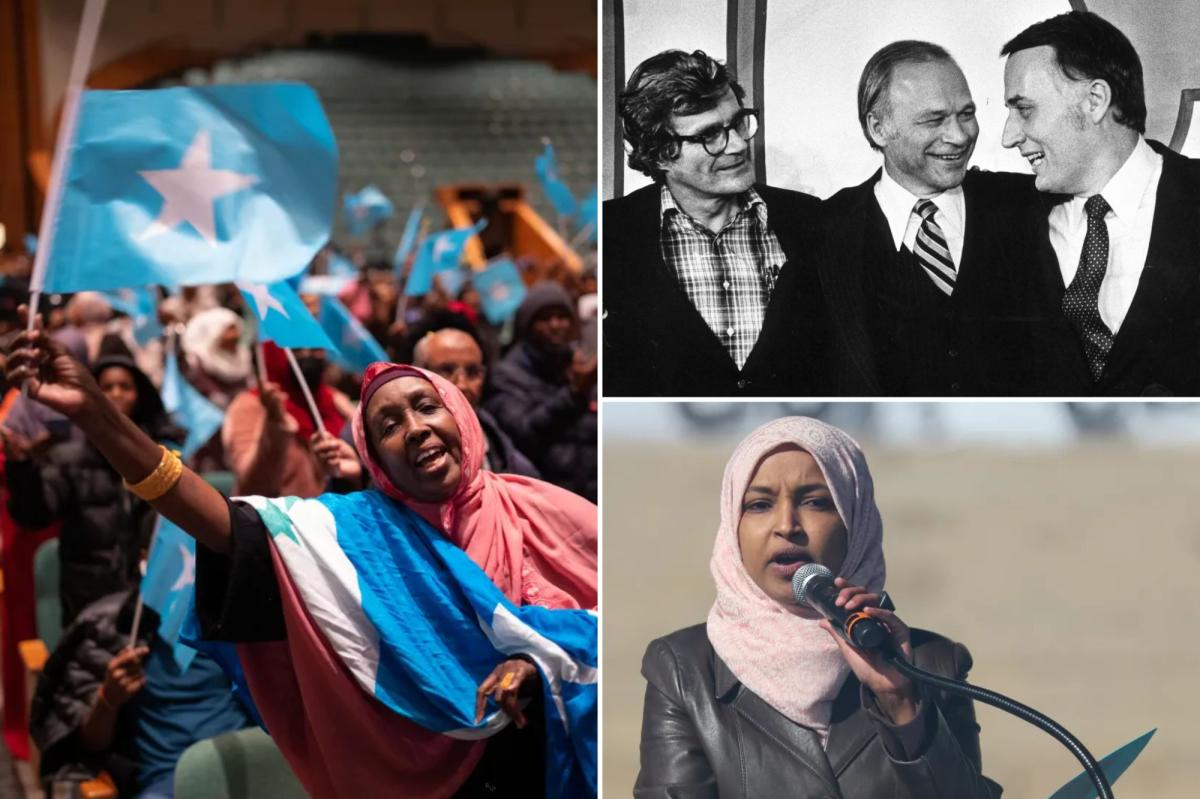
Two church non-profits have taken in at least $62 million to build the Somali community in Minnesota — leading to the rise of Ilhan Omar and the fraud scandals that have gripped that state, The Post can reveal.Catholic Charities and Lutheran Social Services were at the forefront of reshaping the frigid Land of 10,000 Lakes thanks to generous government contracts stemming back generations.“This is a very big pile of government money and a whole bunch of different groups have come to get their own slice of it,” Parker Thayer, an immigration expert at the Washington, DC-based Capital Research Center, told The Post.Sawo Kwao sings and waves the Somali flag awaiting the arrival of Somali President Hassan Sheikh Mohamud in Minneapolis on Dec. 15, 2022. Star Tribune via Getty ImagesHe added the total money pouring into Minneapolis resettlement programs alone is “in the hundreds of millions.”He noted that since 2021, the US Conference of Catholic Bishops, the body overseeing Catholic Charities, has received $140 million in migrant resettlement contracts from the federal government.“It is hurting the ability of these organizations to fundraise in arguably more important areas of their work. I imagine a lot of donors are being pushed away by something that is very reasonably viewed as highly controversial by a lot of people,” Thayer said.Before Minnesota became Somali central, it was known as the Hmong hub.The state first became a test ground for a Vietnam-era resettlement program — with powerful advocacy from then-Vice President Walter Mondale and Minnesota’s Democrat governor Al Quie, according to local historians.“Squad” Rep. Ilhan Omar speaks during a No Kings Rally on March 28, 2026, in St. Paul, Minnesota. Getty Images for No KingsMembers of the Somali American community serve home-made lunches near a makeshift memorial to George Floyd near the spot where he died while in custody of the Minneapolis Police, on May 27, 2020. AFP via Getty ImagesMondale, a Democrat from Minnesota who served as President Jimmy Carter’s veep, traveled with Quie to Asia to visit refugee camps and came back describing the horrid conditions they saw.That led them to become interested in resettling the Hmong people, a Southeast Asian ethnic group recruited by the CIA to fight a “Secret War” against communist forces in Laos.Dang “Donald” Hawj and his pregnant wife Shoua were the first Hmong to arrive in Minnesota in 1975, and the family is still celebrated by locals today.A young boy prays as women line up in prayer during the funeral for five women killed in a car crash on Lake Street, at the Dar Al-Farooq Islamic Center in Bloomington, Minn., on June 19, 2023. Star Tribune via Getty ImagesVice President Walter Mondale with President Jimmy Carter before the veep leaves Washington for a tour of Europe and Japan on Jan. 23, 1977. Getty ImagesMondale then headed the US delegation to the United Nations in 1979, where he delivered a speech which helped secure international commitments to resettlement, framing the crisis in moral terms by comparing it to a failure to protect Jewish refugees before and during World War II.Within a couple years, the Twin Cities’ Hmong population was in the thousands.Catholic Charities and Lutheran Social Services — the latter now called Global Refuge — had built an extensive resettlement operation as far back as World War II to help Christians displaced from war-torn Europe, so were a natural go-for the federal government to help with its mass resettlement.Mondale gestures during a press conference on May 5, 1978, in Thailand, just before he departs for Indonesia, with the three-headed elephant Erawan, a symbol of royalty in Thailand. Associated PressRudy Boschwitz, Al Quie and David Durenberger pose on Nov. 8, 1978, in Minnesota after Boschwitz and Durenberger won US Senate seats and Quie was elected governor during the 1978 elections known as the “Minnesota Massacre.” Star Tribune via Getty ImagesDuring World War II, however, their operations were largely funded from the pews, not Uncle Sam, said Kelsey Reinhardt, president and CEO of the nonprofit advocacy group CatholicVote.“I don’t think there’s a recognition of how generous the US has been,” she told The Post.While the current pope and his predecessor have been strong advocates of open border migration policies, Reinhardt says the gospel is also very clear on the importance of nationhood.Hmong ADC (Auto-Defense de Choc / Self-Defense Shock) militia members are seen during the American ‘Secret War’ in Laos, 1961. Universal Images Group via Getty ImagesRightist Hmong Gen. Vang Pao holds hands with Thai Army Chief of Staff Surakij Mayalab at a site overlooking Hmong-CIA headquarters in Long Tien, Laos. To the left of Mayalab is CIA case officer Burr Smith, with a shaven head, alongside Thai soldiers who served in Laos with Lao-Hmong forces. Universal Images Group via Getty Images“We have to look to the gospel origins on this. The gospel mandates the welcoming of strangers but there’s no unbridled welcoming of people, for example those who hate you or who are going to kill or steal from you,” she told The Post.“We need to ask difficult questions of what our national sovereignty means. What extent are we able to assimilate people? Is the vetting sufficient?”When Somalia was thrown into civil war in the 1990s and the US decided to take in refugees, the Minnesota operation was already an established, well-oiled machine.Downtown Minneapolis. When Somalia was thrown into civil war in the 1990s and the US decided to take in refugees, the Minnesota operation was already an established, well-oiled machine. Ian – stock.adobe.comLike his predecessor, Pope Leo, seen after his election on May 8, 2025, is a strong advocated of open border migration policies. AFP via Getty ImagesThe two church groups have resettled an estimated 29,000 Somalians into Minnesota since 1993, collecting a reported $2,500 per refugee to cover costs like food, initial housing and social workers.The population today is over 100,000 in Minnesota according to data, thanks to chain migration (also known as “family reunification”) and the state’s generous welfare system, which became a magnet for Somalis, including those initially placed elsewhere in the US.“They picked Minnesota because it had extremely generous state social safety net policies and welfare programs, which of course made resettling refugees there easier,” Thayer said. “Refugees from Somalia then moved to Minnesota after they were resettled elsewhere, in places like South Dakota.Kelsey Reinhard, president and CEO of nonprofit advocacy group CatholicVote, said that during World War II, relocating Christians displaced from war-torn Europe was largely funded from the pews, not Uncle Sam. Courtesy of Kelsey Reinhard“A lot of these people, while claiming to be refugees, you look at their Facebook pages, or you look at indictments and find that they routinely travel out of the US back to the place they are supposedly a refugee from,” he added.The Biden administration oversaw the largest jump in living memory of migrant resettlement operations.Minnesota has been a flashpoint in the controversial effort, where a gob-smacking $9 billion in estimated welfare fraud, largely stemming from the Somali community, was uncovered in the last year — speculated to be the largest welfare scam in the history of the US.On Monday, the home of Democrat congresswoman Ilhan Omar, a native Somalian whose district includes Minneapolis’s “Little Mogadishu,” was raided by federal immigration officials as part of a criminal investigation.“They’re creating multiple problems by resettling large numbers of people in one area at the same time they’re creating isolated ethnic enclaves across America, which seem to be causing some cultural problems,” Thayer said.A spokesperson for Catholic Charities Twin Cities said they closed their refugee and immigrant programs in 2018. Lutheran Social Services of Minnesota did not respond to a request for comment.