Browse

Latest Headlines

Fresh headlines, crisp visuals — faster reading.

What Your Funeral Outfit Choice Reveals About Your Dignified Traits New

What Your Funeral Outfit Choice Reveals About Your Dignified Traits

zzHello, lovely ladies. Sometimes, the most solemn moments in life are when our true character and inner strength shine the brightest. Choosing what to wear to a service of remembrance isn’t just about following the rules; it’s a deeply personal way to show our respect, empathy, and love for those who are grieving.Let’s take a gentle, thoughtful look at the four elegant women pictured below. Each is dressed beautifully and appropriately for a respectful occasion, like a funeral or a memorial service. If you were attending such a gathering to support a loved one, which of these outfits would you feel most comfortable and dignified wearing?Take a quiet moment, trust your intuition, and let’s see what your choice reveals about your most admirable qualities.1. Classic Tradition and Steadfast Devotion (The tailored black suit, classic hat with gentle netting, pearls, and gloves)If your eyes were drawn to the first outfit, your most deeply ingrained trait is your unwavering respect for tradition and your steadfast devotion to the people you care about. You truly understand the weight of a moment and believe that showing up beautifully and properly put-together is a profound sign of respect.In life, you are a pillar of strength for your family and community. You are the one who ensures that rituals are honored and memories are preserved. Because you respect the old ways of doing things, people find great comfort in your presence during chaotic or sorrowful times.Your dedication is visible in everything you do. You offer a quiet, reassuring certainty to those around you, proving that true elegance and deep devotion never go out of style.2. Quiet Sincerity and Modest Warmth (The modest, long-sleeved black dress paired with a simple jacket and delicate brooch)Did you choose the second outfit? This beautifully understated look reveals a soul full of quiet sincerity and profound humility. You never feel the need to be the center of attention; instead, your focus is entirely on offering your warm, comforting presence to those who are hurting.You are known for being a wonderfully empathetic listener. When a friend is going through a hard time, you don’t offer empty platitudes—you simply sit with them, hold their hand, and let them know they aren’t alone.You don’t need grand gestures to show your love. Your quiet, steady compassion acts as a gentle balm to those around you. People naturally gravitate toward you because your sincerity makes them feel safe, understood, and deeply cared for.3. Practical Compassion and Grounded Strength (The practical black trousers, warm turtleneck, elegant grey overcoat, and comfortable loafers)If the third outfit caught your eye, you are a woman of immense practical compassion. You understand that showing respect isn’t just about looking the part—it’s about stepping up and being useful when people need you the most. You value dignity, but you also need to be comfortable enough to get things done.You are the ultimate “doer” in times of need. When someone is grieving or overwhelmed, you are the first one at their door with a homemade casserole, the one who organizes the reception, or the one who stays late to help clean up.Your empathy is firmly rooted in action. You have a wonderfully grounded, modern strength about you. People admire your ability to stay clear-headed and helpful, making life just a little bit easier for everyone around you during difficult seasons.4. Thoughtful Grace and Elegant Poise (The deep navy suit, wide-brimmed black hat, cozy shawl, and meaningful cross necklace)If you selected the fourth outfit, your most defining trait is your thoughtful grace. You have a beautiful way of balancing somber respect with your own personal warmth. You pay attention to the little details, knowing that a thoughtful touch—like a soft shawl or a cherished necklace—can bring comfort.You carry yourself with a natural, elegant poise that naturally puts others at ease. You know exactly what to say and how to say it, often finding the perfect words to comfort a grieving heart when others are at a loss.Your presence brings a sense of calm and gentle dignity to any gathering. You honor those who have passed by celebrating the beauty of life, and your thoughtful nature is a true gift to everyone lucky enough to know you.No matter which outfit you felt drawn to, all four of these looks represent deeply respectful, dignified, and wonderful women—just like all of you.This is just a little something for reflection today. Thank you for reading, and I hope you have a truly peaceful and blessed day. Feel free to share your choice in the comments below if you’d like!

Oct 04, 2026
Can You Spot the Hidden Girl Among the Trees? New

Can You Spot the Hidden Girl Among the Trees?

Look very carefully at this special black and white image.At first glance, what is the most obvious thing that you can see?You can clearly see many trees, their roots deep in the soil and their branches reaching up towards the sky.The drawing is quite beautiful, almost like something you would see in an old picture book.It seems like a very peaceful forest scene, doesn’t it?The text on the image says something that is quite a big challenge: “your brain is still young if you can find the girl.”This means that younger brains can often pick up on small, hidden details that older brains might just miss.The image is designed to make you look only at the main subjects, in this case, the large trees.Your brain thinks, “Okay, I see the trees,” and then it stops looking for other things.But there is something more.Hidden within the shapes of the trunk, the branches, and the empty space, is a whole other image.Yes, there is a girl.It’s not that she is small; she is part of the entire picture.Don’t rush; take your time.Don’t just stare at the screen. Let your eyes glide over the entire picture.Try to step back a little, or maybe change your viewing angle just slightly.Can you see the outline? Can you see her face, or maybe her long dress?Some people see it instantly, like an absolute flash of inspiration.For others, it takes a few moments, even up to a minute, before the other image suddenly clicks into view.It’s like a special, surprise gift when you finally see it.Don’t tell anyone else what you see! We don’t want to spoil the fun for them.Let them find it on their own and feel that same sense of satisfaction.So, go ahead and look closely.Let us know, did you find the hidden girl?How long did it take you?And more importantly, did this little exercise make you feel like your brain is just as young and curious as ever?Enjoy the challenge and keep training that incredible brain of yours.ANSWER:

Oct 04, 2026
Can You Spot the Hidden Duck in This Deceptive Deer Portrait? New

Can You Spot the Hidden Duck in This Deceptive Deer Portrait?

Welcome to today’s fun visual puzzle that will really test your observational skills!Optical illusions and hidden object puzzles are a great way to give your brain a quick workout.They challenge the way our brain processes lines, shapes, and shadows.At first glance, this black-and-white sketch looks like a simple portrait of a majestic deer.The deer is standing peacefully among bare tree branches in the forest.Its large antlers and calm eyes immediately catch your attention.The sharp detail in the fur and the twists of the branches make it a beautiful piece of art.However, there is more to this picture than meets the eye.Hidden somewhere within these lines is another animal waiting to be found.Your task is to search for a hidden duck blending into the environment.It sounds easy enough, but it is much trickier than you think!The artist has cleverly used the natural curves of the image to disguise the duck.It might be hidden among the deer’s antlers or resting along the dry branches.It could even be formed by the negative space and shadows between the lines.Many people look at this image for minutes without spotting anything unusual.Your brain naturally wants to focus on the obvious subject, which is the deer.To find the duck, you need to change how you look at the picture.Try scanning the image slowly from top to bottom.Look at the outlines of the branches and see if any shape looks familiar.You can also try tilting your head or looking at the picture from a slightly different angle.Sometimes, taking a step back helps your eyes see the bigger pattern.Are you ready to take on the 10-second challenge?Set a timer on your phone for 10 seconds and focus all your attention on the screen.Look closely at every detail, every curve, and every intersection of lines.Do not get discouraged if time runs out before you spot it.Only a small percentage of people can find the duck in under 10 seconds on their first try.Take all the time you need, enjoy the process, and see if you can spot the secret feathered friend!Good luck, and happy hunting!ANSWER:

Oct 04, 2026
Billionaire's Shock as Three Boys Reveal the Truth at the Airport New

Billionaire's Shock as Three Boys Reveal the Truth at the Airport

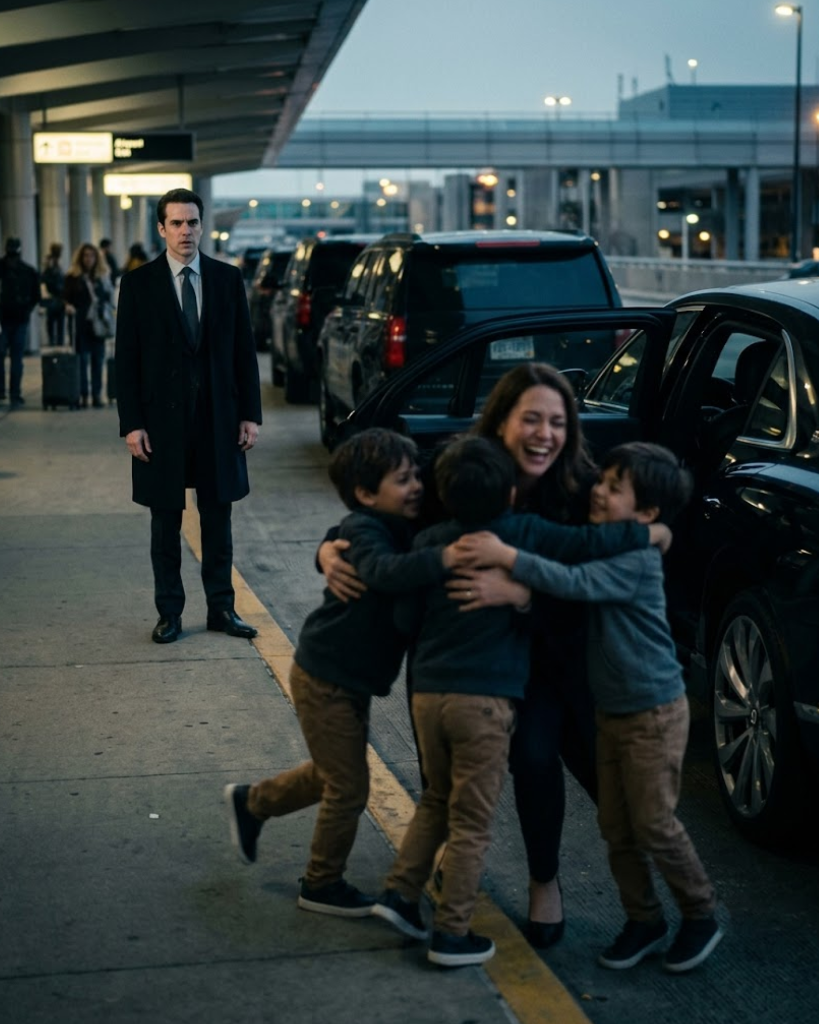
Five years after our divorce, my billionaire ex-husband deliberately chose the seat beside me on a flight just to remind me of everything he thought I had lost when I left him. He smirked when I told him I had moved on, convinced I was still alone and regretted walking away. But when we landed, a Bentley pulled up—and three little boys jumped out, ran straight toward me, and shouted, “Mom!”When I married Sebastian Rourke, I thought the hardest part of our life together would be convincing the world that I had married him for love.Sebastian was already wealthy when we met, although not yet the man whose face appeared on business magazines and airport screens. Rourke Energy had been growing quickly, but the company was still known mostly inside the industry.I was a materials scientist working on a new membrane that could make large-scale energy storage cheaper and safer.We met during a research conference in Boston.He attended because his company was looking for technology.I attended because I was presenting mine.Our first conversation lasted forty minutes and turned into an argument about whether investors understood science badly or scientists understood business worse.At dinner that night, he found me again.By midnight, we were laughing.Two years later, we married.For a while, we were a very good team.Sebastian understood things I didn’t. I understood things he didn’t. He could walk into a room full of investors and make them believe a difficult idea was inevitable. I could walk into a laboratory and tell him whether that idea was actually possible.Rourke Energy eventually licensed part of the technology I had helped develop.The company exploded.So did Sebastian’s public profile.Magazine covers appeared.There were television interviews, conferences, charity events, political dinners, and invitations to houses where people owned paintings worth more than the homes I had grown up around.People started calling us a power couple.I hated that phrase.Sebastian secretly loved it.Still, the man I came home to was different from the man people saw on television.He cooked terrible pasta.He lost his keys constantly.He hated sleeping without some kind of noise in the room, so we kept a small fan beside our bed even in winter.When my mother became ill, he canceled a week of meetings and sat beside me in the hospital.When she died, he held me through a night I barely remember.That was why what happened later hurt so much.My mother’s illness had been neurological.Near the end of her life, one of her doctors told me there was a chance it could have a genetic component. He suggested I speak to a specialist before having children.Sebastian and I had recently started talking about a family.He wanted two children.I wanted three.We joked that whoever was right would choose the next house.But after my mother’s doctor spoke to me, the idea of pregnancy suddenly frightened me.I didn’t tell Sebastian immediately.That was my first mistake.I wanted facts before I gave him another thing to worry about. At the time, Rourke Energy was negotiating its largest acquisition ever, and Sebastian was barely sleeping.So I made an appointment with a genetic counselor named Dr. Felix Monroe.Felix was kind, careful, and completely professional.He arranged testing and explained the different results we might receive.Most of our communication happened through text because I traveled often.Some of those messages, taken out of context, looked strange.We need to meet before you make any decisions.I should have the results Friday.Don’t tell Sebastian until we know for certain.There was nothing romantic about any of it.But Sebastian never saw the messages in context.He saw only enough to destroy us.The night everything changed, I came home carrying a small blue box.My test results were negative.The condition that had killed my mother was not linked to the genetic marker doctors had feared.For the first time in months, I could breathe.I stopped on the way home and bought the smallest pair of baby shoes I had ever seen.Sebastian and I weren’t expecting a child yet.I just wanted to tell him I was ready.When I walked into our penthouse, he was standing beside the windows with my phone in his hand.His face looked unfamiliar.“Who is Felix?”For a moment, I didn’t understand why he sounded that way.Then I saw the messages open on my screen.“Sebastian, give me five minutes and I’ll explain.”“You’ve apparently had months to explain.”I set the blue box on the table.“There is nothing happening between me and Felix.”“Then why are you hiding him?”“I’m not hiding him. I was waiting for information.”He laughed, but there was no humor in it.“What information? Whether you should leave me?”His father had cheated on his mother for years.I knew betrayal was the one wound Sebastian never handled rationally.But I had never imagined he would look at me and see the same thing.I reached for the phone.He pulled it away.“Please listen to me. Felix is a doctor.”“A doctor?”“Yes.”“What kind?”I opened my mouth.Then Sebastian’s phone rang.His chief of staff, Bianca Frost, was downstairs with documents for the acquisition.He looked at the screen and rejected the call.“Funny,” he said. “Because Bianca ran his name for me twenty minutes ago. He doesn’t work at any hospital in Manhattan.”“He’s a private genetic counselor. His clinic works through—”“There it is.”“What?”“Another explanation.”I stared at him.He had already decided.That was the terrible part.I wasn’t standing in front of a husband asking for the truth.I was standing in front of a man collecting evidence for a conclusion he had already reached.“Look inside the box,” I said.His eyes flicked toward it.Then back to me.“I don’t care what’s in the box.”That sentence stayed with me for years.Not the shouting that followed.Not the lawyers.Not even the divorce papers.I remembered those six words.I don’t care what’s in the box.Our marriage ended quickly after that.Sebastian’s attorneys were efficient, and I was too exhausted to fight over money I had never wanted.I kept my own savings, my research income, and the shares that legally belonged to me from work I had done before our marriage.I left the penthouse.I left the Rourke name.And six weeks later, sitting alone in a doctor’s office in Chicago, I found out I was pregnant.The technician turned the screen toward me.Then she went quiet.“What?” I asked.She smiled.“There are three.”I thought she meant three measurements.Then I saw them.Three tiny heartbeats.For several seconds, I couldn’t speak.I laughed.Then I cried so hard the technician brought me tissues.The first person I called was Sebastian.His phone went directly to voicemail.I tried again that evening.Again the next morning.Then I emailed him.No response.Rourke Energy was finalizing its acquisition in Singapore, and Sebastian had left the country.I called his office.Bianca answered.The moment I said my name, her voice changed.“Sebastian has asked that all communication go through counsel.”“This isn’t about the divorce.”“Then contact his attorney.”“I need to speak to him personally.”“That won’t be possible.”I was twelve weeks pregnant when I flew back to New York.I carried the ultrasound images in a folder.Security stopped me downstairs at Rourke Energy.I asked them to call Sebastian.One guard disappeared for several minutes.Bianca came down instead.She didn’t invite me upstairs.“He doesn’t want to see you.”“You told him I’m here?”“Yes.”“And you told him why?”Her expression barely changed.“He said whatever you need can go through the lawyers.”I wanted to tell her that she was lying.Instead, I stood there looking at the woman who had worked beside my husband for four years and wondered whether I had really become that easy to erase.I left the folder with her.“Make sure he gets this.”She looked at it.“I will.”He never did.For months, I kept trying.Letters came back unopened.Emails disappeared into silence.Eventually, I stopped.My father helped me move permanently to Chicago.Graham Ellwood had never liked Sebastian.He believed billionaires collected people the same way they collected companies, and he had warned me before the wedding that one day Sebastian would make me regret trusting him.After the divorce, my father seemed determined to prove he had been right.“You have your own life,” he told me. “Build it.”So I did.I raised three boys.I started a small research company that licensed energy-storage designs to manufacturers instead of building products directly.For the first two years, I worked from a rented office above an accounting firm.By the third year, we employed twenty-seven people.By the fourth, one of our patents was licensed across Europe.The money came quietly.I preferred it that way.I bought a brick townhouse in Lincoln Park.I hired a driver because traveling with three young boys had taught me that convenience was sometimes worth paying for.I learned how to hold three hands while crossing a street.I learned that one child could hate peas while his identical brother loved them.I learned how to answer questions about fathers without turning my pain into theirs.I never told the boys Sebastian had rejected them.Because I didn’t know if that was true.I told them their father and I had separated before I knew I was pregnant and that one day, when they were older, I would explain everything.They accepted that answer longer than I expected.Then came the flight.I had been in New York for a licensing meeting and was returning home to Chicago.I boarded first class, put my bag away, and opened a book.Ten minutes later, I heard a familiar voice behind me.“You’ve got to be kidding.”I looked up.Sebastian stood in the aisle.Five years had changed him.There was more gray near his temples.The confidence was still there, but it had hardened.He looked exactly like the man business magazines described: controlled, successful, impossible to surprise.His assigned seat was two rows behind mine.I knew that because the flight attendant told him.Sebastian looked at the empty seat beside me.Then he looked at me.“I’ll sit here.”The flight attendant hesitated.“Mr. Rourke, your seat is—”“I know where my seat is.”He sat beside me anyway.I closed my book.“There are other empty seats.”“I noticed.”“Then why are you here?”A faint smile appeared.“Five years is a long time.”“Apparently not long enough.”His eyes moved over me.Not in admiration.In assessment.He noticed my clothes were simple.No wedding ring.No expensive jewelry.He probably saw exactly what he expected to see.The woman who had walked away from a billionaire and discovered ordinary life wasn’t glamorous.“I heard you moved to Chicago,” he said.“I did.”“A small research company?”“Something like that.”He leaned back.“I always wondered how long that would satisfy you.”There was the Sebastian I remembered from the end of our marriage.The one who could turn a question into an insult without raising his voice.“It satisfies me very well.”“No regrets?”“About Chicago?”“About leaving.”I looked at him.“You divorced me.”“You signed the papers.”“So did you.”His jaw tightened.For a while, we said nothing.Halfway through the flight, he tried again.“You could’ve taken more in the settlement.”“I didn’t want more.”“You walked out of a penthouse worth twenty million dollars with two suitcases.”“I remember.”He gave a small smile.“Most people would call that foolish.”“Most people weren’t married to you.”He looked out the window.A few minutes later, he asked whether there was anyone in my life.I told him I had moved on.His eyes dropped briefly to my bare left hand.Then he smirked.It was quick, but I saw it.He thought “moved on” was something I said to protect my pride.He thought I was still alone.And for reasons I couldn’t explain, that hurt less than it once would have.When we landed in Chicago, Sebastian followed several steps behind me through the terminal.Outside, a black Bentley was waiting near the curb.My driver opened the rear door.Three small bodies exploded out before he could stop them.“Mom!”Evan reached me first.Micah wrapped himself around my waist.Sam nearly crashed into both of us trying to hug me at the same time.I laughed and bent down, trying to hold all three.“You were supposed to wait in the car.”“We saw you!”“You took forever!”“Grandpa said planes are always late.”Then Evan looked behind me.His smile faded.I didn’t need to turn around.I already knew.Sebastian was standing several feet away.He wasn’t smirking anymore.His face had gone completely pale.The boys were five.They had my eyes.Almost everything else came from him.The dark hair.The shape of their mouths.The small crease beside the left eyebrow.Even the way Evan tilted his head when he was confused was something I had watched Sebastian do hundreds of times.Micah stared at him openly.“Mom, who is that?”Before I could answer, Sam whispered, “He looks like us.”Sebastian took one step forward.His voice came out rough.“How old are they?”I put a hand on Evan’s shoulder.Sebastian’s eyes moved between the three boys.“How old?”Evan answered before I could stop him.“We’re five.”Sebastian closed his eyes.I watched him calculate.Divorce.Five years.Pregnancy.Three boys.When he opened his eyes again, there was no arrogance left in them.“They’re mine.”It wasn’t really a question.I nodded.For the first time since I had known Sebastian Rourke, he seemed unable to find words.Then shock turned into anger.“Why didn’t you tell me?”Something inside me went cold.“I tried.”“What?”“I called you. I emailed you. I flew to New York with an ultrasound folder.”He stared at me.“I never received anything.”“Your office did.”“No.”“Yes.”“You could have found me.”“I came to your building.”His expression hardened as if he wanted to reject the memory before he even had it.“That’s not true.”“Bianca came downstairs. She told me you didn’t want to see me. Security walked me out.”His face changed at her name.I continued.“I left the ultrasound with her.”Sebastian looked as if someone had hit him.“I never saw it.”“I know that now.”“You should have kept trying.”I laughed once.Not because anything was funny.“I was pregnant with triplets, Sebastian. I had just been accused of cheating, divorced, ignored, blocked, and removed from your building. How many locked doors was I supposed to knock on before I believed you wanted them locked?”He looked away.Sam moved closer to me.Sebastian instinctively reached toward my arm.Evan stepped between us.“Don’t touch my mom.”Sebastian stopped immediately.The look on his face almost broke me.He lowered his hand.“I wasn’t going to hurt her.”Evan studied him.“You made her mad.”“Evan,” I said gently.Sebastian swallowed.“He’s right.”The boys looked between us.Micah finally asked the question I had dreaded for five years.“Is he our dad?”The airport noise seemed to disappear.I crouched in front of them.“This isn’t where I wanted you to find out.”“But is he?”I looked at Sebastian.Then back at my sons.“Yes.”Nobody moved.Sam grabbed my coat.Evan stared at Sebastian with the serious expression he used when solving puzzles.Micah asked, “Why didn’t he come to our birthdays?”Sebastian’s face crumpled for half a second before he controlled it.“He didn’t know about you,” I said.Sebastian looked at me with something I had not seen from him in years.Shame.I sent the boys toward the Bentley.Before getting inside, I turned back.“You spent that flight trying to remind me of everything you thought I lost when I left you.”He said nothing.I looked toward the three boys waiting inside the car.“Now you know what you lost too.”The driver closed the door.Sebastian remained on the curb as we pulled away.That night, my phone rang eleven times.I ignored the first ten.On the eleventh, I answered.“I checked the building records,” Sebastian said.His voice sounded exhausted.I sat down at the kitchen table.“And?”“You were there.”I closed my eyes.“Seventeen minutes.”He sounded sick saying it.“Security signed you in. Bianca authorized your removal.”I said nothing.“She redirected your calls. There are archived email rules attached to your address. Anything from you went into a private folder.”My grip tightened around the phone.“Why?”“I don’t know yet.”“Then find out.”“I fired her tonight.”“That doesn’t give you five years back.”“I know.”Those two words were the first apology I believed.Not because they fixed anything.Because he didn’t attach an excuse to them.The next morning, he asked to see the boys.I refused at first.Then he said something that surprised me.“I won’t bring lawyers. I won’t bring security. I won’t ask for custody. Give me one hour somewhere they feel safe. If they want me to leave after ten minutes, I’ll leave.”We met in a park three days later.Sebastian arrived alone wearing jeans and a navy sweater.No driver.No assistant.No expensive gifts.He carried three paper bags.Evan inspected them immediately.“What’s inside?”“Books.”“Why three bags?”“Because I wasn’t sure if brothers like sharing.”“They don’t,” I said.Sebastian almost smiled.The boys questioned him for nearly an hour.Did he have a dog?No.Could he make pancakes?Badly.Did he like dinosaurs?He admitted he knew very little about them.Evan informed him this was a serious problem.Then Sam asked quietly, “Did you not want us?”Sebastian went still.He knelt so he was level with them.“I didn’t know you existed. But I should have listened to your mom a long time ago. If I had, I would have known.”“Would you have come?”“Yes.”There was no hesitation.“Every birthday?”“Yes.”“What about school plays?”“All of them, if you’d let me.”Micah frowned.“We haven’t had a school play yet.”“Then maybe I still have time.”That was the first time one of them smiled at him.Before we left, Sebastian handed me a folder.“I found out why Bianca blocked you.”Inside were bank records.Three payments had been made to a consulting company Bianca owned.The total was two hundred and fifty thousand dollars.All three payments came from an account controlled by my father.I stared at the page until the numbers blurred.“No.”“I checked twice.”“My father helped me during the pregnancy.”“I know.”“He hated you, but he wouldn’t do this.”Sebastian’s expression was grim.“He did.”That evening, I drove to my father’s house alone.Graham was in his study.I placed the records on his desk.For several seconds, he said nothing.Then he sighed.“You’ve been speaking to Sebastian.”“Did you pay Bianca?”His silence answered me.My hands started shaking.“Why?”“He humiliated you.”“So you helped him?”“I protected you.”“You kept the father of my children from knowing they existed.”“He would have dragged you back into his world.”“That was my decision.”“You weren’t thinking clearly.”I stared at the man I had trusted after my marriage collapsed.He had helped choose my doctors.He had furnished a nursery.He had held Evan the first night I brought the boys home.All that time, he knew.“You knew I was trying to reach him.”“Yes.”“You knew Bianca told me he refused to see me.”“I knew.”“Did Sebastian ever tell her to block me?”My father looked away.The answer nearly took my breath.“No.”I sat down because suddenly my legs felt weak.“Why would you do that to them?”He looked frustrated now, as though I were refusing to understand something obvious.“Because I watched your mother disappear inside our marriage. She gave up opportunities for me, and by the time she was sick, she barely knew who she was without this family. Then I watched you marry a man ten times more powerful than I ever was. I knew how it would end.”“So you decided to end it for me?”“He already ended it. I made sure you stayed gone.”“And my sons?”His face softened.“I gave them a stable life.”“No. I gave them a stable life.”He looked startled.For years, my father had spoken as if everything good after the divorce existed because he had saved me.That night I finally saw the difference between support and control.He had not trusted me to choose my husband.He had not trusted me to handle my divorce.He had not trusted me to decide whether Sebastian deserved to know about his children.He loved me.I believe that.But love does not give someone ownership over another person’s life.“You don’t get to see the boys for a while,” I said.His face changed.“You can’t mean that.”“I do.”“They’re my grandsons.”“And Sebastian is their father. Apparently that relationship didn’t matter when you decided you knew best.”I walked out before he could answer.The next months were not dramatic.That mattered to me.Sebastian didn’t arrive with lawyers demanding half the week.He didn’t buy the boys ponies or take them on private jets.He came to Chicago every weekend he could.He learned that Sam hated the crust on sandwiches.He learned that Micah became frightened during thunderstorms but pretended he wasn’t.He learned that Evan needed every question answered completely or he would ask it six more times.The first time he took them to breakfast alone, he called me twenty minutes later because Sam had spilled orange juice and all three boys were arguing over the same blue straw.I laughed so hard I had to sit down.“You run a company with twelve thousand employees,” I reminded him.“None of them have ever cried because their pancake looked like a shoe.”A few weeks later, the boys started calling him Dad.Not because anyone asked them to.It happened one Saturday afternoon when Micah fell off his bicycle.Sebastian reached him first.Micah buried his face in Sebastian’s shirt and cried, “Dad, it hurts.”Sebastian looked at me over our son’s head.I saw tears in his eyes.He didn’t mention it afterward.Neither did I.There was still the matter of us.Sebastian apologized more than once.I never allowed him to blame everything on Bianca or my father.“They made terrible choices,” I told him one night after the boys were asleep. “But you were my husband. You were the one standing in that penthouse. You were the one who decided I was guilty before I finished a sentence.”“I know.”“You threw away the box without opening it.”His face tightened.“I found out what was in it.”“How?”“You told me it was baby shoes.”I looked down.He continued quietly.“I spent five years thinking those messages proved you wanted another man. Now I know you were getting genetic tests because you were afraid our children might inherit your mother’s illness.”“Yes.”“And the night I accused you, you had just found out you were clear.”“Yes.”He rubbed his hands together.“I don’t know how to forgive myself for that.”“That isn’t my job.”“I know.”For the first time, he seemed to understand that an apology did not create a debt.I didn’t owe him forgiveness because he finally understood the truth.He had to become someone worth trusting whether I returned to him or not.So he did the work.Quietly.When reporters eventually learned that Sebastian Rourke had three five-year-old sons in Chicago, he refused every interview.When one photographer appeared outside the boys’ school, Sebastian used his legal team to protect their privacy without putting my name into a press release.When Rourke Energy celebrated its twentieth anniversary, he gave a speech about the technology that had first made the company successful.For years, the press had treated it as his invention.That night, he corrected them.He named the research team.Then he named me.“The science that built our first major platform came from people smarter than the man standing on this stage,” he said. “Maren Ellwood was one of them, and history should remember that correctly.”I watched the speech from my kitchen.I didn’t call him afterward.But I cried.Not because I wanted him back.Because for the first time, he gave me something he should have given me long before our marriage ended.Credit without possession.Respect without conditions.My father eventually apologized too.His took longer.At first, he still insisted he had protected me.Then I showed him something Sebastian had never seen.Three birthday cards.One for each boy.I had written them when they turned one.I had planned to send them to Sebastian if I ever found a way around his office.I never did.“Every year they asked about their father,” I told my dad. “Every year I wondered whether he knew about them and chose not to care. You let me believe that.”My father’s eyes filled with tears.“I thought you’d hate me if you knew.”“I don’t hate you.”He looked relieved too soon.“But I don’t trust you either.”That was harder for him to hear.Trust had to be rebuilt there too.A year after the flight, Sebastian and I took the boys to the lake for a weekend.They spent the afternoon trying to build a raft from pieces of wood they found near the shore.It sank immediately.Sebastian pretended to be shocked.Evan blamed the engineering.Micah blamed Sebastian.Sam blamed the lake.That night, after the boys fell asleep, Sebastian and I sat outside.He looked across the water for a long time before speaking.“I used to think the worst thing that ever happened to me was believing you had betrayed me.”I waited.“It wasn’t.”“What was?”“Being so certain I was right that I never gave you a chance to prove I was wrong.”I looked at him.Five years earlier, those words would have changed everything.Now they couldn’t erase what happened.But maybe that wasn’t what they were supposed to do.“I don’t want our old marriage back,” I said.He nodded.“Neither do I.”That surprised me.He smiled slightly.“Our old marriage ended because I cared more about being right than knowing the truth. I wouldn’t ask you to go back to that.”“So what are you asking?”“Nothing tonight.”He reached across the space between our chairs but stopped before touching my hand.“Maybe someday, if you want it, we build something new.”I looked through the window.Three little boys were asleep in one room because they had insisted a lake house required a sleepover.For years, I had imagined that if Sebastian ever learned the truth, I would feel victorious.I thought I would want him to suffer.I thought seeing regret on his face would heal something in me.It didn’t.The moment that healed me had happened much earlier.It happened when I stopped measuring my life by what Sebastian thought I had lost.He had seen a woman sitting alone on an airplane and assumed loneliness.He had seen simple clothes and assumed failure.He had seen no wedding ring and assumed regret.Then the airport doors opened, three little boys ran into my arms, and the story he had written about my life collapsed in seconds.But those boys were not proof that I had won.Neither was my company.Neither was the Bentley.The real victory was that, during the five years Sebastian thought I had disappeared, I had built a life I loved.A life that did not need his approval to be valuable.Six months after the lake trip, Sebastian asked me to dinner.Not as the mother of his children.Not to discuss schedules.A real date.I said yes.We moved slowly.Painfully slowly, according to Evan, who eventually asked why his parents were “taking longer than normal people.”Two years after that flight, Sebastian proposed again.There was no restaurant.No photographer.No diamond waiting inside champagne.We were in my kitchen.Sam was doing homework.Micah was eating cereal directly from the box.Evan was explaining a volcano project nobody had asked him about.Sebastian looked at me and said, “I don’t want to promise I’ll never make another mistake. I want to promise that when you speak, I’ll listen before I decide what the truth is.”That was the promise I needed.The boys saw me crying and immediately started shouting because they thought something was wrong.Sebastian laughed.So did I.And when I finally said yes, three children jumped between us before he even had time to put the ring on my finger.Five years earlier, I had walked away from my marriage carrying two suitcases while Sebastian believed I was the one losing everything.Maybe we both lost something.Years.Trust.Birthdays he could never get back.Moments no amount of money could buy.But standing in that noisy kitchen, with three boys talking over one another and the man I once loved learning how to love me differently, I understood something I wish we had both learned sooner.Being wrong doesn’t destroy a relationship.Refusing to listen can.And sometimes the most expensive thing a person can lose has nothing to do with money at all.

Oct 04, 2026
What Your Baby Choice Reveals About Your Hidden Personality New

What Your Baby Choice Reveals About Your Hidden Personality

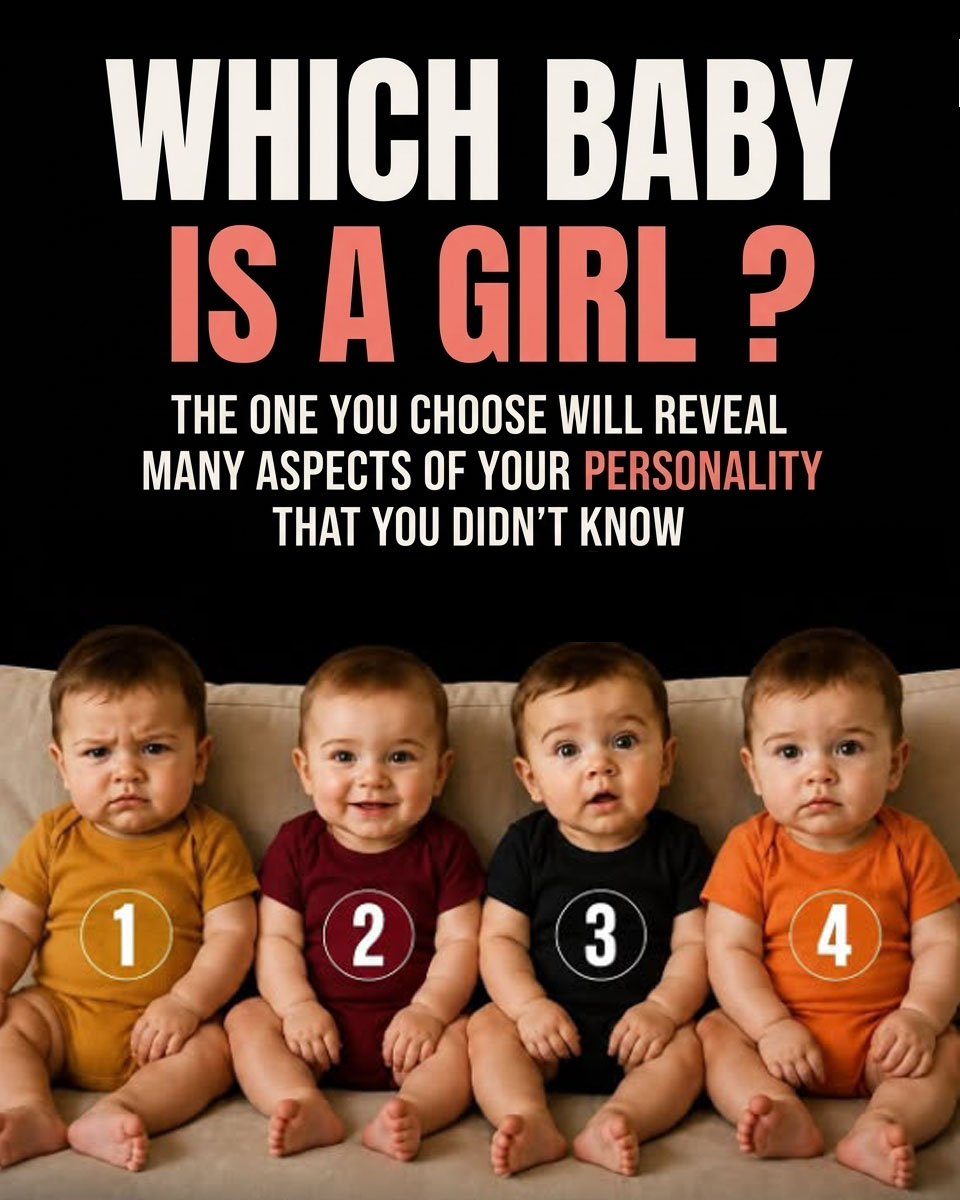
We often hear that intuition speaks louder than words. Look closely at the picture below! There are four adorable babies sitting on the couch, numbered from 1 to 4. Without overthinking it, pick the one baby you believe is a girl.Your choice is not just a guess—it reveals unique and fascinating details about your hidden personality! Let’s find out what your choice says about you.If You Chose Baby #1: The Rational ThinkerIf you picked the first baby with that serious and expressive little face, you are a very practical and logical person! You value rules, order, and common sense. Before making any big decision, you like to think things through and weigh the pros and cons.You are a natural problem-solver, and your friends often come to you when they need honest, reliable advice. Even under pressure, you remain calm and level-headed.If You Chose Baby #2: The Joyful OptimistChose the second baby with that big, bright, sweet smile? You are a ray of sunshine! You have a friendly, warm, and cheerful personality that naturally attracts people to you. You love spreading positivity and making others feel happy and comfortable.You always try to see the bright side of every situation, even when life gets tough. Your enthusiasm and energy are contagious, making you a wonderful friend and companion.If You Chose Baby #3: The Creative DreamerIf your eyes went straight to the third baby with those big, curious eyes, you are a truly creative and imaginative soul! You are observant, intuitive, and deeply in touch with your emotions. You often notice small details that others completely miss.You enjoy expressing yourself through art, music, writing, or innovative ideas. People love your unique perspective on life, and your open-minded nature makes you very approachable and easy to talk to.If You Chose Baby #4: The Gentle Peace-MakerIf you chose the fourth baby sitting so calmly with a soft expression, you have a kind, patient, and gentle heart. Harmony is extremely important to you, and you usually avoid unnecessary conflict or drama.You are a great listener who cares deeply about the feelings of others. People feel safe, peaceful, and relaxed around you because you radiate warmth and stability. Your gentle nature is your greatest strength.ConclusionWhich baby did you choose? Did your personality description match the way you feel inside? Share this fun little quiz with your friends and family to see which baby they pick!

Oct 04, 2026
The Unexpected Question from My Ex’s New Wife That Changed Everything New

The Unexpected Question from My Ex’s New Wife That Changed Everything

I’m 32 years old, and until a few months ago, I believed my marriage was a closed chapter. It was boxed up, labeled, and shoved onto the highest shelf of my memory.My name is Maren. If I sound like I’m still trying to process what happened, it’s because I am. Some nights I replay it all and think, No. That can’t be real. People don’t build entire lives on lies that elaborate.But they do.I hadn’t spoken to my ex-husband, Nolan, in nearly two years when his new wife found me on Facebook.Nolan and I were together for eight years and married for five. We met in our early twenties, when everything still felt negotiable. Dreams, cities, careers, even personality traits. He was calm and methodical. I was louder and more impulsive. We used to joke that I was the spark and he was the steady flame. It felt balanced.We wanted children. At least, I did openly. Nolan said he did too. We talked about names and schools. We discussed how we would rearrange the guest room. We stopped using protection early in our marriage.When nothing happened after a year, we started seeing doctors.That was when infertility entered our vocabulary like an unwelcome tenant.There were tests, appointments, and more tests. Bloodwork. Hormone panels. Semen analyses. Eventually, Nolan sat beside me in a sterile office while a specialist cleared her throat and explained, gently, that his sperm count was extremely low. The odds of natural conception were close to zero.I remember squeezing his hand and telling him we would figure it out. Adoption. IVF. Something.But Nolan changed after that appointment.Subtly at first.He did not want to pursue aggressive treatments. He said he needed time. He said the pressure was making him feel inadequate. I tried to be patient.Over the next two years, the distance between us widened. Conversations became logistical. Affection turned careful. When I brought up fertility options, he would say, “Let’s not force something that isn’t meant to be.”Eventually, he reframed it entirely.“Maybe we don’t actually want kids as much as we thought,” he suggested one evening, staring at the television instead of at me.I did not agree. But I loved him. And I was tired.When he asked for a divorce, he did it in the same calm tone he used to discuss car insurance. He said we had grown apart. He said neither of us should resent the other for something we could not control. He emphasized that it would be mutual and kind.Mutual and kind.That phrase would come back later like a splinter under the skin.The divorce was clean on paper. Assets divided. Lawyers satisfied. We blocked each other on social media. We exchanged final emails about logistics. Then there was nothing.I rebuilt my life, or at least I tried to. I moved apartments. I changed jobs. I dyed my hair. I made new friends. I told myself I had survived something painful but ordinary. Not dramatic. Not catastrophic. Just two adults who wanted different things.Then, one Tuesday night, my phone buzzed while I was half-watching a cooking show and folding laundry I had been avoiding all week.Facebook message request.The profile picture showed a woman with ash-brown hair pulled into a low bun. She had a soft smile and a neutral background. Harmless. I almost ignored it.Then I saw her last name.Hart.The same last name I had once carried.My stomach dropped so fast I pressed my palm against it instinctively, as if I could physically steady myself.Her message was short.“Hi. I’m sorry to bother you. My name is Piper. I’m Nolan’s wife. I know this is strange, but he asked me to reach out. There’s something I need to confirm with you. Just one question. Can I ask?”I stared at the screen for a full minute.Wife.Two years. He had remarried in two years.I did not respond immediately. I made tea that I did not drink. I reread the message. It was not hostile. It was not accusatory. If anything, it sounded reluctant.Finally, unable to sleep, I typed back.“Hi, Piper. This is definitely unexpected. Go ahead.”Her reply came almost instantly.“Nolan told me your divorce was mutual and kind. That you both agreed you didn’t want children anymore and simply grew apart. Is that true?”I read it three times.Not because it was confusing. Because it was surgical.Is that true?I typed, erased, and typed again.“That’s not really a yes-or-no question,” I wrote.There was a pause. Then she responded.“I understand. I just need to know if I can say that it’s true.”Say it.Why would she need to say it?I leaned back against my headboard and stared at the ceiling. A memory surfaced. Nolan is sliding a legal pad across a conference table during mediation.“Let’s keep this amicable,” he had said. “It will make things easier.”Easier for him had always meant quieter for me.“What did Nolan tell you I agreed to?” I typed.This time her response took longer.“He said neither of you wanted children by the end. That there wasn’t resentment. He needs me to confirm that for the court.”Court.The word clarified everything.“He asked you to get that from me in writing, didn’t he?” I asked.“Yes,” she replied. “He said it would sound better coming from me.”There it was. Strategy. Delegation. Control.My mind moved quickly now. Why would Nolan need a documented narrative about a mutual, child-free divorce?Then a darker thought formed, slow and suffocating.What if he were not infertile?What if I had built my entire grief around a lie?“I need some time,” I wrote. “Before I answer, I need to understand something.”She did not push.That silence told me she was already uneasy.The next morning, I called in sick to work and opened my laptop.Public records are less private than most people realize. Within hours, I found what I was looking for.Family court filings. A custody petition. A child’s name.Hazel Hart. Four years old.Four years old.The math was not abstract. Four years meant conception while we were still married. While I was scheduling fertility consultations. While I was crying in the parking lots after appointments. While I was blaming my body for something that, according to doctors, was not even my fault.I felt heat rise through my chest. Not the explosive kind of anger. The steady, clarifying kind.I found the mother’s name. After pacing my apartment for twenty minutes, I called.She answered cautiously.“Hello?”“My name is Maren. I’m Nolan Hart’s ex-wife.”A dry laugh came through the line. “That’s ironic. He said you wouldn’t care about any of this.”“I didn’t know about your daughter until yesterday,” I said. My voice was steadier than I felt.Silence.“He’s trying to get full custody,” she said finally. “He thinks he can provide more stability now that he’s remarried.”“Is that why he needs a written statement about our divorce?” I asked.She exhaled sharply. “He’s telling the court you both chose not to have kids. That he’s always wanted to be a father and I’ve made it difficult.”My grip tightened around my phone.“He claimed infertility during our marriage,” I said. “We saw specialists. I have paperwork.”There was a long pause.“You’re saying he lied?” she asked quietly.“I’m saying he fathered a child while convincing me he couldn’t.”She did not respond, but I heard the shift in her breathing.After we hung up, I unblocked Nolan and texted him.“We need to talk.”He called within thirty seconds.“Maren,” he said smoothly, as if we had spoken last week. “I was hoping you’d reach out.”“Why are you asking your wife to get a written statement from me?” I asked.“It’s just clarification,” he replied. “The court likes clear narratives.”“Did you lie about being infertile?” I asked.He did not answer immediately. Then he said, “That’s not relevant to the current case.”I actually laughed.“You told Piper our divorce was mutual and kind. That we both didn’t want kids. You want me to confirm that so you look like a stable father who simply had an incompatible marriage.”“It was mutual,” he insisted. “We both agreed to move on.”“After you told me you couldn’t have children,” I said. “While you were having one with someone else.”His voice hardened. “You don’t know the full story.”“Then explain it.”Silence.“I need your help,” he said finally. “Just this once. It’s better for everyone if we keep things simple.”Simple.I ended the call.That afternoon, I messaged Piper and asked to meet.We chose a small café downtown. She looked younger in person than in her photos. Tired. Guarded.“I’m not here to attack you,” I said gently. “But Nolan asked you to lie.”Her jaw tightened. “He said you’d say that.”“He has a four-year-old daughter,” I said. “She was conceived while we were married.”Color drained from her face. “No. That’s not possible.”“It is. I have the court records.”She pushed back from the table, her chair scraping loudly. “You’re bitter.”“Maybe,” I said calmly. “But that doesn’t make it untrue.”She stared at me, searching for something. Malice. Instability. Exaggeration. I held her gaze.“I won’t confirm a lie,” I said. “But I won’t chase you either. What you do next is your choice.”She left without another word.Weeks passed.Then I received a subpoena.Nolan’s legal team had obtained our message exchange from Piper. I was being called to testify.The courtroom felt smaller than I expected. Nolan avoided eye contact. Piper sat beside him, rigid.When I was sworn in, my pulse steadied unexpectedly. Truth has a way of doing that.“Did Nolan Hart ask you to misrepresent the nature of your divorce?” the attorney asked.“Yes,” I said clearly.“Was your divorce mutual and kind?”“No.”“Why did it end?”“Because we couldn’t have children,” I said. “He claimed he was infertile. We pursued medical evaluations. I later discovered he fathered a child during our marriage.”A murmur rippled through the room.Nolan’s attorney objected. The judge allowed the testimony.I presented documentation. Medical records. Dates. Court filings.The judge ultimately denied Nolan’s petition for full custody, citing credibility concerns and undisclosed information.Outside the courthouse, I saw a woman standing near the steps with a little girl holding her hand. The child had Nolan’s eyes.The woman met my gaze. There was no hostility in it. Just exhaustion.Piper approached me before I could leave.“I wanted to believe him,” she said. Her voice trembled.“I know,” I replied.“If you hadn’t answered my message…” She swallowed. “He would’ve gotten what he wanted.”I did not say that I knew that, too.“I’m filing for divorce,” she added.I studied her face. Not broken. Just clear.“Good,” I said softly.As I walked away, I realized something unexpected.For years, I had framed my marriage as a failure rooted in biology. A tragic incompatibility. Something neither of us could control.But it was not biology that broke us.It was deception.Nolan had tried to rewrite history. He tried to convert manipulation into mutual understanding and betrayal into kindness. He underestimated one thing. Truth, once uncovered, rarely stays quiet.That late-night message could have been ignored. I could have protected my peace, preserved my distance, and stayed out of it.But then a little girl’s future might have been shaped by a lie.Instead, I answered.And for the first time since my divorce, I did not feel like the woman who had been left behind in a quiet conference room while someone else dictated the narrative.I felt like myself again.

Oct 04, 2026
The Green Pea Puzzle That Has Everyone Questioning Their Sanity New

The Green Pea Puzzle That Has Everyone Questioning Their Sanity

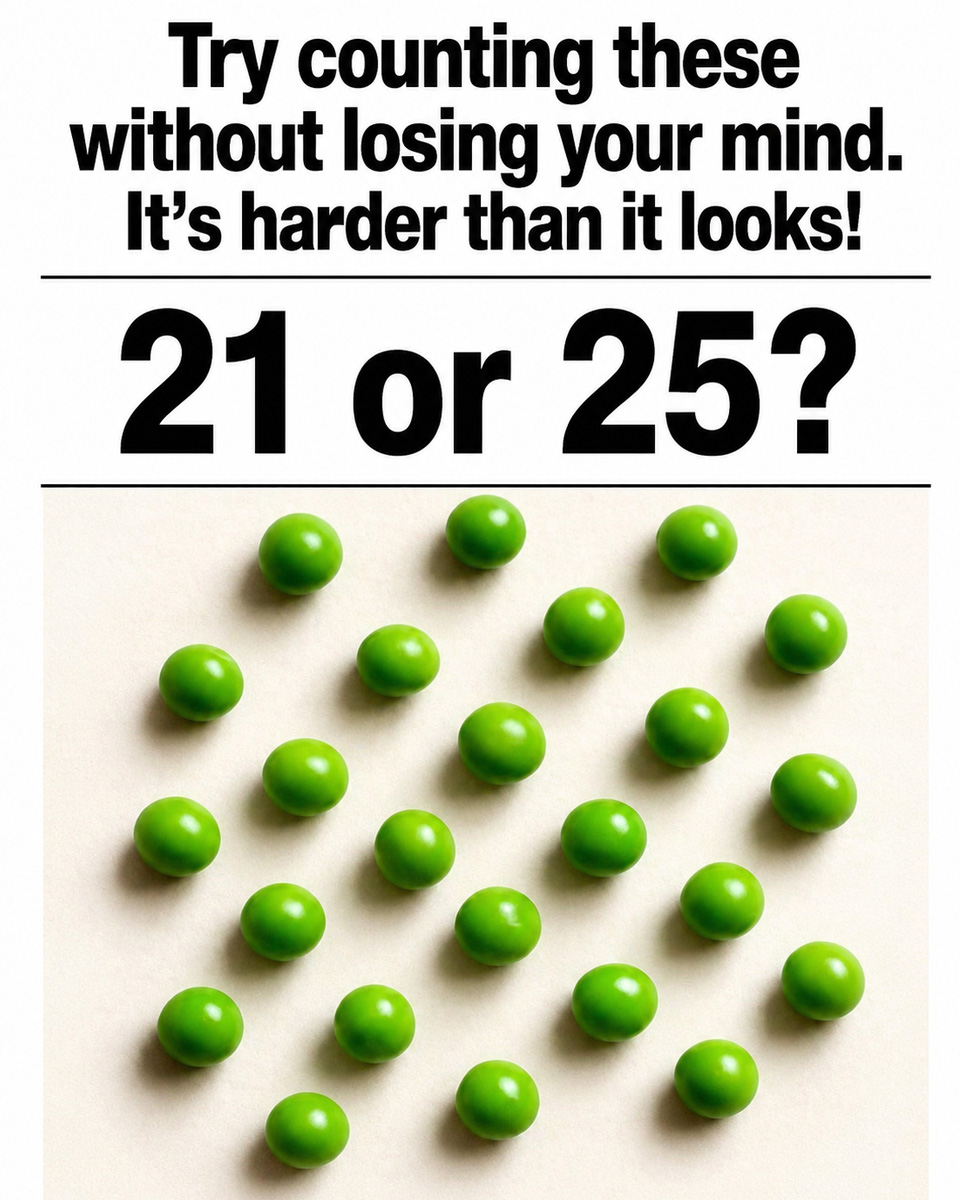
Have you ever looked at a simple picture and felt your brain instantly freeze up?That is exactly what happens when people first look at this viral green pea counting game.At first glance, it just looks like a handful of shiny green peas scattered on a clean table.The text at the top of the image asks a very straightforward question: “21 or 25?”It even adds a playful warning: “Try counting these without losing your mind. It’s harder than it looks!”You might think to yourself, “How hard can it really be to count a few green dots?”But as soon as you start pointing your finger at the screen, your eyes begin to play tricks on you.Your gaze might skip a pea, or you might accidentally count the same one twice.Do not worry, because you are definitely not alone in this struggle.Today, we are going to take a deep breath, slow down, and solve this visual mystery step-by-step.Let us find out together if the true answer is really 21, 25, or perhaps something else entirely!Why Our Brains Get So Easily ConfusedBefore we start counting, let us talk about why this image is so frustratingly difficult.The green peas are not lined up in a perfect, straight square grid.Instead, they are arranged in an alternating, hexagonal-like pattern.This layout creates a subtle optical illusion that confuses your eyes as they jump from one dot to another.Because the rows are slightly shifted, your brain struggles to keep track of where you started and where you ended.On top of that, the bright, glossy texture of the peas makes them look almost identical.Without any unique features on individual peas, your focus easily slides across the screen.Furthermore, there is a clever psychological trick at play here.By presenting you with only two options—21 or 25—the puzzle forces your brain into a trap.This is known as a false dilemma, where you feel pressured to choose one of the given answers even if they might both be wrong.Now, let us bypass the mental traps and count them the smart way!The Step-by-Step Counting GuideTo make sure we do not lose our place, we are going to count the peas row by row, starting from the very top and moving down to the bottom.Grab your index finger, follow along, and let us do this together!The Top Half of the PatternRow 1 (The Top Row): Look at the very top of the green cluster, where we can see 3 peas sitting in a neat horizontal line.Row 2: Just below that, the next row shifts slightly to the outer sides, containing 4 peas in total.Row 3: Moving further down, the pattern narrows back inward, giving us 3 peas.Row 4 (The Middle Row): Right in the center of the cluster, we find another wide row containing 4 peas.The Bottom Half of the PatternRow 5: Below the center, the grid narrows again, showing us 3 green peas.Row 6: Next, we find another wide row stretching across, which holds 4 peas.Row 7 (The Bottom Row): Finally, at the very bottom of the cluster, we see the last 3 peas resting quietly.Now that we have successfully broken down the image into clear, manageable rows, let us add them all up.We will write down the simple equation to make sure our math is absolutely perfect:3 + 4 + 3 + 4 + 3 + 4 + 3 = 24The Brilliant Trick Behind the PuzzleIs it not absolutely hilarious?The image proudly asks you to choose between 21 and 25!Yet, the true, honest answer is actually 24!This is why so many people online argue endlessly in the comment sections of this puzzle.Some people count 24, but because they do not see “24” as an option, they assume they must have made a mistake.They then force themselves to recount until they somehow arrive at 21 or 25.Other people get frustrated and lose track halfway through, eventually just guessing one of the two numbers.It is a wonderful reminder of how easily our minds can be guided toward the wrong answer simply because of how a question is framed.The next time you see a puzzle online, remember to trust your own eyes and your own logical counting over the options given to you!

Oct 04, 2026
Why This Simple Math Puzzle Has Everyone Stumped New

Why This Simple Math Puzzle Has Everyone Stumped

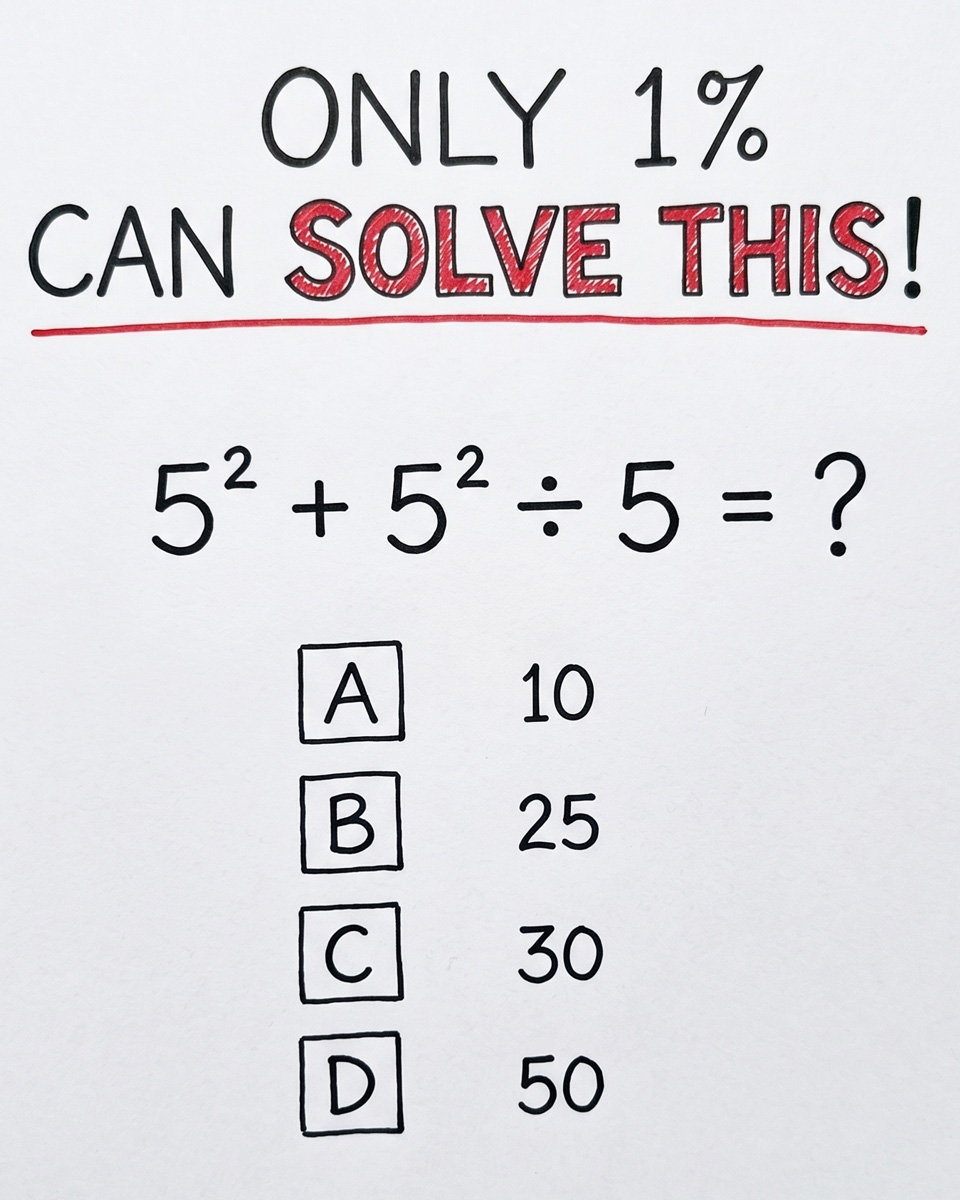
Are you ready to test your basic math skills with a quick challenge?Puzzles like this often look very simple at first glance.However, many people get the wrong answer because they forget a basic rule.Let us look closely at the equation in the picture: 5² + 5² ÷ 5 = ?To solve this correctly, we need to follow the proper order of operations.In mathematics, this order is usually called PEMDAS or BODMAS.This rule tells us which calculation to do first, second, and last.First, we must solve any calculations inside parentheses or brackets.In our equation, there are no parentheses, so we move to the next step.Second, we need to calculate exponents or powers.We have two terms with exponents in this puzzle: 5² and 5².The expression 5² simply means 5 multiplied by 5.When we multiply 5 by 5, we get 25.So, we can replace both 5² terms with the number 25.Now, our equation becomes much simpler: 25 + 25 ÷ 5 = ?Third, we look for multiplication or division from left to right.In our new equation, we have an addition and a division.According to the order of operations, division must always be done before addition.This is the exact step where most people make a mistake.Many people add 25 and 25 first to get 50, and then divide 50 by 5 to get 10.If you chose option A (10), you fell into this common trap!Instead, we must perform the division step first: 25 ÷ 5.When we divide 25 by 5, the result is 5.Now, we update our equation one more time: 25 + 5 = ?Finally, we perform the remaining addition step.We simply add 25 and 5 together.25 + 5 equals 30.Therefore, the correct answer to this puzzle is 30.Looking at the options given in the image:A) 10B) 25C) 30D) 50We can clearly see that option C is the correct choice!

Oct 04, 2026
Widow's Unusual Husband Ad Sparks Unlikely Suitor New

Widow's Unusual Husband Ad Sparks Unlikely Suitor

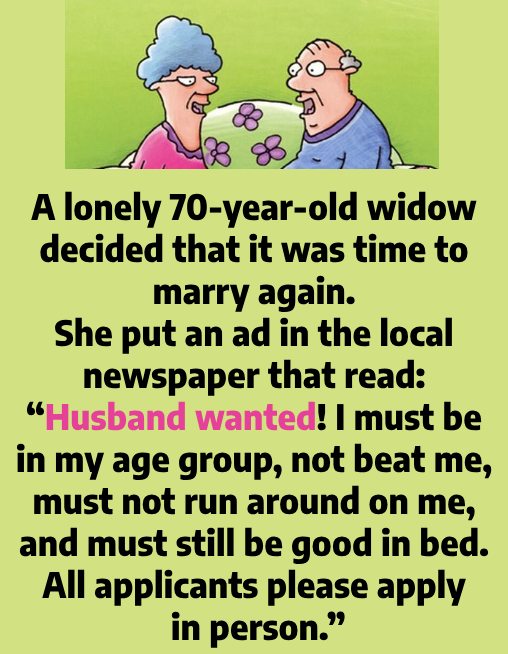
A lonely 70-year-old widow decided that it was time to marry again.She put an ad in the local newspaper that read:“Husband wanted! I must be in my age group, not beat me, must not run around on me, and must still be good in bed. All applicants please apply in person.”The following day, she heard the doorbell. Much to her dismay, she opened the door to see a gray-haired gentleman sitting in a wheelchair. He had no arms or legs.“You’re not asking me to consider you, are you?” the widow asked: “Just look at you — you have no legs!”The old gent smiled: “Therefore, I cannot run around on you!”“You don’t have any arms either!” she snorted.Again, the old man smiled: “Therefore, I can never beat you!”She raised an eyebrow and asked intently: “Are you still good in bed?”The old man leaned back, beamed a big smile, and said: “I rang the doorbell, didn’t I?”Why not help cheer a friend up? Share this joke and help give someone a good laugh!A 70-year-old woman chose to remain overnight in a costly hotelA 70-year-old woman decided to stay at an expensive hotel for her birthday.The next morning, she was appalled when the desk clerk gave her a bill for $250.00. She wanted to know why the charge was too high.“It’s a nice hotel, but the rooms certainly aren’t worth $250.00 for just an overnight stay! I didn’t even have breakfast,” she told the clerk.The clerk clarified that $250.00 is the standard price. At that point, the older lady insisted on talking with the manager.The manager introduced himself and explained that the hotel “has an Olympic size swimming pool and a huge conference center which are available for use.”“But I didn’t use them,” the old woman said.“Well, they’re there and you could have,” he replied.The manager proceeded with that she could likewise have seen one of the in-hotel shows for which the hotel is famous.“We have the best entertainers from the world over performing here,” he said.“But I didn’t go to any of those shows,” she said.The manager replied, “Well, we have them and you could have them.”Regardless of what facility he recommended, the older lady would just answer, “But I didn’t use it!”The manager then replied with his standard reaction. After arguing with him for several minutes, she decided to pay.The manager was shocked when she handed him the check. “But ma’am, this check is only $50.00,” he said.“That’s right. I charged you $200.00 for s-l.eeping with me,” replied the old lady.“But I didn’t!” the manager shouted.“Well, too bad, I was here, and you could have,” the old woman replied.Don’t mess with Senior Citizens, they spent a lifetime learning the skills… !!!Hope this funny story will make you smile! Have a nice day!!

Oct 04, 2026
Can You Spot the Hidden Difference in This Rainy Day Puzzle? New

Can You Spot the Hidden Difference in This Rainy Day Puzzle?

Get ready to test your observation skills with a fun, classic brainteaser.We often think we see everything, but our eyes can be easily fooled.Welcome to a unique puzzle that will put your concentration to the ultimate test.You are about to look at two almost identical illustrations.At first glance, they appear perfectly matched, like two pages from the same book.Look closely at the image provided, showing a man and a woman in the rain.They are smiling and sharing a large, protective red umbrella.Your simple, but challenging, mission is to find just one difference between these two pictures.Only one difference, and you are called a ‘genius.’This may sound easy, but the difference is hidden in plain sight.It’s designed to trick the casual observer and challenge the most sharp-eyed.Take a deep breath and prepare to focus on every small detail.Look at the rain, the clouds, and the umbrella itself.Check the colors and the lines and every part of the people.Don’t let your mind trick you into thinking it’s too difficult, or too easy.This is a game of patience and careful examination.Think of it as a small mental stretch to start your day.Your eyes are powerful tools, and this puzzle will show you how well they work.Take all the time you need, and don’t rush to scroll past.Focus your attention on the screen, and the hidden detail will appear.Good luck on this journey to test your observation!Share this with your friends and see if they have the eyes of a genius too.There is no time limit, just your own attention to detail.We won’t tell you the answer here, that’s for you to find!Just look, find, and prove you have a brilliant eye.ANSWER:

Oct 04, 2026
The Hidden Box That Changed Everything for a Grandmother and Her 7 Grandchildren New

The Hidden Box That Changed Everything for a Grandmother and Her 7 Grandchildren

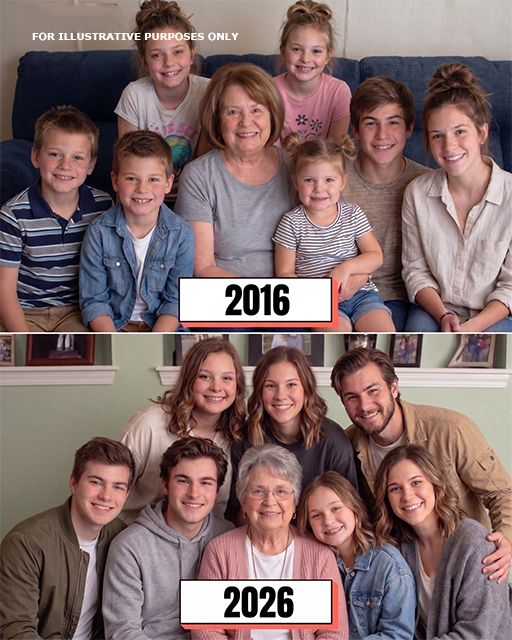
Ten years after my son and daughter-in-law vanished and were eventually declared legally d3ad, my youngest granddaughter discovered a hidden compartment in our basement. Inside was a metal box containing nearly fifty thousand dollars in cash, duplicate identity documents for all seven children, and a map marked with routes leading across the country. At first, I thought it was evidence of a desperate plan that had never happened. I never imagined it would lead us to the truth, or that the truth would be far more painful than believing they were d3ad.My name is Evelyn, and if there’s one thing I’ve learned in life, it’s that grief and love often travel together. Ten years ago, my son, Ryan Harper, and his wife, Natalie, disappeared without a trace. Back then, they were raising seven children: Logan, Maya, Ethan, Olivia, Noah, Sophie, and little Grace, who was only four years old. Their house was always noisy; someone was always laughing, arguing, crying, or running through the hallway. It was chaotic. It was exhausting. It was wonderful.Looking back now, I wish I had paid closer attention during the final days before they vanished. Maybe I would have noticed the warning signs, or maybe I could have stopped what happened. Or maybe I simply tell myself that because it’s easier than accepting I never really knew how much trouble they were in.The last time I saw Ryan and Natalie was in June, when they dropped all seven children at my house for what was supposed to be a two-week summer visit. Nothing seemed particularly unusual. Ryan looked tired, but he had been working long hours for months. Natalie appeared distracted, checking her phone more often than usual, but I assumed they were stressed. Most parents with seven children were.As they prepared to leave, Ryan hugged me. “Thanks for helping us out again, Mom.”“You know you’re always welcome,” I said.Natalie smiled and kissed the children goodbye. “We’ll see you soon.” Those were the last words either of them spoke to their children for ten years.Three days later, authorities contacted me. Ryan and Natalie’s SUV had been discovered at the bottom of a steep canyon nearly four hundred miles away. The vehicle had crashed through a guardrail and plunged into a fast-moving river, and the current was extremely strong. The accident scene suggested the vehicle had been swept downstream after impact.Search teams spent weeks looking for survivors or remains, but nothing was found. Months passed, and no one heard from them. No bank activity appeared on any of their known accounts, no phone records surfaced, and no sightings were confirmed. Eventually, investigators concluded they had most likely di3d in the accident. Several years later, after all legal requirements had been met, they were officially declared deceased. The case was closed, and life moved on. At least, that’s what everyone believed.The children needed a home, and there was never any question about what I would do: I became their guardian. At sixty years old, I suddenly found myself raising seven grieving children. The oldest, Logan, was fourteen, and the youngest, Grace, was four. The age gap alone created challenges, as teenagers and preschoolers have very different needs, but we figured things out together.I sold my small retirement home and moved into Ryan and Natalie’s house because it was the only place large enough for all of us. Money was tight from the beginning. There were years when I worked three part-time jobs, managing bookkeeping for a local contractor, tutoring students in the evenings, and working weekends at the public library. I learned how to stretch every dollar. The older children helped care for the younger ones, and we became a team—a family held together by determination more than anything else.There were difficult days, and there were wonderful days. There were graduations, school plays, sports championships, heartbreaks, and celebrations. Slowly, the sharp edges of our grief softened. The children grew up, and life moved forward.Then, ten years later, everything changed. It started with a burst pipe. During a particularly cold winter, a water pipe froze, damaging part of the basement wall. In the spring, Logan and Ethan volunteered to help replace the damaged section. While removing old panels, they discovered a narrow hidden compartment built between two support beams. Inside sat a small metal lockbox covered in dust.Grace carried it upstairs. By then, she was fourteen years old, curious, intelligent, and increasingly interested in learning about the parents she barely remembered. She placed the box on the kitchen table.“Grandma,” she said, “I think you should see this.”Something in her voice immediately caught my attention. I sat down and opened it, and my stomach tightened. Inside were bundles of cash—a lot of cash, nearly forty-eight thousand dollars. Beneath the money were duplicate copies of every child’s birth certificate, Social Security card, vaccination records, and school records. Not the originals; the originals had always remained in our files. These were duplicate copies that had clearly been collected for travel or relocation. At the bottom lay a road atlas with several routes highlighted, each avoiding major cities and crossing multiple state lines.The room fell silent as Grace stared at the map. “They were planning to leave,” she said quietly. No one argued, because the evidence suggested exactly that.That evening, all seven children gathered around the dining room table. For hours, we examined everything, and questions filled the room. Why would their parents need duplicate documents? Why hide nearly fifty thousand dollars? Why create escape routes, and why never tell anyone? The answers weren’t there, but we knew there had to be more.The next day, we searched the basement from top to bottom. Near an old workbench, Noah found another concealed space. This one contained a waterproof document pouch, and when I opened it, I finally began to understand.The pouch contained years of financial records, but not ordinary debt; it was catastrophic debt. There were unpaid business loans, personal guarantees, private lending agreements, lawsuit notices, and collection demands. These documents were connected to investments that had failed spectacularly. Many of the records had been sent to a rented mailbox rather than their home address, which explained why I had never seen them while handling their affairs. By the time Ryan disappeared, the debts exceeded two hundred thousand dollars. At the back sat a handwritten note in Natalie’s handwriting. It contained a bank account number, and underneath, she had written: Only if everything falls apart.I stared at those words for a long time, because it looked very much like everything had, in fact, fallen apart.The following morning, I visited the bank. After reviewing the legal documentation related to Ryan’s estate, the branch manager agreed to check whether the account still existed. Several minutes later, his expression changed.“I can’t discuss transaction details,” he said carefully, “but I can confirm the account remains active.”I felt my heart skip a beat. “Active?”He nodded. “The account has not been dormant.”For several seconds, I couldn’t speak. Ten years. Ten years. Someone had been using that account for ten years.When I returned home, all seven children were waiting. One look at my face told them everything.“They’re alive,” Grace whispered.I nodded. No one celebrated, and no one smiled. Instead, the room filled with a painful silence, because surviving wasn’t the betrayal. Leaving was.For two days, we debated what to do. Eventually, the bank manager suggested a legal option. Since the account appeared to be linked to individuals who had been declared deceased, the bank could initiate a formal review. Any authorized users would be notified and required to respond. It wasn’t guaranteed to work, but it was the best lead we had, so we proceeded. Then we waited.Four days later, a dark sedan pulled into the driveway. I happened to be watering flowers near the front porch, and the moment the driver stepped out, I knew. Even after ten years, a mother recognizes her child. Ryan looked older and thinner, and his hair was streaked with gray, but it was him. Natalie emerged from the passenger side looking nervous, almost frightened.Neither approached immediately. Then the front door opened behind me, as the children had seen the car. One by one, they stepped outside. No one spoke, and the silence felt endless.Finally, Logan broke it. “Where have you been?”Ryan looked at all seven of his children, and tears immediately filled his eyes. “You’ve all grown up.”It wasn’t an answer, and everyone knew it. Maya crossed her arms. “Start explaining.”Ryan glanced at Natalie, she nodded, and then they told us everything. The financial crisis had been worse than anyone realized. Ryan had invested in a business venture with two partners, and when the business collapsed, one partner disappeared. The other blamed Ryan for fraudulent activity and filed lawsuits. At the same time, private lenders began demanding repayment. Some threats became personal; a few people showed up at the house, while others contacted Natalie directly.Whether the threats were truly dangerous or merely intimidation no longer mattered. Ryan panicked, and the plan became increasingly desperate. At first, they intended to relocate the entire family. The cash, duplicate documents, and travel routes were preparations for that possibility. Then events spiraled out of control.The lawsuits intensified, and an arrest warrant related to financial fraud was issued while investigators sorted through conflicting evidence. Ryan became convinced he would go to prison. Terrified and irrational, he decided the family would be safer without him, and Natalie chose to go with him. One terrible decision became another, then another, until they disappeared completely.“Why didn’t you come back?” Grace asked, her voice shaking.Ryan looked devastated. “At first, we planned to.”“Then what happened?”He swallowed hard. “Every month that passed made it harder.”Natalie wiped tears from her face. “We kept telling ourselves we’d come back next year.”“We followed your lives from a distance,” Ryan admitted.The children stared at him. “What does that mean?” Ethan asked.“We hired investigators a few times over the years, just enough to know you were safe. We knew when Logan graduated. We knew when Maya got accepted to college. We knew…” His voice broke.“But you never called,” Grace said.“No.”“You never wrote.”“No.”“You let us believe you were d3ad.” Neither of them denied it, because they couldn’t.For the first time, Ryan looked directly at me. “I’m sorry, Mom.”I studied him. The boy I had raised seemed buried beneath ten years of fear, shame, and terrible decisions. But one question remained. “Why come back now?”Ryan hesitated, then he answered honestly. “The bank notification scared us. We thought the review might expose everything.”Natalie nodded. “And…” she said quietly, “we were struggling financially again.”The words landed heavily, not because they erased the apology, but because they revealed the truth. The notification had not simply inspired remorse; it had forced action.“The account is frozen pending review,” I told them.Ryan nodded slowly and didn’t argue. He seemed too exhausted for that. Perhaps, after carrying the weight of his choices for ten years, he already understood there was nothing left to win.Then Logan stepped forward. At twenty-four, he was now older than his father had been when he first became a parent. “Grandma raised us,” he said quietly. The others gathered beside him. “She stayed. She sacrificed everything. She never left.”Ryan lowered his head, and Natalie began crying. No one yelled, and no one screamed. The truth itself was painful enough.Before leaving, Ryan asked a simple question, one that should have been easy. “Can I ever be part of your lives again?”No one answered immediately. Finally, Grace spoke. “I don’t know.” It was the most honest response possible.Six months later, investigators completed their review. The original fraud allegations had proven far less serious than Ryan had feared, but his disappearance, false declarations, and years of avoiding legal obligations carried consequences of their own. He and Natalie faced substantial penalties and court supervision. More importantly, they were forced to confront the family they had abandoned. Some of the children chose limited contact, others chose none, and a few remained undecided. Healing, we learned, does not happen on a schedule.Today, several years later, family dinners are smaller than they once were. Some of the grandchildren have homes and children of their own. The educational trust established from the recovered funds helped pay for college tuition and career training. Life moved forward; it always does.Sometimes people ask how I managed to raise seven children alone. The truth is that I didn’t; we raised one another. And when I think about everything that happened—the disappearance, the hidden compartment, the lies, and the painful truth that finally emerged—I realize something important. The greatest act of love isn’t making promises. It’s staying. Day after day. Year after year. Even when life becomes difficult. Because in the end, the people who stay are the ones who become family.


Oct 04, 2026
Brooklyn Artist Transforms NYC Subway Tiles with Living Art, Going Viral New

Brooklyn Artist Transforms NYC Subway Tiles with Living Art, Going Viral

See more of our coverage in your search results. Cracks aren’t wack.The MTA is more than a transit system for New Yorkers — it’s a lifeline that keeps the city going. But with over 8 million residents and riders, things are bound to break. Now, one Brooklyn artist has uncovered a way to turn at least one of the system’s structural flaws into art — a cracked tile at a time. Eujue, no last name, recently went viral on social media with a post that snagged over a million views — showing her replacing a broken “E” tile at Delancey St.-Essex St. station, on Manhattan’s Lower East Side. Eujue is an artist replacing missing subway tiles with art in New York City @eu.pottery/TikTokThe tile wasn’t restored with the boring black text. Instead, Eujue exchanged it with her own live creation — a ceramic square where the “E” is made with living chia plants. Eujue told The Post she got the idea after remembering a poem she read back in college — All Watched Over by Machines of Loving Grace, by Richard Brautigan. “This speculative world described a future where plants, animals, and technology coexisted in harmony. This pushed me to want to build speculative objects that existed in a post apocalyptic future; a world where plants reclaim spaces that were once theirs,” the nature-loving New Yorker told The Post.Brooklyn artist, Eujue, aims to make everyday places feel more cared for and connected @eu.pottery/TikTokThe Brooklynite doesn’t want missing tiles to be seen as a maintenance problem anymore. She encouraged artists to be inspired by this moment to “shape the city around them.”“NYC has always been a place where artists shape the city’s culture, and I hope our public spaces can reflect that. I’d love to make the everyday places we move through feel more cared for and more connected to the people who live here,” she said.Delancey St. was just the beginning. Eujue made the ceramic E tile with chia seeds which grew into plants @eu.pottery/TikTokEujue and her brother built NYC Tile Watch — a website where New Yorkers can report missing or damaged subway tiles. The site was created so routine subway upkeep and public art could coexist. Once a report is made, local artists can fix the broken tiles by turning them into their own creation, bringing life into the dingy subway stations.The movement is gaining traction — even catching the attention of Mayor Mamdani. Eujue said she is currently in conversations with the Mayor’s team and the MTA — about how NYC Tile Watch could potentially develop into a formal program. As of today, the Korean-American said that her site has accumulated 24 approved reports. Subway riders can fill out a public interest form which will help gauge local artist interest in NYC Tile Watch website.“The missing “E” tile was a small change, but it made me think about how many overlooked spaces we pass by everyday,” the artist.The widely-shared TikTok that made Eujue famous already has thousands of comments supporting and celebrating her movement — and making her a bit of a superstar on her socials. In just a week, Eujue has gained thousands of likes, a plethora of new followers and become a local “subway hero.”The Brooklyn artist built the NYC Tile Watch website where locals can report damaged tiles @eu.pottery/TikTok“This is NYC. Art moves our city I love it, it’s soooo NYC,” one user gushed.Another chimed in, offering to do what New Yorkers do best — help. “What if we New Yorkers pitch in watering them too! That way they live a little longer,” they said.For Eujue, it’s just the beginning. The Gothamite told The Post she’s working hard to make sure New Yorkers and visitors feel a kinship to the space that surrounds them. “I’d love to make the everyday places we move through feel more cared for and more connected to the people who live here,” she said.

Oct 04, 2026