Browse

Latest Headlines

Fresh headlines, crisp visuals — faster reading.

The Truth About Oregano Oil: Miracle Cure or Overhyped Herb? New

The Truth About Oregano Oil: Miracle Cure or Overhyped Herb?

Some herbs may offer health benefits. However, no single plant has been proven to cure every infection or illness.Claims about a so-called “miracle herb” often spread quickly online. Some posts suggest that one plant can destroy parasites, cure urinary tract infections (UTIs), fight viruses, reduce arthritis symptoms, and treat many other conditions.The scientific evidence is far more limited.Certain medicinal plants contain compounds with antimicrobial properties. Still, experts emphasize that no single herb has been proven to cure all of these conditions.Two herbs often mentioned in these discussions are oregano and uva ursi.Oregano Oil and Its Active CompoundsOregano (Origanum vulgare) has been studied for its natural antimicrobial properties.Oregano essential oil contains compounds such as carvacrol and thymol. Laboratory studies have shown that these substances may affect the growth of certain bacteria and microorganisms.Researchers have also investigated oregano oil against bacteria associated with urinary tract infections.For example, laboratory studies suggest that oregano compounds may inhibit bacteria such as Escherichia coli and Proteus vulgaris.These bacteria are sometimes linked to urinary infections.However, there is an important limitation.Most of this evidence comes from laboratory or early-stage research. Therefore, it does not prove that oregano oil can safely or reliably treat a UTI in humans.More clinical research is needed.Can Oregano Oil Fight Parasites?Oregano oil has also been studied for possible activity against certain intestinal microorganisms.Some small studies have investigated its effects on organisms such as Blastocystis hominis.The results have created interest in oregano as a possible supportive remedy. However, the evidence remains limited.In addition, different parasites require different treatments.For that reason, oregano oil should not be considered a universal treatment for parasitic infections.Anyone who suspects a parasite should first receive a proper diagnosis.What About Uva Ursi?Another herb traditionally associated with urinary health is uva ursi, also known as bearberry.Uva ursi contains a compound called arbutin.After entering the body, arbutin can be converted into substances that have antibacterial properties. Because of this, uva ursi has been used traditionally for urinary symptoms.However, modern research has produced mixed results.Although some health authorities recognize its history of traditional use, there is still not enough strong evidence to consider uva ursi a reliable replacement for standard UTI treatment.It should also not be used continuously for long periods.Excessive or improper use may increase the risk of side effects.Herbal Products Are Not Risk-FreeIt is easy to assume that a natural product is automatically safe.That is not always true.Herbal supplements can vary greatly in quality, purity, strength, and concentration.Essential oils are especially concentrated.For example, using oregano oil incorrectly may cause: Stomach irritation Allergic reactions Interactions with medications Other unwanted side effects People with existing medical conditions or those taking medication should be particularly careful before using concentrated herbal products.When UTI Symptoms Need Medical AttentionA urinary tract infection should not be ignored.Common symptoms can include painful urination, frequent urination, pelvic discomfort, or a strong urge to urinate.More serious symptoms may include: Fever Blood in the urine Back or side pain Chills Nausea or vomiting These symptoms may indicate that an infection has become more serious.Without proper treatment, some bacterial urinary infections can spread to the kidneys.Therefore, anyone with persistent or severe symptoms should seek medical evaluation.Parasitic Infections Also Require Proper DiagnosisThe same principle applies to suspected parasites.There are many different types of parasitic infections, and they do not all respond to the same treatment.Symptoms alone may not be enough to identify the cause.A healthcare professional may recommend tests to determine which organism is responsible before choosing the appropriate treatment.The Bottom LineHerbs such as oregano and uva ursi contain compounds that researchers continue to study.Some laboratory findings are promising, especially when it comes to antimicrobial activity.However, promising laboratory results are not the same as proven medical treatment.Herbal remedies may sometimes have a supportive role, but they should not be promoted as miracle cures or used as substitutes for necessary medical care.Good hydration, proper hygiene, a balanced diet, accurate diagnosis, and evidence-based treatment remain the safest foundation for protecting urinary and digestive health.

Oct 05, 2026
The Heartbreaking Night My Daughter Vanished New

The Heartbreaking Night My Daughter Vanished

I pushed open my daughter’s bedroom door with my shoulder.My right hand was clenched around a small object so tightly that my nails were digging into my palm.Twenty minutes earlier, that object had shattered everything I thought I knew about my sixteen-year-old daughter.“Lily?”There was no answer.It was barely 6:30 in the morning. The house was gray, cold, and unusually silent.“Lily, sweetheart. We need to talk.”I crossed the room and pulled back the comforter.The bed was empty.The sheets were smooth and cold. Nobody had slept there.Then I noticed the open closet.Her sewing machine sat untouched on the desk.And the bedroom window was cracked open.My stomach dropped.I stepped closer and looked outside.The chrysanthemums my late husband had planted beneath the window were crushed flat.Lily had climbed out.My sixteen-year-old daughter had disappeared during the night.And suddenly, the small object in my hand felt heavier than ever.Two Days Earlier, I Thought I Knew Everything About HerMy husband, Daniel, died suddenly two years earlier.After that, it was just Lily and me.Life became harder. We stopped taking summer trips, and I picked up extra shifts at the dental office.But I tried to make sure Lily never doubted that she was loved.Every night, I stood in her doorway and said, “I love you, kiddo.”She usually rolled her eyes before saying it back.I truly believed we were close.I also knew about Lily’s biggest passion: sewing.She started when she was eleven using a secondhand sewing machine Daniel had found at an estate sale.By sixteen, she could make beautiful clothes.Skirts. Jackets. Dresses.She dreamed of becoming a fashion designer someday.That week, however, she wasn’t sewing something for herself.She was making a dress for a girl at school.The Dress Was for AnnieFor several nights, I noticed the light under Lily’s bedroom door long after midnight.Finally, around one in the morning, I went inside.Lily was bent over her sewing machine with her hair clipped back and a pin between her teeth.“Sweetheart, it’s nearly one. Can’t this wait?”She removed the pin and shook her head.“It’s due tomorrow. Annie’s singing in the school concert, Mom. Her mother can’t afford a dress.”I knew Annie only slightly.She was a quiet girl in Lily’s grade who usually wore oversized sweatshirts.Her mother, Marissa, cleaned offices at night.Lily flexed her tired fingers before returning to the dress.“The kids already laugh at what she wears,” she told me. “Yesterday, she asked the teacher if she could sing from behind the curtain.”My heart sank.“I want her to wear something she doesn’t have to hide in.”Lily spread the dress across her knees.It was deep green, simple, and beautiful.Then she reached for a bag beside her chair.What she pulled out made me freeze.It was a blue cardigan.It Was Her Father’s Last GiftDaniel had given Lily that cardigan the winter before he died.He bought it two sizes too big because he joked that she would grow into it.After he died, the cardigan became one of Lily’s most precious possessions.She wore it on difficult days.She wore it to his funeral.Once, I even found her sleeping in it.I reached toward it.“Lily, that’s your dad’s.”“I know.”Her eyes filled with tears.“I want Annie to have it.”I didn’t understand.The Lily I knew held onto that cardigan as if it were a connection to her father.Part of me wanted to stop her.But another part of me felt proud.I thought she was making an extraordinary sacrifice for someone who needed kindness.So I let her give it away.I had no idea what was really happening.Lily Came Home CryingThe next morning, I drove Lily to school with the green dress hanging carefully in the back seat.She seemed excited.I spent the rest of the day wondering how Annie would react.Would the dress fit?Would she love it?Would the concert go well?But when Lily came home around four that afternoon, her eyes were swollen from crying.She walked straight past me and slammed her bedroom door.I followed.“Honey? Did something happen?”“Please, Mom. Leave it.”I assumed Annie had rejected the dress.Maybe another student had said something cruel.I made Lily her favorite grilled cheese sandwich and left it outside her room.An hour later, it was untouched.Around nine that night, I heard her crying.When I knocked, she shouted, “I said I don’t want to talk!”Eventually, I went to bed believing Lily was simply heartbroken over something that had happened at school.I was wrong.Someone Rang the Doorbell at Six in the MorningThe doorbell woke me the next morning.When I opened the door, a woman was standing there with a thin teenage girl.The girl was wearing a blue cardigan.Daniel’s cardigan.It was Annie.She stood with her arms wrapped around herself, refusing to meet my eyes.The woman beside her introduced herself as Marissa, Annie’s mother.“Is Lily home?” she asked.“Yes. What happened?”Her expression changed.“You don’t know why Lily really gave Annie that dress?”I stared at her.“To help her.”Marissa began to cry.Then she reached into her coat and handed me a small box.Inside was a flash drive.“You don’t know your daughter at all,” she whispered. “I’m so sorry I have to be the one to tell you.”My entire body went cold.The Video Changed EverythingI let them inside and opened my laptop at the kitchen table.Then I plugged in the flash drive.At first, I couldn’t understand what I was watching.I played the video again.Then a third time.My stomach turned.“This can’t be Lily.”But it was.The video showed Lily with several other girls tormenting Annie.They laughed at her clothes.They emptied her bag.They mocked her mother for cleaning offices.And Lily was helping them.At one point, she was even filming.I stared at the screen in disbelief.The daughter who had spent three nights making Annie a dress had also helped humiliate her.“Why?” I whispered.Annie looked down at the table.Then she said something that frightened me even more.“After the concert, Lily and I talked. She said something that scared me.”I immediately ran upstairs.That was when I discovered Lily’s empty bed and open window.She was gone.Annie Thought She Knew Where Lily WentWhen I returned downstairs, Annie looked terrified.“I think I know where she went.”“Where?”“The train station.”She explained that she and Lily used to spend time there together, talking about their dreams and where they might go someday.Marissa grabbed her keys.We drove there as fast as we could.Nobody spoke.Then, as we approached the station, I saw her.Lily was standing at the far end of the platform.A duffel bag hung from her shoulder.A train was arriving.“Lily!”She turned around.Her eyes were red and swollen.I reached her before she could board.“Mom, let go.”“No.”“I have to go.”She was shaking.“I’ll find a job. Maybe I can work for a designer. I’ll figure something out.”Then she looked at me.“You saw the video, didn’t you?”I said nothing.“You’d be ashamed to have a daughter like me anyway,” she whispered. “I’m just making it easier.”My heart broke.“Yes, I saw it,” I said. “And I need to understand what happened.”The Truth About Lily and AnnieI asked Lily why she had treated Annie so cruelly.Lily lowered her head.“We used to be best friends.”Annie, who had followed us onto the platform, finally spoke.“I told Lily that I liked her as more than a friend.”Lily began crying.“And I panicked,” she admitted.She said other girls had overheard Annie.Lily became afraid they would turn against her too.So instead of defending Annie, she joined them.“At first, I thought it would make them leave me alone,” Lily said. “But it kept getting worse.”She wiped her face.“I hated myself, Mom.”I looked between the two girls.“Then why make the dress?”Lily hesitated.Before she could answer, Marissa spoke.“Because of Daniel.”My husband’s name stopped me cold.Annie Had Been With My Husband When He DiedMarissa explained what had happened two years earlier.She had been cleaning an office building one evening.Annie was waiting nearby.Daniel collapsed close to the entrance.Annie saw him first.She ran to get her mother.Marissa called 911, and together they stayed with Daniel until the ambulance arrived.“He asked us to tell his wife and daughter that he loved them,” Annie said softly.I could barely breathe.For two years, I had imagined Daniel dying alone.I pictured him frightened on the pavement with nobody beside him.But he hadn’t been alone.Marissa and Annie had stayed with him.Annie explained that she never knew Daniel’s name.Then, about a month earlier, she noticed a photograph of him in Lily’s locker.She recognized him.By that point, however, her friendship with Lily had already fallen apart.“I didn’t know how to tell her,” Annie said.Lily was crying openly now.“I only found out a few days ago,” she said. “Annie told me during an argument.”Suddenly, everything made sense.The Dress Was Lily’s Attempt to Make Things RightLily looked at Annie.“I couldn’t undo what I did.”Her voice shook.“So I made her the dress. And I gave her Dad’s cardigan because it was the most important thing I had.”Annie nodded.“But I told her a dress couldn’t erase everything.”Lily stared at the ground.“I thought that meant there was no way to fix it.”She believed she had ruined everything.She believed I would be ashamed of her.So she packed a bag and decided to leave.For a moment, nobody spoke.The train had already pulled away.Morning sunlight slowly spread across the tracks.Then Annie did something I will never forget.Annie Gave the Cardigan BackAnnie removed Daniel’s blue cardigan.She stepped toward Lily and placed it around her shoulders.“This belongs to you.”Lily looked at her through tears.“Annie…”“Forgiving you doesn’t mean pretending it never happened,” Annie said. “I’m still angry. I might be angry for a long time.”She paused.“But I’ll give you a chance to make it right.”Then she looked Lily directly in the eyes.“I’ll see you at school.”Marissa gave me a tired nod.The two of them walked back toward the car.I stayed on the platform with my daughter.Some Mistakes Cannot Be Erased — But They Can Be FacedI wrapped my arms around Lily.She collapsed against me.“I was so scared to tell you,” she whispered. “I thought you’d look at me differently.”I held her face in my hands.“You don’t have to have all the answers at sixteen,” I told her. “But you do have to answer for how you treat people.”She looked down.“What you did to Annie was cruel.”She flinched, but I continued.“We’ll deal with it together. At home, at school, and with Annie. But you don’t have to run away.”Lily nodded.Finally, she let me take the duffel bag from her shoulder.That morning taught me something I never forgot.Being close to your child doesn’t mean knowing every thought, every mistake, or every secret.Sometimes it simply means making sure they know that when the truth is at its worst, they can still come home.

Oct 05, 2026
The Mysterious Disappearances After My Father’s Dates: What We Uncovered New

The Mysterious Disappearances After My Father’s Dates: What We Uncovered

Every woman my father dated seemed eager to see him again, then vanished before sunrise. When my best friend agreed to uncover the reason, one chilling message proved this was no coincidence.My father lost my mother 12 years ago.I was old enough to understand what death meant, but not old enough to understand what it could do to the person left behind.My father changed after the funeral.Before Mom died, he filled every room he entered.He sang while making coffee.He told terrible jokes at dinner and laughed before reaching the punch line.He always had music playing in the house.Afterward, the house became painfully quiet.For a long time, he refused to date anyone.Relatives encouraged him to meet someone new.Friends invited him to dinners where a single woman always happened to be seated beside him.He declined every offer.Once, I suggested that Mom would not have wanted him to spend the rest of his life alone.He looked at me with an expression I could not forget.“I am not alone, Lola,” he said. “I have you.”That answer broke my heart more than I let him see.Then, almost overnight, everything changed.He joined dating apps.I first noticed when I visited him one Saturday afternoon.He was sitting at the kitchen table with his phone in both hands.His reading glasses rested low on his nose, and he was smiling at the screen.My father had not smiled like that in years.“What are you looking at?” I asked.He quickly locked the phone.“Nothing.”I raised an eyebrow.He lasted less than ten seconds before confessing.“I made a profile.”“A dating profile?”He nodded, suddenly looking embarrassed.I hugged him before he could explain himself.He stood stiffly at first, then wrapped his arms around me.“I think Mom would approve,” I told him.“I hope so,” he murmured.Soon, he started meeting wonderful women.He told me about them before every date.One worked at a library.Another owned a small bakery.A third volunteered at an animal shelter on weekends.He seemed hopeful each time.But none of them ever stayed.At first, I assumed they simply were not compatible.Dating was complicated.People could enjoy one evening together and still decide there was no future.I told myself that every time one of the women stopped responding.Then I noticed something strange.Every relationship ended the exact same way.The date would go perfectly.My father would call me afterward and tell me about the restaurant, the conversation, and whatever small detail had made the woman laugh.He never sounded arrogant.He sounded relieved.They would make plans to see each other again.Then, by the next morning, the woman had disappeared.No calls.No texts.No explanation.The first time, my father assumed she had become busy.The second time, he thought he had misunderstood her interest.By the third, he started blaming himself.“Maybe I talk about your mother too much,” he said.“You barely mention her on dates.”“Maybe I am too old-fashioned.”“You held a door open for her. That is not a crime.”He gave me a tired smile, but my reassurance never seemed to reach him.My father was heartbroken every single time.“I don’t understand,” he’d whisper.“They all seemed so happy.”I hated watching him lose confidence.Every rejection pulled him further back into the man he had become after Mom died.He stopped singing again.He checked his phone every few minutes.He reread old messages as if the answer might be hidden between the lines.The fourth woman vanished after telling him she wanted him to meet her sister.The fifth disappeared after making weekend plans with him.After the sixth woman vanished, I could not ignore it anymore.Something was not right.Six women could lose interest.That was possible. But six women would not all disappear in the same manner after promising another date.I asked my father whether anything unusual had happened during those evenings.He looked confused.“No. Why?”“Did you argue with them?”“Of course not.”“Did you say anything that could have frightened them?”His face tightened.“What kind of man do you think I am?”“That is not what I meant.”He turned away from me and began rinsing a clean mug in the sink. I knew I had hurt him.“I just want to understand,” I said.“So do I.”That night, I called my best friend, Rachel, and asked her for a favor.Rachel and I had known each other since college.She was honest to the point of being painful.She could charm an entire room, but she could also detect a lie before most people had finished telling it.If my father was doing something wrong, Rachel would notice.“Go on one date with him.”She laughed.“You’ve got to be kidding.”“I’m serious.”Her laughter stopped.“Lola, that is your father.”“I know.”“And he knows me.”“He has only met you a few times.”“That does not make this less strange.”I explained everything.I told her about the six women, the successful dates, and the sudden disappearances.Rachel stayed quiet for a long moment.“So you want me to investigate him?”“I want you to tell me what happens.”“And what exactly am I supposed to say when he recognizes me?”“Tell him we met through the app. He might remember your face, but he will not remember your name.”Rachel groaned.“This is a terrible idea.”“Probably.”“It could ruin my friendship with you.”“It will not.”“It could ruin your relationship with your father.”That possibility frightened me, but I kept my voice steady.“I need to know.”Reluctantly, she agreed.The date went even better than I expected.Rachel called me afterward.“Your dad is wonderful,” she said.“I can’t believe nobody gave him a chance.”I felt relief rush through me.“So nothing strange happened?”“Nothing. He was kind, funny, and respectful. We talked for almost three hours.”“Did he mention another date?”“He asked if I wanted to have dinner again next Friday.”“What did you say?”“I said yes.”For the first time in weeks, I slept without imagining the worst.The next morning, she disappeared too.I called her before work.No answer.I called again during lunch.Straight to voicemail.I sent messages asking whether she was all right. None of them were delivered.By evening, she finally texted me.“Don’t contact me. Please.”That was not Rachel.Rachel would never send a message like that without an explanation. Even during our worst disagreement, she had called me and argued until both of us ran out of things to say.I drove straight to her apartment.Her car was still there.Her lights were on.But nobody answered the door.I knocked until my knuckles hurt. I called her name through the door. I tried her phone again and heard nothing from inside.A neighbor stepped into the hallway and asked whether everything was all right.“I don’t know,” I said.I sat in my car outside her building for almost an hour. I watched her windows, waiting for a curtain to move.Nothing happened.The next afternoon, she called.Her voice sounded shaky.“I can’t explain over the phone.”“When can we meet?” I asked.“Tomorrow morning.”I barely slept that night.The next morning, I caught her just outside her office before she went inside.She looked exhausted. Her face was pale, and she kept glancing toward the building entrance as though she wanted an excuse to escape.“What happened?” I demanded.“What did my father do?”Then she showed me her phone.Her fingers were trembling so badly that I had to take it from her.The screen showed a message from an unknown number.“Stay away from him. You have no idea what he is capable of.”Below it was a photograph of Rachel leaving the restaurant with my father.The picture had been taken from across the street.My stomach tightened.“When did you get this?” I asked.“About 20 minutes after I got home.”I swiped upward.There were more messages.The sender knew Rachel’s address.They knew where she worked. They even knew the name of her younger brother, Graham.The last message was the worst.“If you contact him or Lola again, Graham will learn what happened in Philadelphia.”I looked at Rachel.“What happened in Philadelphia?”Her eyes filled with shame.“Nothing criminal. Graham was struggling with addiction three years ago. He disappeared for two days. I found him in a motel and brought him home. Nobody knows except my family.”“How could this person know?”“I don’t know.”“Why did you tell me not to contact you?”Rachel folded her arms tightly.“Because the message arrived seconds after you called. Whoever sent it knew you were trying to reach me.”A cold wave moved through my body.That meant someone was watching both of us.I asked Rachel to forward every message and photograph. She hesitated before agreeing.“Please be careful, Lola,” she said. “This is not a rejected woman or some jealous stranger.”“You think my father is involved?”“I think someone close to him is.”I wanted to defend him. Instead, I remembered how quickly he had become angry when I asked about his dates.I left Rachel outside her office and drove to my father’s house.He opened the door wearing an old sweatshirt and slippers. His hair was uncombed, and dark circles rested beneath his eyes.“Rachel has not answered me,” he said. “Did I do something wrong?”The pain in his voice sounded real.I stepped inside without responding.He followed me into the living room.“Lola, what happened?”“Someone threatened her.”His face went still.“What?”I showed him the messages.He read them slowly. His expression changed from confusion to fear.“This happened after our date?”“Yes.”He handed the phone back.“We should call the police.”“I already told Rachel we should.”“Then why are you here?”I studied his face.“Because the sender knew personal details about her. They also knew when I called.”My father stared at me.“You think I did this?”“I don’t know what to think.”He sank onto the couch.For a moment, he looked much older than he had the day before.“I would never hurt her.”“Then help me understand.”He rubbed his palms against his knees.“I cannot.”I walked through the house while he watched me. Nothing appeared unusual. The kitchen was clean. His laptop sat on the dining table. His phone lay beside it.“May I look at your phone?” I asked.His hesitation lasted only a second.“Of course.”There were no hidden applications.No suspicious calls. No unknown contacts.Then I noticed a notification from the security system.“You installed cameras?”“After someone broke into the garage last year.”“Where are they?”“Front porch, driveway, and back door.”I opened the application.The footage from the previous evening showed my father returning home alone. He went inside at 10:17 p.m.A few minutes later, someone crossed the edge of the driveway.The figure wore a hood and kept their face turned away.My pulse quickened.“Who is that?”My father leaned closer.“I do not know.”The person stopped near his car, then disappeared from view.I rewound the recording.This time, I noticed the shoes.White sneakers with a dark stripe along the side.I had seen them before.Not recently, but often enough to remember.My father looked at me.“Lola?”I closed the application.“I need to check something.”I drove home and pulled an old storage box from my closet. Inside were photographs, birthday cards, and papers that had belonged to Mom.At the bottom, I found a picture from her final summer.My aunt Sabrina stood beside her, smiling at the camera.On her feet were the same white sneakers.Sabrina had been my mother’s younger sister.After Mom died, she helped my father with everything. She cooked meals, handled paperwork, and stayed with him when I returned to college.Then she withdrew from us.She claimed it hurt too much to visit the house.I had believed her.I called Rachel.“Do you remember meeting my aunt Sabrina?”“Once, at your graduation party.”“Did you tell her about Graham?”Rachel went silent.“Yes. She found me crying in the bathroom. I told her everything.”The final piece settled into place.Sabrina knew Rachel’s secret. She knew my father’s schedule. She knew my habits. She also had access to the house for years.I drove to her apartment before I could lose my nerve.She answered the door in workout clothes.Her white sneakers were beside the entrance.When I showed her the camera footage, the color drained from her face.“You followed Rachel,” I said.Sabrina stepped backward.“Lola, you do not understand.”“Then explain it.”Her eyes hardened.“Your father was supposed to love your mother forever.”“He did.”“No. He replaced her.”“He spent 12 years alone.”“And that made dating acceptable?”Her voice rose.“Your mother gave him everything. Then he smiled at strangers as if she had never existed.”I felt anger burn through my grief.“You threatened six women.”“I warned them.”“You terrified them.”“I protected your mother’s place in his life.”“You protected nothing.”Sabrina began to cry.She admitted finding the women through his dating profile.She researched them online, followed them after their dates, and sent messages using temporary numbers.Most of the women became frightened and blocked my father.Rachel had been different because Sabrina knew her.“Why did you involve Graham?” I asked.“She would not have listened otherwise.”I stared at the woman who had held me at my mother’s funeral.“You did not honor Mom. You used her.”Sabrina covered her face.I left without comforting her.Rachel reported the threats.My father gave the police the camera footage.Sabrina later accepted responsibility and entered counseling as part of the legal process.My father blamed himself at first.“I should never have started dating,” he said.I sat beside him at the kitchen table.“No. You should have started living sooner.”Months passed before he tried again.This time, he told his date the truth about Mom.He also told her he was afraid of losing another chance at happiness.Her name was Jocelyn.She did not vanish the next morning.When my father called me after their third date, music was playing behind him.He laughed at something she said.For the first time in twelve years, the house no longer sounded like a place waiting for someone to return.So here is the real question: When someone destroys every chance your grieving father has to love again in the name of protecting the past, do you forgive the pain behind their actions, or finally accept that honoring the dead should never mean imprisoning the living?If you liked this story, here’s another one for you: I thought my 72-year-old mom’s younger boyfriend was after her money. Then his daughter voiced the same fear, and one sealed envelope turned our family dinner into a reckoning too.

Oct 05, 2026
Eagle's 20-Year Odyssey Uncovers Nature's Hidden Intelligence New

Eagle's 20-Year Odyssey Uncovers Nature's Hidden Intelligence

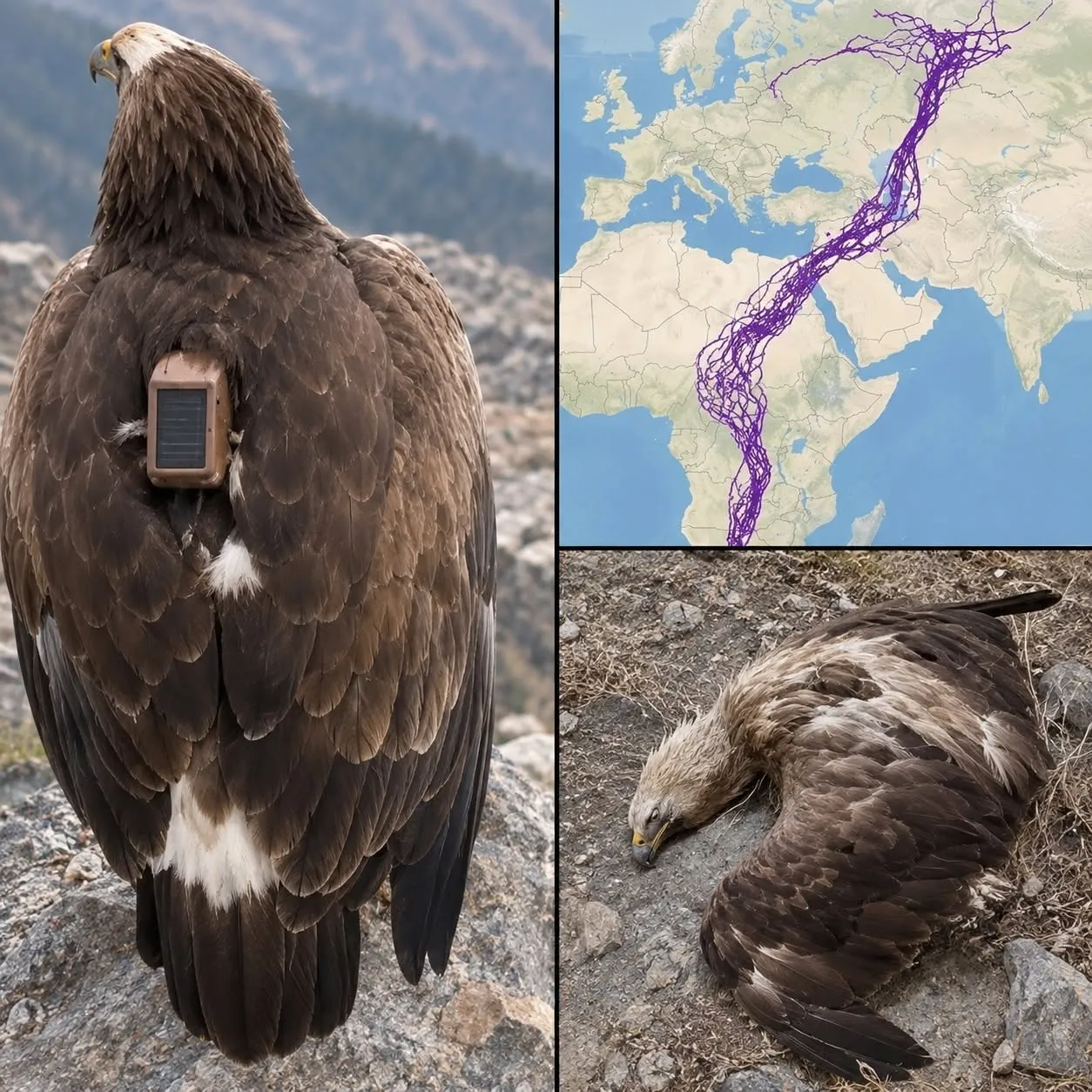
This Bird Broke Every Migration Rule Researchers Thought They KnewScientists Tracked an Eagle for 20 Years—What They Learned Changed How We See NatureA single eagle fitted with a tracking device spent two decades flying across continents in ways that baffled researchers. What seemed like random wandering eventually revealed a fascinating lesson about survival, adaptation, and the hidden patterns of the natural world.For years, scientists monitored the movements of an eagle equipped with a GPS tracker. The project was expected to provide valuable information about migration habits and seasonal travel routes. Instead, it raised more questions than answers.Rather than following predictable paths between breeding and feeding grounds, the bird repeatedly traveled across deserts, mountains, forests, and coastlines in unusual directions. Sometimes it doubled back hundreds of miles. Other times it paused in locations that seemed to have no obvious ecological importance.At first, researchers suspected errors in the tracking equipment. Yet year after year, the data remained consistent. The eagle’s movements appeared deliberate, but the reasons behind them were difficult to understand.A Journey That Defied ExpectationsTraditional migration studies often reveal patterns that are remarkably consistent. Birds usually follow routes shaped by weather conditions, food availability, breeding cycles, and geographical landmarks.This eagle seemed different.Maps generated from twenty years of tracking data showed intricate lines crossing multiple regions and ecosystems. The routes appeared chaotic when viewed from a distance, leading some researchers to wonder whether the bird was simply behaving unpredictably.However, deeper analysis told a different story.Scientists began comparing the eagle’s travel patterns with environmental records, including wind currents, seasonal climate shifts, prey populations, and landscape changes. Gradually, meaningful connections emerged.Image: Mapping a Lifetime of FlightThe bird was not wandering aimlessly. Instead, it appeared to be responding to subtle environmental cues that changed over time.Strong seasonal winds helped explain certain detours. Variations in food sources accounted for unexpected stops. Even shifts in habitat conditions appeared to influence parts of the route.What once looked random began to reveal a complex strategy for survival.Nature’s Hidden IntelligenceResearchers discovered that the eagle’s behavior reflected an extraordinary ability to adapt.Rather than relying on a fixed migration corridor, the bird adjusted its movements according to changing conditions. This flexibility may have allowed it to conserve energy, locate food more efficiently, and avoid environmental challenges.The findings suggest that some wildlife species may possess a far greater capacity for dynamic decision-making than previously understood.Instead of following a rigid blueprint, the eagle seemed to continuously interpret information from its surroundings and alter its course accordingly.Why the Discovery MattersThe study offers important insights into conservation efforts.As climate change, habitat loss, and environmental disruptions continue to reshape ecosystems, animals that can adapt their behavior may have a better chance of survival.Understanding how wildlife responds to changing conditions helps scientists develop more effective conservation strategies and protect critical migration corridors.Lessons From a Master NavigatorThe eagle’s remarkable journey serves as a reminder that nature often contains patterns that are not immediately visible. What appears chaotic at first glance may actually reflect a sophisticated response to a constantly changing world.The Bigger PictureAfter two decades of observation, scientists came away with more than migration data. They gained a deeper appreciation for the complexity of animal behavior and the intelligence embedded within natural systems.The eagle’s story demonstrates that survival is not always about following the same path year after year. Sometimes, success comes from adapting, learning, and responding to the world as it changes.In the end, the bird’s seemingly mysterious journey revealed a powerful truth: nature is often far more interconnected and adaptive than humans first assume.

Oct 05, 2026
Why My Grandmother Chose Economy Over First Class: A Heartfelt Reunion New

Why My Grandmother Chose Economy Over First Class: A Heartfelt Reunion

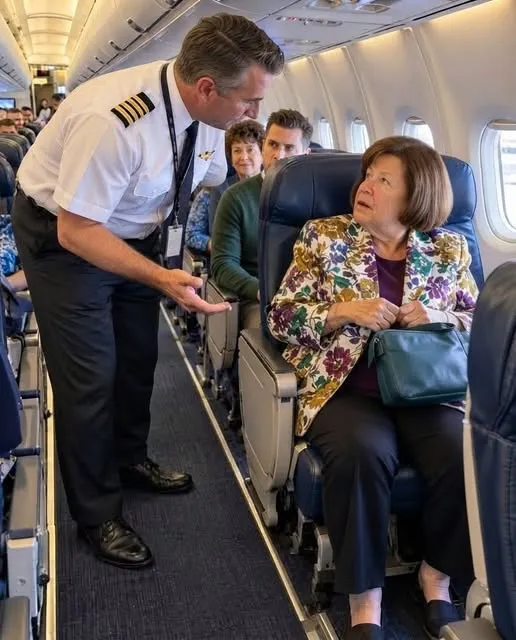
My grandmother said it so softly that I almost thought I had misunderstood her.We were standing at the gate counter at Boston Logan. She held her boarding pass in one hand and pressed her worn brown leather purse against her chest with the other. I stood behind her with both carry-on bags and a cup of coffee that had already gone cold.The gate agent checked the ticket. Then she looked at Grandma. Then at me.“Ma’am, you’re currently in first class. Seat 3A.”“I know,” Grandma replied. “But I’d like 34A instead, if it’s available.”The agent stared at her for a second before typing. “It is available. But if you voluntarily move to economy, we can’t refund the fare difference.”“That’s perfectly fine.”I stepped forward. “Grandma, what are you doing?”She didn’t answer me. A printer whirred behind the counter. The agent handed her a new boarding pass. Grandma studied it for several seconds before carefully slipping it into the side pocket of her purse. Beside something old and yellowed that I only caught a glimpse of.“Thank you,” she told the agent. Then she turned toward me.“Grandma, that ticket cost me more than I want to think about.”“I know, sweetheart.”“Then why would you give it up?”She reached for my hand. Her fingers felt cold. “I’d rather sit in the back.”And that was all she would tell me.I should explain why the ticket mattered so much.My grandmother, Ruth Walsh, had just turned eighty. She still lived alone in the small gray house in Dorchester where she had spent more than five decades. She planted flowers every spring. Did crossword puzzles in ink. And every Sunday at exactly six in the evening, she called me to ask whether I was eating properly.My name is Sam. I was twenty-seven and working as a nurse at Mass General. I worked three twelve-hour shifts most weeks and picked up extras whenever I could. Between rent and student loans, there wasn’t much left over. But I had spent almost a year saving for this trip.A year earlier, on Grandma’s seventy-ninth birthday, I had asked what she wanted for her eightieth. I expected something simple. Dinner. A sweater. Maybe something for her garden. Instead, she put down her fork and said, “I want to go to San Francisco.”I stared at her. “San Francisco?”“To visit your mother.”My mother had lived in California since before I was born. I grew up in Oakland and only returned to Boston for nursing school. I stayed because Grandma was alone.“You haven’t flown in decades,” I reminded her.“Twenty-seven years.”“Mom always comes here.”“I know.”“You told everyone you were never getting on another airplane.”Grandma calmly resumed eating. “I changed my mind.” Then she added, “I want to leave March fourteenth. Flight 212. The morning flight.”That stopped me. “That’s extremely specific.”“Yes,” she said.It was. That evening, I searched for the flight. Flight 212 still existed. Boston to San Francisco. Morning departure. Different aircraft, but the same number and the same route. I didn’t question her. I simply started saving.And when the time finally came, I booked her first class. Seat 3A. I wanted her to have everything. Space. Comfort. A real meal. A seat that reclined almost flat. She was turning eighty and facing something she had avoided for twenty-seven years. I wanted the experience to feel special. Then I booked myself into 3B beside her. The total made my stomach hurt. I put it on my credit card anyway.And now, at the gate, she had traded that expensive seat for 34A without hesitation.“You’re upset,” Grandma said while we waited to board.“I’m not upset.”“You’re a little upset.”“I’m confused.”She held my arm while we moved with the boarding line. She carried a wooden cane now, one with an old brass handle that had belonged to her mother.“That seat was comfortable,” I said. “You’d have room. You could rest. Now you’re going to spend six hours squeezed into economy.”“I’ll survive.”“The seats barely recline.”“I don’t need them to.”“Grandma.”She patted my wrist. “Sam, what you did for me was incredibly generous. I know how hard you worked for those tickets. I know every extra shift represented another piece of this trip.” Her clear blue eyes met mine. “I’m grateful.”“Then why move?”She hesitated. “Because sometimes comfort isn’t the most important thing.”First class began boarding. I looked at my ticket for 3B. “Then I’ll move too.”“No.” She said it with surprising firmness. “I want you to keep your seat.”“I’m not letting you sit alone.”“Yes, you are.” She squeezed my arm. “Please, Sam.”My grandmother almost never asked me for anything. She would rather clear snow from her sidewalk at seventy-eight than call for help. If she was asking for this, there had to be a reason.“Okay,” I said.She smiled. “Thank you.”First class was every bit as luxurious as advertised. Wide gray seats. Actual glassware. Thick pillows. A flight attendant offered me orange juice before departure. I felt miserable. Seat 3A stayed empty until almost the last passenger boarded. Then a businessman in a gray suit dropped into it while talking on his phone. He never looked out the window.I kept twisting around, trying to see into economy. A curtain blocked everything. As we climbed above Boston, I imagined Grandma all the way back in row 34. I began wondering about something I should probably have asked years earlier. Why had she stopped flying?I knew only pieces of the story about my grandfather. His name was Frank Walsh. He had worked as an aircraft mechanic at Logan for thirty-four years. According to Mom, he could listen to an engine and know something was wrong before anyone else found the problem. He died the week I was born. I arrived on March thirteenth, 1999. He died March fourteenth. Everyone told me it was a heart attack. That was basically all I knew. Whenever I asked questions as a child, Grandma became quiet. Mom usually changed the subject.There was only one photograph of him in Grandma’s house. He was young in it, wearing a sailor’s uniform and laughing at something outside the frame. And then there were the silver wings. A small tarnished aviation pin had always been attached to Grandma’s purse. When I was little, I used to run my thumb over it while sitting beside her in church. One day I asked where it came from.“Your grandfather gave it to me.”“Why?”She thought for a moment. “Because I was frightened, and he wanted me to remember that I could be brave.”I was six. I accepted that answer and forgot about it. Until Flight 212.About two hours after takeoff, I finally got out of my seat. I walked through business class and into economy. It felt like entering a different airplane. The seats were tighter. The aisle narrower. People were sleeping awkwardly, reading, watching movies, or balancing drinks on tiny tray tables.I went all the way to row 34. Grandma was by the window. She stared at the endless blue sky. Her purse was held tightly against her chest. Beside her sat a red-haired boy around eight or nine. He wore an airline badge around his neck. Unaccompanied minor. His name was Oliver. He held a coloring book, although he wasn’t coloring. His knee bounced nervously. The aisle seat was empty.I crouched beside them. “You okay, Grandma?”She turned toward me. For one strange second, she looked lost. Then she smiled. “I’m fine.”She wasn’t. Her hands were trembling. Her eyes looked damp. I’m a nurse. I know what “fine” looks like. This wasn’t it.“Are you feeling sick?”“No.”“You’re shaking.”“It’s just nerves.”The boy beside her looked up. “I’m nervous too.”Grandma turned toward him. Her expression softened immediately. “Are you flying alone?”He nodded. “My mom put me on the plane in Boston. My dad’s meeting me in San Francisco.” Then he admitted quietly, “I don’t like when the airplane shakes.”“Neither do I,” Grandma said.Oliver looked surprised. “You don’t?”“No. But my husband used to repair airplanes. He taught me that turbulence is like driving over bumps in a road. The airplane is built to handle them.”“Did he fix this airplane?”Grandma looked out the window. “Maybe.” Then she smiled. “Maybe he did.”I watched the two of them for another minute. “I’m okay now,” Grandma told me. “Go enjoy your seat.” She nodded toward Oliver. “I have company.”So I returned to first class.Twenty minutes later, the cockpit door opened. A younger pilot stepped into the galley. He spoke quietly to one of the flight attendants. She looked surprised. Then she pointed toward the rear cabin. The pilot started walking backward through the plane. Slowly. He wasn’t simply checking the cabin. He was searching.I don’t know what made me follow him. I just did. He passed row twenty. Then twenty-five. Thirty. At row 34, he stopped.Grandma was still by the window. Oliver had finally begun coloring a purple dinosaur. The pilot stared at my grandmother. Then at her purse. Then at the small silver wings attached near the zipper. His entire expression changed. He crouched beside her.“Where did you get those?” His voice sounded unsteady.Grandma looked carefully at him. The pilot swallowed. “Mrs. Walsh,” he said, “why did you choose seat 34A?”I froze several rows away. He knew her name. Grandma’s chin began trembling. “Because that’s where he told me to sit.”There was only one person she could have meant. My grandfather. A man who had been gone for twenty-seven years.The pilot stood abruptly. “Who told you?”Grandma opened her purse. Her hands shook as she reached into the side pocket. She pulled out the yellowed paper I had noticed at the gate. An old boarding pass. The thick cardstock kind airlines used years ago. The edges were worn soft. She handed it to him. He unfolded it. I could read the faded printing from where I stood.Flight 212. Boston — San Francisco. March 14, 1999. Seat 34A. Passenger: Frank Walsh.The pilot stared at it. Then he turned it over. There was faded handwriting in pencil on the back. He read it. His face changed. He turned toward the front of the plane. “Carol,” he called. “Please get the captain.”The gray-haired flight attendant hurried down the aisle. “Danny? What happened?”The pilot held up the old boarding pass. Her hand flew to her mouth. “It’s her,” he said. “She’s in 34A.”Carol stared at Grandma. Then hurried toward the cockpit.Danny crouched beside Grandma again. “I have to go back up front so the captain can come down,” he said. “But before I do, I need to tell you something.”Grandma studied his face. “You were the little boy.”Danny froze. “The boy who sat beside him.”His eyes filled. He nodded. Then he reached into his shirt pocket. He opened his palm. There was another tiny pair of silver wings. Exactly like Grandma’s.“He gave these to me,” Danny whispered. “I’ve carried them on every flight since.”Grandma touched the pin gently. “He had two,” she said.Danny nodded. “He told me.”She stared at the wings. “When they returned his belongings, that one was missing. I wondered for years where it had gone.”“I tried to find you,” Danny said. “But I didn’t know enough. Your husband only called you Ruthie.”Grandma began crying quietly. Danny explained that one of the flight attendants had noticed the matching pin on her purse. That was why he had come looking.Then I asked the question neither of them had answered. “Why are you on this flight?”Danny looked at me. “Every March fourteenth, the captain and I request Flight 212.”“Why?”His eyes moved toward Grandma. “Because your grandfather died on this flight.” He pointed toward the window. “In that seat.”I sat down in the aisle seat beside Oliver. My hands were shaking. “You told me Grandpa died from a heart attack,” I said.“He did,” Grandma answered.“Here?”She nodded.“Why was he flying to California?”She looked directly at me. “To meet you.”I couldn’t speak. Grandma explained. I had been born early in the morning on March thirteenth. When Mom called Boston, Grandpa immediately said he was getting on the next available flight. Grandma was supposed to travel with him. They had booked 34A and 34B. But the night before, she became ill. Frank wanted to stay home. She insisted he go. At the gate, her unused seat was reassigned to an eight-year-old boy traveling alone. Danny.Frank called her before boarding. “He told me the boy looked terrified,” Grandma said. “I told him to look after him.”Then she unfolded the old boarding pass. There was a message written on the back. She handed it to me. The pencil had nearly faded away.Ruthie — We’re above the Rockies. Snow everywhere. Sun across the peaks. You should see this. Best view I’ve ever seen. I’m keeping the seat warm for you. Next time we sit here together. 34A. Promise me. — F.I read it twice. Then again. “You carried this all these years?”“Every day.”“And you never flew again.”She shook her head. “I couldn’t.”For twenty-seven years, Grandma had imagined Grandpa spending his final moments alone. She had blamed herself for being sick. She wondered whether she might have noticed something earlier if she had been there. Mom had hidden most of the story from me because Grandpa had been flying to California to meet me. She never wanted me to grow up thinking his death was somehow connected to my birth.“It wasn’t your fault,” Grandma said. “It wasn’t mine either.” She looked at the note. “It was his heart.”Then I finally understood why she had chosen this flight. This date. This seat.“I’m eighty now,” she said. “I’m tired of being afraid.” Her fingertips traced Grandpa’s handwriting. “He asked me to sit here someday.” She looked through the window. “I wanted to see what he saw.”The cockpit door opened again. This time the captain came down. He was an older man with gray hair and four gold stripes on his shoulders. He stopped beside row 34 and removed his hat.“Mrs. Walsh, my name is Gene Holt.”Grandma looked up. “I’ve wanted to meet you for twenty-seven years.”He explained that in 1999 he had been the first officer aboard Flight 212. He had been the person sent from the cockpit when the crew reported that a passenger in 34A was feeling unwell. Grandma tightened her grip on my hand.“Please tell me what happened.”Gene sat down. For twenty-seven years, Grandma had received nothing more than an official letter. No one had ever told her the whole story. Gene took a breath. “We were crossing Colorado.”The morning had been clear. The Rockies were visible below. A flight attendant called the cockpit and reported that the man in 34A was having chest discomfort. Gene went back. Frank was pale and sweating. Beside him sat a frightened eight-year-old boy. Danny. The crew and a medical professional on board tried to help while the pilots diverted toward Denver. But Grandpa understood what was happening.According to Gene, he kept worrying about Danny. “Make sure the boy is okay,” he kept saying. Then Frank told Gene he had spent thirty-four years fixing airplanes at Logan. He told him his wife’s name was Ruthie. And he said, “Tell her I’m sorry.” Then, “Tell her I saved her the window.”Grandma covered her mouth. Gene continued. Frank reached toward his work jacket. He removed the silver wings he had worn for decades. Then he handed them to Danny.“You’re going to be a pilot someday,” Frank told him. “Keep these. Be brave.”Danny took the pin. Frank closed the boy’s hand around it. That was one of the final things he did.Nobody around us spoke. Even strangers nearby had stopped pretending not to listen. Gene told us they had landed in Denver. Afterward, he stayed with Danny for hours until arrangements could be made to send him on to San Francisco. The little boy refused to release those silver wings. Years later, Gene stayed in contact with him. Danny eventually decided he wanted to fly. Gene helped him. Recommended him. Mentored him. And when Danny eventually joined the airline, Gene requested him as his first officer. Every March fourteenth, they flew Flight 212 together. For Frank.“I’m retiring soon,” Gene told Grandma. “This was going to be one of our last March fourteenth flights together.” He placed his hand over hers. “I always hoped we would find you before then.”Grandma’s eyes filled again. “He wasn’t alone?” she whispered.Gene shook his head. “No, ma’am.”“He had people with him.”Then he smiled gently. “And he had a frightened little boy holding his hand.”For twenty-seven years, Grandma had carried the image of Frank alone in seat 34A. Now, for the first time, that image changed.Gene looked at her. “If you had been beside him that day, Danny would probably have been sitting somewhere else.” Grandma stared at him. “Your husband gave that boy courage when he needed it most.” Gene gestured toward the cockpit. “And that boy is now flying the airplane carrying you.”Before returning to the cockpit, Gene looked at Oliver. “You traveling alone?”Oliver nodded.“First time?”Another nod. Gene pulled a modern plastic junior-pilot pin from his pocket. “These aren’t quite as impressive as the old silver ones.” He attached it to Oliver’s shirt. “But they still work.”Oliver smiled nervously.“Be brave,” Gene said. Then he returned to the cockpit.I didn’t go back to first class. I stayed in row 34. Oliver in the middle. Grandma by the window.Soon, the captain’s voice came over the speaker. He told everyone we were approaching the Rocky Mountains. Then he told them briefly about Frank Walsh. An aircraft mechanic who had spent thirty-four years helping keep planes in the air. A man who had been traveling to meet his newborn granddaughter. A man who had shown kindness to a frightened child sitting beside him.Then Gene said, “That frightened child is my first officer today.”The cabin became completely silent.“And Mrs. Ruth Walsh is sitting in 34A today for the first time.”Grandma pressed her hand against the window. Outside, the Rocky Mountains stretched across the horizon. Snow caught the sunlight. The peaks seemed endless.“This is the view he wanted you to see,” Gene said over the speaker.Grandma looked out for a long time. Oliver leaned toward the glass beside her. Instead of guarding the window she had waited twenty-seven years to see, Grandma shifted closer to the aisle.“Come here,” she told him. “We can share.”So they did. An eighty-year-old woman and a nervous red-haired boy squeezed together beside the window of 34A. Just as Frank had once sat beside another frightened child.After we landed, the crew asked us to remain on board for a few minutes. Danny and Gene came out of the cockpit. Danny walked back to row 34. He knelt beside Grandma and opened his hand. The old silver wings rested in his palm.“These belong to you.”Grandma stared at them. Then she gently closed his fingers around the pin. “No.”Danny looked confused.“Frank gave them to you.” She smiled through tears. “He told you to be brave.” Her eyes moved toward his pilot’s uniform. “And you were.”Danny looked down.“He would have been proud of you,” she said. Then she touched the matching wings on her purse. “We’ll each keep one.”“You keep his.”“I’ll keep mine.”Gene stood behind him. “Would you like to see the cockpit before you leave?”Grandma laughed. “I’m eighty years old.”“That sounds like a yes.”She smiled. “It is.”Mom was waiting at baggage claim in San Francisco. When she saw Grandma’s swollen eyes, she rushed toward us. “Mom? What happened?”Grandma put down her cane. She placed both hands on her daughter’s face. “I sat in his seat.”Mom froze.“34A,” Grandma said. “I saw the mountains.”Mom’s eyes filled immediately.“And the pilots were there,” Grandma continued. “The people who were with him.” Then she smiled through her tears. “The little boy has grown up. He’s a pilot now. He flew me here.”Mom stared at her. Grandma whispered, “He wasn’t alone.”That sentence seemed to release something both women had carried for nearly three decades. They hugged in the middle of the airport. I joined them. Mom apologized for never telling me why Grandpa had been on that flight. She had been afraid I would blame myself. But now the truth felt strangely simple. Nobody had caused it. Nobody needed to carry it. As Grandma had said, “It was just his heart.”We spent a week in California. On our final evening, we sat outside Mom’s house in Oakland. Grandma kept unfolding the old boarding pass. Reading the faded pencil message. Folding it again. Mom eventually asked, “Why did you finally decide to go back?”Grandma touched the little silver wings on her purse. Then she told us a story I had never heard. In 1966, when she was twenty, she had taken her first airplane flight. She was terrified. A young sailor sat beside her. His name was Frank Walsh. He noticed her shaking and pulled two small silver wing pins from his pocket. His father had given them to him when he was young. Frank handed one to Grandma.“I’ll wear one,” he told her. “You wear the other. That way, if you get scared, you’ll remember somebody else has the matching wings. You won’t be alone.”Grandma carried those wings for sixty years. Frank carried the matching pair for decades. And when his own life reached its final moments, he gave his pair to a frightened child traveling alone. That child carried them for twenty-seven years. Every flight. Until the day Grandma finally returned to 34A.“I think I was waiting for someone to tell me he wasn’t alone,” Grandma said. “I just didn’t know that was what I needed.” She looked toward the lights across the Bay. “And now I know. He wasn’t.”We flew back to Boston one week later. This time, I booked economy. Row 34. Seats A and B. I never even checked the price of first class. At the gate, an employee recognized Grandma’s name. Captain Holt had left something for her. An envelope. Inside was a photograph. Gene and Danny stood beside an airplane. Danny held his hand toward the camera. The silver wings rested in his palm. On the back, someone had written: Ruth — Still keeping the seat warm. Always. — Gene & Danny.Grandma kept that picture on her lap for the entire flight.A year has passed. Gene has retired. His final flight was Flight 212 from Boston to San Francisco. Grandma and I were aboard. Row 34. Danny flew beside him. When the aircraft landed, the airport welcomed Gene’s final flight with the traditional water salute. The passengers applauded. Grandma cried. I cried. Gene tried to thank everyone over the intercom and had to stop halfway through.Danny later became a captain. When he received his fourth stripe, he mailed Grandma a photograph. The old silver wings were tucked inside his captain’s hat.Grandma turned eighty-one recently. She told me what she wanted for her birthday. San Francisco. March fourteenth. Flight 212. I booked the tickets immediately. Economy. Row 34. I didn’t bother looking at first class.Because I finally understood. I hadn’t wasted money buying Grandma that original first-class ticket. The expensive seat simply wasn’t the one she needed. For twenty-seven years, she had been afraid to fly. Afraid to return to the sky. Afraid to see the mountains her husband had described. Afraid of whatever truth waited in 34A.What she needed wasn’t luxury. She needed someone to help her board the airplane. She needed to fulfill a promise written in fading pencil. And she needed to learn that the man she loved had not spent his final moments alone.I never met my grandfather. But I think about him often now. I think about an aircraft mechanic traveling across the country to meet his newborn granddaughter. I think about him reaching into his jacket when he knew something was wrong. Not to take something for himself. But to give courage to a frightened child beside him. I think about that boy carrying the silver wings into adulthood and becoming a pilot. And I think about Grandma returning to the same window twenty-seven years later. Then moving aside so another nervous child could share it with her.Airlines divide cabins into classes. First. Business. Economy. Some seats are wider. Some recline farther. Some come with better food and nicer glasses. But I learned something on Flight 212. The best seat on an airplane isn’t always the one that costs the most. Sometimes it’s simply the place where someone makes sure you don’t have to be afraid alone.My grandfather understood that. Eventually, Grandma did too. It just took me thirty-four rows to understand it.

Oct 05, 2026
The Shocking Twist in My Marriage to a 72-Year-Old Boss New

The Shocking Twist in My Marriage to a 72-Year-Old Boss

I was 35 years old when I married a 72-year-old man.At first, I did not marry him because I was in love.I married him because I was terrified.My daughter and I were close to losing our home. I had almost no money, nowhere to go, and no family waiting to help us.Then my wealthy boss, William, made me an offer that changed everything.Five years later, he died.The day after his funeral, his lawyer sat across from me and said something I would never forget.“William prepared this trap specifically for you,” he said. “And he knew you would fall into it.”Then he told me I had inherited nothing.Not the house.Not the money.Not a single cent.But that was only the beginning.I Learned Early That Homes Could DisappearI grew up moving from one foster family to another.As a child, I became used to packing my belongings into a small suitcase. Every new house came with the same hope.Maybe this family would keep me.Usually, they did not.Because of that, I learned very early that a home was never guaranteed.Years later, I met Ben.He had grown up in the foster system too. Perhaps that was why we understood each other so quickly.Neither of us had much.I worked in a small store, while Ben worked as a mechanic. We lived in a modest apartment and drove an old car.Still, we were happy.Then our daughter, Sophie, was born.For the first time in my life, I felt as though I had created the family I had always wanted.However, that happiness did not last.Then I Lost My HusbandBen became seriously ill.For nearly a year, we fought beside him.There were hospital visits, medications, bills, and endless nights without sleep.Eventually, we lost the fight.Ben died.Suddenly, I was alone with a one-year-old daughter and a mountain of medical debt.I barely had time to grieve.Sophie still needed food.She needed clothes.She needed a home.Most of all, she needed me to keep going.So I found another job.That was how I met William.My 72-Year-Old Boss Lived AloneWilliam was 72 years old, wealthy, widowed, and completely alone.He lived in a large mansion that felt almost too quiet for one person.I worked there as a housekeeper.Every morning, I cleaned his home and prepared his breakfast. I also bought groceries and helped with small errands.William was always polite.He never treated me as though I was beneath him.Still, we were employer and employee.Nothing more.At least, that was what I believed.Unfortunately, my salary was not enough to solve my problems.Then Sophie became sick.Her medication cost more than I expected, and I was already behind on rent.A few weeks later, my landlord gave me an ultimatum.I had one month to pay what I owed or leave the apartment.I had nowhere else to go.William Found Me Crying in His KitchenOne evening, I was standing alone in William’s kitchen.I thought he had already gone upstairs.I was wrong.As I wiped down the counter, I finally broke.I began crying quietly.Then I heard his voice behind me.“Laura, what happened?”I quickly wiped my face.“It’s nothing.”William did not believe me.Eventually, I told him everything.I told him about Sophie’s illness.I told him about the rent.Finally, I admitted that my daughter and I might soon have nowhere to live.William remained silent for a long time.Then he walked away.For several days, he did not mention the conversation again.I assumed he had decided it was none of his business.Then he called me into his study.His Proposal Left Me SpeechlessWilliam was sitting behind his desk when I entered.He looked more nervous than I had ever seen him.“Laura,” he said, “I know this is going to sound crazy.”I waited.Then he looked directly at me.“I’ve fallen in love with you.”I could not speak.Before I could respond, he continued.“Marry me.”I stared at him.William was old enough to be my father.He was wealthy.I was his housekeeper.The entire idea sounded impossible.Then he said the words that changed my decision.“You and Sophie will have a home here. No one will ever be able to throw you out again.”I immediately thought about my daughter.I thought about foster homes.I thought about packing suitcases.Most of all, I thought about Sophie going through the same fear I had experienced as a child.So I said yes.Our Marriage Was Not What People ExpectedI knew what people probably thought.A 35-year-old woman had married a wealthy 72-year-old man.The assumptions were obvious.However, our life together was surprisingly simple.I never asked William for expensive jewelry.I never wanted designer clothes.When he offered to buy me a new car, I chose a reliable used one instead.Whenever he wanted to spend money on me, I usually found something Sophie needed more.Over time, William became part of our family.He taught Sophie how to play chess.He attended her school events.He helped her with homework.Eventually, she started calling him Grandpa.At first, I had married William because I was afraid of becoming homeless.But somewhere along the way, something changed.I fell in love with him.Then William’s Health Began to FailA few years into our marriage, William fell on the stairs.After that, walking became difficult.Doctors suggested hiring a full-time caregiver.We could easily afford one.But I wanted to care for him myself.Every morning, I helped him get dressed.During the afternoon, I pushed his wheelchair through the garden.Some nights, he could not sleep.On those nights, we sat together in the kitchen and drank tea until sunrise.By then, the mansion no longer mattered to me.Neither did his money.I stayed because he was my husband.I stayed because I loved him.Five years after our wedding, William died.I was devastated.Still, I believed Sophie and I would at least remain in the home we had shared with him.Then his lawyer arrived.“You Will Receive Nothing”The day after William’s funeral, his lawyer, Mr. Harris, came to the house.He sat across from me with a thick folder in his hands.His expression made me nervous.Then he spoke.“William knew you would fall into this entire trap.”I froze.“What trap?”Harris opened the folder.He studied the documents for several seconds before looking back at me.“There is something you need to hear first.”My stomach tightened.“According to William’s official will, you will receive nothing from his estate.”I stared at him.He continued.“Not the house. Not the money. Not a single cent.”For a moment, I could not breathe.“That’s impossible,” I whispered. “I was his wife.”Harris did not answer.Instead, he reached into his briefcase.Then he pulled out a thick white envelope.My name was written across the front.I recognized William’s handwriting immediately.The Envelope William Left BehindI reached for the envelope.Suddenly, Harris placed his hand over it.“Before you open this, there is something else you need to know.”I looked at him.“Months before William died, he gave me very specific instructions.”My heart started pounding.“What instructions?”Harris slowly pushed the envelope toward me.“I was supposed to tell you first that you had inherited nothing. Only after that was I allowed to give you this.”“Why?”Harris studied my face.“Because William wanted to know whether you would do exactly what he predicted.”I felt confused.“And did I?”“Yes.”I stared at him.“What did I do?”He pointed toward the envelope.“Open it.”Then he added one final warning.“After you do, everything you thought you knew about William may change.”My hands began to shake.I opened the envelope.The Photograph Inside Made My Blood Run ColdThe first thing I found was a letter.It was written in William’s handwriting.Dear Laura, If you are reading this, then I am no longer beside you. If Harris followed my instructions, you have just been told that you will receive nothing from my will. You probably believe I deceived you. But keep reading.Beneath the letter was an old photograph.I pulled it out.The picture showed a much younger William, probably around 40 years old.Several children stood around him.I turned the photograph over.There was an address written on the back.The moment I read it, my body went cold.I knew that address.It belonged to the group home where I had spent part of my childhood.“What is this?” I whispered.Harris remained silent.So I continued reading.William Had Known About Me Long Before Our MarriageWilliam explained everything in his letter.Years earlier, he and his first wife had tried to have children.They could not.Eventually, they decided to use part of their wealth to help children in foster care.They paid for school programs, clothing, medical treatment, and other expenses.Usually, they did it anonymously.Hundreds of children received help.I had been one of them.I stopped reading.“What?”Harris nodded.“Some of your medical expenses and educational programs were paid for through William’s foundation.”I could barely understand what I was hearing.William had helped me when I was a child.Decades before I became his housekeeper.But there was more.He Did Not Recognize Me at FirstAccording to William’s letter, he had no idea who I was when he first hired me.Then, a few weeks later, he noticed information connected to my old group home.That was when he realized I had been one of the children his foundation had once helped.Still, he never told me.William wrote:I could have simply given you money. But you never would have accepted it.He reminded me of the day Sophie needed medication.William had offered to give me money.I refused unless he allowed me to repay every cent.After we married, he noticed the same pattern.I never asked for jewelry.I never demanded expensive vacations.I never treated his money as my own personal fortune.According to his letter, that was when he understood something important.I had married him because I was afraid.Not because I wanted to become rich.“You Chose a Roof Over Your Daughter’s Head”My eyes filled with tears as I continued.William had written:I was never angry that you initially married me because you needed security. You did not choose luxury. You chose a roof over your daughter’s head.I covered my mouth.Then I kept reading.Perhaps selfishly, I used that opportunity to finally have a family of my own. You gave me five years that became the happiest years of my life. Sophie called me Grandpa when I had already begun to believe I would never truly be needed by anyone again.By then, tears were falling onto the pages.Then I reached the sentence that confused me most.And that is why I left you nothing in my will.I lowered the letter.“I don’t understand,” I told Harris.He nodded.“I know.”Then he placed another folder on the table.William’s Real Plan Was Already CompleteHarris pushed the second folder toward me.“William could not leave those things to you in his will,” he explained.“Why?”“Because they were no longer part of his estate when he died.”I opened the folder.The first document was the deed to the house.I read the name once.Then twice.My name was on it.William had transferred the house to me before his death.I covered my mouth.Then I found another document.It showed an investment account that William had created three years earlier.The beneficiary was Sophie.There was enough money to pay for her education.But William still was not finished.The Final Document Changed My LifeAt the bottom of the folder was another set of papers.William had created a charitable foundation.Its purpose was to help struggling single mothers and children in the foster-care system.Then I saw the name of the person appointed to manage it.Laura.Me.I sat in complete silence.Finally, Harris spoke.“Now do you understand what he meant by the trap?”I looked at him.“He knew I would think he had deceived me.”Harris shook his head.“Not exactly.”He leaned forward.“William knew that after hearing you inherited nothing, your first concern would not be luxury or money.”I thought back to the moment he had told me.My first thought had been Sophie.Where would we live?What would happen to her?Harris nodded as if he could read my thoughts.“That was what William predicted.”There Was One Last GiftHarris stood up and began gathering his papers.Then he stopped near the door.“There’s one more thing.”He reached into his briefcase and handed me a small box.I opened it.Inside was a white chess queen.Immediately, I thought about William and Sophie playing chess together at the kitchen table.Beneath the piece was a small note.It contained one sentence in William’s handwriting.Give this to Sophie when she is old enough to understand that sometimes family is not the people you are born to. It is the people who choose to stay.That was when I finally broke down.For years, I believed William had saved Sophie and me.Only after his death did I understand the truth.We had saved him too.Sophie Asked About Grandpa’s ChairThat evening, Sophie returned home from school.She walked into the house and immediately looked toward the garden.“Mom?”“Yes?”“Can we leave Grandpa’s chair outside?”I looked at her.“I don’t want anyone to throw it away,” she said.I pulled her into my arms.“Of course we can.”Then I gave her the white chess queen.She held it carefully in her small hand.For several seconds, she said nothing.Finally, she smiled.“Grandpa always said the queen was the strongest piece on the board.”I smiled through my tears.“He was right.”William’s Real InheritanceA few months later, William’s foundation helped its first family.The mother was young.She had two small children and was about to lose her apartment.I sat across from her and explained that the foundation would cover six months of rent.She immediately started crying.I knew that cry.Years earlier, I had cried the same way in William’s kitchen.I had been terrified.I had believed my daughter and I were about to lose everything.Then someone gave us another chance.Now I could do the same for someone else.That was when I finally understood what William had truly left behind.It was not simply a mansion.It was not an investment account.It was not money.His real gift was the opportunity to help another person when they felt they had nowhere left to turn.I once married William because I was desperate for a home.Years later, I realized he had been searching for something too.A family.In the end, we both found what we needed.And perhaps that was William’s real inheritance.

Oct 05, 2026