Browse

Latest Headlines

Fresh headlines, crisp visuals — faster reading.

The Secret My Ex-MIL Hid That Changed Everything New

The Secret My Ex-MIL Hid That Changed Everything

I took in my ex-MIL after she broke her leg—but when she moved out, my neighbor whispered, “There’s something you need to know about her.”My ex-mother-in-law, Beverly, had always been kind to me, even after my marriage ended.Five years ago, I divorced her son, Wade, after discovering he’d been having an affair with a woman from his office.When Beverly found out, she was furious.“I’m ashamed of what my son did to you, Maren. You deserved so much better.”She still loved Wade, of course. He was her son, and I never expected her to stop loving him because of what happened between us.But she never defended his behavior, and I appreciated that.We remained on good terms, occasionally calling each other or meeting for coffee. My only condition was that we never discussed Wade, and she respected that.Then one Tuesday afternoon, Beverly called me crying.“Honey, I’m sorry to bother you, but I broke my leg last week, and I’m having a terrible time managing on my own.”“Beverly, why didn’t you tell me? Can’t one of your kids help?”“I’ve asked all three. They all have their reasons why they can’t take me in.”Wade couldn’t take time off work. His younger brother lived in a small apartment, and their sister had two young children and a house full of stairs.I knew Beverly hated asking anyone for help. She’d raised three children while working long shifts at a grocery store, and even after retiring, she insisted on doing everything herself.The thought of her struggling alone made my heart ache.“Listen, why don’t you stay with me for a while? At least until you’re back on your feet.”“Oh, sweetheart, I couldn’t possibly ask you to do that.”“You’re not asking. I’m offering.”She hesitated before accepting.Two days later, Wade dropped her off at my house.He carried her suitcase into the hallway, glanced around, and gave me an uncomfortable smile.“Nice to see you, Maren.”I hadn’t seen him in nearly a year.“You too. I’ve got everything ready for your mother.”He nodded, kissed Beverly on the cheek, and left without offering to help with anything else.I watched his car disappear down the driveway.Beverly sighed.“I’m sorry about all this, honey.”“Don’t be. Let’s get you settled.”I’d moved a small table beside the guest bed for her medications and cleared enough space for her walker. I even borrowed a shower chair from a coworker.For the first week, everything went smoothly.I made breakfast before work, prepared dinner when I got home, and took Beverly to her appointments whenever I could.In the evenings, we watched old movies and talked about everything from gardening to the neighbors.She was easy company.Sometimes I caught her watching me with an expression I couldn’t quite understand.One evening, while I was washing dishes, she said, “You’ve been very good to me, Maren.”I laughed.“You’ve thanked me about twenty times today.”“I know. I just don’t think you realize how much it means.”I dried my hands and kissed her cheek.“You’re family, Beverly. That didn’t change because Wade and I got divorced.”Her eyes filled with tears, but she quickly looked away.At the time, I thought she was overwhelmed by the kindness.I had no idea what she was hiding.During the second week, Beverly began asking strange questions about my schedule.“What time will you be home tomorrow?”“Probably around six. Why?”“Oh, nothing. I was just wondering whether I should wait for dinner.”The next day, she asked again.Then, one Thursday, a meeting at work was canceled, and I came home almost two hours early.I found Beverly sitting on the guest bed with papers spread across her lap.The moment she saw me, she quickly gathered them together.“Maren! You’re home already?”“Yeah. Everything okay?”“Of course, sweetheart.”I noticed an old shoebox beside her pillow. Its corners were worn, and a faded green ribbon was tied around the lid.“What’s that?”Beverly glanced at the box.“Oh, just some old things I’ve been sorting.”She reached for her walker.“Would you mind making me a cup of tea?”I did as she asked.But something about the way she’d covered those papers bothered me.A few days later, I saw my neighbor, Nola, leaving through the side gate with a shopping bag tucked under her arm.She stopped when she noticed me.“Everything all right?” I asked.“Yes, dear. Beverly just asked me to help her with something.”I thanked her for looking after Beverly while I was working.Nola nodded, but she seemed unusually nervous.I didn’t think much of it until another evening when I came home early and found Beverly whispering into her phone.She immediately ended the call.“Who was that?”“Just Nola, sweetheart.”I frowned.“Is something wrong?”“No, no. Everything’s fine.”I wanted to believe her.After everything I’d been through with Wade, I hated the feeling that someone was keeping secrets from me.But Beverly had never given me a reason to distrust her.So I let it go.Four weeks after she moved in, her doctor finally said she could return home with some part-time assistance.I packed her suitcase and helped her into Wade’s car.Before leaving, Beverly wrapped her arms around me.“You have no idea what this means to me.”I hugged her back.“Call me if you need anything, okay?”She nodded, holding on a little longer than usual.For a moment, I thought she wanted to say something else.Instead, she kissed my cheek and got into the car.That afternoon, I was changing the sheets in the guest room when someone knocked on my front door.It was Nola.And she was holding the same old shoebox I’d seen beside Beverly’s bed.“I’m sorry, Maren,” she said quietly. “But there’s something you need to know about Beverly.”My stomach tightened.“What happened?”Nola stepped inside and lowered her voice.“She never wanted you to know the real reason she came to stay with you. She’d planned it all along.”I stared at her.“Planned what?”Nola looked down at the box.“Her broken leg was real, honey. And she really did need help. But before she ever called you, she came to me with this.”She placed the shoebox on my kitchen table.“She wanted to give something back to you. She just couldn’t bring herself to tell you where she’d found it.”I slowly untied the ribbon.Inside was a stack of yellowed recipe cards, a small photograph, and an envelope folded in half.I recognized the handwriting on the first card immediately.My grandmother’s.For several seconds, I couldn’t move.The card had a tiny brown stain near the corner and a faded note written in blue ink.Add another spoonful of sugar if Maren is helping.My eyes filled with tears.“Oh my God.”I carefully lifted the stack.There was Grandma’s peach cobbler, her Sunday biscuits, and the cinnamon rolls she’d made every Christmas morning.I’d thought those recipes were gone forever.My grandmother had raised me after my mother died, and cooking had been our favorite thing to do together.She never used expensive ingredients or complicated equipment. Most of her recipes were written on whatever paper she could find, usually with little notes squeezed into the margins.After she passed away, I kept every card in a small wooden recipe box.When Wade and I divorced, those cards were among the few possessions I desperately wanted to keep.I’d left him the furniture, the television, and almost everything we’d bought together.But I’d asked him to make sure Grandma’s recipe box was packed with my things.He promised he would.When I unpacked after moving, it was missing.Wade told me the movers must have misplaced it.I called the moving company three times. I searched every carton, went through the storage unit, and even visited the donation center where we’d sent our old furniture.Nothing.Eventually, I accepted that I’d lost the last little pieces of my grandmother’s handwriting.Now they were sitting on my kitchen table.“Nola,” I whispered, “where did Beverly get these?”She pulled out a chair.“From Wade.”I looked up.“What?”“Beverly found them in his garage a few months ago. He had a box of your old belongings hidden behind some Christmas decorations.”I stared at her.“He told me the movers lost them.”Nola nodded sadly.“Beverly confronted him. Apparently, he admitted he’d kept them after the divorce because he was angry with you.”I felt sick.For five years, I’d blamed myself for not packing those cards personally.I’d spent countless nights wondering whether I’d accidentally thrown away something Grandma had treasured.And all that time, Wade had known exactly where they were.“Why didn’t Beverly just tell me?”“She was ashamed of what her son had done. She thought if she returned the cards without explaining, you might believe they had simply turned up somewhere.”Nola gestured toward the box.“She asked me to hold it while she stayed here. Whenever you were at work, I’d bring it over so she could sort through everything and decide how to return it.”Suddenly, Beverly’s strange behavior made sense.The questions about my schedule.The nervous looks whenever I came home early.The shoebox that kept appearing and disappearing.“She wanted to leave it in your closet,” Nola continued. “She thought you might believe you’d overlooked it during the move.”“Then why didn’t she?”“Because she knew it would be another lie.”Nola wiped her eyes.“Yesterday, she told me she couldn’t do it. She wanted me to keep the box until she found the courage to tell you herself.”I looked at the envelope beneath the recipe cards.My name was written on the front.I opened it carefully.Inside was a letter I’d written to my grandmother near the end of my marriage.Grandma had already been gone for several years, but I still wrote to her sometimes when I felt lonely.The first line made my chest ache.Grandma, I don’t know why I keep apologizing to Wade when I haven’t done anything wrong.I remembered writing those words.That was before I discovered the affair, when Wade had started coming home late and acting irritated whenever I asked where he’d been.He’d accused me of being suspicious and difficult.I’d believed him.Near the bottom of the letter, I’d written:I wish you were here. Sometimes I feel like I’ve become someone you wouldn’t recognize.I pressed the paper against my chest.I couldn’t understand why Wade had kept something so private.Nola reached across the table and squeezed my hand.“I’m sorry, sweetheart.”After she left, I sat alone for a long time.Then I picked up my phone and called Beverly.She answered almost immediately.“Maren?”“Nola gave me the shoebox.”There was a long silence.Then I heard her begin to cry.“Oh, honey. I’m so sorry.”“Why didn’t you tell me?”“I wanted to. Every single day I was there, I wanted to.”I closed my eyes.“You watched me search for those recipes five years ago. You knew how much they meant to me.”“I know.”“Why would Wade do something like that?”Beverly’s voice shook.“He told me he was angry because you left him. He said he’d kept a few things that mattered to you because he wanted you to feel what it was like to lose something.”I swallowed hard.“He already made me lose enough.”“I know, sweetheart.”I could hear her crying.“When I found those cards, I was furious with him. But I was also ashamed. I’d raised him, and I couldn’t understand how he’d become someone capable of doing that to you.”“Beverly, you didn’t make him hide my things.”“No. But I hid the truth after I found them.”I looked down at the letter.“You could have brought them to me over coffee.”“I know. When I broke my leg and none of my children would help, I thought staying with you might give me the chance to return everything. I hoped you would offer, and you did.”She paused.“But then you were so kind to me. You cooked for me, drove me to appointments, and made me feel welcome. I became terrified that telling you would make you think I’d only come because of that box.”I took a slow breath.“Did you?”“No, honey. I needed your help. But I also hoped I could finally make things right.”I believed her.Still, it hurt that she’d spent four weeks watching me care for her while hiding something so important.“I need some time, Beverly.”“I understand.”After ending the call, I called Wade.He answered with his usual impatient tone.“What is it, Maren?”“Did you deliberately keep Grandma’s recipes when we divorced?”Silence.Then he sighed.“Mom had no business getting involved.”My hands began shaking.“You told me the movers lost them.”“They were just old pieces of paper.”“They belonged to my grandmother.”“I know that.”“Then why did you keep them?”He was quiet for a moment.“Because I was angry, okay? You were leaving, and I wanted to keep something you cared about. I didn’t think you’d still be upset about it five years later.”I stared at the wall.Five years ago, I would have cried and begged him to understand how much he’d hurt me.Instead, I asked one more question.“Did you read the letter?”He hesitated.“Some of it.”I felt my stomach drop.“That was private, Wade.”“We were married, Maren.”“And you still managed to make me feel completely alone.”He started to argue, but I ended the call.I had heard enough.The next morning, I drove to Beverly’s house.She opened the door with her walker and looked surprised to see me.“Maren?”“Can we talk?”She nodded and led me into the living room.We sat across from each other, with the shoebox resting on the coffee table.“I don’t blame you for what Wade did,” I told her. “But I need you to understand something.”She listened quietly.“When he betrayed me, I spent months feeling like I couldn’t trust anyone. You were one of the few people who made me feel I wasn’t imagining things.”Beverly wiped her eyes.“And then I kept another secret from you.”“Yes.”She lowered her head.“I was afraid you’d stop seeing me if you found out what my son had done.”I reached for her hand.“Beverly, I divorced Wade because of his choices. I didn’t stop caring about you because you’re his mother.”She started crying again.“But if we’re going to remain part of each other’s lives, I need you to be honest with me, even when the truth is uncomfortable.”“I promise.”I believed she meant it.I wasn’t ready to pretend the secrecy hadn’t hurt, but I didn’t want to lose her either.Before I left, Beverly asked about the recipes.“Have you tried making anything yet?”I shook my head.“Not yet. I haven’t been able to look through them without crying.”She smiled sadly.“Your grandmother must have been a wonderful woman.”“She was.”I looked down at the shoebox.“Maybe you can help me make her peach cobbler sometime.”Beverly’s face softened.“I’d love that.”Three weeks later, Beverly came over for Sunday lunch.Her leg had improved enough that she could stand at the kitchen counter for short periods, although she still used her walker when she got tired.Nola joined us.I spread Grandma’s recipe cards across the counter and found the peach cobbler recipe.The card was covered in her familiar handwriting.Beverly read the instructions aloud while Nola peeled the peaches.I measured the flour, trying to remember how Grandma used to do everything without checking the recipe twice.At one point, I added too much cinnamon.“Well, that’s going to be interesting,” Nola said.Beverly laughed.“Maybe your grandmother would approve.”“She definitely wouldn’t. She used to complain that I never measured anything properly.”We laughed together.When the cobbler came out of the oven, the edges were a little darker than Grandma’s had been.But the kitchen smelled exactly the way I remembered.I cut three generous servings and placed them on the table.Beverly took a bite.“Oh, Maren. That’s wonderful.”I smiled, although my eyes had filled with tears.For the first time in years, I felt as though a small part of Grandma had returned to my kitchen.After lunch, Beverly helped me put the recipe cards into a new wooden box I’d bought the week before.She picked up the peach cobbler card and studied it.“Your grandmother had beautiful handwriting.”“She did.”Then Beverly looked at me.“Thank you for letting me be here.”I placed my hand over hers.“I’m glad you came.”She smiled, and this time, neither of us needed to say anything else.Before she left, I slipped the cinnamon roll recipe into an envelope.“What’s this?” she asked.“A copy. You can help me make them at Christmas.”Beverly held the envelope carefully.“Are you sure?”I nodded.She hugged me, and I hugged her back.Later that evening, after everyone had gone home, I washed the dishes and returned Grandma’s recipe box to the kitchen shelf.I placed her old photograph beside it, the one Nola had found tucked beneath the cards.Grandma was standing in her kitchen, holding a pie, with flour on the front of her dress.I stood there looking at her for a while.Then I opened the recipe box and took out the card for her Christmas cinnamon rolls.I’d never made them without her before.But this year, I was going to try.

Nov 03, 2026
Two Americans Unknowingly Cause Uproar in French Church New

Two Americans Unknowingly Cause Uproar in French Church

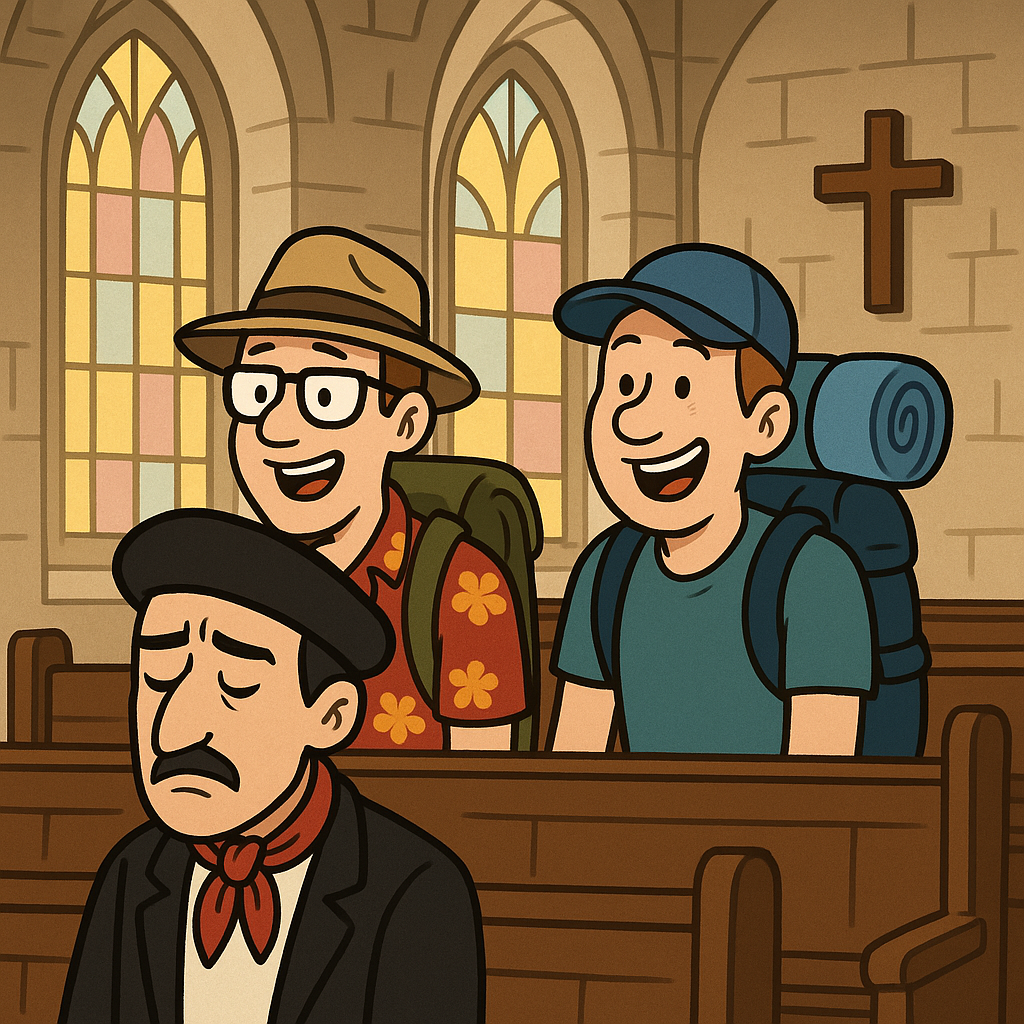
Two American men are touring Europe, and are scheduled to arrive in France Sunday afternoon.However, they arrived several hours early, and had little to do on Sunday morning while everything was closed.“Well,” one says to the other, pointing to a nearby Cathedral, “why don’t we attend Mass?”“Sure,” replies his friend. “But we don’t know how the French pray and we can’t speak French!”The first guy thinks of a solution. “We’ll pick a guy in front of us, and whatever he does, we’ll do.”His friend agrees. They enter the church, sit close to the front, and choose a guy.Fifteen minutes pass, and their plan is working well. Thirty minutes, no issues.By the time forty-five minutes pass, they’ve gotten used to the routine. Suddenly, while everyone is seated, the priest says something in French and the gentleman they chose stands up. Without thinking, the two Americans stand up as well.The church bursts into hard laughter.Realizing that no one else is standing up, the two American men leave in embarrassment. They wait for the Mass to end, and then approach the priest, who spoke English.“We’re well-meaning people- we don’t speak French and just chose some guy to imitate while praying,” one says.The priest chuckles. “Ah. You’re probably wondering why everyone laughed at you.”“Yes,” replied the other American.“Well, you see, I announced the Baptism of a child… and asked for the father of the child to stand up.”One recent Sunday, a young boy arrived to his Sunday school class late.His teacher knew that the boy was usually very prompt and asked him if anything was wrong. The boy replied no, that he was going to go fishing, but that his dad told him that he needed to go to church instead.The teacher was very impressed and asked the boy if his father had explained to him why it was more important to go to church rather than to go fishing.To which the boy replied, “Yes, ma’am, he did. My dad said that he didn’t have enough bait for both of us.”A little girl was in church with her mother when she started feeling ill.“Mommy,” she said, “can we leave now?”“No,” her mother replied.“Well, I think I have to throw up!” exclaimed the girl.“Then go out the front door and around to the back of the church and throw up behind a bush,” said her mother.After about sixty seconds, the little girl returned to her seat. “Did you throw up?” her mother asked.“Yes,” the little girl replied.“How could you have gone all the way to the back of the church and returned so quickly?” her mother asked.“I didn’t have to go out of the church, Mommy.” Smiled her little girl proudly. “They have a box next to the front door that says:‘For the Sick.’

Nov 03, 2026
Widow Finds Secret Gift from Late Husband After Heartbreaking Christmas New

Widow Finds Secret Gift from Late Husband After Heartbreaking Christmas

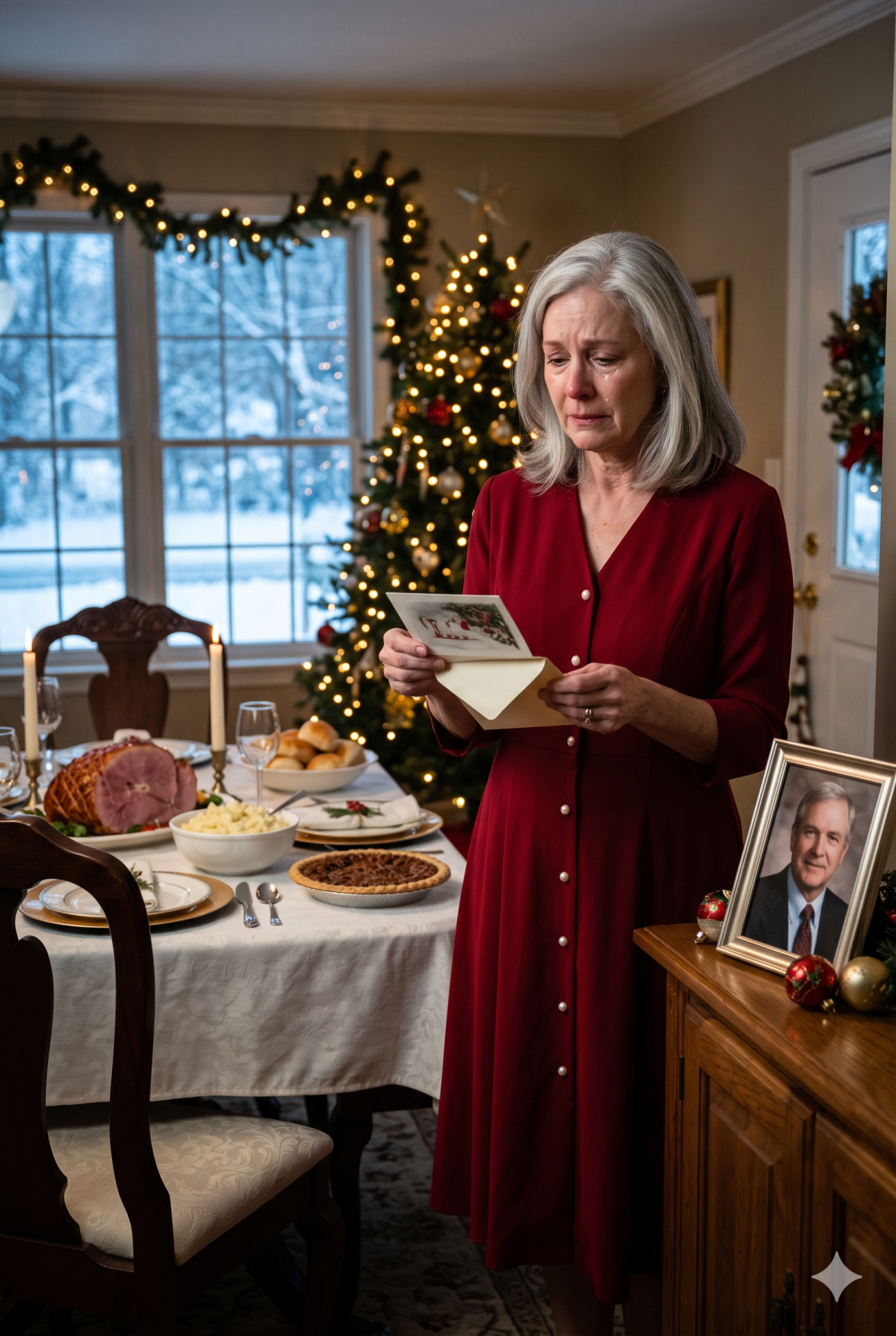
On my first Christmas after my husband di:ed, I spent 2 days cooking for my son and his wife. They never showed up. Instead, a courier delivered a card: “We’re spending Christmas somewhere else. It just worked out better for everyone.” I was 67, sitting alone beside 3 untouched plates, crying over my first Christmas without my husband. But the next morning, I found an envelope hidden beneath our old bird feeder—in my late husband’s handwriting. Inside was a mysterious instruction: “My desk. Bottom drawer. Look underneath.” When I followed it, I discovered a brass key, a document bearing my name, and a letter that made my hands tremble…At 4:10 on Christmas afternoon, a delivery driver handed me an envelope from my son while the dinner I’d spent 2 days preparing sat untouched on the table.Inside was a Christmas card.Dear Mom,Sorry for the last-minute change. We’re spending Christmas with Audrey’s family this year. It just worked out better for everyone. Hope you understand.Love, Spencer and Audrey.I read those words 3 times.Better for everyone.My husband, Walter Bellamy, had di:ed 9 months earlier. We’d been married for 46 years, and this was my first Christmas without him.Our only son, Spencer, knew how much I needed him that day.Yet he hadn’t called or even sent a text.He’d paid a stranger to deliver a card after dinner was supposed to begin.I was 67 years old, standing in the red dress Walter always loved, staring at 3 places set at the dining table.I’d made Spencer’s favorite pecan pie. The ham was glazed perfectly. The candles had burned halfway down.At 3:45, I’d still been watching the driveway, hoping to see his car.Now I knew he wasn’t coming.My phone buzzed.Audrey had posted a photograph of their Christmas celebration at her parents’ house.Spencer stood smiling beside her, surrounded by relatives.The caption read:Christmas exactly where we belong. ❤️I looked from the photograph to my empty dining room.Then I turned off my phone.Only 3 days earlier, I’d called Spencer to confirm our Christmas plans.“I found another box of your father’s financial papers,” I’d mentioned. “Maybe you could help me look through them after dinner.”He’d gone strangely quiet.“What kind of papers?”“Old bank statements, investment documents, things like that.”“Have you read them?”“Not yet, sweetheart. I thought we’d look together.”He’d quickly changed the subject.At the time, I hadn’t thought much of it.Now, remembering that conversation, I wondered why he’d sounded so nervous.Walter used to tell me I made too many excuses for people.When Spencer forgot my birthday, I said he was busy.When he borrowed $12,000 for home renovations and returned only half, I said young couples had expenses.When his visits became increasingly rare after Walter’s funeral, I told myself he was grieving.One evening, Walter had said, “Florence, you keep confusing loving someone with allowing them to hurt you.”I’d been angry with him.Mostly because he’d been right.That Christmas evening, I ate 3 bites of ham, packed away the leftovers, and blew out the candles.Before going to bed, I touched the pearl buttons on my dress.Walter had fastened those same buttons for me on our 40th anniversary.“Still the prettiest woman in any room,” he’d whispered.I cried until I fell asleep.Spencer never called.But the following morning, something happened that would change everything.I woke before 6 and carried my coffee into the backyard.A thin layer of frost covered the grass.At the edge of the garden stood an old wooden bird feeder Walter had built 20 years earlier.It leaned slightly to the left.Whenever I suggested repairing it, he’d laugh.“The birds haven’t complained.”I brushed frost from its roof.That’s when I noticed a small envelope tucked into a waterproof sleeve beneath it.My name was written across the front.Florence.I recognized the handwriting immediately.Walter.My hands trembled as I opened it.Inside was a single instruction.My desk. Bottom drawer. Look underneath.I hurried inside.Walter’s oak desk still stood in the study, exactly as he’d left it.I pulled out the bottom drawer and felt underneath.My fingers touched tape.A second envelope came loose.Attached to it was a small brass key.Inside was a note.My darling Florence,If you’re reading this, you’ve made it through your first Christmas without me.I hope you weren’t alone. But if you were, please don’t mistake someone else’s absence for proof that you aren’t loved.There’s somewhere I’ve always wanted to take you.The key opens a door to something that belongs entirely to you.Love, Walter.Beneath the note was a recorded property deed.The address was near Ligonier, Pennsylvania.I’d never heard of it.But the owner’s name was unmistakable.Florence Bellamy.My own name.The deed had been recorded 3 years earlier.“What did you do, Walter?” I whispered.By 9, I’d packed an overnight bag.The drive took me through frozen hills and narrow country roads.Eventually, I reached a gravel lane leading to a cedar cabin with green shutters and a stone fireplace.It wasn’t enormous.But it was beautiful.The brass key opened the front door.Inside, I found Walter’s old leather reading chair beside the fireplace.My mother’s handmade quilt lay across the sofa.Our first kitchen table stood beneath a window overlooking the woods.And photographs covered the mantel.Spencer as a little boy.Our family vacations.My parents’ wedding.Walter and me on our 25th anniversary.I touched his chair and burst into tears.He hadn’t simply bought a cabin.He’d created another home from the memories of our life together.On the kitchen counter sat another letter.Florence,I wanted this to be our retirement home. I imagined quiet mornings, terrible fishing trips, and you telling me where to plant the roses.I bought it using part of my inheritance and arranged for a property manager to handle the bills, taxes, insurance, and maintenance until I could surprise you.It’s already legally yours.But there’s something else you need to understand.You deserve security, even when the people you love disappoint you.Never let anyone convince you otherwise.Forever, Walter.I was still holding the letter when my phone rang.“Mrs. Bellamy?” a woman asked.“Yes?”“My name is Beatrice Quinn. I assisted your husband with his estate planning.”I recognized her name. We’d met after the funeral when she helped me organize Walter’s remaining financial matters.“Why are you calling?”“Walter arranged for your neighbor, Hazel, to place a letter beneath your bird feeder on Christmas night. He wanted you to discover the cabin after your first Christmas without him.”I closed my eyes.Hazel had invited me to spend Christmas with her family.I’d declined because I was expecting Spencer.Now I understood why she’d been so insistent that I shouldn’t be alone.“Your husband also asked me to speak with you once you’d found the key,” Beatrice continued.“About what?”“His investments. And some information involving Spencer.”My stomach tightened.“What about my son?”“There have been developments in the bank investigation we discussed after Walter’s death. I’d prefer to explain everything in person.”The following morning, I sat across from Beatrice in her Pittsburgh office.She explained that Walter had purchased the cabin using inherited money and recorded the deed in my name.A property manager had handled all its expenses, which explained why I’d never received bills or tax notices.Then she opened a thick folder.“Florence, do you remember signing documents for a retirement investment account about 6 years ago?”I nodded.Walter had explained that he wanted to invest part of his inheritance for our future. I’d signed the account-opening paperwork and authorized him to manage it.I knew the account existed, but Walter had handled the investments. I hadn’t followed its balance closely.“Shortly before he di:ed, Walter discovered a suspicious withdrawal,” Beatrice said. “He reported it to the bank as your authorized representative. The bank restricted further transactions, and you confirmed the dispute after his death.”I remembered.Beatrice had called me in April about a questionable payment.I’d confirmed that I hadn’t authorized any unusual withdrawals, but the bank hadn’t yet established who was responsible.At the time, I was overwhelmed with funeral expenses, insurance forms, and grief.Beatrice had assured me the remaining funds were protected while the investigation continued.“Just before Christmas, we finally received records from the bank and the company involved,” she continued. “They answered questions we’ve been investigating for months.”She placed a photocopy in front of me.A check for $18,500.It was payable to a consulting company called Westbridge Financial Partners.At the bottom was my signature.Except it wasn’t.I leaned closer.“That’s not my handwriting.”“You’re certain?”“Absolutely.”The capital F was too narrow, and the final stroke of Bellamy curved upward instead of downward.Someone had studied my signature.But they’d copied it incorrectly.“Who signed it?” I whispered.“We haven’t established who physically wrote your name. But the transaction was arranged through a company connected to someone you know.”I stared at her.“Who?”Beatrice took a breath.“Your son, Spencer.”The room seemed to tilt.“No.”“I understand this is difficult.”“Spencer wouldn’t steal from me.”Without arguing, Beatrice handed me Walter’s small black notebook.I recognized it immediately.He’d kept it beside his bed during chemotherapy.I opened to a page dated January 12.Spencer asked about Florence’s retirement account again.He thinks she won’t need the money.He says she doesn’t understand finances.I’ve spent 46 years with my wife. I know exactly what she understands.Another entry followed.January 19.Spencer claims Florence agreed to let him handle the account.January 26.Asked Florence. She says she signed nothing.Something is wrong.I covered my mouth.I remembered Walter asking whether I’d permitted Spencer to manage our investments.I’d told him I hadn’t.He’d simply nodded.Now I understood why.He’d suspected our son.Beatrice explained that a payment had subsequently been processed using a questionable authorization bearing my signature.Walter had challenged the transaction.The consulting company had returned $7,000, but the remaining $11,500 was still disputed.“Did Spencer know his father had discovered it?”“Yes.”“What did he say?”“That you’d approved everything verbally.”I laughed bitterly.“I’d never even heard of Westbridge Financial Partners.”Beatrice opened another folder.“There’s something else.”It contained an email Spencer had sent Walter during his final months.Dad, we need to discuss the cabin. Mom won’t want the responsibility of managing another property. I could put it under my management and rent it out.It would be better for everyone.Beneath the email, Walter had written one word.No.I stared at the page.Spencer had known about the cabin.He must have discovered it while helping his father organize paperwork during chemotherapy.And he’d already been trying to control it.“Did he try to transfer the property?” I asked.“He contacted a real estate agent about the possibility. But the deed was already recorded in your name. He had no authority to proceed.”I sat motionless.Walter had spent his final months protecting me from our own son.Then Beatrice handed me another document.It was a summary of the assets Walter had arranged for my benefit.I looked at the total.$487,600.“That can’t be right.”“It is,” Beatrice said. “It includes the cabin, valued at approximately $210,000, an investment account currently worth $180,000, and a separate retirement trust holding $97,600. The investment balance reflects the disputed withdrawal.”I stared at the page.Walter had driven an old truck for years.He’d repaired broken appliances instead of buying new ones.He’d compared grocery prices and insisted we didn’t need expensive vacations.All that time, he’d been investing carefully and saving for our retirement.For a future we’d never been able to share.Beatrice handed me one final letter.My dearest Florence,If you’ve discovered what Spencer did, I’m sorry.I wanted to tell you myself. I challenged the missing money and made sure the bank knew what had happened. But I was afraid of burdening you while you were caring for me.Perhaps I was wrong to keep my suspicions from you.I knew you loved our son enough to forgive almost anything.But love should never require you to surrender your dignity.You are not a burden. You are not helpless. And you do not have to earn your place in anyone’s life.Listen if Spencer tells the truth. Forgive him if you choose.But don’t confuse apologies with change.I have loved you since the day you spilled coffee on my shoes and blamed me for standing too close.I love you now.And I will love you through every Christmas morning I cannot share with you.Forever yours, Walter.I cried quietly.Then I folded the letter and placed it in my handbag.For the first time since Walter di:ed, I felt something besides grief.I felt the beginning of courage.When I returned home, I had 4 missed calls from Spencer.His messages were waiting.Mom, where are you?Have you looked through Dad’s financial documents?Please call me. We need to talk.Not one apology for Christmas.Not one question about how I was doing.Just paperwork.I called him.“Mom! Finally. I’ve been worried.”“Worried about what, Spencer?”He hesitated.“About you handling Dad’s finances alone.”“I’ve hired professionals.”“Mom, you don’t need strangers involved in family matters.”I looked at the for:ged check lying beside me.“Then perhaps you can explain something.”“What?”“Why does an $18,500 check have my signature when I never signed it?”Silence.Then he said, “What check?”“Westbridge Financial Partners.”His breathing changed.“Where did you hear that name?”“From your father’s attorney.”“Mom, those investments are complicated.”“Then explain them.”“Dad asked me to help him.”“Did he ask you to sign my name?”“No!”“Then who did?”Another silence.“You’re making a huge mistake,” he finally snapped.“Perhaps. But the bank is investigating.”His voice rose.“You’re going to let them investigate your own son?”“I’m going to find out what happened to my money.”“Mom, I’m your son!”“I know.”“After everything I’ve done for you?”I looked toward the dining room.The Christmas card still lay on the sideboard.“Spencer, you couldn’t even call me on Christmas.”“That has nothing to do with this.”“Doesn’t it?”He said nothing.“Why didn’t you come?”“Audrey’s parents invited us.”“And you couldn’t tell me until after I’d cooked dinner?”He sighed impatiently.“Mom, don’t make everything about yourself.”I felt something inside me finally settle.For years, I’d been afraid that questioning him would cost me our relationship.Now I realized that staying silent had already cost me my self-respect.“I love you, Spencer,” I said. “But I will not protect you from the truth.”Then I ended the call.Over the next 2 weeks, Beatrice arranged a detailed review with a forensic accountant named Felix Cole.They discovered that Spencer had communicated with Westbridge’s owner, Malcolm Price, about transferring money into a struggling commercial property venture.The records also revealed a document supposedly granting Spencer limited authority to communicate with the bank about my investment account.The bank had initially accepted the submitted paperwork before Walter challenged its authenticity.My signature appeared at the bottom.Again, it was false.But something else caught my attention.The witness signature.Audrey Bellamy.My daughter-in-law.I stared at her name.Audrey had sat at my dining table for years.She’d called me Mom.She’d held my hand at Walter’s funeral and promised I’d never have to face anything alone.Now her name appeared on paperwork I’d never signed.Three evenings later, Audrey came to my house.She was alone.Her eyes were red.“Florence,” she whispered, “I need to tell you something.”I let her inside.She sat at the kitchen table and began crying.“Spencer told me you found out about the money.”“Did you sign that financial authorization?”She nodded.My chest tightened.“Did you witness me signing anything?”“No.”“Then why did you sign it?”“Spencer said you’d already agreed. He told me it was just paperwork the bank needed.”“And you believed him?”“At first.”I stared at her.“At first?”She wiped her cheeks.“His business was failing. He owed money. We were terrified of losing our house.”“So you decided to take mine?”“He said it was temporary. He promised he’d replace the money.”I felt sick.“You knew what he’d done.”She looked down.“Eventually, yes.”“And you never told me.”“I’m sorry.”I thought about Christmas.The empty table.The courier.The photograph.“Why didn’t you come on Christmas Day?”Audrey’s face crumpled.“Because Spencer was afraid.”“Afraid of what?”“You mentioned finding Walter’s financial papers. Spencer knew his father had discovered the unauthorized transaction before he di:ed. He thought you might have found evidence connecting him to it.”I stared at her.“So you stayed away because you thought I might ask questions?”She nodded.“We didn’t want to face you until Spencer figured out what to say.”My stomach twisted.They hadn’t simply chosen another Christmas celebration.They’d deliberately avoided me because they were afraid of being exposed.“You let me sit alone all afternoon because you were hiding what you’d done?”Audrey began crying harder.“We didn’t know how to tell you.”I stood.“Then you can understand why I don’t know how to trust you.”She looked up.“Do you hate us?”“No,” I said quietly. “But I can’t pretend we’re still the same family.”I asked her to leave.And for once, I didn’t feel responsible for making someone else feel better.A week later, Spencer agreed to meet me at Beatrice’s office.He arrived looking exhausted.For the first 20 minutes, he denied everything.Then Felix laid out the emails, financial records, and transfer trail.Spencer finally stopped arguing.His shoulders slumped.“I was going to pay it back,” he whispered.I looked at him.“Then you knew it wasn’t yours.”He covered his face.“I was desperate, Mom. The business was collapsing. Dad had already figured out something was wrong, but I thought I could replace the money before you learned what I’d done.”“You could have asked for help.”“Dad would’ve said no.”“Then you should have respected his answer.”He began crying.“I couldn’t admit I’d failed.”“Spencer, a failed business is not the end of the world. Taking money from someone who trusts you is something entirely different.”He looked at me with tears in his eyes.“I’m sorry.”I believed he was sorry.But I didn’t know whether he was sorry for what he’d done or because he could no longer hide it.“I love you,” I said. “But the investigation will continue. And you will have to accept the consequences.”“Mom, this could ruin my life.”My voice trembled.“You should have thought about that before you risked ruining mine.”For the first time, he had no answer.The following months were difficult.The bank continued its investigation. Spencer entered a formal repayment agreement for the remaining $11,500, while the review of the false documents continued separately.Audrey admitted in writing that she’d signed as a witness without seeing me sign.I didn’t immediately forgive either of them.Instead, I focused on rebuilding my own life.I began spending weekends at the cabin.I planted flowers along the porch.I replaced the faded curtains.I read books beside Walter’s fireplace.And I invited Hazel to stay for a weekend.She finally told me how Walter had arranged the Christmas surprise.Months before his death, he’d given her the envelope and made her promise to place it beneath the bird feeder on Christmas night.“He told me you’d need something to look forward to,” she said. “He never imagined you’d spend Christmas alone, Florence. He just wanted you to discover the cabin at a time when you might need a reason to smile.”I looked toward the woods.Walter had been gone for months.Yet somehow, he’d still managed to make me feel loved.Hazel and I spent the weekend cooking, playing cards, and laughing about our younger days.For the first time since Walter di:ed, I laughed without immediately feeling guilty afterward.I was still grieving.I always would be.But I was also learning how to live again.By September, Spencer had begun making regular repayments.He’d also started counseling.He called one evening.“Mom, are you ever going to forgive me?”I looked through the cabin window at the trees turning gold.“I don’t know, sweetheart.”His voice cracked.“I miss you.”“I miss who we used to be.”He was quiet for a moment.Then he said, “Dad told me something before he di:ed.”“What?”“He said I was spending so much time trying to look successful that I’d forgotten how to be honest.”My eyes filled with tears.That sounded exactly like Walter.“He was right,” Spencer whispered. “I thought if I could fix the business and replace the money, I could keep you from finding out how badly I’d failed.”“And now?”“Now I understand I destroyed your trust because I couldn’t face my mistakes.”He took a shaky breath.“I’m sorry, Mom. Not because I got caught. Because I hurt you.”For the first time, I heard responsibility instead of excuses.“Thank you for saying that.”“Can we start over?”I thought carefully.“We can start talking, Spencer. Trust will take longer.”“I understand.”And this time, I hoped he meant it.When December arrived, I made a different Christmas plan.I invited Hazel and 3 friends to the cabin.I wasn’t going to spend another holiday waiting beside a window.On Christmas Eve, a package arrived from Spencer.Inside was a framed photograph of Walter and me on our 40th anniversary.I was wearing my red dress with the pearl buttons.Walter stood behind me, smiling.There was a letter.Mom,I found this picture and thought you should have it.Dad loved you more than anything.I wish I’d understood sooner what he was trying to teach me.I know I can’t undo last Christmas.I know I can’t make you trust me again just because I say I’m sorry.But I’m working on becoming someone you can be proud of.You don’t owe me forgiveness.I hope you have a beautiful Christmas.Love, Spencer.I read it twice.Then I placed the photograph beside Walter’s reading chair.On Christmas afternoon, the cabin filled with laughter.Hazel brought homemade biscuits.We roasted chicken, baked rolls, and served pecan pie.At exactly 3:45, I glanced at the clock.The same time I’d stood beside my window the previous Christmas, waiting for my son.I remembered the empty chairs.The untouched ham.The terrible feeling of being forgotten.But this year was different.My home was warm.My table was full.And I wasn’t waiting for anyone to decide whether I was worth visiting.That evening, after my guests left, I carried a cup of tea onto the porch.Snow drifted silently through the trees.I took Walter’s letter from my pocket and read his words again.You are not helpless. And you do not have to earn your place in anyone’s life.My phone buzzed.A message from Spencer.Merry Christmas, Mom. I love you.I smiled and typed back.Merry Christmas, sweetheart. I love you, too.Then I put down the phone.I didn’t wait for another message.I didn’t wonder whether he’d call.I simply sat there, watching the snow.At 67, I’d lost my husband, discovered a betrayal I never imagined possible, and learned that love doesn’t always protect us from being hurt.But I’d also learned something far more important.You can love someone deeply and still refuse to let them take advantage of you.You can forgive without forgetting. And you can leave the door open without handing someone the key.Walter had left me a cabin, financial security, and a collection of beautiful memories.But his greatest gift was teaching me something I’d spent my entire life forgetting.My happiness mattered, too.I looked toward the empty chair beside me.“Thank you, darling,” I whispered.Then I went inside, closed the door against the cold, and settled into Walter’s old leather chair.For the first time since his death, the silence didn’t feel lonely.It felt like peace.THE END.

Nov 03, 2026
Why One Student's Cardboard Companion Left Everyone Speechless at Graduation New

Why One Student's Cardboard Companion Left Everyone Speechless at Graduation

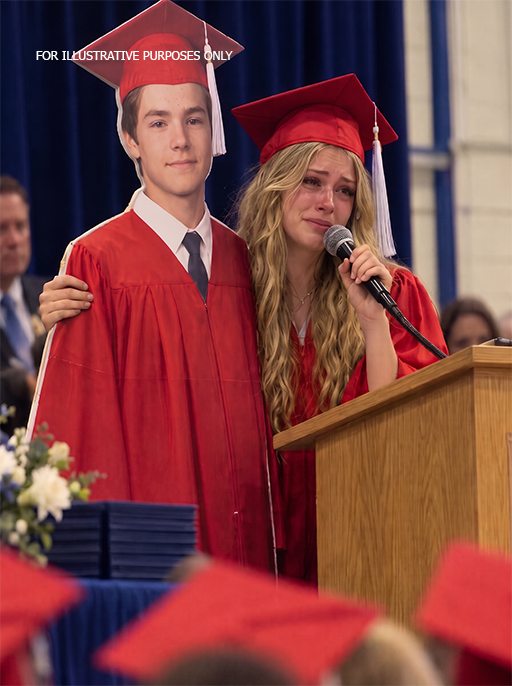
“Mom, please promise you won’t stop me.”My 18-year-old daughter, Maya, stood in front of her bedroom mirror, carefully adjusting a graduation cap on a life-size cardboard cutout of a teenage boy.The cutout wore a blue graduation gown identical to hers. Its smiling face was so familiar that looking at it made my chest ache.“Maya, are you sure you want to do this?” I asked.She nodded.“I’ve never been more sure of anything.”I wanted to support her. More than anything, I wanted her graduation to be a happy day. But I also knew how cruel people could be when they didn’t understand something.“The principal has already turned down your requests,” I reminded her. “What if he refuses to let you walk across the stage?”“Then I’ll deal with it.”She took my hands.“But please don’t explain anything for me. Whatever happens, I need to tell them myself.”I hesitated. For 2 years, I’d watched my daughter struggle through a kind of grief no parent could fix. Now, for the first time in months, there was determination in her eyes.So I squeezed her hands.“I promise.”I had no idea how difficult keeping that promise would become.The moment we entered the school gymnasium, people started staring.Maya carefully carried the cardboard boy beside her, keeping one arm around his shoulders.At first, there were only whispers.Then someone laughed.“Is that her imaginary boyfriend?”Another student snickered.“She’s seriously bringing a cardboard guy to graduation?”A girl pulled out her phone and started recording.Most of the students laughing were recent transfers who didn’t recognize the face. A few longtime classmates looked uncomfortable, but none stepped forward to explain.Maya heard every word. I could tell by the way her shoulders stiffened, but she kept walking.We had nearly reached the graduates’ seating area when Principal Preston approached us.“Maya, absolutely not.”She stopped.“Good morning, Mr. Preston.”“We’ve already discussed this. You cannot bring that figure into the graduation procession.”“Please, sir. I only want him beside me when I receive my diploma.”“This ceremony recognizes students who have completed their graduation requirements. We can’t make exceptions for personal displays.”“I’m not asking you to give him a diploma.”The principal sighed.“I understand this is important to you, but the rules apply to everyone. Leave it with your mother or place it somewhere safe. If you insist on bringing it onto the stage, I may have to exclude you from the procession.”My stomach tightened.“Mr. Preston, please—”But Maya turned toward me and gave a small shake of her head.Our promise.I fell silent.Without arguing further, she carried the cutout to a corner near the gym entrance and carefully leaned it against the wall.She straightened its cap one last time before returning to her seat.The ceremony began shortly afterward.Students delivered speeches about friendship, perseverance, and the futures waiting beyond high school. Families applauded as graduates crossed the stage to accept their diplomas.I should have been enjoying every moment.Instead, my eyes kept drifting toward the cardboard figure standing alone near the entrance.I knew how much this day meant to Maya.For months, she had tried to persuade the school to acknowledge someone who wouldn’t be graduating.First, she requested a brief mention during the ceremony. When that was refused, she suggested including a photograph in a remembrance display near the entrance.The principal declined that request, too.Finally, she asked whether she could carry a framed photograph while accepting her diploma.Again, the answer was no.Each time, Principal Preston explained that the ceremony needed to focus on graduating students.Maya had never asked for a diploma on anyone else’s behalf.She simply wanted someone to be remembered.Now, watching her sit quietly among her classmates, I wondered whether I should have intervened sooner.Then the principal announced her name.“Maya.”My daughter stood.But instead of walking directly toward the stage, she hurried to the gym entrance and retrieved the cardboard cutout.Whispers spread through the audience.Principal Preston stepped forward.“Maya, I told you to leave that there.”She stopped beside the microphone near the stage steps.“Please, Mr. Preston. Just let me explain.”“This isn’t the appropriate time.”“Then when is?”Her voice trembled, but she didn’t back down.“I’ve been trying to explain for months.”The principal reached toward the microphone, but Maya spoke before he could stop her.“Before anyone laughs at this boy again, there’s something you need to know.”The room gradually fell silent.She turned the cutout toward the audience.“His name was Theo.”She swallowed.“And he wasn’t my boyfriend.”Her eyes filled with tears.“He was my twin brother.”A murmur spread through the gym.“He was supposed to graduate with us today. But he died 2 years ago.”The girl who had been recording slowly lowered her phone.A boy in the front row covered his mouth.Principal Preston froze.For a moment, nobody moved.Then the principal stepped away from the microphone.“Maya,” he said quietly, “go ahead. We’re listening.”My daughter took a shaky breath.“Theo was born with a serious heart condition. He spent much of his childhood going in and out of hospitals, but he never wanted anyone to treat him differently.”As she spoke, memories came rushing back.Theo had been born 7 minutes before Maya, a fact he never let her forget.He was funny, stubborn, and fiercely competitive.The twins argued over everything, from who deserved the last pancake to who would get better grades.But they were also inseparable.When Theo’s condition worsened during sophomore year, he began missing weeks of school, sometimes months.Maya carried assignments between school and the hospital. They studied together whenever he felt strong enough.Even on his worst days, Theo insisted on keeping up.“I can’t let Maya beat me at everything,” he’d joke.She’d roll her eyes.“Too late.”He had always dreamed of graduating with his sister.One afternoon, during a long hospital stay, he asked Maya to bring him information about the graduation ceremony.“Do you think they’ll let me cross the stage in a wheelchair?” he asked.“Of course,” Maya replied.“And if they don’t?”“I’ll push you myself.”He grinned.“Just don’t crash me into the principal.”I remembered laughing with them.I couldn’t have imagined how desperately I’d someday wish that conversation had become reality.Theo died 6 months later.He was only 16.Our home changed overnight.The laughter disappeared. His bedroom stayed exactly as he’d left it, and Maya became a quiet version of the girl she’d once been.She still attended school and completed her assignments, but she stopped talking about college and the future.I often found her sitting on Theo’s bedroom floor, surrounded by his notebooks and photographs.Sometimes she cried.Other times, she simply stared at his belongings.I thought she needed time.What I didn’t understand was that she was carrying a promise that meant more to her than I’d realized.Back in the gymnasium, Maya rested one hand on Theo’s cardboard shoulder.“My brother loved this school. Even when he was too sick to attend, he asked about his classmates and teachers every day.”She looked at Principal Preston.“And someone here once promised him that he would never be forgotten.”The principal frowned slightly.Maya reached into the cardboard gown and pulled out a folded piece of paper.She walked toward him and handed it over.He unfolded it.At first, he looked confused.Then his expression changed.“Where did you get this?”“It was in Theo’s school folder.”He stared at the paper.“I remember this letter.”My heart skipped.I recognized it, too.Theo had received a letter from the school during one of his longest hospital stays. He’d been so proud of it that he asked me to read it aloud twice.He kept it carefully tucked away with his completed assignments.After he died, I packed the folder into a storage box.I hadn’t known Maya had found it.Principal Preston handed the paper back to her.Maya returned to the microphone.“This letter was written to Theo when he was in the hospital.”She unfolded it and began reading.“Dear Theo,“Your teachers have told me how hard you’ve continued working despite the challenges you’re facing. Your determination, humor, and dedication to learning make you a valued member of our school community.“We are proud to have you as one of our students.“Whatever the future holds, I hope you always remember that you have a place among your classmates and teachers.“You are an important part of this school, and you will not be forgotten.”Maya lowered the letter.“It was signed by Principal Preston.”Nobody laughed.The principal stood motionless, looking at the paper in her hands.“My brother believed every word you wrote,” Maya said.Her voice cracked.“He told Mom that even though he couldn’t come to school, he was still part of the class.”She paused to steady herself.“You promised him he wouldn’t be forgotten.”Principal Preston nodded.“I remember writing that.”“Then why was it so difficult to remember him today?”He looked down.Maya continued.“I asked for his name to be mentioned. I asked for a photograph. I even asked if I could carry his picture when I received my diploma.”Tears slipped down her cheeks.“Every time, you said no.”The principal took a slow breath.“Maya, that letter was sincere. But graduation has academic requirements, and I was trying to maintain the same standards for everyone.”“I understand that,” she replied.“I’m not asking you to pretend Theo graduated. I know he didn’t complete the requirements. I’m not asking for a diploma.”She looked toward the audience.“I’m asking you to remember that he was here.”Then she faced the principal again.“How would mentioning his name or letting me carry his picture have been unfair to anyone?”The question hung in the silence.Several teachers lowered their eyes.Principal Preston glanced at the letter again.After a moment, he said quietly, “I see the difference you’re trying to explain.”But Maya wasn’t finished.“There’s something else.”She turned toward Theo’s photograph.“A few months before he died, Theo made me promise something.”I felt my chest tighten.This was the conversation she’d never fully explained to me.“He told me that if he didn’t make it to graduation, he didn’t want people remembering him as just a sick boy they felt sorry for.”Maya smiled through her tears.“He wanted everyone to remember that he was funny, that he loved school, and that he was terrible at basketball even though he insisted he was amazing.”A few students laughed softly.“He wanted to be remembered as a classmate. As someone who belonged here.”She looked at the cardboard cutout.“I know this looks strange. Theo probably would’ve made fun of it himself.”Her smile faded.“But when I couldn’t get permission to bring even a small photograph, I didn’t know what else to do.”She gently straightened his cap.“So I made him big enough that nobody could overlook him.”I covered my mouth as tears streamed down my face.Maya looked toward me.“I’m sorry I didn’t tell you about the letter, Mom.”I shook my head.Then she faced Principal Preston once more.“I didn’t plan to give a speech. I hoped you’d let me walk with him. I brought the letter because I wanted to remind you of your promise if you stopped me again.”The principal looked toward Theo’s smiling photograph.For several moments, he remained silent.Then he approached the microphone.“Maya, I owe you an apology.”His voice was quiet but clear.“I remember your brother. I remember how highly his teachers spoke of him and how determined he was to continue learning.”He paused.“When I wrote that letter, I wanted Theo to know he belonged here, regardless of whether his health allowed him to attend classes.”He looked down.“But when you asked me to remember him, I failed to show you that same compassion.”The gym remained silent.“I was so concerned about maintaining the ceremony’s rules that I overlooked a simple distinction. Honoring a student’s memory isn’t the same as awarding a diploma.”He turned toward Maya.“I should have listened. And I should never have threatened to keep you from participating today.”His expression softened.“I’m truly sorry.”Maya wiped her cheeks.“Thank you.”Principal Preston stepped aside.“If you’d still like your brother beside you when you receive your diploma, I’d be honored to welcome you both.”For a moment, Maya stared at him.Then she nodded.“Yes, please.”She lifted Theo’s cutout and carefully approached the stage.That was when something unexpected happened.A boy in the front row stood up.I recognized him as one of Theo’s former classmates.Then another student rose.Then another.Within seconds, much of the graduating class was standing.Applause filled the gymnasium.Some students were crying. Others smiled through their tears.Nobody laughed anymore.Maya walked across the stage with Theo beside her.Principal Preston handed her diploma to her.“Congratulations, Maya.”She accepted it with one hand while steadying the cardboard figure with the other.I raised my phone.Through tears, I took a photograph.My daughter stood onstage in her blue cap and gown, holding her diploma.And beside her was the smiling face of her twin brother.It wasn’t the picture I’d dreamed of taking when they were little.But somehow, it was beautiful.After the ceremony, several classmates approached Maya.Some apologized for laughing.Others shared memories of Theo.One boy remembered how Theo used to draw ridiculous cartoons in the margins of his worksheets.Another remembered him helping with math homework during a hospital stay.A girl who had transferred to the school after his death admitted she’d thought the cutout was a prank.“I’m sorry,” she said. “I should’ve asked instead of laughing.”Maya quietly accepted their apologies.For the first time in 2 years, talking about Theo seemed to make her smile more than cry.Before we left, Principal Preston approached us again.He apologized to me and explained that he wanted to discuss creating a permanent remembrance display for students who had passed away before graduation.Maya thought for a moment.“Could it show what they loved doing? Their hobbies, their artwork, things their friends remember?”He nodded.“I think that’s exactly what it should do.”She smiled faintly.“Theo would’ve liked that.”Then she added, “I just wish you’d listened before today.”The principal didn’t argue.“So do I.”That evening, I found Maya sitting on her bedroom floor beside the cardboard cutout.She had removed Theo’s graduation cap and placed it next to her own.Her diploma rested across her knees.“Are you okay, sweetheart?” I asked.She shrugged.“I don’t know.”I sat beside her.“Did today turn out the way you wanted?”“Mostly.”She looked at her diploma.“Mom, can I tell you something?”“Anything.”Her eyes filled with tears.“When I walked across that stage, I was happy.”I smiled gently.“Of course you were.”“But then I felt guilty.”“Why?”“Because Theo wasn’t really there. He’ll never graduate. He’ll never go to college or do any of the things we planned.”Her voice broke.“And I get to do all those things.”I took her hand.“Maya, do you remember what Theo told you during his last hospital stay?”She looked at me.I had been sitting beside them that evening when Theo spoke about the future.He was exhausted, but his voice had been unusually serious.“Promise me something, May. If I don’t get to do everything we planned, don’t spend your life feeling guilty because you still can.”Maya had cried and promised him.Now she closed her eyes.“I remember.”“He wanted you to be happy, sweetheart.”She wiped her cheeks.“I’ve spent so much time trying to keep everyone from forgetting him that I think I forgot what he wanted for me.”I pulled her into my arms.“You can love your brother and miss him every day while still living a wonderful life. Being happy doesn’t mean you’re leaving him behind.”She cried against my shoulder.After a while, she looked toward the cutout.“Do you think Theo would’ve been proud of me today?”I smiled through my tears.“He would’ve bragged about you to everyone.”Maya laughed softly.“Then he’d have said he could’ve gotten better grades.”“Without a doubt.”We sat together, laughing and crying as we remembered his terrible jokes and his insistence that being born 7 minutes earlier made him the wiser twin.Then, for the first time in a long while, Maya started talking about college.She told me about the education program she wanted to attend and the children she hoped to teach someday.I listened, feeling something I hadn’t felt in 2 years.Hope.Over the following weeks, Maya helped the school plan its remembrance display. She chose a photograph of Theo laughing, along with one of his ridiculous classroom drawings.She wanted people to remember his life, not simply mourn his death.And as summer drew to a close, she prepared to leave for college.On the morning of her departure, I found her standing in Theo’s bedroom.The cardboard cutout was safely propped against the wall, its graduation cap resting on a nearby shelf.Maya held a small copy of their graduation photograph.She looked at her brother’s smiling face for a long moment.Then she whispered, “Well, Theo, I guess I’m going first this time.”She placed the photograph carefully inside her bag, picked up her suitcase, and turned toward me.“I’m ready, Mom.”I hugged her tightly.For 2 years, I’d been afraid that losing Theo had taken away my daughter’s future, too.But as we walked toward the car, I finally understood.Maya wasn’t leaving her brother behind.She was carrying his love, his laughter, and everything he’d taught her into the life waiting ahead.And that was exactly what he had wanted.My son never got to cross the graduation stage, but his sister made sure he was remembered. And when the time came for her to move forward, she finally understood that honoring his life meant allowing herself to live her own.

Nov 03, 2026
The Secret My Uncle Revealed After His Funeral That Changed Everything New

The Secret My Uncle Revealed After His Funeral That Changed Everything

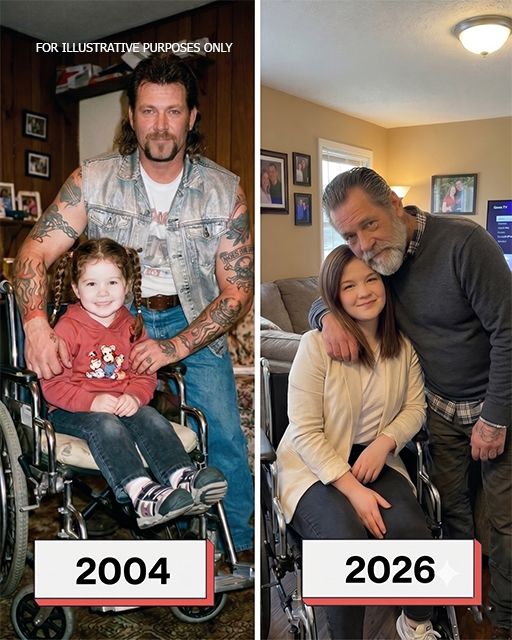
I was 4 years old when a car ac:cident took both my parents and left me unable to walk.I barely remember that night. Just rain against the windows, my mother’s frightened voice, and a terrible crash.My parents, Arthur and Beatrice Hartley, di:ed at the scene. I survived, but a spinal cord injury left me permanently dependent on a wheelchair.With no one immediately available to care for me, social workers began discussing temporary foster placement.That’s when my uncle Callum stepped forward.“I’m taking her,” he told them firmly. “She’s my niece. She belongs with family.”Callum was only 24. He wasn’t married, had no children, and lived alone in a modest house. But he had a steady job repairing industrial equipment, and he was determined to give me a home.After an initial assessment, the authorities approved a temporary placement. He spent his savings installing a wheelchair ramp, widening doorways, and modifying the bathroom. Several months later, the court granted him permanent guardianship.From that moment, he became my entire world.Callum wasn’t the gentle, affectionate type. He was stubborn, terrible at cooking, and completely clueless about raising a little girl.But he tried harder than anyone I’ve ever known.He learned to braid my hair by practicing on a doll. When I became interested in makeup, he watched online tutorials until he could apply eyeliner without making me look like a raccoon.He took me to parks, fairs, and museums, always making sure they were wheelchair accessible. When I turned 16, he found an instructor who could teach me to drive using hand controls.Whenever I doubted myself, he’d remind me, “Your wheelchair doesn’t get to decide how big your life will be.”He never married or had other children.Whenever I asked why, he’d smile.“I already have the best family I could ask for.”Growing up, I often asked him about my parents.He told me my mother loved gardening, and my father was a terrible dancer. He kept their photographs around the house and never let me forget how much they had loved me.But whenever I asked about my birth or my earliest years, he became strangely vague.“You were a beautiful baby,” he’d say before changing the subject.I never questioned it. He was my uncle, after all. Why would he remember every detail?Our family was small. Callum told me that our grandparents had di:ed before the accident and that he and my father had no other close living relatives. We’d also moved to a different town after he became my guardian, and most of the people who’d known our family years earlier were no longer in touch.To me, Callum was all the family I had left.By 25, I’d graduated from college and was working as a graphic designer. I was saving for my own apartment, and Callum couldn’t have been prouder.Then he started getting sick.First came the exhaustion, followed by unexplained weight loss and persistent stomach pain.Eventually, doctors diagnosed him with advanced pancreatic cancer.He was only 45.During his final year, I cared for him as he’d cared for me.Sometimes, he’d look at me with an expression I couldn’t understand.“I’m sorry, sweetheart,” he’d whisper.I’d squeeze his hand.“You have nothing to apologize for.”One afternoon, while we were looking through old family photographs, he suddenly said, “Maeve, there’s something about your parents I’ve wanted to tell you for a long time.”I turned toward him.“What is it?”He stared at a photograph of my mother, his eyes filling with tears.Then he shook his head.“I’m sorry. I can’t.”I assumed grief had overwhelmed him and didn’t push.Callum di:ed 3 weeks after entering hospice care, shortly after my 26th birthday. He was 46.His de:ath shattered me.For 22 years, he’d been my protector, my closest friend, and the one person who never let me face life’s difficulties alone.Now he was gone.After his funeral, our longtime neighbor, Mrs. Parker, visited.She held a cream-colored envelope in trembling hands.“Your uncle asked me to give you this after he passed away.”She placed it in my lap.My name was written across the front in Callum’s familiar handwriting.“He also wanted me to tell you he’s sorry.”My stomach tightened.Sorry? For what?I opened the envelope.The first sentence made my blood run cold.Maeve, I’ve been lying to you your whole life. I’ve carried a secret for more than 20 years, and I should have told you long ago.My hands began shaking.Before anything else, you need to know that Arthur and Beatrice loved you more than anything.But there’s something I’ve never told you.They weren’t your biological parents.I froze.What?They adopted you when you were a baby.I read those words several times, struggling to understand.Had my parents adopted me?Why hadn’t anyone told me?I continued reading.Your biological mother was a young woman named Nadine Rivera. She di:ed from complications several days after giving birth to you.Your biological father was only 20. He loved you desperately, but losing Nadine devastated him.He struggled with grief, lost his job, and couldn’t provide a stable home for you.For several months, Arthur and Beatrice helped him care for you. They had been hoping to become parents for years, and they loved you from the moment they held you.Eventually, after many painful conversations and counseling, your father agreed to let them adopt you.Tears filled my eyes.My biological father had given me up?Had he ever wondered what happened to me?Then I reached the next paragraph.Maeve, there’s something else you deserve to know.The young man who signed those adoption papers was me.I’m not just your uncle.I’m your biological father.I stopped breathing.Callum?The man who’d raised me, held my hand through surgeries, taught me to drive, and attended every school event?He was my father?I read the sentence again and again, convinced I must have misunderstood.But the letter continued.I was 20 when you were born. Nadine was the love of my life. We were young and frightened, but we wanted you more than anything.When she di:ed, I fell apart. I couldn’t hold down a job, and some days I could barely take care of myself.Arthur was my older brother. He and Beatrice gave me the love and stability I couldn’t provide at the time.They never pressured me. They helped me explore my options, and after months of struggling with the decision, I agreed to the adoption.Signing those papers was the hardest thing I’ve ever done.Callum explained that he hadn’t disappeared from my life after the adoption.He visited regularly, watched me grow, and celebrated birthdays and holidays with us.Over the following years, he’d gradually recovered from his grief, secured a steady job, and bought a small house.By the time you were 4, I’d finally become the kind of man who could provide for a child.But you were happy with Arthur and Beatrice. They were your parents, and you adored them. I would never have tried to take you away from the family that had raised you.Then came the accident.I felt my chest tighten.Arthur and Beatrice had always intended to tell you about the adoption when you were old enough to understand.But they di:ed before they had the chance.They had named me as their preferred guardian in their wills. When the social workers began discussing temporary placement, I couldn’t bear the thought of losing you too.I worked with the authorities, made the necessary changes to my house, and proved I could provide the care you needed.When the court granted me guardianship, I promised myself I would never fail you again.Tears streamed down my face.At first, I thought you were too young to understand the truth.Then you were struggling with your injuries, and I didn’t want to add another painful revelation.When you got older, I worried you’d feel abandoned if you learned I’d once given you up.Every year, I promised myself I’d tell you.And every year, I found another excuse.Eventually, the secret became so big that I was terrified it would destroy the trust between us.I remembered that afternoon when he’d tried to tell me something about my parents.Now I understood.When I got sick, I knew I couldn’t keep hiding it.I tried to tell you while we were looking at photographs. But when I saw you smiling at Beatrice’s picture, I lost my courage.I was afraid you’d look at me differently. I was afraid you’d hate me.But that doesn’t excuse what I did.You deserved to know the truth while I was alive. You deserved to ask questions, to be angry, and to decide for yourself how you felt.I’m deeply sorry I took that opportunity away from you.I pressed the letter against my chest and sobbed.For years, I’d believed Callum was a wonderful uncle who’d sacrificed everything to raise his orphaned niece.Now I knew he was a father who’d once surrendered his daughter because he believed she deserved a better life.And when tragedy struck, he’d been given a second chance.But he’d never told me.Not once in 22 years.The final page contained another surprise.There’s a wooden chest beneath my bed. Inside, you’ll find a copy of your original birth certificate that I kept before the adoption was finalized, along with the adoption records and photographs from your earliest years.Your amended birth certificate lists Arthur and Beatrice as your parents, which is why the truth never appeared in the paperwork you grew up using.You’ll also find something your mother left behind.I love you, Maeve. I always have.Your father, Callum.I immediately went to his bedroom.The wooden chest was exactly where he’d described.Inside, I found photographs, legal documents, and a faded blue notebook.My original birth certificate listed Callum Hartley as my father and Nadine Rivera as my mother.The adoption records confirmed that Arthur and Beatrice had legally become my parents when I was an infant.Everything he’d written was true.Beneath the documents was a photograph of Callum holding a newborn baby.Me.He looked impossibly young, exhausted, and frightened.But he was smiling.Beside it was a photograph of Nadine.She had dark curly hair, warm brown eyes, and a smile so familiar that I gasped.I looked just like her.With trembling hands, I opened the notebook.It was Nadine’s pregnancy journal.She’d written about doctor’s appointments, baby clothes, and all the little things she and Callum dreamed of doing with me.Then I found an entry dated shortly before my birth.I hope our little girl grows up brave, kind, and stubborn enough to chase her dreams.Callum worries so much about being a good father. He doesn’t realize he’s already the most loving man I know.I hope our daughter always knows how lucky she is to have him.I broke down.Throughout my childhood, whenever I refused to give up on something, Callum would smile and say, “You get that stubbornness from your mother.”I’d always assumed he meant Beatrice.Now I understood he’d been remembering Nadine.At the bottom of the chest was another stack of envelopes.Each had my name and an age written on it.Maeve — Age 8.Maeve — Age 12.Maeve — Age 16.Maeve — Age 18.There were more than a dozen.Every few years, Callum had written a letter explaining the truth, intending to give it to me.But he’d never found the courage.One letter, written on my 18th birthday, contained a passage I’ll never forget.Today you told me I was the best uncle in the world.I smiled, but part of me wanted to cry.I wish I were brave enough to tell you that I’m your dad.Not because I need you to call me that.But because you deserve to know who you are.I sat beside the chest for hours, reading those letters.For the first time since his de:ath, I wasn’t only grieving the man I’d lost.I was grieving every conversation we’d never had.I wanted to ask him about Nadine.I wanted to know what he’d felt when he held me for the first time.I wanted to tell him that learning he’d given me up would have hurt, but it wouldn’t have erased the years he’d spent loving me.Most of all, I wanted to tell him he didn’t have to be afraid.Over the following weeks, I contacted the attorney handling his estate, who helped me confirm the birth and adoption records.I also spoke to Mrs. Parker, who admitted that Callum had told her the truth shortly before his death.“He was terrified you’d hate him,” she said quietly.I shook my head.“I could never hate him. But I wish he’d trusted me enough to let me decide how I felt.”She squeezed my hand.“He knew he’d made a mistake, sweetheart.”For a long time, I struggled with conflicting emotions.Part of me was furious that he’d kept such an important truth from me.Another part couldn’t stop remembering the man who’d spent evenings practicing hairstyles, working extra shifts to pay for my medical equipment, and teaching me that my disability didn’t define my future.Eventually, I realized I didn’t have to pretend his decision was right to appreciate everything he’d done.I could love him and still feel hurt.I could forgive him gradually, without pretending his secret hadn’t changed my life.A month later, I visited his grave.I brought 3 photographs.One of Arthur and Beatrice holding me as a little girl.One of Nadine and Callum smiling together.And one of Callum standing proudly beside me at my college graduation.I placed them near his headstone.Then I looked at his name and whispered, “You should have told me.”My voice trembled.“I wish you’d trusted me. I wish I’d known about Nadine. And I wish I’d had the chance to call you Dad while you were still here.”I wiped away my tears.“But I know you loved me. You showed me every single day.”For the first time, I allowed myself to say the words I’d never known he was waiting to hear.“I love you, Dad.”A few months later, I moved into my own apartment.I made a photo album containing every part of my family’s story: Nadine’s journal, Arthur and Beatrice’s photographs, and the letters Callum had never found the courage to give me.On the first page, I wrote:I had a mother who gave me life but never got to watch me grow.I had 2 parents who chose me, loved me, and gave me a beautiful beginning.And I had a father who made a heartbreaking decision when he was young, then spent 22 years making sure I never doubted that I was loved.I still wish Callum had told me the truth sooner.His silence hurt me, and I can’t pretend otherwise.But nothing can erase the childhood he gave me or the sacrifices he made.For 22 years, I called him my uncle.And for 22 years, he quietly loved me as his daughter.I only wish we’d had the chance to call each other what we’d always been: father and daughter.

Nov 03, 2026
The Unexpected Gift from Mrs. Hargrove That Changed Everything New

The Unexpected Gift from Mrs. Hargrove That Changed Everything

I grew up believing that kindness always came with a price.My mother abandoned me shortly after I was born. My father was serving a prison sentence, and no relatives were willing to take me in. By the time I turned 18, I had lived in 9 different foster homes.Some families were kind. Others reminded me that I was only there because the state paid them.When I aged out of the system, I had $600, a duffel bag, and nowhere to go.At 23, I was living in a cramped apartment above a laundromat in a small town called Fairhaven. I worked at an auto repair shop during the week and stocked shelves at a hardware store on weekends.My dream was to open my own garage someday. But with barely enough money to pay rent, that dream seemed impossible.Then I met Mrs. Mabel Hargrove.She was 85, lived alone in a large Victorian house down the street, and had a reputation for being stubborn enough to argue with a brick wall.One rainy afternoon, I spotted her struggling with 2 grocery bags on her front steps. When one split open, I helped gather the oranges rolling across the sidewalk and carried everything inside.She noticed the grease on my hands.“You’re a mechanic?”“Yes, ma’am.”“Then perhaps you can fix my kitchen faucet. It’s been dripping for weeks.”I repaired it in 20 minutes.When she tried to pay me, I refused.She studied me for a moment.“Come back tomorrow, young man. I have a proposition for you.”Curiosity brought me back.Over tea the following afternoon, Mrs. Hargrove explained that her health was declining. Her husband, Arthur, had died years earlier. They had no children, and her only niece rarely visited.“I need someone reliable,” she said. “Groceries, appointments, repairs, a little company. I’ll pay you every week.”Then she leaned forward.“And if you take good care of me until the end, I intend to leave you a substantial inheritance.”I stared at her.“How substantial?”She smiled.“Enough to give a young man like you a proper start.”I’d learned not to trust promises without paperwork, so we signed a simple agreement covering my weekly payments and responsibilities. The inheritance remained a personal promise.I knew it was a risk, but I needed the extra income.“Deal,” I said.At first, it was strictly business.Every morning, I checked on her before work. In the evenings, I bought groceries, prepared meals, handled repairs, and helped keep track of her medical appointments.The money she paid me was enough to quit my weekend job, which gave me more time to help her.Mrs. Hargrove was not an easy woman.She complained about my haircut, my old truck, and the frozen dinners I ate.But she also insisted that I sit down for tea every evening.She told me stories about her childhood, her marriage, and Arthur, whom she described as the kindest man she’d ever known.“Arthur believed everyone deserved a chance,” she once said. “He could never turn away someone who needed help.”Eventually, she began asking about my life.I told her about the foster homes, the constant moving, and how terrifying it had been to turn 18 with nowhere to belong.She listened quietly.“Every child deserves to feel wanted, Eli.”I shrugged.“Some of us just get unlucky.”She reached across the table and squeezed my hand.“Being unlucky doesn’t mean you’re worth less.”I didn’t know what to say.Nobody had ever spoken to me quite like that.A few weeks later, she handed me a wrapped package.Inside was a pair of thick, dark-green knitted socks.They were uneven, lumpy, and possibly the ugliest socks I’d ever seen.“For you,” she said proudly. “So your feet don’t freeze in that dreadful apartment.”I laughed and thanked her.That night, I wore them to bed.Nobody had ever knitted anything for me before.As the months passed, something changed.I stopped checking the clock during our evening conversations. Sometimes I stayed for hours, listening to her stories or watching old game shows together.I also noticed an old, dented blue lunchbox on the highest shelf of her pantry.“What’s in there?” I once asked.“Arthur’s things,” she replied, smiling faintly. “Things too precious to throw away.”I never asked again.On her 86th birthday, I baked her a chocolate cake.It leaned awkwardly to one side, and the frosting looked terrible.When I placed it in front of her, she started crying.“What’s wrong?” I asked.She shook her head.“It’s been years since anyone made me a birthday cake.”Then she hugged me.For the first time in longer than I could remember, I felt like somebody’s family.A few months later, a larger repair shop in another town offered me a better-paying position.It was exactly the kind of opportunity I’d been waiting for.But taking it would have meant moving away, leaving Mrs. Hargrove without the daily help she’d come to depend on.I called a friend to talk it over.“I know the money’s better,” I told him, standing near her kitchen doorway. “But I can’t leave Mabel right now. She doesn’t have anyone else.”I didn’t realize she was within earshot.The following evening, she confronted me.“Eli, did you turn down a better job because of me?”I hesitated.“It’s not a big deal.”“Nonsense! You shouldn’t sacrifice your future for an old woman.”I smiled.“You’re not just some old woman.”Her expression softened.“Then what am I?”I looked at her.“You’re family.”She turned away quickly, pretending to straighten the teacups.But I saw her wipe her eyes.By winter, her health had deteriorated. Her doctor arranged additional home care, but I continued visiting every morning and evening.Sometimes she fell asleep while we talked. Other times, she asked me about my dream of opening a garage.One evening, she asked an unusual question.“If you had your own business, what would you do once it became successful?”“Probably hire some help.”“What kind of people?”I thought for a moment.“Maybe young adults coming out of foster care. Give them a chance to learn something useful.”She smiled.“Why?”“Because I know how hard it is to start with nothing. If I ever get ahead, I’d like to help someone else.”She studied me for a long moment.“Arthur would have liked you.”The last night I saw her alive, I brought her chicken soup and helped her settle into her favorite armchair.As I prepared to leave, she called my name.“Eli?”“Yes?”“Are you happy?”The question surprised me.I thought about my life, my job, and the little routine we’d built together.“Yeah,” I admitted. “I think I am.”She smiled.“Good. That’s all I wanted to know.”The next morning, I found her sitting in that same chair.The television was still playing an old game show.Her knitting basket rested beside her feet.She had passed away peacefully in her sleep.I stood there for several minutes, unable to move.Then I sat beside her and cried.For the first time in my life, I felt as though I’d lost a mother.Her funeral was held 5 days later.A few neighbors attended, along with members of her church and her niece, Cynthia, who spent most of the service checking her phone.Three days afterward, Mrs. Hargrove’s attorney, Stuart Bell, invited me to a meeting concerning her estate.I hated myself for thinking about the inheritance.But she’d made me a promise, and I couldn’t help wondering whether my life was finally about to change.The meeting took place in a small conference room.Cynthia sat across from me, wearing an expensive black coat.Mr. Bell opened a folder and began explaining Mrs. Hargrove’s will.Her Victorian house would go to a charity providing temporary housing for struggling families.Her savings would go to her church.Her jewelry and several family heirlooms would go to Cynthia.I waited for my name.It never came.Finally, Mr. Bell closed the folder.“That concludes the distributions under Mrs. Hargrove’s will.”My stomach dropped.“Excuse me,” I said. “What about me?”Mr. Bell looked at me carefully.“I’m sorry, Mr. Turner. You aren’t named as a beneficiary in the will.”I stared at him.“That can’t be right.”Cynthia gave a small, unpleasant smile.“Apparently, Aunt Mabel knew exactly what she was doing.”I ignored her.“She promised me an inheritance.”Mr. Bell nodded.“Mrs. Hargrove did leave a personal message for you. She specifically requested that I deliver it privately.”A message?After everything we’d been through, all she’d left me was a message?My throat tightened.“Thank you, but I don’t think I can do this right now.”I stood up.Mr. Bell called after me, but I kept walking.That evening, I lay in bed staring at the ceiling.I thought about the socks, the birthday cake, and all those evenings we’d spent drinking tea.Had I misunderstood her promise?Had she changed her mind?Or had I been foolish to believe I meant as much to her as she meant to me?The money wasn’t even what hurt most anymore.It was the thought that perhaps I’d imagined the closeness between us.I barely slept.The next morning, someone knocked on my door.When I opened it, Stuart Bell stood in the hallway holding a dented blue metal lunchbox.“Mr. Turner,” he said gently. “I tried calling you yesterday evening. Mrs. Hargrove left instructions that I deliver this to you privately after the estate meeting.”I recognized the lunchbox immediately.It had belonged to Arthur.“What is this?”Mr. Bell held it out.“Actually, Eli, she left you one thing. And I think you should read her letter before I explain anything else.”Inside were a brass key, several old photographs, and an envelope bearing my name.My hands trembled as I opened it.“My dear Eli,“By now, you’ve probably learned that my house, savings, and jewelry have gone to other people and organizations.“I imagine you’re disappointed. Perhaps even angry.“When we first met, I promised you a substantial inheritance because I was frightened of spending my final years alone.“At the time, I hadn’t decided exactly what I would leave you. I only knew that I wanted someone to stay.“But then something happened that I never expected.“You became my family.”My eyes blurred.I continued reading.“You remembered how I liked my tea. You listened to my stories even when I repeated them. You brought me dinner when I was too tired to cook, and you made me the most ridiculous chocolate cake I’ve ever seen.“But the moment I knew you truly loved me was when you turned down that better-paying job.“You didn’t know I overheard your telephone conversation.“You told your friend you couldn’t leave because I needed you.“You could have chosen a better future for yourself, but you stayed to make sure I wasn’t alone.“That was when I understood that you weren’t taking care of me for the inheritance anymore.“You were taking care of me because you cared.“And I knew exactly what I wanted to give you.”I swallowed hard and unfolded the next page.“Do you remember telling me about your dream of opening a garage?“Arthur had the same dream when he was young. He spent years saving and working until he finally opened his own repair shop.“When his health failed, we closed the business. I could never bring myself to sell the property.“For years, I wondered why I kept it.“Now I know.“The brass key in this box opens the building at 47 Willow Street.“And, my dear boy, that building is yours.”I stopped reading.“What?”Mr. Bell smiled.“Mrs. Hargrove and her husband owned a repair shop. She placed the property in a living trust years ago and recently named you as its beneficiary.”I stared at him.“She left me a garage?”“Yes. The building has 3 service bays, an office, equipment, and a small apartment upstairs. There’s no outstanding mortgage.”I could barely process his words.Mr. Bell continued.“She appointed me successor trustee. I’ll handle the legal paperwork required to transfer the property to you. It’s separate from the assets distributed under her will.”I looked back at the letter.“I know a building cannot replace the childhood you should have had.“But I hope it gives you the beginning you deserved.“A home that belongs to you. A business you can build with your own hands. And perhaps, someday, a place where you can help young people who have never been given a fair opportunity.“You once told me that nobody had ever given you a place where you truly belonged.“I wish I could go back and change that.“But I can give you one now.“Please don’t waste your life wondering whether you’re worthy of love, Eli.“You are.“You made my final year one of the happiest of my life.“And for a little while, you were someone’s favorite person in the world.“With all my love,“Mabel.”I couldn’t finish reading without crying.Mr. Bell sat quietly until I composed myself.Then he asked, “Would you like to see it?”I nodded.An hour later, we stood outside an old 2-story brick building on Willow Street.Above the entrance hung a faded sign:HARGROVE’S REPAIR & SERVICE.My chest tightened.I’d heard Mrs. Hargrove talk about Arthur countless times, but she’d never told me he’d owned a garage—or that she still had the building.I unlocked the door.Inside were 3 garage bays, workbenches, storage cabinets, and rows of carefully preserved tools.The building was dusty but structurally sound. Mr. Bell explained that Mrs. Hargrove had maintained it over the years and arranged essential repairs.On one wall hung a framed photograph of Arthur standing beside a young mechanic.Underneath were the words:“Honest work. Fair prices. Everyone deserves a chance.”I stared at the sign.It was exactly the kind of business I’d always dreamed of running.Then Mr. Bell showed me the apartment upstairs.It had a small kitchen, a bedroom, and a living room overlooking the street.The walls had been freshly painted.On the bed lay a handmade quilt.I recognized it immediately.Mrs. Hargrove had spent months working on that quilt while we sat together in the evenings.A note rested on top.“I told you I’d finish it before winter. I always keep the promises that matter most.”I sat on the bed and covered my face.For years, I’d dreamed of owning something nobody could take away from me simply because they changed their mind.Now I was sitting inside my very first home.And the woman who made it possible would never get to see me living there.Over the next several months, Mr. Bell helped me complete the property transfer.Reopening the garage wasn’t easy.Some equipment needed servicing, and other pieces had to be replaced. I needed business insurance, permits, inspections, and supplies.I kept my regular job while preparing the building during evenings and weekends. My savings, along with a modest startup loan from a local credit union, covered the initial expenses.My boss, Wesley Finch, was surprisingly supportive.“Mrs. Hargrove came to see me a few months before she passed,” he admitted.I looked at him.“She did?”“Asked whether I thought you could run your own shop.”“What did you tell her?”He smiled.“That you were stubborn, hardworking, and one of the most honest mechanics I’d ever employed.”Six months after her death, I reopened Hargrove’s Repair & Service.I kept the original name.Business was slow at first, but Wesley referred customers to me, and a few longtime residents remembered Arthur.I worked long hours, saved what I could, and gradually built a reputation for fair prices and reliable work.For the first time in my life, I wasn’t just working to survive.I was building something.A little over 2 years after reopening, the garage was doing well enough to take on additional employees.One afternoon, a young man walked in carrying a worn backpack.He looked about 19.“Are you hiring?” he asked nervously.“Do you have experience?”He shook his head.“Not much. But I’m willing to learn.”I noticed his thin jacket and worn-out shoes.“Where are you staying?”He hesitated.“With friends when I can. Sometimes at a shelter.”“Family?”He looked down.“I grew up in foster care. I aged out last year.”For a moment, I couldn’t speak.I saw myself at 18, standing outside my last foster home with a duffel bag and nowhere to go.Then I remembered what Mrs. Hargrove had written.“Perhaps, someday, a place where you can help young people who have never been given a fair opportunity.”I looked at him.“What’s your name?”“Isaac.”“Well, Isaac, can you be here at 8 on Monday morning?”He blinked.“Seriously?”“I can start you on a paid apprenticeship. You’ll learn the basics, and if you work hard, there’s room to grow.”His face lit up.“Thank you, sir. You have no idea what this means.”I smiled.“Actually, I think I do.”As he left, I glanced at the photograph of Arthur and Mabel hanging near the entrance.For the first time, I understood that the garage wasn’t simply something she’d left behind.It was something she’d entrusted to me.Last week would have been Mrs. Hargrove’s 89th birthday.I closed the shop early and bought a small chocolate cake.Upstairs, I placed it beside her photograph and lit a candle.“Happy birthday, Mabel,” I whispered. “I got a proper cake this time. I figured you’d appreciate that.”I laughed, then wiped my eyes.Beside her photograph sat Arthur’s old blue lunchbox.Inside, I still kept her letter and the ugly green socks she’d knitted for me.They were faded and worn, but I wouldn’t trade them for anything.I thought about the day we’d first met.I’d helped an old woman carry her groceries, expecting nothing.The next day, I’d agreed to care for her because she promised me an inheritance.At the time, all I wanted was money.But somewhere along the way, I’d found something I’d spent my entire life searching for.A family.I looked at her photograph.“I came into your life because I wanted what you owned,” I whispered. “But I would have stayed even if you’d had nothing.”Then I blew out the candle.Today, my garage continues to grow. I’ve begun offering paid training opportunities to other young adults leaving foster care, and I hope to help many more.Sometimes, when I watch them learning, laughing, and making plans for their futures, I think about Mrs. Hargrove sitting in her favorite armchair, knitting those ridiculous socks.She never got to see the garage reopen.She never got to meet Isaac.But every time I give someone a chance, a little piece of her kindness lives on.I thought I was taking care of an elderly woman in exchange for an inheritance. Instead, she gave me something I’d never had before—a home, a family, and a reason to believe in myself.And the greatest thing she left me wasn’t the garage. It was the chance to become for someone else the person she’d been for me.

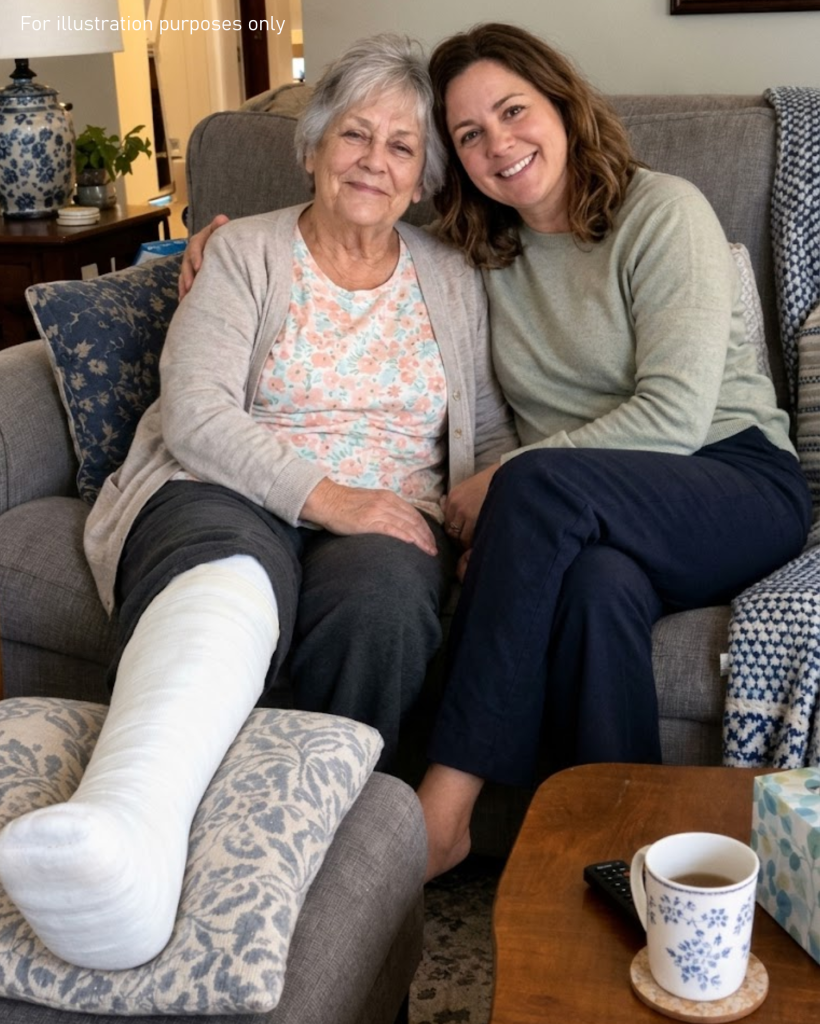
Nov 03, 2026
Husband's Drunken Miscount Sparks Hilarious Bedroom Drama New

Husband's Drunken Miscount Sparks Hilarious Bedroom Drama

A wife was with her lover when she heard her husband’s key in the door.“Stay where you are,” she told the panicked lover. “He’s so drunk he won’t even notice you’re with me.”Sure enough, the husband lurched into bed none the wiser, but a few minutes later, through a drunken haze, he saw six feet sticking out at the end of the bed.He turned to his wife: “Hey, there are six feet in this bed. There should only be four. What’s going on?!?”“Nonsense,” said the wife. “You’re so drunk you miscounted. Get out of bed and try again. You can see better from over there.”The husband climbed out of bed and counted. “One, two, three, four. Oh ok, you were right.”A drunk ice fisherman drills a hole in the ice and peers into it.As he does so, a loud voice from above says, “There are no fish down there.”So the drunk fisherman walks several yards away and drills another hole.As he peers into it he again hears a voice say, “There’s no fish down there.”So he walks about 20 yards away and drills another hole. Once again the voice says, “There’s no fish down there.”The fisherman looks up to the sky and asks, “God, is that you?”“No, you idiot,” says the voice. “It’s the rink manager.”A police officer pulls over this guy who had been weaving in and out of the lanes.He goes up to the guy’s window and says, “Sir, I need you to blow into this breathalyzer tube.”The man says, “Sorry officer I can’t do that. I am an asthmatic. If I do that I’ll have a really bad asthma attack.”“Okay, fine.” Sighs the office. “I need you to come down to the station to give a blood sample.”“I can’t do that either. I am a hemophiliac.” Says the man. “If I do that, I’ll bleed to death.”“Well, then we need a urine sample.”“I’m sorry officer I can’t do that either. I am also a diabetic. If I do that I’ll get really low blood sugar.”“Alright then I need you to come out here and walk this white line.”“I can’t do that, officer.”“Why not?”“Because I’m too drunk.”

Nov 03, 2026
The Heartfelt Twist That Changed Everything for This 50-Year-Old Mom New

The Heartfelt Twist That Changed Everything for This 50-Year-Old Mom

I was 50 years old when I boarded a plane to attend my only daughter’s funeral. I never imagined that 2 abandoned babies on that flight would change my life forever.Nearly 18 months later, the morning after I officially adopted those children, a stranger appeared at my door holding a cardboard box.“I knew your daughter,” she said. “And there’s something you need to know about the twins.”When she showed me what was inside, my knees nearly gave way.My daughter, Hazel, was 27 when she died.She had moved across the country 4 years earlier, but we remained incredibly close. We spoke almost every evening, and she always found a way to make me laugh.Then, 3 days before my planned visit, a driver ran a red light and struck her car.Hazel died at the hospital.I couldn’t believe it. Just the night before, we had been discussing restaurants we wanted to visit together.Her final text remained on my phone.“Mom, there’s something important I want to tell you when you get here. I think it’s going to make you really happy.”I had replied, “Now I’m curious! Love you, sweetheart.”She never answered.On the morning of my flight, I wore the blue cardigan Hazel had given me for Christmas. It felt like the only way to carry a piece of her with me.I barely remember boarding the plane.About halfway through the journey, 2 babies began crying across the aisle.A woman in her late 40s was struggling to care for them. They were twins, a boy and a girl, perhaps 6 months old.She tried bottles, pacifiers, and blankets, but nothing seemed to calm them.Several passengers complained.A flight attendant with a silver hair clip eventually came over to help, and the babies settled down.I closed my eyes, wishing I could sleep through the rest of the journey.When we landed, everyone rushed to collect their belongings.I noticed the woman caring for the twins hurry toward the front with her handbag and coat.I assumed she would return.But she didn’t.A few minutes later, the flight attendant approached the empty seat.“Where’s the woman who was sitting here?”A passenger pointed toward the exit.“She already got off.”The attendant stared at the 2 infant carriers.“Without the babies?”Within minutes, airport security was involved.The twins were crying again, their little faces red and frightened.I should have continued toward baggage claim. My sister was waiting, and my daughter’s funeral was the following morning.But something stopped me.“Can I help?” I asked the flight attendant.“Have you cared for babies before?”I swallowed.“I raised a daughter.”She carefully placed the little girl in my arms.The baby squirmed briefly, then rested her cheek against my shoulder. Her tiny fingers curled around Hazel’s blue cardigan.A wave of grief hit me so suddenly that I almost couldn’t breathe.I rocked her gently.“It’s okay, sweetheart. You’re safe.”She slowly stopped crying.Her brother was still upset, so I sat beside him and held his little hand until he quieted too.When a social worker arrived, she explained that the babies would be placed together in emergency care while authorities investigated.“Will someone stay with them?” I asked.“Of course.”“And they’ll stay together?”“We’ll do everything we can.”I left my contact information and asked for the agency’s number.I couldn’t explain why those children had affected me so deeply.I only knew I couldn’t stop thinking about them.Hazel’s funeral was beautiful and devastating.The church was filled with friends, coworkers, and people she had helped through various charitable organizations.One colleague mentioned that Hazel often spent her weekends volunteering with families facing difficult circumstances.That sounded exactly like my daughter.She had always believed kindness mattered most when nobody expected anything in return.After the burial, my sister, Vivian, found me sitting alone.“You’re thinking about those babies too, aren’t you?” she asked.I nodded.“Is that terrible? I should be thinking about Hazel.”“You can miss your daughter and worry about 2 children at the same time.”That evening, I called the number the social worker had given me.She couldn’t disclose much because I wasn’t related to the children, but she confirmed that both were safe and still together.When I asked whether I might be allowed to care for them, she explained the foster-parent approval process.It sounded overwhelming.Background checks. Training. Home inspections. Interviews. Legal requirements.Even if I qualified, there was no guarantee the twins would be placed with me.But I couldn’t dismiss the thought.Over the next few weeks, I began making inquiries and submitting paperwork.I learned more about the twins’ circumstances as my application progressed and the authorities completed their investigation.Their names were Ruby and Felix.Their mother, Serena, had been a young single parent dealing with a serious medical condition.Several weeks before my flight, her health had deteriorated, and her aunt, Colleen, agreed to take the babies temporarily to her home in another state while Serena received treatment.Unfortunately, Serena died shortly after Hazel’s accident.Colleen was devastated, financially struggling, and terrified of becoming permanently responsible for 2 infants.She boarded a flight to Serena’s hometown, hoping to find help through the relatives and community organizations Serena had known.But during the journey, she became overwhelmed.When the plane landed, she panicked and abandoned the twins, convincing herself that airline employees would immediately find them and ensure their safety.It was a dangerous, irresponsible decision.Authorities located her shortly afterward. She admitted what she had done and was ruled out as a suitable caregiver.The children’s father had not yet been located, and no other available relative could safely take both babies.The twins remained in foster care while the investigation continued.Meanwhile, I kept working toward approval.Vivian was worried.“Marianne, you’re 50, and you’ve just lost your daughter. Are you sure you’re ready to raise 2 babies?”“No,” I admitted. “But I want to find out whether I can give them the home they deserve.”Fortunately, I had worked remotely as an accountant for years and had enough savings to support a family.With Vivian’s help, I rented a small house near hers and continued the approval process.I also attended grief counseling because I knew the twins could never replace Hazel.I needed to be certain I was ready to love them for themselves.Nearly 6 months after that flight, I finally received the call I had been hoping for.The agency had approved me as a foster parent, and Ruby and Felix could be placed in my care.They were almost 1 year old when they arrived.Ruby had a mischievous smile and loved clapping her hands.Felix was quieter, with curious eyes and a habit of pulling off my glasses.My first night was a disaster.Both babies cried, Felix spilled milk everywhere, and Ruby refused to sleep unless I held her.At 3 a.m., I called Vivian.“I think I’ve made a terrible mistake.”“Are the babies hurt?”“No.”“Are you hurt?”“Only my back.”“Then you’re doing better than you think.”She arrived with coffee anyway.Over the following months, my quiet house filled with toys, laughter, spilled food, and sleepless nights.Ruby took her first steps while chasing Felix across the living room.Felix learned to say “Mama” before I was emotionally prepared to hear it.And for the first time since Hazel’s death, I caught myself smiling without immediately feeling guilty.I still cried for my daughter.Sometimes I sang the lullaby I used to sing to Hazel, and tears would run down my face.But Ruby and Felix never minded.They simply wanted me to keep singing.As the twins grew, I became increasingly curious about Serena.I didn’t want them to grow up knowing nothing about their biological mother.Their caseworker told me Serena had received assistance from a community housing program. Volunteers had helped with groceries, childcare, and housing applications during her illness.I wrote down the program’s name, hoping to request photographs someday.I didn’t recognize it.Hazel had volunteered with several different organizations, and although she often told me stories about the families she helped, she rarely mentioned their names.I had no reason to suspect a connection.Meanwhile, the legal process continued.The twins’ father was eventually located. After receiving legal advice and considering his circumstances, he chose not to seek custody and formally consented to the adoption.The court also confirmed that no other suitable relatives were available.By the time Ruby and Felix were approaching their second birthday, the remaining requirements had been resolved.I was finally allowed to adopt them.About 2 weeks before the hearing, I contacted Serena’s former housing program.I explained that I was adopting her twins and asked whether anyone had photographs or memories of their mother.The coordinator promised to reach out to former volunteers.With my permission, she shared my name, contact information, and a brief explanation of how I had met the children.I also mentioned that our adoption hearing was scheduled for Friday.That Friday, Vivian accompanied us to the courthouse.Ruby wore a cream-colored dress. Felix wore a blue shirt and kept trying to remove his shoes.When the judge asked whether I understood the lifelong responsibility I was accepting, I looked at those 2 little faces.“Yes,” I whispered. “I love them more than I can explain.”A few minutes later, the adoption was finalized.Ruby and Felix were officially my children.Outside the courthouse, Vivian took our first family photograph.That evening, we celebrated with chocolate cake.After the twins fell asleep, I sat alone looking at Hazel’s picture.“I wish you were here, sweetheart,” I whispered. “You would have loved them.”I had no idea how true those words were.The following morning, someone knocked on my door.A woman in her early 30s stood outside holding a cardboard box.Her dark hair was pulled back with a silver clip.Something about her was familiar.“Mrs. Carver?”“Yes?”“My name is Camille. I’m a flight attendant. I believe we met on a flight last year.”I stared at her.Then I remembered.She was the woman who had helped me hold the twins.“What are you doing here?”She glanced at the box.“I also volunteer at Serena’s housing program. The coordinator contacted me after you asked for photographs.”“Do you have some?”“Yes. But there’s something else.”Her expression became serious.“Marianne, I knew your daughter.”I froze.“Hazel?”She nodded.“We volunteered together. I mostly helped with fundraising and office administration, while Hazel worked directly with families. We became good friends.”My heart began pounding.Camille explained that she regularly worked flights between the 2 cities and volunteered during her days off.Although she had known Hazel, she had never personally met Serena or her babies.Their roles at the program were different, and Hazel rarely brought the twins into the office.“When I saw your name in the coordinator’s message and read about the babies being abandoned on a flight, I remembered you immediately,” Camille said.She glanced at the box.“I knew Hazel had passed away, but I didn’t know you were her mother. And until this week, I had no idea those babies were Serena’s children.”I could barely speak.Camille continued.“Last year, the program moved offices. Some old volunteer materials were accidentally packed into storage, including things Hazel had left behind.”She explained that most of Hazel’s personal belongings had already been returned to our family.But an unmarked box containing photographs and papers had been overlooked.“When the coordinator asked us to find pictures of Serena and the twins, I remembered seeing Hazel’s old volunteer files. I searched the storage room yesterday and found this.”She placed the box on my kitchen table.“I didn’t want to interrupt your adoption hearing. And after seeing what was inside, I thought it might be important that you learn about it afterward.”“Why?” I whispered.Camille’s eyes filled with tears.“Because you chose those children without knowing your daughter had loved them first.”I stared at her.“What?”She opened the box.Inside were several photographs and a cream-colored envelope.Across the envelope, written in handwriting I would have recognized anywhere, was a single word.Mom.My knees nearly gave way.I reached for the first photograph.It showed Hazel sitting on a couch, smiling.In her arms were 2 babies.A little girl wearing a yellow onesie.A little boy in a blue knitted hat.I recognized them instantly.Ruby and Felix.I covered my mouth.“No…”Camille nodded gently.“Hazel was helping Serena before she died. She visited her regularly, brought groceries, helped with housing applications, and watched the twins when Serena needed rest.”I stared at the photograph.My daughter had held my children.Long before I ever boarded that plane, Hazel had loved the same babies I would eventually adopt.“She wanted you to meet them,” Camille whispered.I looked up.“What?”“She talked about you all the time. She said you would adore the twins.”Suddenly, Hazel’s final message echoed in my mind.“Mom, there’s something important I want to tell you when you get here.”Camille gently touched the envelope.“She was putting together these photographs for your visit. I think you should read her letter.”My fingers trembled as I opened it.Dear Mom,There’s a little family I can’t wait for you to meet.Her name is Serena, and she has the most beautiful twins, Ruby and Felix.Serena has been going through a difficult time, especially with her health, but she’s an incredible mother. I’ve been helping her whenever I can.Mom, you would absolutely adore these babies.Ruby smiles at everyone, and Felix has this funny little serious face that reminds me of you when you’re concentrating.I wish I could do more for them.Sometimes I worry about what will happen if Serena gets sicker, but we’re working to find her more support.You always taught me that family isn’t just about blood. It’s about showing up for people when they need you.I think that’s why these 3 have become so important to me.I want you to meet them when you visit. Maybe together we can find a way to make things easier for Serena.I love you, Mom.Thank you for teaching me how to care.Love, Hazel.I broke down.For months, I had wondered what Hazel wanted to tell me before she died.Now, holding that letter, I finally understood what she had most likely been so excited to share.She had wanted to introduce me to Serena and her babies.She had no idea she would die before our visit.She couldn’t have known that Serena would pass away shortly afterward.And she certainly couldn’t have imagined that Serena’s twins would be abandoned on the very plane carrying me to her funeral.Yet somehow, I had found them.Camille sat quietly while I cried.After a while, she said, “There’s something I find especially meaningful about this.”I looked at her.“You didn’t know Hazel had cared for those children. Nobody asked you to take them in because of her. You chose them yourself.”I looked toward the living room, where Ruby and Felix were playing with wooden blocks.Camille smiled through her tears.“Your daughter wanted you to meet them because she knew what kind of person you were. And you proved her right without even knowing.”I held Hazel’s photograph against my chest.For the first time since her death, I felt as though I had recovered a precious piece of her life that I thought was lost forever.Over the following months, I worked with Camille and the housing program to collect more photographs of Serena and Hazel.I created an album for the twins.The first pages showed Serena holding them as newborns.The next showed Hazel visiting, reading to them, and making them laugh.Then came photographs of their first days with me, their milestones, and our adoption ceremony.I wanted Ruby and Felix to know their entire story.Serena was their first mother, and she had loved them.Hazel had been someone who cared deeply about their happiness.And I was the mother who would raise them, doing my best to honor both women.As the children grew older, I began explaining their history in ways they could understand.I never wanted them to believe they had been unwanted.Their lives had begun with love, even though they had experienced heartbreaking losses.On Hazel’s birthday, 2 years after the adoption, I took Ruby and Felix to visit her grave.Ruby carried pink flowers.Felix held the photograph of Hazel cradling them as babies.“Mommy,” Ruby asked, looking at the picture, “is that Hazel?”“Yes, sweetheart.”“She’s holding us?”I nodded.“She knew you before I did.”Felix studied the photograph.“Did she love us?”“Very much.”Ruby looked at me thoughtfully.“Do you miss her?”I swallowed the lump in my throat.“Every day.”She wrapped her little arms around my neck.“We love you, Mommy.”I held her tightly.“I love you both more than you’ll ever know.”Before we left, Felix placed a flower beside Hazel’s headstone.“Bye, Hazel,” he whispered.I stood there looking at my children and thinking about everything that had happened.Losing Hazel would always be the deepest sorrow of my life.Adopting Ruby and Felix hadn’t erased that grief, and they could never replace her.But they had brought laughter, purpose, and love back into a home that had once felt unbearably empty.That evening, after putting the twins to bed, I reread Hazel’s letter.One sentence stayed with me.You always taught me that family isn’t just about blood. It’s about showing up for people when they need you.I had boarded that plane believing I was traveling to say goodbye to the most important person in my life.Instead, I met 2 frightened babies who needed someone to stay.I didn’t know their names.I didn’t know their story.And I had no idea my daughter had loved them before I ever saw them.I only knew I couldn’t walk away.Hazel never got the chance to introduce me to Ruby and Felix. But on the day I traveled to say goodbye to her, I unknowingly met the 2 children she had been so excited for me to know.And although my daughter couldn’t come home to me, the love she had given those children found its way into my home—and into the rest of my life.

Nov 03, 2026
68-Year-Old Widow's Journey to Fulfill Late Husband's Dream Takes an Unexpected Turn New

68-Year-Old Widow's Journey to Fulfill Late Husband's Dream Takes an Unexpected Turn

At 68, I sold my car, rented out my apartment, and flew to New Zealand to take the trip my late husband and I had always dreamed of — at the hotel he’d chosen years ago, the owner looked at my passport and said, “I’ve been waiting for you.”My husband, Calvin, passed away a year ago.Since then, our apartment had become terribly quiet. I still caught myself reaching for two coffee mugs in the morning, and sometimes I turned toward his empty chair when something funny happened on television.We’d been married for 44 years. I missed his terrible jokes, his habit of leaving his reading glasses in strange places, and the way he always kissed my forehead before going to bed.Our children and grandchildren lived less than an hour away, but weeks sometimes passed without a visit. When they called, it was usually because they needed something.My daughter, Erin, wanted someone to watch her children. My son, Grant, needed help picking up furniture or running errands. Even my granddaughter, Brooke, seemed to remember I existed only when she needed to borrow money.I loved my family, but somewhere along the way, I’d become the person everyone depended on without wondering what I might need myself.Calvin and I had dreamed of visiting New Zealand for years.We were enormous fans of The Lord of the Rings. We’d watched the movies so many times that our children used to groan whenever Calvin suggested another marathon. He wanted to see Hobbiton, walk through the green countryside, and stand beside the mountains we’d admired on television.We kept a folder filled with pictures, hotel brochures, and little notes about places we wanted to visit.But there was always something more important.First, we bought our home. Then came the children, college tuition, weddings, helping them get settled, and years of babysitting our grandchildren.“Someday, Marian,” Calvin always told me. “When things settle down, we’ll finally go.”But someday never came for him.One rainy morning, I found our old travel folder while cleaning a cabinet. Inside was a photograph of a little country hotel in New Zealand. Calvin had circled it in blue ink and written, “This one’s perfect for us.”I sat at the kitchen table, looking at his handwriting for a long time.Then I wondered why I was still waiting.Within six weeks, I’d sold my car, rented out my apartment for a year, and booked a flight to Auckland.My children were furious.“You rented the apartment to strangers?” Erin demanded. “For an entire year? We were counting on that place for the grandchildren someday!”Grant shook his head when I told him about the car.“You could’ve given it to me instead of selling it. You know mine’s getting old.”Even Brooke had something to say.“Normal grandmothers your age stay home and help with the grandkids. You’re being selfish.”Their words hurt more than I wanted to admit. For a moment, I nearly canceled everything.But then I looked at Calvin’s photograph on the mantel and remembered how many times we’d put our plans aside for someone else.For once, I didn’t apologize.I flew anyway.When I finally reached Hobbiton and saw those little round doors tucked into the green hills, I stood there with tears running down my cheeks.“Calvin would’ve loved this,” I whispered. “He’d be running around here like a little boy.”I took dozens of pictures, including one of myself standing beside a bright blue door. I wished he could have been there to laugh at how excited I was.Later that afternoon, I arrived at the small hotel he’d chosen all those years ago.It was a charming place with climbing roses, wooden balconies, and a garden full of flowers. I could immediately understand why Calvin had loved its picture.A gray-haired man behind the reception desk greeted me warmly and asked for my passport.But when he read my name, his smile disappeared.He looked at the passport again, then raised his eyes to me.“I’ve been waiting for you,” he said.I stared at him.“I’m sorry?”“Marian Whitcomb?”“Yes. Is there something wrong with my reservation?”He placed the passport on the counter and let out a long breath.“Nothing at all. I’m Ewan, the owner. I can hardly believe you’re actually standing here.”I looked around the empty lobby.“Have we met before?”“No, but I’ve heard quite a lot about you.”That made me uncomfortable.“From whom?”Ewan hesitated, then glanced toward a photograph hanging beside the staircase.“Would you mind waiting until tomorrow morning? There’s something I’d like to show you, but I need a little time to prepare.”After nearly twenty hours of traveling, I was too exhausted to argue. He carried my suitcase upstairs and promised that breakfast would be ready at eight.Still, I barely slept that night.The following morning, I entered the dining room and found a cheerful woman arranging plates of eggs, mushrooms, and fresh bread.She looked up when I approached.“You must be Marian!”I stopped.“Does everyone here know my name?”She laughed.“I’m Hazel. Ewan said you’d be joining us.”Then she placed a small blue tin beside my plate.“I believe this belongs to you.”I stared at it.The tin looked almost identical to one I’d kept in our kitchen for thirty years.When our children were little, I always filled it with homemade shortbread before family trips. Calvin used to tease me about packing enough food to survive a week in the wilderness.Once, during a camping trip, heavy rain trapped us inside our tent for an entire afternoon. The children had eaten nearly everything we’d brought, and my shortbread became our emergency dinner.Calvin never stopped telling that story.I opened the tin with trembling fingers.Inside were six shortbread cookies and a folded card.The card read, “A good adventure should begin with something sweet. Your next stop is the little bookshop on Willow Street.”I looked at Hazel.“Who gave you this?”She smiled gently.“Someone who thought you might appreciate a familiar breakfast.”“Was it my husband?”For a moment, her expression changed.“Perhaps Ewan should answer that.”My heart began to pound.Calvin had never visited New Zealand. At least, he’d never told me he had.I finished my tea and walked to the bookshop, determined to get some answers.The shopkeeper, a tall man named Theo, looked delighted when I introduced myself.“So you’re the woman who won the argument about Gandalf!”I nearly dropped my handbag.“What?”Theo laughed.“Something about your husband being convinced a certain line came from the books, when you insisted it was only in the movies.”I remembered that argument perfectly.Calvin had been so confident that he’d offered to wash dishes for an entire week if I proved him wrong. I fetched the book from our bedroom, found the passage, and enjoyed seven wonderfully lazy evenings afterward.“How on earth do you know that story?” I asked.Theo reached beneath the counter and brought out a beautiful hardbound copy of The Hobbit.“Someone asked me to keep this for you.”Inside the front cover was another card.“There’s always room at the table for one more friend. Visit the little café beside the gardens.”I closed the book.“Please, I need you to tell me what’s happening.”Theo’s smile softened.“I promise there’s nothing to be afraid of, Marian. But I’d hate to spoil something that took a great deal of thought.”By then, I was beginning to feel both curious and frustrated.I returned to the hotel and found Ewan trimming the rosebushes near the entrance.“Enough mysteries,” I told him. “How do strangers on the other side of the world know private stories about my marriage?”He put down his gardening shears.“You’re right. I owe you an explanation.”“Did Calvin come here without me?”“No. He never set foot in this country.”“Then how did you know him?”Ewan looked toward the garden before answering.“We became friends through an online discussion group. We talked about Tolkien, books, and traveling. Your husband had a wonderful sense of humor.”I could picture Calvin sitting at our computer, happily arguing with strangers about fictional kingdoms.“He certainly did,” I said quietly.Ewan continued, “Over time, several of us became friends. Calvin talked about you often, especially about the trip you were planning together.”“But why have you been waiting for me?”He hesitated.“Because there’s something he entrusted to me. I promised to handle it a certain way.”“What sort of thing?”“I’d like to ask you to join us for dinner tomorrow evening. Afterward, I’ll answer every question.”I studied his face.He seemed sincere, and the memories I’d encountered that morning had already brought Calvin closer to me than he’d felt in months.“All right,” I said. “But no more surprises after tomorrow.”Ewan smiled.“I’ll do my best.”That afternoon, I visited the café mentioned on the card.The owner, Nell, greeted me with a pot of tea and a small envelope.Inside was a simple request: invite someone I’d never met to share a meal.I almost laughed.At 68, I hadn’t approached a complete stranger to make friends in years.But I noticed a woman about my age sitting alone beside the window, studying a map covered in handwritten notes.I walked over and introduced myself.Her name was Judith. She’d recently retired from teaching and was traveling through New Zealand after spending most of her adult life caring for her parents.When I explained my unusual assignment, she chuckled.“Well, I came here hoping to do something different. Having lunch with a stranger seems like a good start.”We talked for nearly two hours.She told me about the places she’d visited, and I told her about Calvin, my children, and the trip I’d almost been too frightened to take.At one point, I realized something surprising.Judith had been listening to me without once asking for a favor.Before we left, we exchanged phone numbers and arranged to meet again the following morning.That evening, Erin called.“Mom, when exactly are you coming home?”“I’ve only been here a few days, sweetheart.”“Well, I need someone to watch the kids next Thursday. Their school has a teacher training day.”“Erin, I’m in New Zealand.”“I know, but can’t you change your plans? You’ve already seen the place Dad wanted to visit.”I closed my eyes.“Your father wanted to see much more than one little village.”“Mom, honestly, Dad would’ve thought selling your car and disappearing for a year was ridiculous.”I gripped the phone.“Your father spent twenty years hoping we’d make this trip. We kept postponing it because the family always needed us.”“That’s not fair.”“Maybe not. But do you know how many times I’ve eaten dinner alone this past year? Or how often I’ve sat by the telephone hoping one of you would call just to ask how I was?”Erin went quiet.“I love you and your children,” I continued, struggling to steady my voice. “But I want to enjoy what’s left of my life, too.”After we hung up, I cried for a while.Then I washed my face, opened my suitcase, and took out the blue dress I’d packed for a special evening.The following night, I entered the hotel dining room expecting a quiet meal with Ewan.Instead, I found a long table decorated with flowers, candles, and little wooden doors painted in bright colors.Hazel, Theo, and Nell were there. So was Judith, who greeted me with a delighted wave.Several other guests stood as I entered.I stopped in the doorway.“What on earth is all this?”Ewan approached and gently took my hand.“Marian, there’s someone who wanted to be here tonight.”He led me toward a laptop resting on a small table.On the screen was a familiar living room.Our living room.Then I saw Calvin sitting in his favorite armchair, wearing the green sweater I’d given him for Christmas.My breath caught.Ewan pressed play.“Hello, sweetheart.”Hearing his voice again was almost unbearable.“If you’re watching this, it means you finally made it to New Zealand. I hope you’ve taken plenty of pictures, because you know how terrible I am at remembering what anything looks like.”A few people laughed softly.Calvin smiled at the camera.“I’ve been talking to some wonderful people over there for a few years now. Ewan promised me that if you ever showed up, they’d make sure you didn’t spend the whole trip sitting alone and missing me.”I pressed my hand against my mouth.“I know you, Marian. You’ll tell yourself you’re too old to make new friends, or that traveling alone is silly. Then you’ll spend half your holiday worrying about whether everyone back home is managing without you.”He shook his head.“Sweetheart, you’ve spent your whole life looking after us. You worked extra shifts when we couldn’t afford the mortgage. You sat through every school concert, helped both our children move house more times than I can count, and somehow made every birthday feel special.”His voice grew softer.“I don’t know whether we’ll get to see New Zealand together. I certainly hope we do. But if you’re watching this without me, I want you to enjoy it for both of us.”Tears blurred the screen.“Talk to people. Try things you’d normally refuse. Take a few wrong turns. And if you find a place you love, stay an extra day.”He leaned toward the camera.“I’ve had forty-four wonderful years with you, Marian. I wouldn’t trade them for anything. But I don’t want you to spend the years ahead only remembering the ones we shared.”He paused, smiling through eyes that looked unusually bright.“There’s still so much of the world you haven’t seen. Promise me you’ll give yourself a chance to see it.”The recording ended.For several seconds, I couldn’t move.Then Ewan pulled out a chair, and I sat down, sobbing into my hands.Judith put an arm around my shoulders while Hazel brought me a glass of water.When I could finally speak, I looked at Ewan.“How long have you had that recording?”“Almost three years,” he answered. “Calvin sent it to me before his health began to decline.”He explained that my husband had told his online friends stories about our marriage, often making them laugh until their stomachs hurt.When Calvin realized we might never make the trip together, he’d asked Ewan for one favor.If I ever booked a room at his hotel, he wanted someone to welcome me and help me discover that traveling alone didn’t have to mean being lonely.“He even contributed toward tonight’s dinner,” Ewan added. “He said you’d probably insist on paying for everyone otherwise.”I laughed through my tears.“That sounds exactly like him.”“But he was very clear about one thing,” Ewan continued. “We weren’t to contact you or pressure you to come. He wanted the decision to be yours.”I looked around the table.These people had never met Calvin in person, yet they’d spent their time preparing an evening for the wife he’d left behind.Hazel raised her glass.“To Calvin, who told wonderful stories. And to Marian, who’s finally making some of her own.”We stayed at the table for hours.For the first time since my husband’s funeral, I laughed without feeling guilty afterward.Two days later, I sent my children a short video from the dinner, along with part of Calvin’s recording.Erin called that evening.She was crying.“Mom, I’m so sorry. I didn’t understand how much this meant to you.”I sat beside the hotel window and listened.“I think I got so used to having you nearby that I forgot you might want something different,” she admitted. “I shouldn’t have made you feel guilty.”Grant called the next morning and apologized for what he’d said about the car. Brooke sent a long message asking me to forgive her.I appreciated their apologies, although I knew it would take more than one conversation for our family to change its habits.When Erin asked when I planned to return, I told her the truth.“I haven’t decided yet.”“You’re staying longer?”“Judith and I are going to travel south together. We’ve been looking at places near the mountains.”“Mom, you barely know her!”I smiled.“Neither of us knows anyone when we first meet them, sweetheart.”Erin laughed.“Well, promise you’ll call and let us know where you are.”“I will.”Over the next few weeks, Judith and I visited places I’d only ever seen in photographs. We took long walks, tried unfamiliar food, and occasionally got lost because neither of us was particularly good at reading maps.I kept a notebook filled with things I wanted to tell Calvin.Some evenings, I still missed him so badly that I could hardly sleep. But I no longer felt that enjoying myself meant leaving him behind.A month after arriving in New Zealand, I stood beside the water at Milford Sound, watching clouds drift between the enormous mountains.Judith was a few steps away, taking photographs.I opened my notebook.The first pages contained the list Calvin and I had made together years before. Almost every place on it now had a little check mark beside its name.On the next page, I’d begun another list.There were places in Australia I wanted to visit, a train journey across Canada, and a small town in Italy that Judith had described over breakfast.I smiled as I imagined Calvin teasing me about needing a second notebook.“Ready to go?” Judith called.“Just a minute.”I took one last photograph of the mountains, then tucked the notebook into my bag.For forty-four years, Calvin had been the person I wanted beside me whenever I discovered something beautiful.I wished he could have stood there that morning. I probably always would.But he had known me well enough to understand that I might need a little encouragement to keep going without him.And somehow, with help from a handful of strangers, he’d managed to give me that encouragement even after he was gone.I joined Judith on the path toward our car.“There’s a lovely little bakery back in town,” she said. “Should we stop for something?”I thought of Calvin, his ridiculous love of second breakfasts, and the blue tin waiting in my hotel room.“Absolutely,” I said. “And this time, I’m ordering two pastries.”Judith laughed.“Two?”“One for me,” I replied, smiling, “and one because Calvin would’ve insisted we try everything.”Then we walked on together, talking about where we might go tomorrow.

Nov 03, 2026
Father-in-Law's Candy Snatch Sparks Family Confrontation New

Father-in-Law's Candy Snatch Sparks Family Confrontation

My 8-year-old twin sons came home from trick-or-treating in tears after their grandfather took nearly all their favorite chocolates as “payment” for spending 2 hours walking around the neighborhood with them.When one of my boys asked for his favorite candy back, Grandpa called him selfish and ungrateful.I was furious, but my husband’s reaction surprised me even more. After hearing what happened, he went completely silent. Then he revealed something about his own childhood that he’d never told me before.Minutes later, he emptied one of the boys’ Halloween buckets, grabbed his car keys, and headed straight to his father’s house.I thought he was going to demand an apology.I had no idea he was about to confront a painful family pattern that had continued for generations.Halloween had always been one of my twin boys’ favorite holidays.Carter and Finn were 8 years old and had spent weeks planning their costumes. Carter wanted to dress as a firefighter, while Finn insisted on being an astronaut.For days, they talked excitedly about which houses gave out the best candy and whether they’d collect enough chocolate to last until Christmas.Unfortunately, my husband, Thomas, had to work late on Halloween. I was recovering from a sprained ankle, so walking around the neighborhood for hours wasn’t an option either.When my in-laws volunteered to take the boys trick-or-treating, I gratefully accepted.My mother-in-law, Patricia, adored her grandchildren. My father-in-law, Walter, was a little stricter, but he enjoyed teaching the boys practical skills.He occasionally went fishing with Thomas and the twins, and he often helped them repair their bicycles.However, this would be the first Halloween Walter and Patricia had taken the boys out without either parent accompanying them.I thought it would be a wonderful opportunity for everyone to spend time together.I couldn’t have been more wrong.The boys returned shortly after 8:30 p.m.Normally, they would burst through the door, shouting over each other as they described everything they’d seen.This time, Carter walked straight past me with his head down.Finn followed, looking close to tears.“Hey, boys! How was Halloween?”“Fine,” Carter muttered.Before I could ask what was wrong, Walter carried both candy buckets into the kitchen.“Let’s see what we’ve got here,” he announced.I assumed he was helping the boys sort their treats.But when I entered the kitchen, I found him sitting at the table with the contents of both buckets spread out in front of him.He had divided the candy into 3 piles.The 2 smaller piles belonged to Carter and Finn.The largest pile, containing almost every full-sized chocolate bar and their favorite caramel treats, sat directly in front of Walter.He unwrapped a chocolate and took a bite.“Walter, what are you doing?” I asked.He glanced up.“Collecting my payment.”“Payment for what?”“For taking these 2 trick-or-treating. I spent 2 hours walking around the neighborhood. You didn’t think I’d do it for free, did you?”I stared at him.Surely he was joking.But Walter continued eating.“Besides, children don’t need all this sugar. They’ve still got plenty left.”Carter stood beside the table, staring at a large caramel bar in his grandfather’s pile.“Grandpa,” he whispered, “can I please keep that one? It’s my favorite.”Walter frowned.“Don’t be greedy, Carter.”“But the lady at the blue house let me choose it myself.”“And I spent my evening taking you around,” Walter replied. “You should be grateful instead of complaining.”Carter’s eyes filled with tears.Finn stepped forward.“We can give you some of our other chocolates, Grandpa.”Walter shook his head.“I’ve already picked what I want.”That was enough for me.“Walter, stop,” I said firmly. “Those treats belong to the boys. You should have asked before taking anything.”He waved a dismissive hand.“Oh, Meredith, don’t make a big deal out of a few chocolates. I’m teaching them that nothing in life comes free.”I looked toward Patricia.She stood by the doorway, twisting the strap of her handbag.“Walter, perhaps you’ve taken enough,” she said quietly.He ignored her.I moved the boys’ remaining candy away from him and told him he couldn’t take anything else.Walter sighed dramatically, gathered the chocolates he’d already claimed, and stood.“Fine. Keep the rest.”At the door, he turned toward the twins.“Don’t forget to thank your grandfather for taking you out.”“Thank you,” Carter murmured.Finn said nothing.Walter chuckled.“Someone’s tired.”After my in-laws left, I locked the door and brought the boys into the living room.“Come sit with me.”They climbed onto the couch beside me.“Did Grandpa tell you beforehand that he was going to take your candy?”Both shook their heads.“He said he deserved it,” Carter whispered.“Did you tell him you wanted to keep your chocolates?”Finn nodded.“Carter asked for his caramel bar. But Grandpa said he was spoiled.”Carter wiped his cheeks.“I told him it was my favorite when we got it. He knew.”Finn leaned against me.“I didn’t ask for mine back because I didn’t want him to yell at Carter again.”My heart sank.The problem wasn’t simply that their grandfather had taken their candy.He’d made them feel guilty for wanting to keep something that belonged to them.I pulled them close.“Listen carefully. Neither of you did anything wrong.”Carter looked up.“But Grandpa said we weren’t grateful.”“Being grateful doesn’t mean someone can take your things without asking.”Finn hesitated.“Will Grandpa be mad at us?”“Your dad and I will handle this. And I’m sorry I didn’t stop him sooner.”I helped them choose a few remaining treats before getting them ready for bed.When Thomas came home around 10 p.m., I was waiting at the kitchen table.“How was Halloween?” he asked.I told him everything.At first, he looked confused.Then his expression changed.“Wait,” he said quietly. “Dad did that to our boys?”“Yes.”Thomas slowly pulled out a chair.“I can’t believe he’s doing it again.”I frowned.“Again?”He stared at the table.“Dad used to do the same thing to me and my older brother.”I was stunned.Thomas was 40, and we’d been married for 10 years. Yet he’d never mentioned this.“When we were kids, Dad insisted on taking us trick-or-treating every Halloween,” he explained. “We thought he enjoyed spending time with us.”He gave a bitter laugh.“But the moment we got home, he’d dump our candy on the table and take all the best pieces.”“He called it payment?”“His commission,” Thomas replied. “If we complained, he’d call us selfish.”He looked away.“I remember getting this enormous chocolate bar when I was 9. I’d been excited about it all evening. Dad took it before I could even unwrap it.”“What did you do?”“I cried. And he told me I was too old to cry over candy.”I reached for his hand.“Thomas, I’m so sorry.”He shook his head.“It wasn’t just Halloween. Whenever he took us fishing, he’d remind us how much the bait cost. If he bought us ice cream, we’d hear about it for days.”He paused.“Eventually, my brother and I stopped asking him to take us anywhere.”“Did your mother ever intervene?”“She’d tell us to let him have a few pieces. It was easier than arguing.”Thomas looked toward the staircase.“I thought he’d grown out of that behavior. When you told me Mom and Dad were taking the twins, it never occurred to me he’d start doing it to them.”He stood abruptly.“I’m going to their house.”“Now?”“Yes.”He grabbed his jacket, then noticed the boys’ Halloween buckets.“Actually, I need one of those.”He emptied Carter’s remaining candy into a bowl and picked up the plastic pumpkin.“Why are you taking an empty bucket?” I asked.“Because Dad thinks this is about how much chocolate he took. I want him to understand what he made the boys feel.”Before he left, I caught his arm.“Thomas, the boys are worried Grandpa might stop loving them because they complained.”His face tightened.“Then he needs to hear that.”After Thomas drove away, I went upstairs.Carter was sleeping, but Finn was still awake.“Mom?”I sat beside him.“What’s wrong, sweetheart?”He hesitated.“Grandpa still likes us, right?”“Of course he does.”“Even though Carter asked for his candy back?”I brushed the hair away from his forehead.“Finn, you never have to give someone your things to make them love you. Not even family.”He thought about that for a moment.“Okay.”But he asked me to stay until he fell asleep.I did.Later that night, Thomas told me what happened at his parents’ house.Walter answered the door looking irritated.“What’s so important it couldn’t wait until morning?”Thomas held up the empty bucket.“We need to talk about Halloween.”Walter rolled his eyes.“Oh, for heaven’s sake. Meredith sent you here over a few chocolates?”“She didn’t send me. I’m here because I remember you doing the same thing to me.”Walter’s expression changed.Thomas placed the bucket on the kitchen table.“Dad, do you remember taking our Halloween candy when we were kids?”“Of course. That was our little tradition.”“Our tradition?”“I took you boys around, and I got a few treats for my trouble.”Thomas shook his head.“We hated it.”Walter scoffed.“You survived.”“That’s not the point.”“Then what is?”Thomas pushed the bucket toward him.“Carter carried this around all evening. He was proud of what he’d collected. You took the chocolates he was most excited about, and when he asked you to stop, you called him ungrateful.”Walter folded his arms.“Children need to learn to share.”“Sharing means someone chooses to give you something. You didn’t give them a choice.”“I was teaching them that nothing in life is free.”Thomas stared at him.“Do you honestly believe your grandchildren should have to pay you to spend time with them?”“Don’t twist my words.”“Then explain why Finn is upstairs wondering whether you’ll stop loving him because Carter complained.”Walter froze.“What?”“They’re afraid of disappointing you, Dad. They’re 8 years old, and they already think your affection comes with conditions.”Walter looked toward Patricia, who was standing quietly by the counter.Thomas turned to her.“Mom, you remember what Dad used to do.”She nodded.“I do.”“And you always told us to let him have the candy.”“I didn’t want to start an argument.”“I know. But nobody ever told us we were allowed to say no.”Walter rubbed his forehead.“You’re making me sound like a terrible father.”“I’m not saying you never did anything good for us,” Thomas replied. “I’m saying you made us feel that every favor came with a debt.”He paused.“Remember when my brother and I stopped asking you to take us fishing?”“You got older. You wanted to spend time with your friends.”“No. We still loved fishing. We just got tired of feeling like we owed you something afterward.”Patricia slowly sat down.“I always wondered why you boys preferred going with your uncle.”Thomas nodded.“Because he never kept score.”The kitchen fell silent.Walter looked down at the bucket.“I didn’t know you felt that way.”Thomas answered quietly.“You never asked.”Walter opened a drawer and took out the remaining Halloween chocolates. Several wrappers were already empty.“There. Take them back.”Thomas gathered the uneaten bars.“You’ll need to replace the ones you ate.”Walter sighed.“Fine.”“And you owe Carter and Finn an apology.”“I’ll tell them I was only joking.”“That’s not an apology.”Thomas picked up the bucket.“Until you understand that, the boys won’t be going anywhere alone with you.”Then he left.When Thomas returned home, I could see how exhausted he was.We agreed that the twins could continue seeing their grandparents, but only with us present until Walter demonstrated that he respected their boundaries.The following morning, we returned the recovered chocolates to the boys.Carter smiled when he spotted his caramel bar.But Finn immediately asked, “Is Grandpa still mad?”Thomas knelt beside them.“Grandpa was wrong to take your candy without asking. Neither of you was selfish for wanting to keep it.”Carter frowned.“But he said we were.”“I know. And I’m sorry he made you feel that way.”Thomas took their hands.“You can always tell us when something upsets you, even if it’s something a grown-up does.”That afternoon, Patricia called.Walter had bought replacement chocolates and wanted to bring them over.“Is he ready to apologize?” I asked.Patricia hesitated.“He says he wants everyone to move on.”“Patricia, the boys deserve more than that.”She sighed.“I know. And I should have spoken up when it happened.”That evening, my in-laws arrived with a bag of chocolates.Walter stood awkwardly in our living room while Carter and Finn sat together on the couch.“I brought what I owed you,” he said.“Thank you, Grandpa,” Carter replied.Walter cleared his throat.“Your dad tells me I upset you on Halloween.”Neither boy answered.“I thought we were having a little fun.”I gently interrupted.“Walter, why don’t you ask them how they felt?”He looked surprised.Then he turned toward Carter.“Well, how did you feel?”“Sad,” Carter whispered.“Why?”“Because you took the caramel bar I showed you.”Finn spoke next.“And you called Carter selfish.”Walter opened his mouth, then closed it.Before he could respond, Carter asked a question none of us expected.“Grandpa, if we didn’t have any candy, would you still want to take us trick-or-treating?”Walter went completely still.“Of course I would.”“Then why did you say we had to pay you?”The room fell silent.Walter slowly lowered himself into the armchair opposite the boys.For the first time, he seemed to understand what they were really asking.“When I was little,” he began, “my father used to tell me nothing in life was free. If he drove me somewhere, I had to do extra chores. If he bought me something, he’d remind me about it afterward.”Thomas looked at him.“You never told me that.”Walter nodded.“I didn’t think it mattered.”He stared at his hands.“I hated feeling like I owed my father something every time he did anything for me. But when I had children of my own, I convinced myself that treating you the same way would teach you responsibility.”He paused.“I suppose I never stopped to think about what I was doing.”Thomas answered softly.“You should have.”Walter nodded again.“I know.”Then he looked at his grandsons.“Carter, Finn, I’m sorry. I was wrong to take your chocolates without asking. And I was wrong to call you selfish.”His voice softened.“You don’t owe me anything for spending time with you. I’m your grandfather. I should be grateful that you want me around.”Carter looked at him cautiously.“Are you still coming to our birthday?”Walter smiled sadly.“If your mom and dad say it’s okay.”“Of course,” I replied. “We just need everyone to respect the same rules.”Walter nodded.“I understand.”But one apology couldn’t undo decades of ingrained habits.Over the following weeks, we continued supervising visits.Walter made an effort, although he occasionally caught himself slipping into his old behavior.One afternoon, he spent nearly an hour helping the twins assemble a model airplane.When they finally finished, Walter stretched his back and chuckled.“Well, after all that work, you boys owe me—”He stopped mid-sentence.Carter and Finn looked at him.Walter shook his head.“Actually, no. You don’t owe me anything. I wanted to help.”Finn grinned.“Good, because we don’t have any money.”Walter laughed.“Then it’s lucky I wasn’t charging you.”Thomas smiled from across the room.It was a small moment, but it mattered.Walter was beginning to recognize his mistakes without anyone having to correct him.A few weeks later, Walter came over to help the boys finish painting their airplane.When they were done, Carter ran upstairs and returned carrying 2 chocolate bars from his Halloween collection.He offered one to Walter.“Here, Grandpa. You can have this.”Walter stared at the chocolate.“Are you sure?”Carter nodded.“Yeah. I have another one.”Walter accepted it carefully.“Thank you. That’s very generous.”Finn grinned.“And you didn’t even have to walk anywhere!”Everyone laughed.Walter looked at Carter.“You know you didn’t have to give me anything, right?”“I know.”“Then why did you?”Carter shrugged.“Because I wanted to.”Walter went quiet.He placed the chocolate beside him and watched the boys proudly admire their airplane.Later, while the twins were outside showing Thomas their work, Walter stayed behind to help me clean up.“Meredith,” he said, “I owe you an apology too.”I stopped stacking plates.“For what?”“For putting you in that position on Halloween. You were trying to protect your children, and I made you feel like you were overreacting.”“Thank you for saying that.”He looked through the window toward Thomas.“I thought he and his brother had forgotten all those things from childhood.”“They hadn’t.”Walter nodded.“No. I can see that now.”He paused.“I loved taking my sons places. I really did. But I was so determined to teach them that everything had a price that I never considered what it was doing to them.”He looked at his grandsons playing in the backyard.“I don’t want Carter and Finn to grow up feeling the same way.”“Then keep showing them that spending time together is enough.”“I will.”That evening, after my in-laws left, Thomas found the chocolate Carter had given Walter sitting on the kitchen counter.His father had accidentally left it behind.Thomas picked it up and smiled.“Funny. Dad spent years demanding candy from us, and today Carter gave him some without being asked.”“Because Carter knew he could say no,” I replied.Thomas nodded.“I think Dad’s finally beginning to understand.”I wasn’t certain Walter had completely changed, but over time, his actions began to speak louder than his promises.He continued visiting the boys without demanding anything in return.When they asked for help, he gave it willingly. When they disagreed with him, he listened instead of accusing them of being ungrateful.And he respected our decision to supervise their visits until we felt comfortable changing that arrangement.Several months later, when the weather grew warmer, Carter asked whether Grandpa could take them fishing.Thomas and I discussed it carefully.Walter had consistently respected our boundaries, and the boys were comfortable around him again.So we agreed.That Saturday, Walter picked them up early in the morning.He reminded them that they could call us whenever they wanted to come home.The boys returned that afternoon with muddy shoes, enormous smiles, and a photograph of Finn proudly holding a fish barely larger than his hand.At dinner, Carter told us everything.“Grandpa even bought us ice cream!”“That sounds wonderful,” I said.Then Carter grinned.“And I asked Grandpa how much we owed him.”Thomas stopped eating.“What did he say?”Carter giggled.“He said we didn’t owe him anything.”Finn nodded enthusiastically.“He said he was the lucky one because he got to spend the whole day with us!”Thomas lowered his eyes.I noticed him blinking rapidly.For the first time Thomas could remember, his father had described spending time with family as a privilege rather than something that deserved repayment.Later that evening, Thomas called Walter to thank him for taking the boys fishing.I was washing dishes when I overheard part of their conversation.“The boys had a wonderful time, Dad.”There was a pause.Then Thomas smiled.“Yeah. I’d like that.”After he hung up, I asked what his father had said.Thomas leaned against the counter.“He asked if I’d like to go fishing with him next weekend. Just the 2 of us.”I smiled.“And what did you say?”“I said yes.”He looked down at his phone.“Dad told me he knows he can’t change what happened when I was little. But he’d like to make some better memories now.”I took his hand.“Then maybe this is your chance.”Thomas nodded.For decades, he’d believed that asking his father for time meant owing him something in return.Now, for the first time he could remember, his father was the one asking to spend time with him.And he wasn’t asking for anything in return.

Nov 03, 2026