Browse

Latest Headlines

Fresh headlines, crisp visuals — faster reading.

Grandmother's $150m Hotel Gift Unveils Husband's True Colors New

Grandmother's $150m Hotel Gift Unveils Husband's True Colors

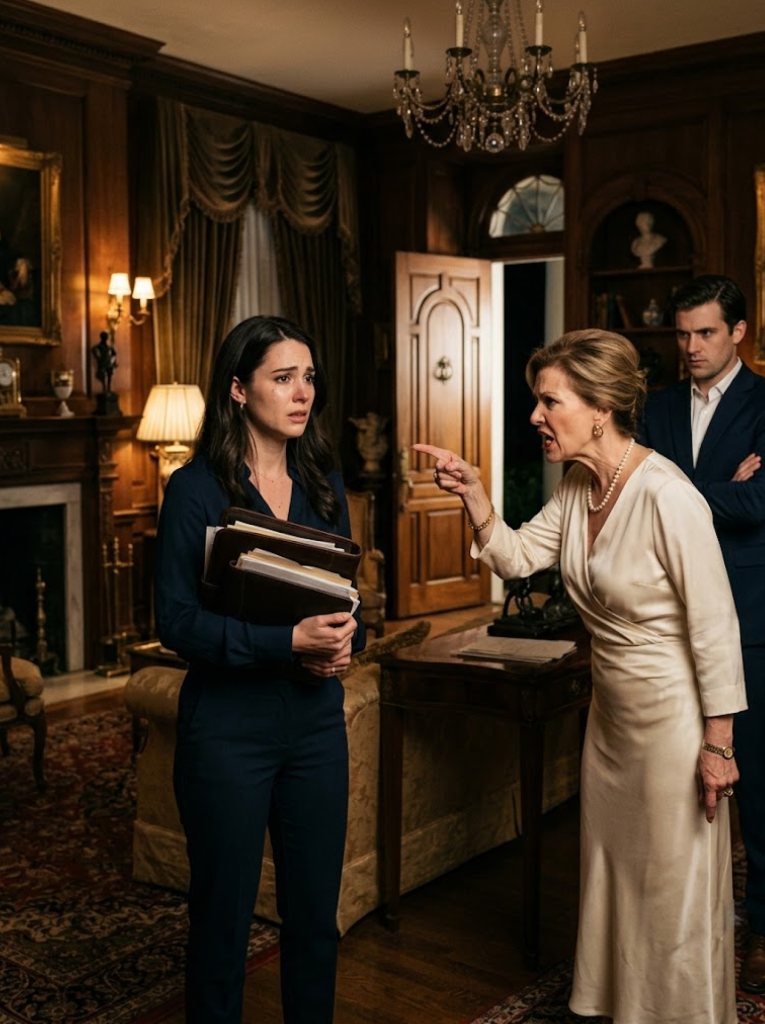
For three years, my husband and his mother treated me like I was lucky to be part of their family. Then, on my 27th birthday, my grandmother handed me ownership of a $150 million hotel. The moment I said I wanted to run it myself, my husband threatened divorce and his mother threw me out of the house. But before I could even pack a bag, my grandmother appeared at the door and asked one question that made them both go pale.My twenty-seventh birthday was supposed to be a quiet dinner.At least, that was what my grandmother had told me.When I arrived at the restaurant that evening, however, I realized her idea of “quiet” was very different from mine. She had reserved a private dining room in one of the nicest restaurants in downtown Chicago, complete with tall windows overlooking the river, fresh flowers on the table, and a pianist playing softly in the next room.My grandmother, Margaret Dawson, was already there.At seventy-eight, she still carried herself with the same calm confidence that made people straighten their backs when she entered a room. She had spent most of her adult life building businesses with my grandfather, and after he died, she continued managing their investments herself.She hugged me tightly.“Happy birthday, sweetheart.”“Grandma, this is too much.”“It’s dinner, Claire. Sit down before you complain.”I laughed and took the chair beside her.Across from us sat my husband, Nolan, and his mother, Vivian.Nolan looked handsome as always in a dark suit, though he had spent most of the evening checking his phone beneath the table. Vivian wore a cream designer dress and enough jewelry to make the restaurant lights bounce off her whenever she moved.I had been married to Nolan for three years.For most of those three years, Vivian had found small ways to remind me that she considered me less accomplished than her son.Sometimes she disguised it as concern.Other times she didn’t bother.That evening was no different.When the waiter poured wine, Vivian looked at me and smiled.“You look lovely tonight, Claire. It’s amazing what a little effort can do.”I knew exactly what she meant.Since leaving my accounting job after Nolan’s company began expanding, I had worked mostly from home, helping my grandmother with her charitable foundation and managing some investments on the side. Vivian described this as “not really working.”Nolan gave an uncomfortable laugh.“Mom.”“What? I gave her a compliment.”I waited for him to say something else.He didn’t.He rarely did.Instead, he checked his phone again.I had become good at ignoring moments like that. Keeping dinner pleasant always seemed easier than starting another argument that would end with Nolan telling me his mother “didn’t mean anything by it.”So I smiled and changed the subject.After dinner, the waiter brought out a small chocolate cake. Margaret waited until the candles were blown out before reaching beside her chair and lifting a dark leather folder onto the table.She placed it in front of me.“One more present.”I stared at it.“What is this?”“Open it.”Inside were several legal documents.At first, I assumed they had something to do with the foundation. Then I saw the property name printed across the first page.The Dawson Grand Hotel.I looked at my grandmother.The Dawson Grand was one of Chicago’s oldest luxury hotels, occupying almost an entire block near Michigan Avenue. My grandfather had purchased it decades earlier and spent years restoring it.“Grandma?”“As of this morning,” she said, “it’s yours.”I thought I had misunderstood.“What do you mean, mine?”“I transferred ownership to you.”My eyes moved back to the papers.There were signatures, ownership documents, trust records and valuation reports.The latest valuation stopped me cold.One hundred and fifty million dollars.I looked up.“You gave me the hotel?”Margaret smiled.“Happy birthday.”I couldn’t speak for several seconds.Nolan finally put his phone down.“How much did you say it’s worth?”I barely noticed the question.I was too busy trying not to cry.The hotel had always been important to my grandparents. My grandfather used to take me there as a child, letting me sit behind the concierge desk and pretend I was checking guests in.My grandmother knew that.“This is too much,” I whispered.“No, it isn’t.”“Why me?”“Because I trust you.”Those four words affected me more than the number on the valuation sheet.Vivian leaned forward.“Well, that’s certainly generous.”Her voice had changed.Suddenly, she seemed very interested.“Of course, a property of that size isn’t something you simply walk into and manage.”Margaret took a sip of wine.“I suppose we’ll find out.”Vivian smiled at me.“Nolan has experience running a company. I’m sure he’ll be able to handle most of the business side for you.”I glanced at Nolan.He didn’t correct her.Instead, he nodded slowly.“We can talk about it tomorrow.”Something about his tone bothered me.Not congratulations.Not pride.Planning.As we were leaving the restaurant, Margaret hugged me again.Then she whispered, “Don’t let anybody make decisions for you tonight.”I pulled back.“What does that mean?”She only squeezed my hand.“This gift will tell you a lot about the people around you.”I thought she was being dramatic.Less than an hour later, I understood exactly what she meant.The drive home was almost silent.Nolan didn’t turn on the radio. Vivian sat in the back seat staring out the window.We lived in a six-bedroom house in Lake Forest, a beautiful place Nolan loved to call proof that his business had finally made him successful.I used to feel proud every time he said that.That night, the second we entered the living room, Vivian dropped her purse onto the sofa.“I’ve been thinking about the hotel.”I was still holding the folder from Margaret.“Already?”“There’s a lot to arrange.”She sat down.“Nolan should take over as managing director. I’ll help oversee hospitality and events.”I actually thought she was joking.Then I saw Nolan’s face.He was serious too.I looked from one to the other.“You’ve decided all of this during the drive home?”Nolan loosened his tie.“Claire, you have to be realistic. You don’t know how to run a hotel.”“Neither do you.”“I run a company.”“An import business.”“Business is business.”Vivian sighed.“Please don’t make this difficult. Your grandmother gave you an asset, not a hobby. You need people who understand responsibility.”“I’ll hire people who understand hotels.”Nolan stared at me.“You’d hire strangers instead of trusting your husband?”“That’s not what I said.”“Then let me run it.”The speed of it unsettled me.The papers had been in my hands for barely two hours, yet Nolan was already talking as though my grandmother had handed him a new division of his company.“I want to learn how it works first.”Vivian laughed.“Learn?”I looked at her.“Yes.”“Claire, you’ve spent the last few years arranging charity dinners and sitting at home with a laptop. A hotel worth that much isn’t the place to discover whether you’re good at business.”I felt heat rise into my face.“I worked in finance before I married Nolan.”“For three years.”“Five.”Vivian waved her hand dismissively.Nolan stepped closer.“Mom’s being rude, but she’s not completely wrong.”That hurt more than Vivian’s comment.“So what exactly are you saying?”“I’m saying ownership doesn’t mean you have to prove something. Let me handle the operation. You can stay involved however you want.”“While you make the decisions?”“For us.”“No.”He stared at me.“What?”“The hotel was given to me. I want to understand it before I hand control to anyone.”His face tightened.“You’re being ridiculous.”“I’m being careful.”Vivian stood.“Your grandmother puts one expensive building in your name and suddenly you think you’re a businesswoman.”I looked at Nolan, expecting him to stop her.Instead he said, “Claire, if you’re going to start treating me like some employee who needs permission from you, we have a bigger problem.”“I haven’t treated you like anything.”“You just told me you don’t trust me.”“I said I want to run my own property.”He laughed once.Then he said something I never expected to hear on my birthday.“Maybe we should just get divorced.”The room went quiet.I waited for him to take it back.He didn’t.Vivian folded her arms.“Maybe that’s exactly what needs to happen.”I looked at my husband.“You’d divorce me because I won’t give you control of a hotel I received tonight?”“That’s not what this is about.”“What is it about?”“Respect.”I almost laughed.Apparently respect meant giving him whatever he asked for.Vivian walked toward the stairs.“If she wants to behave like this, she can do it somewhere else.”I frowned.“What?”She turned.“Pack your things and leave.”I stared at her.“This is my home.”“No, darling. This is my son’s home.”Nolan said nothing.That was the moment that hurt the most.Three years of marriage, and when his mother ordered me out, he stood beside her.I looked at him.“Are you really going to let her throw me out?”He rubbed his jaw.“Maybe some space would be good.”My eyes filled with tears.I hated that they did.I hated giving Vivian the satisfaction of seeing them.Fine.I would leave.I turned toward the stairs.Before I could take more than two steps, the front door opened.My grandmother walked in.Two men followed behind her, both carrying briefcases.Vivian stared at her.“Margaret? What are you doing here?”Margaret looked around the room.Then at my face.Then at the overnight bag Vivian had pulled from the hall closet and dropped at the bottom of the stairs.“What happened?”Nobody answered.I wiped my cheek.“Vivian wants me out.”Margaret looked at Nolan.“And you?”He cleared his throat.“We had an argument.”“Did you tell your wife to leave?”“It’s complicated.”Margaret’s expression barely changed.Then she looked at Vivian.“Let me make sure I understand. You’re throwing Claire out of this house?”Vivian straightened.“This is a family matter.”Margaret gave a small laugh.Then she asked the question that made both Nolan and Vivian go pale.“Have either of you ever bothered to check who owns this house?”Silence.Vivian frowned.“What are you talking about?”One of the men beside my grandmother opened his briefcase.“My name is Daniel Brooks. I represent Mrs. Dawson and several trusts belonging to the Dawson family.”He removed a document.“This property was purchased seven years ago through the Claire Dawson Residential Trust. The sole beneficiary is Claire.”I stared at him.“What?”Nolan closed his eyes.That told me everything.“You knew?”He looked at me.“Claire—”“You knew the house was mine?”“My company was struggling when we moved in. Your grandmother arranged the purchase. I thought eventually—”“You told everyone you bought it.”“I paid household expenses.”“That’s not the same thing.”Vivian looked genuinely stunned.“You said this house was yours.”Nolan didn’t answer.Margaret looked around the living room.“For three years, you’ve sat in my granddaughter’s home and treated her like she should be grateful you allowed her inside.”Vivian’s face turned red.“That isn’t fair.”“No?”Margaret’s voice remained calm.“You just ordered her out.”Vivian started to speak again, but I stopped her.“No.”Everyone looked at me.I had spent years smoothing things over.That night, I suddenly didn’t want to.I looked at Nolan.“You wanted space.”His face changed.“Claire, don’t do something you’ll regret.”“I won’t.”I looked at Daniel.“What do I need to do to make them leave?”Vivian gasped.“You can’t be serious.”Daniel answered calmly.“Tonight, you can request that they leave voluntarily. We can handle everything else properly tomorrow.”Nolan came closer.“Claire, listen to me. I was angry.”“You threatened divorce because I wouldn’t give you my hotel.”“I didn’t mean it.”“Your mother told me to get out.”“She was upset.”“And you stood there.”That was the part he couldn’t explain.I gave them twenty minutes to collect what they needed for the night.Vivian spent most of those twenty minutes switching between crying and blaming Nolan.He tried to talk to me twice.I wouldn’t listen.When the front door finally closed behind them, I leaned against it and cried until my chest hurt.Margaret didn’t tell me to stop.She simply sat beside me on the floor.The next morning, I woke with a headache and a hotel worth $150 million.For a few minutes, I wished none of it had happened.Then I remembered Nolan standing beside his mother while she ordered me out of my own house.I went downstairs.Margaret was already drinking coffee.“I can’t run that hotel,” I said.She looked up.“Why?”“Because I don’t know how.”“That’s different from being unable to learn.”I sat across from her.“What if I ruin it?”“You won’t run it alone.”She reminded me of all the work I had done with her foundation over the years.I had reviewed budgets, found duplicate invoices, renegotiated supplier contracts and helped evaluate investments.I had treated those things as favors for my grandmother.She hadn’t.“I wasn’t giving you busywork, Claire.”I stared at her.“You were testing me?”“Teaching you.”That afternoon, I walked into the Dawson Grand as its owner.I was terrified.I didn’t pretend otherwise.The general manager, Stephen Cole, introduced me to department heads and executives who had been running the property longer than I had been alive.Some were welcoming.Others clearly expected me to disappear within a month.At the first executive meeting, I mostly listened.Then the chief financial officer mentioned a consulting payment that caught my attention.It was nearly $400,000, paid in advance to a company called North Bridge Advisory.I asked to see the contract.The room became uncomfortable.The company had existed for less than three weeks.Its address belonged to a mailbox service.“Who approved this?” I asked.The CFO hesitated.Finally, he said, “Your husband.”My stomach tightened.“Nolan has no position here.”“He told us he was acting on behalf of the family. He said ownership changes were coming and certain funds needed to be moved before the transition.”“Moved where?”Nobody answered immediately.That was enough.I ordered an outside audit.Within days, we discovered several suspicious payments connected to Nolan or people around him.He had been preparing for my grandmother to hand me something valuable.He just hadn’t known how valuable.Then came the message.Nolan sent it late one night.He told me he had private photographs of me from vacations during our marriage.Nothing obscene, but personal enough that I would never want them spread around strangers online.His message was short.Give him half the hotel, or the photographs would become public.I sat staring at my phone for several minutes.The man I had slept beside for three years was blackmailing me.My first instinct was to call him and beg him not to do it.Instead, I called Daniel.He arrived at my grandmother’s office less than an hour later.After reading the messages, he said, “Do not answer him.”“Why?”“Because he’s just given us evidence.”For the next twenty-four hours, Nolan continued messaging me.I stayed silent.Then he made the mistake that turned a threat into something much more serious.He created an anonymous social media account and uploaded one of the photographs.It was removed quickly.Not quickly enough.Digital investigators preserved it and traced the account.By then, the hotel audit had also uncovered close to five million dollars in questionable contracts and transfers connected to companies Nolan had recommended.His own import business was in worse trouble than I knew.Several lines of credit had been maxed out.Suppliers were demanding payment.And, as investigators soon discovered, Vivian had been hiding debts of her own.She had spent years gambling privately and borrowing money to cover losses.Suddenly, the way they had reacted to my hotel made awful sense.They hadn’t seen a birthday gift.They had seen a way out.Nolan was arrested weeks later on charges connected to the extortion attempt and financial fraud.Vivian wasn’t charged with everything investigators uncovered, but the comfortable life she had spent years showing off disappeared quickly.Most of it had never truly belonged to her anyway.The divorce took months.During that time, I worked at the hotel almost every day.I made mistakes.I asked questions that probably sounded embarrassingly basic.I kept experienced managers instead of pretending I knew their jobs better than they did.Gradually, the numbers improved.Wasteful contracts were canceled. Several executives involved in Nolan’s deals were replaced. Staff who had initially treated me like a temporary owner began coming directly to me with problems.One afternoon, about six months after my birthday, I walked through the lobby and realized something strange.I wasn’t scared anymore.Not of the hotel.Not of being divorced.Not even of being alone.At the final divorce hearing, Nolan looked very different from the man who had sat across from me at my birthday dinner.He looked tired.His attorney did most of the talking.The evidence of the blackmail attempt made his position difficult, while the trusts my grandmother had established kept him from claiming the hotel or the house.Before we left the courtroom, he approached me.“Claire.”I stopped.He looked as though he hadn’t slept.“I didn’t think any of this would happen.”That was probably true.He had expected me to give in.“I was under pressure,” he continued. “My business was falling apart. Mom had debts. I panicked.”“You threatened me with private pictures.”“I know.”“You tried to move money out of the hotel before I even walked through the door.”He lowered his eyes.Then he said, “I loved you.”I believed he believed that.That was perhaps the saddest part.Maybe Nolan had loved me in whatever way he knew how. But somewhere along the way, he had also decided that loving me entitled him to what belonged to me.I didn’t need to argue about the difference anymore.“I hope you figure out why you did what you did,” I said. “But you won’t figure it out with me.”I walked away.A year after my twenty-seventh birthday, the Dawson Grand was doing better than it had in years.The hotel had become my job rather than simply my inheritance.And on the third floor, we opened something my grandmother and I had spent months planning.A small nonprofit center offering legal guidance, temporary financial assistance and career training to women trying to rebuild after divorce, financial abuse or controlling relationships.We named it after my grandmother.She complained for two weeks.Then she cried at the opening ceremony.That evening, after the guests left, Margaret and I sat on the rooftop terrace overlooking the city.She handed me a glass of sparkling water.“Quite a birthday present,” she said.I laughed.“You almost destroyed my marriage.”“No.”I looked at her.She raised an eyebrow.“Your marriage was already in trouble. The hotel simply gave Nolan something he wanted badly enough to stop pretending.”I thought about that.She was right.The money hadn’t changed him in one night.It had revealed a side of him I had spent years making excuses for.Vivian hadn’t suddenly become cruel because I inherited a hotel either. She had always believed I should stay quiet and be grateful. The inheritance simply gave me something worth saying no over.For years, I thought peace meant avoiding arguments.I thought being a good wife meant being understanding every time Nolan dismissed my feelings.I thought swallowing Vivian’s insults proved I was mature.None of those things saved my marriage.They only taught two people how much I would tolerate.That night, I returned to my house alone.The same house Vivian had once ordered me out of.I walked through the kitchen, left my shoes beside the stairs and poured myself a glass of water.Nothing dramatic happened.There was no music playing.Nobody was waiting to applaud me.I simply stood there for a moment and realized how different the house felt when I no longer had to make myself smaller inside it.A year earlier, I had believed my grandmother’s greatest gift was a hotel worth $150 million.It wasn’t.The hotel gave me money and responsibility, but the most important thing it gave me was a reason to finally say no.And once I did, I learned who had only been comfortable with me when the answer was always yes.

Oct 25, 2026
Jeff Garlin's Emotional Struggle After 'Goldbergs' Exit Revealed New

Jeff Garlin's Emotional Struggle After 'Goldbergs' Exit Revealed

Jeff Garlin is opening up about his exit from The Goldbergs. “When the producer of the show came to my house [after] I was done, [I] didn't want to go back. He said, ‘What would it take for you to go back?’” Garlin, 64, recalled on the Wednesday, October 21, episode of the “Where Everybody Knows Your Name” podcast. “I said, ‘A big raise and I work one day a week.’ They said, ‘Yes,’ and if it sounds too good to be true, it's too good to be true.” He continued, “I had resentment from my castmates, not as much the crew, but there were some of them [who harbored] great resentment. I didn't know it at the time, though. I was naïve. I didn't know they knew anything about anything.” Garlin, who played patriarch Murray Goldberg, was written off the 10th season amid an HR investigation into his behind-the-scenes behavior after complaints of alleged verbal misconduct. (Garlin has vehemently denied the accusations.) Before his character was killed off, Garlin explained that he initially agreed to film seven episodes in two days at a time. “At first I'm like, ‘Yeah, great.’ And then I think, ‘I don't want to be dead man walking around that set.’ And then, ‘No, I'll do it,’” he told podcast host Ted Danson. “I had a nervous breakdown and I was going to commit suicide. I reached out to Susie [Essman], and I said, ‘I hate when people don’t reach out, but at noon today, I will be dead. I’m letting you know.’” His Curb Your Enthusiasm costar Essman, 71, subsequently called Jeff’s ex-wife, Marla Garlin, and the comedian’s girlfriend, Sari Tracht, who reached out to his best friend Brad Morris. “He watched me while they were looking for a place for me to go, and the choices came down to two places that could be helpful for me, with all the research they were doing and talking to people,” Jeff said, noting his friends found treatment facilities with vacancies in California and Ohio, respectively. “Middle of winter, I went to Cincinnati because I was serious. I'm not going to some f***ing rehab in Beverly Hills. F*** that, man.” During Jeff’s stint at the Cincinnati-based facility, he underwent dialectic behavior therapy (DBT) that apparently helped the actor deal with his depressive thoughts. “I was no longer suicidal, they helped get me to a point where I could stand,” he added. “Then, I went out in the world and it took time between therapy and medication for bipolar [disorder and] all that stuff to where I felt, kind of, whole. I'm just now, this is from five years ago, feeling really good.” If you or someone you know is struggling or in crisis, help is available. Call or text 988 or chat at 988lifeline.org.

Oct 25, 2026
Why This Engineer's Pay Stub Made Waves in the Company New

Why This Engineer's Pay Stub Made Waves in the Company

When the CEO asked why I was leaving, I quietly placed my latest pay stub on her desk. Vivian Hawthorne glanced at the number at the bottom. Then she looked again. $312.64. For several seconds, she said nothing. Then she picked up her phone. “Get Finance and HR up here. I also want Marcus Hale and Dean.” She paused. “No. I mean right now.” That was the moment my resignation turned into something much bigger than I ever imagined.I had worked at Hawthorne Automation for 6 years.I was a field systems engineer, which meant spending countless nights in roadside hotels and factory control rooms, trying to restart machines that had suddenly stopped working.Packaging lines. Conveyors. Sensors. Control panels.I genuinely loved the work.What I had stopped trusting was payday.That Friday, a cardboard box sat beneath my desk. Inside were 3 notebooks, a chipped coffee mug, 2 screwdrivers I had bought myself, and a photograph of my 6-year-old daughter, Ivy, laughing at the zoo.I had already given 3 weeks’ notice, finished my service calls, and trained Miles, the younger engineer taking over my territory.Then Vivian’s assistant appeared.“Grant, Vivian wants to see you.”“Right now?”“Right now.”Vivian had founded Hawthorne Automation with her father. In the early years, she regularly walked the factory floors, talked to technicians, and asked whether employees had the equipment and support they needed.Then the company expanded.More factories. More departments. More managers.Eventually, employees like me knew her mostly through company emails and quarterly videos.When I entered her office, my resignation letter was already on her desk.“6 years,” she said.“Yes.”“You didn’t ask for a counteroffer.”“No.”“You didn’t request another territory.”“No.”“You simply resigned.”“Yes.”She studied me.“Why?”I had prepared the usual answer.Better opportunity. Less travel. More time with family.Instead, I opened my folder.“I can’t afford to keep working here.”I slid my pay stub across her desk.My gross earnings included my regular salary, emergency overtime, and on-call compensation.Then came the deductions.Project accountability adjustment.Customer responsibility charge.Tool assessment.Attendance adjustment.The company had taken several thousand dollars in disputed charges from that pay cycle, including money earned during emergency assignments.After taxes, insurance, and the other deductions, just $312.64 reached my bank account.Vivian frowned.“What happened at Meridian Packaging?”“Their production line kept shutting down.”“You handled the emergency call?”“Yes.”“Did you repair it?”“Yes.”“Did the customer complain?”“No.”Her expression changed.She pointed at one deduction.“Then why were you charged for Meridian?”“Operations said I was responsible for the project outcome.”She pointed at another.“And this?”“Same project. Different code.”“You were charged twice?”“Yes.”“Who approved it?”“Marcus Hale submitted the adjustments. HR processed them.”“And who authorized them in Operations?”I hesitated.“Dean.”Her younger brother.Dean Hawthorne had become vice president of operations 3 years earlier.He introduced what he called an ownership culture.According to Dean, employees needed to think like owners and take financial responsibility for preventable mistakes.In theory, it sounded reasonable.In practice, it became a system where managers could assign financial penalties to employees under vaguely defined rules.My first deduction was $200.I had replaced a failed sensor at a customer’s factory. My service report included readings, part numbers, replacement photographs, and the customer’s signature.But I had forgotten 1 photograph of the damaged sensor before disposing of it.Marcus called me into his office.“$200 documentation adjustment.”I argued that the report still contained everything needed to verify the repair.He shrugged.“Consider it a cheap lesson.”I let it go.Later, a customer failed to return a satisfaction survey.Another deduction.Then a shared wrench disappeared.4 technicians were charged.Two weeks later, someone found the wrench in Marcus’s service truck.Nobody received a refund.Each time something happened, I told myself the same thing.Don’t risk your job over a few hundred dollars.I had a mortgage. My father needed regular medical appointments. My wife, Mara, worked at a pharmacy, and Ivy had just started kindergarten.For a long time, we managed.Then came Meridian Packaging.Their new automated production line had been shutting down without warning.I had barely returned from another assignment when an emergency request came through.Nobody volunteered.I did.Before I left, Mara handed me my phone charger.“Take pictures of everything.”“I always do.”“No, Grant. This time I mean everything.”So I did.Cable routes. Sensor labels. Terminal connections. Equipment specifications.After several hours of troubleshooting, I discovered that some installed sensors did not match the approved design. Several signal cables had also been routed too close to high-power wiring.I worked with the customer’s electrician to correct the problems.The line restarted.Their maintenance manager signed my service report.No software defect identified. Installation and procurement discrepancies documented. Service response satisfactory.I came home exhausted but relieved.A few days later, Marcus called me into his office.An internal responsibility form was sitting on his desk.It classified the problem differently.Field software/configuration issue.Responsible engineer: Grant Mercer.I stared at it.“That isn’t what happened.”“It’s an internal cost allocation.”“The customer report clearly identifies the sensors and wiring.”“If we classify it that way, procurement and production absorb the cost.”“They should, if they caused it.”Marcus leaned back.“Grant, somebody has to own the outcome. We can’t have every department pointing fingers whenever a project goes over budget.”“Then investigate who actually caused the problem.”His expression hardened.“Sign the form.”“No.”“You’re making this harder than necessary.”“Then process it without my signature.”He did.That pay period, Meridian-related charges swallowed several thousand dollars of my compensation.A few days later, Mara’s debit card was declined at the grocery store.She came home carrying 1 small bag.Eggs. Spinach. Yogurt for Ivy.She placed it on the counter.“Grant, is there something about our finances you haven’t told me?”I finally showed her the pay stub.She read every line.“Was Meridian your fault?”“No.”“Can you prove it?”“Yes.”“Then why are we paying for it?”Before I could answer, Ivy called from the hallway.“Mom, am I still doing art class next month?”Mara closed her eyes.“We’ll see, sweetheart.”Then she looked at me.“Every time this happens, you say it isn’t enough to fight about.”I said nothing.“But it’s never just one thing, Grant.”That night, I updated my résumé.2 weeks later, another automation company offered me a position with less travel, clearer compensation, and written review procedures for any performance-related adjustments.I accepted.Then I resigned from Hawthorne.And now Vivian Hawthorne was sitting across from me, staring at the paycheck that had finally pushed me out.She reached for her phone.Within 15 minutes, her office was full.Adrian Cole, the CFO, opened his laptop.Renee Lawson from HR arrived with a folder.Marcus walked in looking irritated.Dean followed him.He glanced at me, then at Vivian.“What is this about?”Vivian turned the pay stub around.“Explain this.”Dean read it.“Employee accountability adjustments.”“Explain it without the slogan.”Dean sat down.“Project overruns were increasing. Managers needed a way to discourage preventable losses. The accountability program was designed to make employees more careful about decisions that affect costs.”Vivian looked at him.“Did Grant cause the problem at Meridian?”Dean hesitated.“Not directly.”“Did he choose the sensors?”“No.”“Approve installation?”“No.”“Then why did he lose thousands of dollars?”“Because field service owns the customer outcome.”Adrian interrupted.“What written authorization supports these deductions?”Renee opened her folder.“Employees acknowledged the accountability policy.”“Did Grant authorize these specific amounts?”“No separate authorization.”“Who independently verified that he caused the loss?”Renee hesitated.“Operations reviewed the responsibility classification.”Adrian stared at her.“So Operations assigned the responsibility, initiated the deduction, and confirmed its own decision?”Nobody answered.Vivian rubbed her forehead.“Why hasn’t any of this appeared in our employee-relations reports?”Renee shifted in her chair.“Most complaints were categorized as routine payroll inquiries.”Vivian looked up sharply.“Routine payroll inquiries?”“Yes.”“So employees could dispute being charged for something they didn’t cause, and the reports I received would show ordinary payroll questions?”Renee said nothing.Vivian turned toward me.“Why didn’t anyone tell me?”For the first time, I felt angry.“People did complain.”“Not to me.”“You’re the CEO.”“That shouldn’t matter.”“But it does.”I took a breath.“I disputed charges twice. HR sent both complaints back to Marcus. He confirmed his own decisions, and HR closed the cases.”Vivian looked at Renee.“Is that true?”Renee searched her laptop.A minute later, she found the emails.“Yes.”Vivian stared at the screen.For a moment, she looked genuinely ashamed.“I kept asking whether employee complaints were being resolved,” she said quietly. “I never asked who was deciding they were resolved.”Then she turned to Adrian.“How much money has been deducted under this program?”Adrian began typing.“I can pull a preliminary total from the payroll codes, but it won’t tell us which deductions were justified.”“Do it.”Renee supplied the relevant codes.Project accountability.Customer responsibility.Tool assessment.Documentation penalty.Attendance adjustment.Adrian ran the query.His expression changed.“That’s higher than I expected.”“How much?” Vivian asked.“Over $1 million in the last 3 years.”The room went silent.Dean immediately leaned forward.“That doesn’t mean $1 million was improperly deducted.”Adrian nodded.“Correct. This is only a preliminary figure.”Vivian looked at the screen.“How many employees?”Adrian typed again.“214.”I felt sick.I knew other technicians had been affected.I hadn’t imagined the scale.Vivian turned toward Marcus.“Walk me through Meridian.”Marcus shrugged.“The customer had downtime. Grant serviced the equipment. Operations allocated a portion of the costs to field service.”“Was there a software defect?”“Not exactly.”“What does that mean?”Marcus hesitated.“The internal classification was broader than the technical diagnosis.”I opened my folder.Mara’s words came back to me.Take pictures of everything.I handed Vivian the customer-signed service report.She read it carefully.Then she compared it with the internal allocation form.“Why does one say there was no software defect while the other assigns Grant responsibility for a configuration problem?”Marcus looked toward Dean.Dean answered.“The internal form wasn’t intended to replace the technical report. It was a cost-accountability classification.”Vivian looked at Marcus.“Did Grant agree with it?”“No.”“Did anyone outside Operations review the technical evidence?”Marcus didn’t answer.“Were the sensor and wiring issues later confirmed?”Dean finally spoke.“Yes. Production changed some specification controls afterward.”“So there was a confirmed upstream problem.”“Yes.”“Did Grant’s deductions get reversed when you discovered that?”Silence.Vivian looked at Adrian.“Freeze new deductions under these codes immediately.”Dean sat forward.“You cannot shut down an entire program over one disputed case.”Vivian turned toward him.“I’m not shutting it down because of one case. I’m freezing it because we cannot establish that the process was properly controlled.”She looked at Renee.“Preserve every complaint and approval record.”Then Adrian.“Payroll logs, adjustments, reversals, reimbursements, and coding history.”Finally, Dean and Marcus.“No changes to existing records without documented authorization. And no private discussions with affected employees about their cases outside the review process.”Dean’s expression hardened.“This is an overreaction.”Vivian reached for the phone.“Get Legal involved.”Then she stopped.“Actually, outside counsel.”Dean stared at her.“You’re bringing in outside lawyers?”“Yes.”“Over Grant’s paycheck?”“No.”She pointed to Adrian’s laptop.“Because that paycheck just exposed a program affecting 214 employees.”Then she looked at me.“Grant, you’re leaving today. You’ll still be paid through the end of your notice period.”I froze.“Am I being fired?”“No. I don’t want you returning to Operations while the records are being secured.”Marcus looked at me as he left.Not frightened.Accusing.As if I had created the problem simply by revealing it.That afternoon, I drove home with my cardboard box.Mara was waiting in the driveway.“Well?”I placed the pay stub on the kitchen counter.“The CEO didn’t know how bad it was.”Mara raised an eyebrow.“Didn’t know, or didn’t want to know?”“I think she genuinely didn’t know.”“That doesn’t make it okay.”“No.”And she was right.Vivian had been responsible for understanding what was happening in her company.But the problem was bigger than one uninformed executive.Operations saw project costs.HR saw completed forms.Finance processed payroll codes.Executive reports showed routine inquiries being resolved.Employees were the only ones experiencing the entire system.Several days later, outside counsel contacted me.I agreed to an interview.I brought everything.Emails.Pay stubs.Photographs.The Meridian service report.Marcus’s internal allocation form.They asked precise questions.Had Dean personally ordered Marcus to change the classification?“I don’t know.”Had Dean ever told me to falsify anything?“No.”Had Marcus threatened to fire me?“No.”Did I believe assignments changed after I challenged deductions?“I suspected it, but I couldn’t prove why.”I refused to exaggerate.The facts were already serious enough.Over the following weeks, investigators interviewed other employees.Stories emerged.A technician had been charged after a customer changed a project schedule and created overtime.A production specialist lost money over scrap caused by an approved design revision.Several employees had been charged for shared tools later found in supervisors’ storage.Others received attendance penalties tied to company travel delays.Not every complaint was valid.One employee had damaged equipment through clear negligence and signed a separate repayment agreement.Another had misused a company vehicle.The investigation wasn’t about declaring every worker innocent.It was about determining which charges had a factual and lawful basis.About 6 weeks after my resignation, Hawthorne began issuing provisional corrections for clearly unsupported deductions.Miles called first.“They returned my tool charges.”“All of them?”“All 3.”Then another technician received money.Then Harold.The refunds began quietly while the broader investigation continued.Several months later, the final audit findings were released internally.The original $1 million figure had covered only the payroll codes Adrian identified in Vivian’s office.Investigators found additional affected compensation categories and related payroll errors.When repayments, tax corrections, applicable interest, and other remediation were included, the total cost to Hawthorne reached millions.The company announced that several adjustment categories would be permanently discontinued.Employees would receive individualized decisions.Disputed cases could be appealed to independent reviewers.Then came the management consequences.Investigators discovered that Marcus had submitted significantly more employee adjustments than most other operations managers.Some were supported.Many were not.They also found emails showing how he responded when employees challenged him.Take ownership.Cheap lesson.The system needs teeth.In one case, an employee challenged a charge caused by a customer changing a project’s scope.Marcus replied that reversing deductions whenever someone complained would weaken accountability.That email explained everything.The goal had shifted from determining responsibility to discouraging complaints.Marcus was terminated for repeated misuse of the policy, unsupported classifications, and documented retaliatory conduct.Dean’s case was more complicated.He hadn’t personally approved every deduction.Investigators found no evidence that he had directed Marcus to falsify Meridian’s records.But he had designed the program.He had connected management performance to project-cost recovery.And he had ignored warnings that managers were using financial penalties too aggressively.The board removed Dean’s authority over employee compensation and field operations, eventually moving him into a narrower strategic role.Some employees thought he should have been fired.Part of me agreed.But I also understood that fairness meant judging each person’s actual conduct, not simply choosing the harshest punishment.My individual reimbursement notice arrived shortly afterward.Meridian deductions: reversed.Missing-wrench charge: reversed.Customer survey charge: reversed.Documentation penalty: reversed.Two attendance deductions were reviewed.One was reversed.One remained.Mara read the notice.“They kept that one?”“Yes.”“Were you actually late?”I thought about it.“Yes.”“Then it’s fair.”I laughed.She was right.The money returned to us was substantial.We rebuilt our savings, cleared the credit-card debt from those difficult months, and finally enrolled Ivy in the art program she had missed.Harold received more than $10,000 because his unsupported deductions had accumulated over several years.He called me crying.“My wife thought I was terrible with money.”I didn’t know what to say.For years, many of us had blamed ourselves for financial instability that was partly being created by the company.The repayments couldn’t undo everything.But they mattered.Months later, Vivian asked whether I would participate in 3 paid consulting sessions while Hawthorne redesigned its compensation policies.I agreed, after clearing the limited work with my new employer.I wasn’t returning as an employee.I simply understood what had failed.During one session, a younger engineer asked:“So are you saying employees shouldn’t be accountable for mistakes?”“No,” I replied.“I’m saying accountability shouldn’t be a surprise.”The redesigned policies protected base wages, established transparent bonus formulas, and required proper evidence and independent review before any lawful financial adjustment.Managers could still discipline employees for legitimate misconduct.But they could no longer invent paycheck penalties based on vague responsibility labels.During the final session, Dean approached me.“Grant.”“Dean.”He looked uncomfortable.“I owe you an apology.”I waited.“I still believe employees should care about the financial consequences of their decisions.”“So do I.”“But I thought making them bear those consequences would encourage ownership.”I looked at him.“Owners get upside.”He stopped.“They also get information,” I continued. “Decision-making authority. Control.”Dean nodded slowly.“We gave you responsibility without those things.”“You gave us the losses.”He looked down.“Yes.”For once, he didn’t defend the slogan.And that mattered.I didn’t need to become his friend.I didn’t even need to forgive everything.I only needed him to understand what had been wrong.About 1 year after my resignation, Vivian invited me to lunch.We met at a diner near the interstate.Halfway through breakfast, she placed a folder beside my plate.I stared at it.“No.”She laughed.“You haven’t opened it.”“Still no.”“It’s a job offer.”“For what?”“Director of Field Reliability.”I smiled.“You created a position.”“We need someone who understands what happens in the field and what happens when executives design policies without listening to the people affected.”“Higher salary?”“Yes.”“Less travel?”“Yes.”“Direct access to senior leadership?”“Yes.”I looked at the folder.A year earlier, I would have given almost anything for that opportunity.Now it was sitting in front of me.And I didn’t want it.“Vivian, I appreciate the offer.”“But?”“But Hawthorne had 6 years to value my work while I was there.”She nodded.“That’s fair.”“I’m glad the company changed. I’m glad people got their money back. I don’t want Hawthorne to fail.”“I know.”“But fixing the system doesn’t erase why I had to leave.”For several seconds, she said nothing.Then she closed the folder.“I understand.”She didn’t argue.That mattered more than the salary.My new job at Northstar Controls had become predictable in the best possible way.I still worked hard.I still traveled.But when payday came, the numbers made sense.When something changed, I received an explanation.And when I disagreed with a manager, I could ask questions without worrying that my paycheck would mysteriously shrink.Ivy eventually returned to art class.Then, 6 months later, she announced that she wanted to play soccer instead.For a moment, I almost objected.Art class had come to symbolize everything our family had nearly lost.Mara stopped me.“It’s her hobby, Grant.”She was right.Ivy didn’t need to keep painting to prove our family had recovered.We signed her up for soccer.She was terrible.She loved it.And watching her run across the field without knowing what we had once sacrificed to pay for those ordinary childhood experiences was worth more than anything Hawthorne could have offered me.Years later, I became a supervisor at Northstar.When one of my engineers made a costly mistake, I remembered Hawthorne.Instead of immediately assigning blame, we investigated.The engineer had made an error.But the process had also failed.A verification step was missing, software safeguards were inadequate, and the schedule had been rushed.We corrected the system and coached the employee.Nobody invented a surprise deduction.That experience confirmed something I had learned the hard way.Accountability didn’t have to mean arbitrary punishment.And a workplace where employees could question decisions was stronger than one where they were afraid to speak.I sometimes thought about my final morning at Hawthorne.The cardboard box beneath my desk.The photograph of Ivy laughing.The resignation letter on Vivian’s table.And the pay stub showing exactly $312.64.For years, I had told myself that each unfair deduction was too small to challenge.$200.A missing wrench.A customer survey.A disputed responsibility form.One bad paycheck.I kept waiting for things to get better.Instead, the system learned that employees would absorb the losses quietly.Until one day, I couldn’t anymore.When Vivian asked why I was leaving, I finally told her the truth.That one conversation led to an investigation, substantial repayments, management consequences, and a company-wide reform.But the most important change wasn’t the money returned or the people disciplined.It was that employees finally had somewhere independent to go when something was wrong.They no longer had to wait until they were carrying a cardboard box toward the exit before they felt safe asking questions.Because the most dangerous workplace isn’t always the one where everyone complains. Sometimes it’s the one where nobody believes complaining will change anything.


Oct 25, 2026
Jed York's Prostitution Arrest: Why Bay Area Leaders Want Campaign Cash Returned New

Jed York's Prostitution Arrest: Why Bay Area Leaders Want Campaign Cash Returned

Bay Area Democrats who received campaign cash from 49ers owner Jed York are facing fresh pressure to give it back, as three former civic committee members demand answers about his prostitution-related arrest and push to unseal the records.The campaign takes aim at Democratic Rep. Ro Khanna, Rep. Sam Liccardo and the Democratic Congressional Campaign Committee (DCCC), calling on politicians and political organizations to return or donate contributions from York and 49ers-affiliated businesses.A frame grab shows San Francisco 49ers owner Jed York.“Give the money back. Unseal the arrest record,” declares the petition at jedyorkexposed.com. Its message to Democratic recipients is pointed: The organizers want the money out of their campaign coffers and the public records surrounding York’s arrest released.The petition was created by Holly Roberts, a former Charter Review Committee member; Helen Narcisco, a former Senior Advisory Committee member; and Carolyn McAllister, a former Civil Service Commission member. The website says the checks were written before York’s arrest and that recipients have not said whether they will return them.The page lists a $5,700 contribution from York to Khanna for Congress dated May 14, 2024, and a $3,300 contribution to Liccardo for Congress dated June 14, 2024. It also identifies a $2,500 York contribution to the DCCC, alongside contributions from DeBartolo Corp. and 49ers affiliates to California candidates.The group’s demands extend beyond campaign cash. It wants Columbiana County to unseal the full arrest record, including the police report, booking file and court record, arguing that the public should have access to the documents.York was fined $500,000 by the NFL and suspended for six games following a prostitution-related arrest. The organizers want NFL Commissioner Roger Goodell to reopen the case and impose a stiffer financial penalty, arguing that the existing punishment fails to reflect the wealth of a team owner.The league’s treatment of coaches provides another point of contention. Mike Vrabel, Aaron Glenn and Nick Sirianni have each faced $250,000 fines for sideline arguments with referees — penalties that look very different when set against the financial hit imposed on York.Body camera footage shows the arrest of Jed York for prostitution in East Palestine, Ohio. East Palestine Police Dept.The website says the checks were written before York’s arrest and that recipients have not said whether they will return them. East Palestine Police DeptThe group’s demands extend beyond campaign cash. Getty ImagesMike Florio, editor in chief of Pro Football Talk, has questioned the NFL’s disciplinary math, highlighting the contrast between the coaches’ fines and York’s penalty. Florio described York’s fine as “a mere $500,000” following a prostitution-related arrest, while arguing that the coach fines were “over the top.”Download The California Post App, follow us on social, and subscribe to our newsletters California Post News: Facebook, Instagram, TikTok, X, YouTube, WhatsApp, LinkedInCalifornia Post Sports Facebook, Instagram, TikTok, YouTube, XCalifornia Post Opinion California Post Newsletters: Sign up here!California Post App: Download here!Home delivery: Sign up here!Page Six Hollywood: Sign up here!

Oct 25, 2026
Why Tom Brady and Candice Swanepoel's Romance Is Stirring Buzz New

Why Tom Brady and Candice Swanepoel's Romance Is Stirring Buzz

Tom Brady and supermodel Candice Swanepoel are dating, a source exclusively tells Us. Brady, 49, and Swanepoel, 38, have been together “for a while,” per the insider. Neither the retired NFL quarterback nor Swanepoel have publicly addressed their newfound romance. Us reached out for comment. Brady was previously married to supermodel Gisele Bündchen from 2009 to 2022. The pair now coparent son Benjamin, 16, and daughter Vivian, 13. (Brady also shares eldest son Jack, 19, with ex Bridget Moynahan.) Following their divorce, Brady has been romantically linked to the likes of Irina Shayk and Alix Earle. Despite a series of headline-making flings, Brady has remained relatively mum about his love life. “I don’t have much time for a personal life or much time for myself, but I love working, and I love my kids,” Brady told People in January. “I like to be busy and try to really stay fulfilled in the things I’m doing, so I’m working on some really cool projects and I’m involved with some great teams of people that are doing some really positive things.” He continued at the time, “My oldest [son] is 18. But seeing him thrive and grow, and there’s nothing greater for a parent when you’re seeing your kids do well. I’m so blessed in so many parts of my life.” As for Swanepoel, she was most recently in a decade-long relationship with ex-fiancé Hermann Nicoli before their 2018 split. Swanepoel and Nicoli, 44, are parents of two sons: Anacã, 10, and Ariel, 8. Swanepoel, who has kept her dating life private since the breakup, has been candid about balancing motherhood with her busy modeling career. “Life is a constant search for balance, for me at least, and yes I do sometimes feel overwhelmed, but I’m very in tune with my children’s needs, then my own personal needs, which are also important,” she told V magazine in 2023. “Sometimes it’s easy to forget. I’ve realized to be a better mother, I know I need to also take care of myself, whether that be about my [physical] health or mental health or being able to excel in my career and business because it brings me joy and so my children have begun to understand that too.” She added, “I think it’s very healthy and important for them to see everything I do. One of my most vivid memories as a child was seeing my father wake up at 4 a.m. to take care of our farm and his dedication and drive is something that is now part of me and something I hope they will learn from me.”

Oct 25, 2026
Why Sharon Stone's Bold Basic Instinct Recreation is Turning Heads New

Why Sharon Stone's Bold Basic Instinct Recreation is Turning Heads

Sharon Stone has taken fans back to one of the most unforgettable moments of her Hollywood career, recreating the famous interrogation scene from Basic Instinct at the age of 68.The actress posed for a special edition of Elle Spain, celebrating the magazine’s 40th anniversary. The photographs were shared on the publication’s social media account.In one of the striking images, Stone sits confidently on a chair wearing a green trench coat, recreating the unmistakable atmosphere of the provocative scene that made cinematic history.In the 1992 thriller, Sharon played Catherine Tramell, a mysterious woman whose behavior during a police interrogation became one of the film’s most talked-about moments.The famous sequence, in which her character casually crosses her legs while answering detectives’ questions, remains one of the most recognizable scenes in Hollywood cinema.More than three decades later, Stone has returned to the iconic pose, offering a new interpretation of the moment that helped establish her as an international star.Alongside the glamorous photo shoot, the actress also reflected on the difficult experiences that dramatically changed her life and career.In 2001, Sharon suffered a stroke and a brain hemorrhage, leaving her facing a long and challenging recovery.She revealed that she had to relearn basic abilities, including walking, speaking and reading. Even after regaining her health, returning to Hollywood proved difficult.According to the actress, acting opportunities became increasingly scarce following her recovery, creating another major obstacle in her professional life.Despite those setbacks, Stone continues to appear in fashion editorials and public projects, demonstrating her enduring connection to the entertainment industry.Her latest photographs celebrate both her remarkable career and the unforgettable character that remains closely associated with her name.

Oct 24, 2026
Tallulah Willis Stuns in a 712-Hour Balenciaga Gown at Her Idaho Wedding New

Tallulah Willis Stuns in a 712-Hour Balenciaga Gown at Her Idaho Wedding

Tallulah Willis is officially married. The 32-year-old daughter of Demi Moore and Bruce Willis has exchanged vows with rock musician Justin Acee, marking a major new chapter in a relationship that began more than three years ago.Before celebrating with their loved ones, Tallulah and Justin took care of the legal side of their marriage at the Blaine County Courthouse in Hailey, Idaho. The happy news was shared by Tallulah’s older sister, 35-year-old Scout Willis, who celebrated the newlyweds with the words: “My angels got their marriage license.”The couple then surrounded themselves with relatives and friends for a wedding celebration in Sun Valley, Idaho. Tallulah walked into the occasion wearing a cream bridal gown made from silk and satin, created for her by Balenciaga creative director Pierpaolo Piccioli. The design featured bare shoulders, a full skirt, flowing train, elegant draping and a statement bow at the back.The gown was particularly significant for Piccioli as well, as it was among the first wedding dresses he created after taking the helm of the fashion house. Its elaborate craftsmanship required an enormous amount of time: the hand-finished design took 712 hours to complete.Much of that work went into the skirt. Organza petals were individually embellished with beads before being sewn onto the gown one by one. The sculpted strapless bodice also carried a subtle family connection, drawing inspiration from the Balenciaga look Demi Moore wore to the Vanity Fair party connected with the Oscars earlier this year.For Tallulah, however, the most important part was not simply having an impressive designer dress. She wanted to feel that the gown truly belonged to her. “I hoped my dress would be magical, not in the sense that it was unexpected, but that it would be only for me,” she explained.The bride also reflected on her relationship with her own body and the work she has put into feeling comfortable with herself. “I’ve worked so hard throughout my life to find that beauty every day,” Tallulah said, describing the occasion as a particularly meaningful moment in which she could celebrate beauty on her own terms.Her new husband has spent years immersed in music. Justin previously served as the drummer for the rock band Made Violent and has since moved into a solo career under the name Nighties. Tallulah, who appeared in The Scarlet Letter, has also been involved in his creative work, starring in the music video for his track Ugly Truths.Their love story dates back to January 2023, when the pair began their romantic relationship. Roughly a year later, during the Christmas celebrations, Justin decided to take the next step and proposed to Tallulah.Even the engagement ring went through an unexpected change. The first ring Justin presented to his future wife turned out to be uncomfortable for her to wear. Tallulah eventually revealed a replacement in March 2025: a striking four-carat antique cushion-cut champagne diamond held in a substantial yellow-gold setting.Choosing Idaho for the wedding was especially personal for Tallulah. Long before it became the place where she married Justin, the state had played an important role in the childhood she shared with her sisters.During the height of their Hollywood careers, Demi Moore and Bruce Willis bought a family ranch in Idaho and moved there from Los Angeles. The decision allowed them to raise their three daughters with more privacy, away from the constant glare of Hollywood and the photographers who followed their famous parents.

Oct 24, 2026
Johnny Depp's Bold Return: The Campaign Keeping Him in the Spotlight New

Johnny Depp's Bold Return: The Campaign Keeping Him in the Spotlight

Johnny Depp is once again commanding attention in front of the camera. The 63-year-old actor has taken part in a new advertising campaign for the Sauvage Extrait fragrance while his long-awaited return to Hollywood continues to gather momentum.The luxury fashion house behind the campaign remained loyal to Depp throughout his highly publicized legal conflict with Amber Heard. At a time when Hollywood studios were distancing themselves from the actor, the company chose to maintain their partnership.Their professional relationship continued after the courtroom battle. In May 2023, following Depp’s legal victory, the actor signed a new three-year deal reportedly worth more than $20 million.Depp and Heard, who is 22 years younger than the Pirates of the Caribbean star, married in February 2015. Their marriage ended after just 15 months, followed by a bitter divorce and allegations of domestic violence from both sides. Depp later won the widely followed 2022 defamation trial.In the aftermath, both stars effectively moved away from Hollywood. Depp concentrated on European film projects, while his personal life also made headlines because of his relationship with Russian model Yulia Vlasova.Heard chose a different path, settling in Spain with her daughter Oonagh Paige. She later welcomed twins Agnes and Ocean and has kept the identities of her children’s fathers private.Depp’s career is now entering another chapter. In July, the first trailer for Ebenezer: A Christmas Carol, based on Charles Dickens’ story, appeared online. Eight years after his so-called cancellation, Depp is returning to Hollywood in the role of the famously miserly Ebenezer Scrooge.

Oct 24, 2026