Browse

Latest Headlines

Fresh headlines, crisp visuals — faster reading.

Why Men Born in January, April, August, and November Are Seen as the Most Loyal Husbands New

Why Men Born in January, April, August, and November Are Seen as the Most Loyal Husbands

Men Born in These Months Are the Most Faithful Husbands  Is Your Man on the List? Why Loyalty Matters More Than Romance Birth Months and Personality Traits January – The Reliable Partner April – The Passionate Fighter August – The Protective Partner November – The Deeply Connected Partner Other Months That Show Strong Loyalty Traits The Truth About Love and Commitment Why People Love These Lists Final Thoughts When it comes to relationships, loyalty matters more than grand romantic gestures. Anyone can say the right words—but true commitment shows up in difficult moments.That’s why many people are curious about patterns in personality, including the idea that certain birth months may be linked to stronger relationship traits. While this isn’t a scientific rule, some trends suggest that men born in specific months may be more dependable and loyal partners.So, which months stand out the most?Why Loyalty Matters More Than RomanceFlowers, gifts, and sweet messages are nice—but they don’t define a strong relationship.What really matters is consistency. Staying during hard times Supporting your partner emotionally Working through problems instead of walking away As many relationship experts point out, the true measure of love is not how someone acts when things are easy—but when things get difficult.Birth Months and Personality TraitsIt’s important to understand that birth months don’t define a person completely. However, they are often associated with certain personality tendencies.These traits can influence how someone behaves in relationships—especially when it comes to loyalty, commitment, and emotional connection.Let’s look at the months often linked to faithful and dependable partners.January – The Reliable PartnerMen born in January are often seen as disciplined and responsible.They don’t rush into relationships. Instead, they take time to build something meaningful.Once they commit, they tend to stay loyal because they value stability and long-term goals.Key traits: Serious about commitment Problem-solvers Value long-term relationships April – The Passionate FighterApril-born men are known for their strong personalities.They may be intense at times, but that intensity often translates into dedication.When they care about someone, they fight for the relationship instead of giving up.Key traits: Passionate and driven Emotionally invested Loyal through challenges August – The Protective PartnerMen born in August are often described as confident, protective, and generous.They take pride in being dependable and often feel responsible for the well-being of their loved ones.Once committed, they are unlikely to walk away easily.Key traits: Protective and supportive Strong sense of responsibility Loyal and consistent November – The Deeply Connected PartnerNovember-born men are often emotionally deep, even if they don’t show it openly.They form strong emotional bonds and don’t take relationships lightly.Once trust is established, they tend to remain committed for the long term.Key traits: Emotionally intense Deep connection seekers Strong loyalty Other Months That Show Strong Loyalty TraitsWhile the article highlights a few key months, other sources also suggest additional months associated with loyalty: July: Known for emotional depth and long-lasting attachment December: Often loyal and committed once they truly fall in love March & June: Associated with empathy and attentiveness in relationships This shows that loyalty is not limited to just one group—it can appear in many forms.The Truth About Love and CommitmentWhile it’s fun to explore patterns like birth months, the truth is simple:Loyalty is a choice.It’s built through: Communication Respect Effort Consistency No birth month can guarantee a faithful partner—but certain personality traits may make it more likely.Why People Love These ListsArticles like this go viral because they tap into something relatable:Everyone wants a loyal partner.And people enjoy seeing if their partner matches these “traits.”But it’s important to take these ideas as general observations—not strict rules.Final ThoughtsSo, are men born in certain months really more faithful?Maybe.But what matters most is not when someone is born…It’s how they show up in your life.Because in the end, loyalty isn’t about personality trends.It’s about choosing to stay, support, and grow together—every single day.

Nov 17, 2026
The Shocking Truth Revealed on My Triplets' 18th Birthday New

The Shocking Truth Revealed on My Triplets' 18th Birthday

For eighteen years, I believed I had lost one of my triplets. Then, on my sons’ eighteenth birthday, a box arrived with the words “Happy Birthday, Brothers,” and the note inside sent me back to the hospital, my mother, and a devastating truth that had been hidden from me all along.I had just stepped inside to finish frosting the cake. Through the open kitchen window came the sounds of the backyard music, shouting, and the unmistakable laughter of eighteen-year-old boys.My husband, Watson, leaned over and kissed the side of my head.“You okay?”“I’m fine.”His eyes settled on the cake.Two large candles rested beside it. One and eight.“You okay?”Hidden behind the flour container, where only I could see it, was the tiny white candle I lit every year for Rowan.Watson noticed where I was looking.“I’ll light it with you later,” he said.“After everyone leaves.”He gave a quiet nod.We had never allowed Riley and Rex to forget their brother. Rowan wasn’t a secret in our family. He was one of my sons.We came home with only two babies because Doctor Jefferson told us Rowan had died before he became strong enough to leave the hospital.That was how I’d counted my children from the day they were born.Watson’s gaze followed mine.Then the doorbell rang.“I’ll get it, hon,” I said, brushing frosting off my thumb.Watson glanced toward the backyard.“Probably another kid who forgot which gate to use.”I opened the front door, expecting to see a teenager holding a gift bag with grass stains on his shoes.There was no one there.Only a small brown box rested on the welcome mat. It had no mailing label or postage—just a sentence written across the lid in black marker.“I’ll get it, hon.”“Happy Birthday, Brothers.”A chill ran through my body.“Who is it?” Watson called from the kitchen.“No one.”I lifted the box. It felt light, but something shifted inside.Watson walked into the hallway and read the writing.“Happy Birthday, Brothers.”“Maybe one of the boys ordered something.”“No,” I replied. “I’m taking it to our room. I don’t want them opening some cruel joke in front of everyone.”His expression changed. He understood.I shut our bedroom door and sat on the edge of the bed. For a long moment, I simply stared at the box.Then I opened it.A folded letter rested on top.His expression changed.“Dawn,Please don’t show this to anyone until you finish reading.Don’t trust Grandma.”For illustrative purposes onlyMy breath caught.Beneath the letter lay a tiny hospital bracelet.It was faded yellow with age.“Don’t trust Grandma.”Printed on it was one name:Rowan.Underneath was a photograph of a young man standing beside a lake.He had Riley’s smile, Rex’s height, Watson’s jawline, and my eyes.A sound escaped me that I’d never heard before.Watson knocked softly.“Dawn?”I couldn’t answer.The same broken sound escaped my throat again.“Dawn, open the door.”With trembling hands, I unlocked it.He stepped inside and saw the box lying on the bed.I held up the bracelet.“It says Rowan.”The color drained from Watson’s face.“It says Rowan.”His gaze shifted to the photograph, and he collapsed onto the bed beside me.“No.”I handed him the letter.“Read it.”He shook his head.“Watson. Read it.”His voice cracked on the very first sentence.He shook his head.“My name is Rowan. I was told you loved my brothers but couldn’t love all three of us.”Watson covered his mouth.I took the letter back and forced myself to continue.“I didn’t believe that at first.Then I found papers with your signatures. I don’t know if you gave me away or if someone made that choice for you. But I need the truth before I spend the rest of my life hating the wrong person.I found your address in a locked folder my adoptive parents kept with my bracelet, placement papers, and your signed forms.”“I didn’t believe that at first.”I turned toward Watson.“I didn’t give him away.”“I know.”“I would’ve crawled through fire for him.”“I know, Dawn.”“Then why does he have our signatures?”“I know, Dawn.”Watson stared into the box.“What else is in there?”I pulled out a photocopied document.At first the words blurred together.Medical release. Placement. Best interest. Extended care.At the bottom was my signature.It looked thin, crooked, and barely recognizable.Next to it was Watson’s.“I don’t remember signing this,” I whispered.“What else is in there?”Watson took the page, and his hands began shaking.“I remember a clipboard.”I looked at him.“What?”“At the hospital, sweetheart. Your mother handed it to me. She said you had already signed. She said they needed mine so Rowan wouldn’t suffer.”My stomach twisted.“What?”“Peggy said that?”He nodded.“She said you couldn’t face it. She said I had to be strong enough for both of us.”I shot to my feet so quickly the box nearly hit the floor.For eighteen years, fragments of that night in the hospital had stayed with me.Doctor Jefferson walking toward us.My mother wrapping me in her arms.“She said you couldn’t face it.”Someone saying,“He’s gone, Dawn.”I had been sedated, shattered, and far too weak to hold a pen without help.Everything after that dissolved into a blur.Now I looked at Watson.“I need the old folder.”“Now?”“Right now.”He followed me to the hallway closet while music pounded outside.“I need the old folder.”I dragged down the plastic storage bin and emptied every hospital paper across the bedroom floor.Watson knelt beside me.“What are we looking for?”“Proof that Rowan died.”His hands froze.I found Riley’s discharge paperwork, Rex’s feeding records, sympathy cards, and the funeral receipt my mother had handled because I could barely stand.“What are we looking for?”But there was no death certificate.My mother had always insisted the official documents were locked safely inside her fireproof box.“Watson.”He looked at the empty gap in the file.“There’s nothing,” I said.“Maybe Peggy kept it.”“Of course she did.”But there was no death certificate.Then I found Doctor Jefferson’s old business card.On the back, he had written:“I hope one day you find peace with the decision made for Rowan.”Watson read it twice.“Decision?”“That’s what I thought.”He glanced at the copied paperwork on the bed.I grabbed my keys.“We’re going to Doctor Jefferson.”Watson stood.“Now?”“Right now.”“We’re going to Doctor Jefferson.”For illustrative purposes onlyDoctor Jefferson looked much older than I remembered.His receptionist tried to stop us, but I held up Rowan’s bracelet.“Tell him it’s about the baby he told me was dead.”A minute later, after she showed him the bracelet, he opened his office door.I laid the bracelet on his desk.“Where did this come from?”His expression shifted.“Where did this come from?”“Where did you get that?”“From my son.”His eyes dropped to the copied document in my hand.“I want Rowan’s records,” I said.“There are procedures, Dawn.”“Then get me the form.”“Dawn, I can’t discuss this without proper paperwork.”“I want Rowan’s records.”“Fine. Answer one question.” I leaned closer. “Did Rowan die?”Doctor Jefferson slowly lowered himself into his chair.“Rowan was critically ill.”“That wasn’t the question.”He folded his hands.“He stabilized after the transfer.”I gripped the edge of his desk.“You told me he died.”“I was told you understood the placement option. Your mother said the private placement had already been discussed with the social worker.”“Rowan was critically ill.”“By me?”He looked away.That answer was enough.“By my mom,” I said. “Right?”Watson’s voice cracked.“We buried him.”Doctor Jefferson swallowed.“Your mother arranged the memorial. I was told you and Watson understood there would be no viewing.”“We buried him.”“The family?” I asked. “Or her?”Silence.“Did you ever ask me, without my mom in the room, if I wanted my son placed with another family?”Doctor Jefferson lowered his eyes.“No.”“Did you ask Watson?”“No.”“Then you never confirmed consent,” I said. “You had a grieving woman’s signature and my mother’s version of grief.”Doctor Jefferson kept looking down.“I told myself Rowan needed a stable home.”“He had one,” Watson said. “It was ours.”I picked up the bracelet.“I’m filing for every record. Every page. Every note. And then I’m filing complaints wherever I need to.”Doctor Jefferson nodded.“No,” I said. “You don’t understand. But you will.”“It was ours.”Watson’s voice cracked again.“Where is he?”“I don’t know now,” the doctor admitted. “The couple moved years ago.”I raised the photograph.“He found us first.”When we drove back into the driveway, the party was still in full swing.Riley and Rex were laughing in the backyard, and my mother’s car was parked by the curb.Watson reached for my hand.“Let me go in first.”“He found us first.”“No,” I said. “You’re coming with me.”Together we walked up the porch steps.A tall young man stood beside the railing, looking as though he couldn’t decide whether to knock or leave.“I’m sorry,” he said. “I left the box and walked away. But I heard them laughing out back, and I couldn’t leave.”I recognized him before he spoke again.“You’re coming with me.”“Rowan.”His eyes filled with tears.“I don’t know what I’m supposed to call you.”“You don’t have to call me anything yet.”He turned toward Watson.“Are you angry?”Watson let out a broken sound.“At you? Never.”Rowan looked back at me.“I just needed to know if I was unwanted.”“No.” I stepped closer, then paused. “Can I?”He nodded.I touched his cheek with two fingertips.He was warm, real, and breathing.“You were wanted every second, my boy.”The patio door slid open behind us.Mom stepped outside carrying a bright gift bag.“Dawn? Why are you standing out front? I brought the boys their presents.”He was warm, real, and breathing.My mother froze when she saw Rowan.“Dawn,” she whispered.I stepped between her and my son.“Which boys, Mom?”Her mouth opened, but no words came.“You brought gifts for Riley and Rex,” I said. “But you knew there were three.”Watson stood beside me.“You told us Rowan died.”My mother stared at Rowan.Her grip tightened around the gift bag.“Not now. Let’s do this later, when the backyard isn’t crawling with teenagers.”“No,” I said. “Let’s do it now.”The backyard fell silent.Riley reached the patio door first, with Rex close behind him.“Mom?” Riley asked. “What’s going on?”Watson’s voice broke.“Boys, this is Rowan.”“What’s going on?”Rex stared at him.“Our brother?”For several long seconds, no one moved.Rowan lowered his eyes.“I didn’t come here to take anything from you.”Riley stepped closer, fighting the urge to hug him.“You’re not taking anything.”Rowan’s jaw trembled.“I spent my whole life thinking I was the one nobody could keep.”“No,” I said. “That was never true.”“You’re not taking anything.”Mom began crying.“You were falling apart, Dawn. Two babies at home, bills, machines, no sleep. I arranged the funeral because you couldn’t look at the tiny coffin.”My stomach turned.“You told me not to,” I said.“I wanted you to remember him happy. Not like that.”“You put his framed baby picture on a sealed coffin and said Rowan was too fragile to view. But it was empty.”“I was protecting you.”“You were falling apart, Dawn.”“No. You were hiding what you’d done.”Watson wiped tears from his face.“We buried an empty box because you decided grief was easier to manage than truth.”Mom looked at Rowan.“I found you a good home. Parents who loved you before they met you. They had money. They could focus just on you.”Rowan flinched.“You told them I wasn’t wanted. You told them that my parents had given me up because they didn’t want another mouth to feed.”“You were hiding what you’d done.”“I said your mother couldn’t raise you.”“I could have,” I said. “Tired mothers are still mothers.”Riley looked at Mom. “Grandma, did you know he was alive this whole time?”She didn’t answer.Rex stepped back when she reached for him. “Don’t.”“Rex, honey.”“No. You don’t get to touch us right now.”I pointed toward the side gate. “Leave.”“Tired mothers are still mothers.”“No,” I said. “You did that eighteen years ago.”After she left, Rowan stayed near the porch steps.Riley glanced at him. “Do you like chocolate cake?”“Dawn, please.”Rowan gave a broken little laugh. “I don’t know. I usually had vanilla.”Rex wiped his eyes. “That’s tragic. We’ll fix that first.”I brought out the cake and lit three small candles.One for each of my sons.I looked at my sons. We weren’t fixed, and we weren’t whole yet, but we were finally standing in the same light.“I already got mine back,” I said. “Now we learn how to keep it.”We’ll fix that first.”Later, Rowan and I sat on the porch steps while the party settled into a softer kind of noise behind us.“I’m not asking you to pretend I raised you,” I said. “And I’m not asking you to call me Mom before you’re ready.”“That’s okay,” I said. “You get to choose the pace. But I need you to know one thing. There has always been a place for you in this family. Even when I thought you were gone.”I shook my head. “No. You were the baby someone took choices away from.”Then he reached over and placed his hand on my arm.My chest tightened at the sound of my name. It hurt, but it was honest. And honest was more than I’d had for eighteen years.Thank you for fighting for me.”“I’m requesting every record,” I said. “Then I’m speaking to a lawyer. Doctor Jefferson and my mother don’t get to hide behind eighteen years of silence.”Behind us, Riley shouted, “Rowan! Rex says vanilla cake counts as a personality flaw!”Rowan laughed under his breath.I watched him stand and walk toward his brothers.Peggy had stolen eighteen years from us. No lawyer could hand those years back.But that night, my son was no longer a secret, a lie, or an empty place at the table.He was home.

Nov 17, 2026
Shelley Fabares' Nostalgic 'Johnny Angel' Performance Captivates Again New

Shelley Fabares' Nostalgic 'Johnny Angel' Performance Captivates Again

In the early 1960s, the American music scene was captured by a charming hit: “Johnny Angel.” Performed by Shelley Fabares, the song told the story of a teenage girl’s unspoken love—something many young listeners could relate to. Its catchy melody and simple, heartfelt lyrics quickly made it a favorite. Shelley Fabares, born in Santa Monica, California, was already well known as an actress before her music debut. She gained fame playing Mary Stone on The Donna Reed Show, where her wholesome image won over audiences.Moving into music came naturally, and in 1962 she released “Johnny Angel,” her first single. The song became an instant success, reaching number one on the Billboard Hot 100 in April 1962 and staying on the chart for 15 weeks. It also topped charts in Canada and New Zealand, proving its wide appeal.The song’s story—about a girl quietly admiring a boy who doesn’t notice her—resonated deeply with teenagers. Backed by the rich harmonies of Darlene Love and The Blossoms, the track had a polished and memorable sound. Despite this major success, Fabares’ music career was brief. Her follow-up, “Johnny Loves Me,” performed moderately well but didn’t match the original’s impact.She soon returned to acting, appearing in films with Elvis Presley and continuing her Hollywood career. “Johnny Angel” remains a timeless classic. Its simple story and emotional sincerity still connect with listeners today, capturing the innocence of first love and the enduring power of music.

Nov 17, 2026
Why This Mother's Return After 10 Years Is Stirring Emotions New

Why This Mother's Return After 10 Years Is Stirring Emotions

The Woman Standing at My DoorThe woman on my porch had once walked away from me when I needed her most.Now, ten years later, she was standing outside my home with trembling hands, asking me to save her.At first, I almost did not recognize Katherine.She had once been the kind of woman who never stepped outside without styled hair, polished nails, and carefully applied makeup. The woman before me wore a faded gray coat and boots with cracked leather. Her hair was pulled back with a plain black band, and exhaustion had settled into the lines around her eyes.She looked older than the woman who had abandoned us.That was the first thing I noticed.My ten-year-old daughter, Amelia, stood in the doorway with one hand wrapped around the doorknob. She had Katherine’s eyes, though Katherine had not been around long enough to watch them become thoughtful, cautious, and bright.Katherine noticed the resemblance immediately.“Hello, Amelia,” she said softly.Amelia did not answer.Instead, she turned and looked at me.A moment later, Greta appeared in the hallway.She was thirteen now. Unlike her younger sister, she carried a few scattered memories of her mother—a familiar perfume, a voice from another room, a hand smoothing her hair. Most of what she knew, however, came from the photographs I had kept.Greta stopped beside Amelia and crossed her arms.Katherine attempted a smile.Neither girl smiled back.I pushed my wheelchair closer to the entrance.“What brings you here?”Katherine’s gaze dropped toward my chair.Ten years earlier, she had looked at that wheelchair as though it were a chain binding her to a life she did not want. Now she could barely look at it without shame.“My husband left me,” she began. “He put loans and credit cards in my name. There were business debts I didn’t even know existed.”A passing car briefly lit the porch behind her.“I lost the house last month, Aiden.”She rubbed her hands together against the cold.“I have nowhere else to go.”Greta shifted beside me but remained silent.“I’m not asking for much,” Katherine continued quickly. “Just enough for a deposit, a few months of rent, groceries—anything that could help me start over.”Her words sounded rehearsed, as though she had repeated them during the entire drive to my house.But while she spoke, my mind returned to another night—the night she had decided that our family was no longer worth fighting for.The Night She Walked AwayGreta had been three years old.Amelia was only six months old and burning with a fever.I had been home from rehabilitation for eleven days following the accident that took away the use of my legs. I was still learning how to move from the bed to my wheelchair without falling. Every ordinary task had become a complicated challenge.The living room was crowded with therapy bands, medicine bottles, unpaid bills, baby supplies, and toys scattered across the floor where I could not easily reach them.I was frightened, exhausted, and determined not to let my daughters see how overwhelmed I felt.That evening, Katherine placed our feverish baby in my arms.Then she picked up a suitcase.For a moment, I thought she was going to stay with her sister for the night. Perhaps she needed rest. Perhaps she needed time to breathe.Then she looked directly at me and said the words I would never forget.“I didn’t sign up to be your nurse.”Greta stood near the couch, clutching a small plastic horse by one leg.Katherine looked at our children, but there was no hesitation in her face.“I’m not giving up my entire life to take care of the three of you,” she said. “I deserve more than this.”Then she walked out.The door closed while Amelia was still coughing in my arms.For months afterward, Greta asked the same question every night.“When is Mommy coming home?”And every night, I gave her the only honest answer I had.“I don’t know, sweetheart.”Years later, when both girls became old enough to understand that their mother had chosen to leave, they asked me why.I never called Katherine selfish in front of them.I never tried to make them hate her.I simply said, “That is a story your mother will have to explain herself one day.”Now that day had arrived.It stood shivering on my porch, wearing a worn coat and asking for money.The Condition She Did Not Expect“I’ll help you,” I said.Relief swept across Katherine’s face so quickly that it almost angered me.“Thank you,” she breathed. “Aiden, I knew that despite everything, you were still—”“But there is something you must do first.”Her expression changed.“You owe an apology that does not belong to me.”I looked toward Greta and Amelia.Katherine followed my gaze.“I already told you I was sorry.”“You haven’t said anything to your daughters.”She opened her mouth, but Greta stepped back from the doorway.“Dad, can we have dinner?”Greta was not forgiving her mother.She was not trying to be cruel either.She simply refused to display ten years of hurt on the front porch for a woman who shared her features but knew almost nothing about her.I moved my chair aside.“Come in, Katherine.”She entered slowly, glancing around as if the walls might remember what she had done.Perhaps they did.A Stranger at Our Dinner TableDinner was already waiting.I had made chicken soup, toasted bread, and sliced apples because Amelia had always liked something cold beside a hot meal.Katherine sat at the far end of the table beneath a photograph from Greta’s school concert.In the picture, both girls were leaning against my wheelchair, laughing because I had forgotten that the camera timer was already counting down.Katherine stared at the photograph for several seconds.“You’ve both grown so much,” she said.Greta tore her bread into small pieces without looking up.“That usually happens when ten years pass.”I gave her a gentle warning glance.She lowered her eyes but did not apologize.Katherine wrapped her hands around the warm soup bowl.“What grade are you in now?” she asked Greta.“Eighth.”“Do you enjoy school?”“Sometimes.”Each answer was polite, brief, and firmly closed.Katherine turned to Amelia.“And you?”“Fifth grade.”“What subject do you like most?”Amelia studied her mother before answering.“Music.”A hopeful smile appeared on Katherine’s face.“I used to love music too.”Amelia nodded once.“Dad knows.”Four simple words, yet they carried the weight of an entire childhood Katherine had missed.I reached for my tea.Before my hand touched the cup, Amelia slid it closer and turned the handle toward my right hand.She had been doing that since she was four.Without looking up, Greta pushed the bread basket toward me because she knew I would ask for it next.These were the small habits that made us a family.I knew Greta needed quiet before school. I knew Amelia hummed whenever she felt nervous. Both girls hated canned peas. Neither of them could sleep if the hallway light was completely turned off.They knew when I needed help and when helping would make me feel helpless.We had spent years learning one another.Katherine sat among those quiet rituals like a visitor trying to understand a language the rest of us spoke fluently.She asked about their friends.Greta mentioned Maya and Sophie.“Which one is your best friend?” Katherine asked.“Both,” Greta replied. “Just for different reasons.”“Of course,” Katherine said, smiling too eagerly.Then she asked Amelia whether she still enjoyed playing with dolls.Amelia glanced at Greta.“I stopped playing with dolls when I was seven.”Katherine lowered her spoon.There was no graceful way to recover from missing ten birthdays.The Book on the ShelfAfter dinner, Greta collected the bowls while Amelia wiped down the table.Katherine rose as though she intended to help, but she stopped when she realized the girls already knew exactly what to do.That was when she noticed the old book on the shelf near the living room window.It was called The Adventures of Little Fox.Its red spine was secured with strips of clear tape, and one corner had been chewed during Amelia’s teething stage—something Amelia still denied whenever Greta teased her about it.Katherine moved closer.“You kept that book?”I rolled toward the shelf and took it down.“You remember it?”“I bought it before Greta was born,” she said. For the first time that evening, her voice softened naturally. “I thought I would read it to both of them.”I placed the book in my lap and opened the worn cover.The inside pages held much more than the printed story.There were pencil lines recording the girls’ heights.Greta at four.Amelia at three.Greta on her first day of school.Amelia on the day she finally grew taller than the lamp table.Katherine reached toward the page but stopped before touching it.“What are all these marks?”“Sit down.”The girls came into the living room and settled on the couch.Without discussion, they chose the same spots they had occupied for years. Greta sat on the left. Amelia curled into the corner with her feet beneath her.Katherine sat in the chair across from them.I opened the book.The printed story followed a little fox wandering through the forest in search of a safe place to sleep.But surrounding the printed words were years of handwritten memories.I had filled the margins with moments I was afraid time might steal from me.“Greta lost her first tooth tonight. She cried because she thought the Tooth Fairy might be frightened by Dad’s wheelchair.”Katherine’s face tightened.I turned the page.“Amelia slept through the night for the first time. Greta woke up twice to make sure her baby sister was still breathing.”Another page.“Greta rode her bicycle without help. She kept looking back to make sure I was watching.”Then another.“Amelia forgot half the steps during her first dance recital but bowed proudly when the music ended.”There were notes about science fairs, snow days, stomachaches, school concerts, scraped knees, thunderstorms, friendships, and first dances.As the girls grew older, the blank spaces became smaller.I wrote between the trees, beneath the illustrations, around the fox’s tail, and wherever else I could fit another memory.Katherine slowly touched one entry with her fingertip.“Greta asked why her mother left. I told her it was her mother’s story to explain one day.”Her finger remained on the sentence.“I didn’t know you were writing all this,” she whispered.“I wasn’t writing it for you.”The words were not spoken with anger.That somehow made them land harder.“I started writing because everything became a blur after the accident,” I explained. “Medication. Physical therapy. Work. Bottles. Diapers. School meetings. I was terrified that one day I would forget which memories belonged to which daughter.”Katherine turned another page.“Greta’s first fever after Katherine left. Slept beside her bed because she kept calling for someone.”Katherine stopped reading.“Was she calling for me?”Greta answered from the couch.“I don’t remember.”That answer hurt more than yes ever could have.It meant that even the memory of needing her mother had faded.Katherine looked down at another note.“Amelia learned to tie her shoes. Refused help for forty minutes, then celebrated by requesting pancakes.”Amelia laughed quietly.“I remember that.”“So do I,” I told her.Katherine continued reading until she reached one of the final pages.By then, her hands were trembling.“I still don’t understand,” she said. “What does this book have to do with the money?”I pushed it gently toward her.“Tonight, you are going to read your daughters a bedtime story.”Greta sat straighter.Katherine looked from me to the girls.“They’re far too old for bedtime stories.”“Yes,” I replied. “They are.”“Then why would you ask me to do that?”“Because they have never heard their mother’s voice at bedtime.”The Story They Had Waited Ten Years to HearSilence filled the room.Katherine lifted the book.At first, she read in a stiff, careful voice, as though she were afraid of making a mistake.“Little Fox walked beyond the old oak tree…”She paused, cleared her throat, and began again more slowly.The girls barely looked at the pictures.They watched her face.Katherine noticed after a few pages.Her carefully prepared expression disappeared. There were no more practiced apologies, no explanations, and no attempt to win anyone’s sympathy.There was only a mother reading to two daughters whose childhoods had continued without her.Halfway through the story, she reached a handwritten note beside an illustration of a river.“Amelia had her first nightmare. She would not tell me what frightened her. She held onto my shirt until morning.”Katherine stopped speaking.Amelia waited.After several seconds, Katherine forced herself to continue.Her voice grew unsteady as she neared the end, but she finished every word.When Little Fox finally discovered a home beneath the roots of a strong old tree, Katherine closed the book.No one spoke.Then Amelia leaned forward.“So that’s what your bedtime voice sounds like.”Katherine’s lower lip trembled.She pressed two fingers against her mouth, but a sob escaped.Greta did not rush to comfort her.Neither did I.Some pain must be allowed to exist. It should not be silenced simply because witnessing it makes others uncomfortable.After a while, Greta spoke.“Did you think about us on our birthdays?”Katherine wiped her eyes.“Yes.”“Every birthday?”Katherine looked at her.“No.”Greta nodded slowly.It was not the answer she had hoped to hear, but it was the truth.And truth, however painful, was the first real thing Katherine had given them that night.Amelia stared at the taped spine of the book.“Did you keep photographs of us?”“At first.”“How many?”“Three.”“Why only three?”Katherine lowered her head.“Because looking at them made it harder for me to pretend I had not done something terrible.”Something shifted in the room.It was not forgiveness.It was not healing.But her honesty opened a door that excuses never could.The questions continued.“Did you know I was afraid of thunderstorms?” Greta asked.“No.”“Did you ever wonder whether we looked like you?”“No.”Amelia pulled one sleeve over her hand.“Before tonight, did you ever truly plan to come back?”“Many times.”“But you didn’t.”“No,” Katherine admitted. “I didn’t.”The girls asked everything they had held inside for years.Katherine did not blame my accident.She did not blame fear, money, stress, or the man she later married.She did not portray herself as another victim.For once, she remained inside the consequences of her own decisions.And she listened.The Debt Money Could Never RepayIt was nearly midnight when the questions finally ended.Katherine looked toward me.“I believed I came here to ask you for money,” she said, resting one hand on the closed book. “But you showed me something I can never purchase or recover.”“That was always the greater debt,” I replied.Then I handed her an envelope.Inside was enough money for a security deposit, groceries, and three months of rent in a modest apartment.She stared at the amount.“Why would you still help me?”“Because our daughters are watching.”I looked at Greta and Amelia.“I want them to understand that compassion does not require us to deny what happened. Helping someone does not mean pretending they never hurt you.”Katherine folded the envelope carefully and placed it inside her coat.At the door, Amelia suddenly hurried back toward the bookshelf.She picked up The Adventures of Little Fox and carried it to Katherine.For a second, I thought Amelia was giving her the book as a keepsake.“She’ll have something to remember you by,” I said.Greta shook her head.“No, Dad.”She looked directly at her mother.“She’s taking it so she can finally finish reading it.”Katherine held the battered book against her chest.For the first time that evening, she did not ask for anything else.Then she stepped into the night.The Beginning After the EndingAfter the door closed, the empty place on the bookshelf seemed far larger than the space one small book should have occupied.Greta noticed me staring at it.“What are we going to read now, Dad?”I rested my hands on the wheels of my chair.“I think we finally reached the end of that story.”Amelia walked to the shelf and selected another book.She placed it gently in my lap.“Then we should begin a new one.”The girls settled beside me, just as they had done almost every night of their lives.Outside, Katherine paused beside her car.She held the taped storybook beneath one arm.Through the open window, my voice drifted into the cold night as I began reading the first page of our new book.Katherine stood there for a while, listening to the family she had once abandoned.Perhaps she finally understood that forgiveness could not return the years she had missed.Money could help her rebuild a home.Honesty might help her rebuild trust.But only time—and the choices she made from that moment forward—could determine whether she would ever truly become part of our story again.


Nov 17, 2026
Why Andrew's Return After Six Years Exposed a Shocking Family Secret New

Why Andrew's Return After Six Years Exposed a Shocking Family Secret

PART 2:I stood frozen.“What?”Andrew glanced past me into the house.“Where’s Marcus?”The warmth that had rushed through me disappeared instantly.“He’s out walking.”“I’ll wait.”Without asking, he stepped inside.I shut the door behind him, unable to stop staringThe clothes he wore were completely different from the colorful skirts and soft sweaters he loved as a teenager. There was no makeup on his face. Everything about him had changed.As though he had read my thoughts, he looked directly at me.“People keep looking at my clothes instead of hearing what I’m saying.”My face burned…For six long years, I convinced myself that my son had left me behind and never looked back. When he finally appeared at my doorstep one morning, I thought I would finally receive the answers I’d spent years searching for. Instead, I learned I had been asking the wrong questions the entire time.The knock sounded shortly after dawn.At first, I considered ignoring it.Marcus had already gone out for his usual morning walk, and I wasn’t expecting visitors. Pulling my robe closer around my shoulders, I went to answer the door.A man stood outside.He was tall and solidly built, wearing dark jeans and a simple navy sweater. His hair was neatly cut, and a trimmed beard lined his jaw. He stood with a rigid posture that reminded me of someone with military training.For a brief second, I assumed he had the wrong address.Then I noticed his eyes.My legs nearly gave way.“Andrew?”He swallowed hard but offered no smile.“Hi, Mom.”A cry caught in my throat.Six years.I had pictured this moment every day. I imagined running into him at the supermarket, at church, or passing him on the street. Sometimes he appeared older in my mind. Other times, he looked exactly as he had the night he vanished.But never like this.I hurried toward him with my arms open.“My baby…”“Stop,” he said.His tone wasn’t angry.It sounded exhausted. Raising one hand, he kept a careful distance between us.“I want him to tell you the truth right now.”I stood frozen.“What?”Andrew glanced past me into the house.“Where’s Marcus?”The warmth that had rushed through me disappeared instantly.“He’s out walking.”“I’ll wait.”Without asking, he stepped inside.I shut the door behind him, unable to stop staring.The clothes he wore were completely different from the colorful skirts and soft sweaters he loved as a teenager. There was no makeup on his face. Everything about him had changed.As though he had read my thoughts, he looked directly at me.“People keep looking at my clothes instead of hearing what I’m saying.”My face burned.“I’m sorry.”“I came back for one reason.”He locked eyes with me.“It’s time for Marcus to stop lying.”My pulse quickened.“Lying about what?”“You’ll find out when he gets here.”The anger had vanished from his voice. What remained was certainty. He walked into the living room and stayed standing.I wanted to ask him everything.Where had he been?Was he okay?Had life treated him kindly?Did he ever think about me?Instead, I remained silent, terrified that one wrong question might make him disappear again.The quiet stretched between us until the front door opened.Marcus walked in holding a bakery bag. The second he saw Andrew, he froze.For the first time since we’d been married, I saw genuine fear cross his face.The bag slipped from his fingers.Bread rolls tumbled across the floor.“You,” Marcus whispered.Andrew remained still.“Tell her.”Marcus recovered almost immediately.“I don’t know what game you’re playing.”“Tell her.”“I have nothing to tell.”Andrew slipped a hand into his jacket and pulled out his phone.“I was hoping you’d make the right choice.”The remaining color drained from Marcus’s face.“What is this?” I asked.Neither man responded.Instead, they stared at one another like two people picking up a conversation that had been unfinished for years.“I think you should leave,” Marcus said.Andrew let out a bitter laugh.“You’ve been trying to make me leave for years.”I looked between them.“What is happening?”Andrew finally faced me.“Mom, do you remember my 18th birthday?”The question struck me hard.How could I possibly forget?The day had begun perfectly.I’d spent weeks preparing the celebration because I wanted Andrew to feel special.He had just graduated high school. Despite all the arguments between him and Marcus, I still hoped time would soften their relationship.Andrew came downstairs dressed in black slacks, polished boots, and a flowing burgundy blouse he adored.He seemed nervous.I wrapped him in a hug.“You look wonderful.”He smiled.“I wasn’t sure if I should wear it.”“You should wear whatever makes you feel like yourself.”Marcus overheard us.His face darkened immediately. He stayed quiet, but I recognized the look. It meant he was saving his anger for later.Throughout most of dinner, he barely spoke.Family members chatted, Andrew laughed with his cousins, and for a little while, I convinced myself we might get through the evening peacefully.Then my sister asked Andrew whether he had decided on college.Before he could answer, Marcus cut in.“He needs discipline before he needs a degree.”The room went quiet.Andrew placed his fork down.“I’m doing just fine.”Marcus ignored him.“No. You’re confused.”Under the table, I reached for Marcus’s hand.“Please.”He pulled away.“If he wants anyone to respect him, he should join the army.”No one said a word.Marcus stared directly at Andrew.“Maybe then you’ll finally become a real man. I’m trying to save you from a world that won’t be kind to you.”The statement lingered in the room like smoke.I remember hearing my niece cry in the next room. I remember my mother softly saying, “Marcus,” and I remember Andrew’s expression.Not angry. Not embarrassed.Just broken.He stood up.“I don’t have to sit here and listen to this.”Marcus leaned back.“You’ve been avoiding the truth your whole life.”Andrew looked at me.For one terrible moment, I thought he was asking me to choose.I should have stood beside him.I should have left with him.Instead, I stayed frozen in my chair.Andrew walked out of the dining room, ran upstairs, and a few minutes later, I heard the front door close. I assumed he needed space. I never imagined it would be years before I saw him again.I remember everything that happened afterward.Guests left one after another, offering uncomfortable smiles and quiet apologies, as though they somehow shared responsibility for the evening.I washed dishes I barely remembered serving while Marcus sat watching television as though nothing had happened.“Are you going to apologize?” I asked.He never took his eyes off the screen.“For telling the truth?”“You humiliated him.”“He embarrassed himself.”I slammed a plate into the sink harder than intended.“He’s my son.”“And he’s 18 now. Maybe it’s time someone stopped treating him like a child.”I dried my hands and headed upstairs.Andrew’s bedroom door stood open. The room was empty. I assumed he was still out somewhere clearing his head.Then I noticed the note on his bed.“Mom,”“I love you more than anyone in this world, but I can’t keep living like this. Please don’t look for me.”“I’m sorry.”“Andrew.”I remember screaming.Marcus rushed upstairs, pretending to be as shocked as I was. During the following weeks, he played the role of the concerned stepfather perfectly.He drove me to the police station, printed flyers, and walked beside me through parks while I searched for any sign of my son.When police reminded us that Andrew was legally an adult and free to leave if he chose, Marcus wrapped an arm around me.“We have to accept his decision.”Months became years.Every birthday, I baked his favorite chocolate cake. Every Christmas, I wrapped a gift that never got mailed. Every Mother’s Day, I stared at my phone, hoping it would ring.It never did.Whenever I cried, Marcus always said the same thing.“You have to let him go.”Eventually, I stopped bringing Andrew up because every conversation ended the same way.“He made his choice.”Those words became my prison.Now my son stood before me, staring at Marcus as though the years between them didn’t exist.“I didn’t ask you to remember the party,” Andrew said. “I asked if you remembered what happened after.”The rest of the truth finally came pouring out, revealing the manipulation, the messages, the lies, and the years that had been stolen from us. Every text Marcus had sent, every cruel word that convinced Andrew he was unwanted, shattered the story I had believed for six years.When I finally read the messages on Andrew’s phone, I understood that my son had never stopped loving me. He had only been convinced that I would be happier without him.And Marcus had been the one who convinced him.The confrontation that followed tore apart everything Marcus and I had built together. Even when faced with proof, he refused to fully accept responsibility. He called it protection. He called it helping our family.But there was only one truth.He had destroyed our family.When I handed him a suitcase and told him to leave, it wasn’t done out of anger alone. It was the realization that every birthday, every Christmas, every tear I’d cried had been built on a lie he allowed me to believe.Twenty minutes later, he walked out carrying the suitcase.For the first time in years, the house felt peaceful.Then I turned back to Andrew.He still stood where he’d been when he first entered, as though he wasn’t sure he belonged there anymore.I slowly crossed the room.This time, I didn’t rush.Stopping in front of him, I asked softly,“May I hug you?”He smiled through tears.“You never had to ask.”I wrapped my arms around my son, and he held me just as tightly.“I am so sorry,” I whispered.“I should have protected you.”He rested his forehead against mine.“I know.”“No.”Fresh tears filled my eyes.“I need you to hear this.”I took a deep breath.“I failed you.”He gently shook his head.“You were lied to.”“I still should have seen it.”After a moment, he smiled.“We both believed someone who didn’t deserve our trust.”I nodded.“That won’t happen again.”He glanced around the living room.“It feels different.”“It is.”Taking his hand, I smiled through my tears.“This has always been your home.”His eyes filled once more.“I wasn’t sure.”I squeezed his hand.“You never lost your home.”He smiled.“I know.”Then he pulled me into another embrace.The thing we’d lost wasn’t home.It was six years.But at last, we had each other again.Enjoyed this read? Here’s another story for you: I believed my daughter had become the latest victim in a mystery that had terrified our town for over a decade. Then I discovered that every missing person had left behind the exact same photograph, and the truth was nothing like I expected.

Nov 17, 2026
The Hidden Legacy of Mr. Vance: What My Son Discovered New

The Hidden Legacy of Mr. Vance: What My Son Discovered

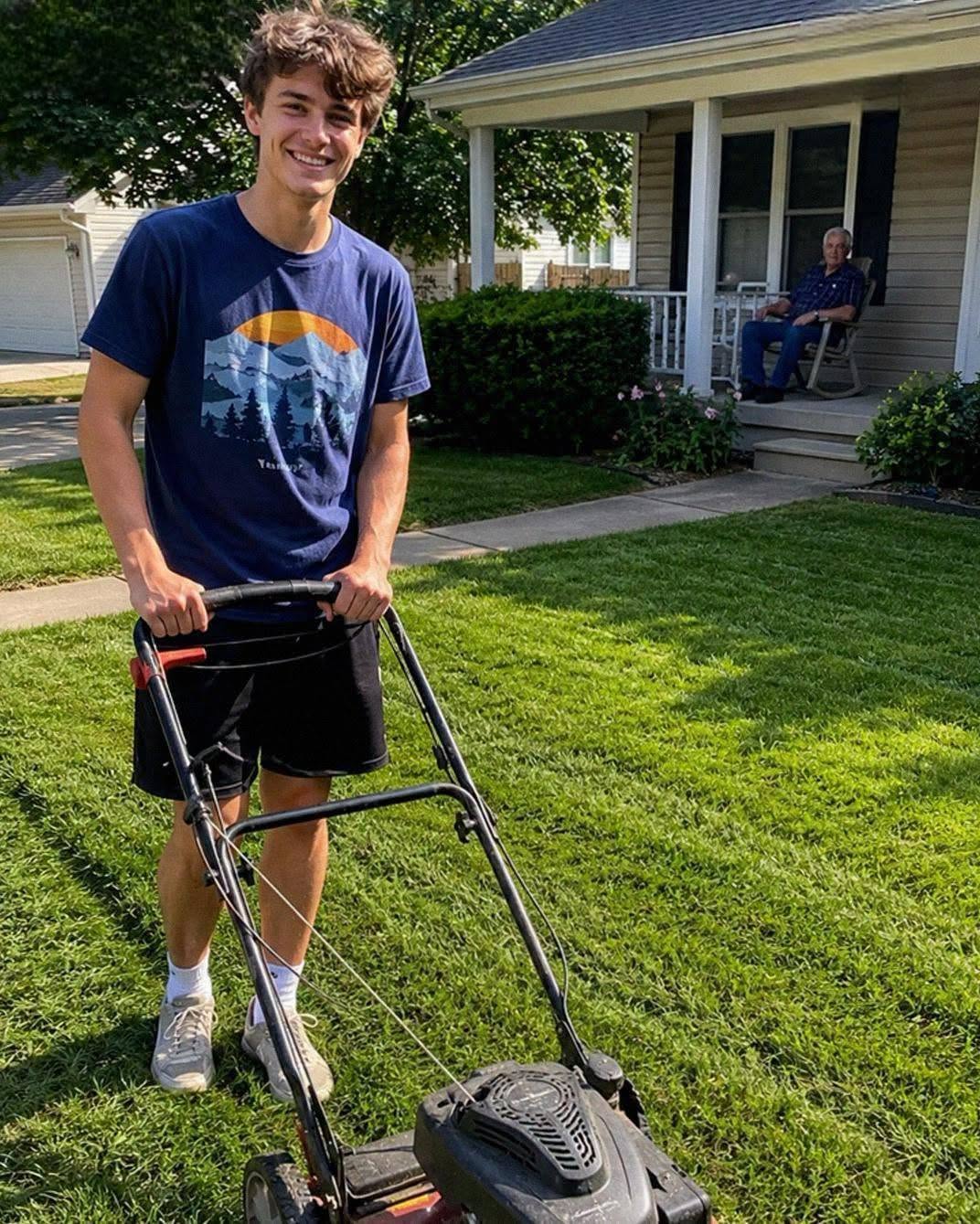
For four years, my son Noah mowed our elderly neighbor’s lawn every Saturday without ever asking for money. Mr. Vance barely spoke to him, and I assumed their quiet routine was just Noah being kind. Then Mr. Vance died, and at the funeral, his lawyer came straight toward my son with an envelope.Raising Noah by myself taught me that there are some things you can explain to a child and other things they just learn by watching you.His father left before Noah was born.I worried about what growing up without a father might do to him.There wasn’t some dramatic goodbye. No screaming fight in a driveway. No final speech about how he wasn’t ready to be a dad.He just stopped answering.By the time Noah was born, I had already accepted that every diaper, fever, school meeting, broken toy, and late-night panic was going to be mine.I worried about what growing up without a father might do to him.Noah became the kind of kid who noticed people.Turns out I should have worried less.Noah became the kind of kid who noticed people.He just paid attention.If an older woman dropped something at the grocery store, Noah picked it up.And when he was fourteen, he noticed Mr. Vance.Mr. Vance lived across the street from us.Most days, Mr. Vance sat in an old wooden chair on his porch.His wife, Margaret, had died a few years earlier, and after that he seemed to fold into himself.He had two grown children, Aaron and Claire, but I rarely saw them. I assumed they lived far away.Most days, Mr. Vance sat in an old wooden chair on his porch with his hands resting over his stomach.People waved.Sometimes he waved back.“Mr. Vance can’t get his mower started.”Usually he didn’t.One Saturday morning, Noah was looking out our front window when he said, “Mom.”I was drinking coffee.“What?”“Mr. Vance can’t get his mower started.”I glanced outside.Noah kept watching.Mr. Vance was standing halfway down his driveway, leaning heavily on the mower handle. He pulled the starter cord once, then stopped and pressed a hand against his lower back.“He’ll probably figure it out,” I said.Noah kept watching.Then Mr. Vance tried to bend down and nearly lost his balance.Noah put down his cereal spoon.“He’ll say no.”“I’m doing his yard.”“You could ask first.”“He’ll say no.”“Probably.”Noah disappeared into the garage.Five minutes later, he pushed our mower across the street.I stood at the kitchen window expecting Mr. Vance to tell him to go home.Then he pointed toward the side yard.Instead, Mr. Vance watched Noah for several seconds.Then he pointed toward the side yard.Noah nodded.That was it.For the next four years, from spring through fall, every Saturday morning, Noah mowed Mr. Vance’s lawn.He never got paid.Noah looked offended.I once told him he should at least let the man give him twenty dollars.Noah looked offended.“Why?”“Because you’re doing work.”“So?”“So people usually get paid for work.”He shrugged. “He can’t do it.”Mr. Vance wasn’t much of a conversationalist.Apparently, as far as Noah was concerned, that settled the matter.Mr. Vance wasn’t much of a conversationalist.Sometimes I would see Noah finish the lawn, wipe his forehead with his shirt, and stand by the porch.Mr. Vance might say three words.Noah might say two.“What did you two talk about?”Then Noah would come home.“What did you two talk about?” I’d ask.“Nothing.”“You stood there for ten minutes.”“Yeah.”“What did he say?”That was apparently an entire conversation between them.“He said it’s hot.”“And?”“I said yeah.”That was apparently an entire conversation between them.Still, during mowing season, Noah never missed a Saturday unless we were out of town.Even the morning after prom, when Noah looked like he hadn’t slept at all.Summer heat.Cold October mornings.Light rain.The week before finals.Even the morning after prom, when Noah looked like he hadn’t slept at all.I recognized him from a few holiday visits.He went.Two weeks ago, Mr. Vance died.Aaron knocked on our door himself.I recognized him from a few holiday visits.He looked exhausted.Noah came downstairs when he heard his name.“I’m Aaron,” he said.“I know.”He glanced toward our garage.“Is Noah home?”Noah came downstairs when he heard his name.Aaron swallowed.Noah didn’t say anything at first.“My dad passed last night.”Noah didn’t say anything at first.Then he asked, “Was he alone?”“No. Claire and I were there.”Noah nodded once.I realized Mr. Vance had known more people than I thought.“Okay.”Aaron looked almost confused by his reaction.Then Noah said, “When’s the funeral?”We went three days later.The church was crowded enough that I realized Mr. Vance had known more people than I thought.Aaron and his sister, Claire, sat in front.When the service ended, everyone stood.Both of them cried through most of the service.Noah insisted on sitting in the last row.“This is family stuff,” he whispered.“You mattered to him too.”“Not like they did.”When the service ended, everyone stood.The man held out a thick envelope.Aaron was hugging someone near the front when a man in a gray suit walked down the aisle toward us.He stopped directly in front of Noah.“Are you Noah?”Noah glanced at me.“Yeah.”People nearby began turning to look.The man held out a thick envelope.“I’m Daniel. I handled Mr. Aaron’s estate.”Noah stared at it.“What is this?”“Something he left for you.”People nearby began turning to look.Inside were four smaller envelopes.Aaron noticed and walked over with Claire.Daniel handed Noah the envelope.“He left very specific instructions.”Noah opened it.Inside were four smaller envelopes.“I’ve never seen those.”Each one had handwriting across the front.Saturday One.Saturday Two.Saturday Three.Saturday Four.“Your instructions are to open one each Saturday. In order.”Claire blinked.“I’ve never seen those.”Neither had Aaron.Noah looked at the lawyer.“What’s in them?”“I don’t know. Your instructions are to open one each Saturday. In order.”Aaron studied the envelopes for another second before he almost smiled.Noah gave a short laugh.At a funeral.I nudged him.“Sorry,” he said. “It’s just… that’s him.”Aaron studied the envelopes for another second before he almost smiled.Aaron and Claire had both come over.“Yeah. It is.”The following Saturday, Noah opened the first envelope at our kitchen table.Aaron and Claire had both come over.Inside was an address and one sentence.“Take Claire with you.”Claire stared at the address.Then her mouth opened slightly.Claire hadn’t been there in years.“I know this place.”It was a diner about twenty minutes away.Claire hadn’t been there in years.When we arrived, an older woman behind the counter looked at Claire and froze.“Oh, my goodness.”Claire frowned.Claire started crying before she even knew why we were there.“Ruth?”Ruth came around the counter and hugged her.“I haven’t seen you since your mother died.”Claire started crying before she even knew why we were there.Ruth disappeared into the back and returned with a cardboard box.“Your father brought this to me six months ago.”Margaret’s handwriting covered every card.Inside were recipe cards.Dozens of them.Margaret’s handwriting covered every card.Claire picked one up and made a sound like the air had been knocked out of her.“Cinnamon rolls.”Ruth smiled sadly.Claire pressed the card to her chest.“Your mother’s Christmas recipe.”Claire pressed the card to her chest.“I thought these were gone.”She sat in that diner and cried.Later, in the parking lot, she told Noah, “After Mom died, I stopped doing Christmas breakfast.”Noah leaned against the car.She looked down at the recipe card.“Why?”“The house didn’t smell right.”She looked down at the recipe card.“I know that sounds stupid.”“It doesn’t.”Claire wiped her face.“Dad knew.”Take Aaron to Franklin Field. Bring the glove.Saturday Two was harder.The envelope said:Take Aaron to Franklin Field. Bring the glove.The old baseball glove had been included with Mr. Vance’s belongings for Aaron.The second Aaron saw it, his jaw tightened.“No.”Claire looked at him.Aaron pointed at the glove.“Aaron.”“No. I’m not doing some sentimental scavenger hunt.”Noah stayed quiet.Aaron pointed at the glove.“Do you know what makes this ridiculous?”“No,” Noah said.Aaron laughed without humor.Aaron looked toward Mr. Vance’s empty house across the street.“My son, Ben, played Little League at Franklin Field for five years.”His voice sharpened.“I invited Dad constantly.”Claire said softly, “I know.”“He always had an excuse.”“Dad couldn’t come watch his own grandson play ball.”Aaron laughed without humor.“Too tired. Too hot. Bad knees. Didn’t feel like crowds.”Then he looked at Noah.“Dad could sit on that porch every Saturday watching you mow, but he couldn’t come watch his own grandson play ball.”Noah flinched.Aaron immediately looked guilty.“I spent years thinking he didn’t care.”“I’m not mad at you.”“I know.”“It’s just…”Aaron rubbed both hands over his face.“I spent years thinking he didn’t care.”Noah held out the glove.At Franklin Field, we searched for almost half an hour.“Then maybe you should come.”Aaron stared at him.Finally, he took it.At Franklin Field, we searched for almost half an hour.A groundskeeper finally waved us toward the concession stand, where Mr. Vance had left an envelope in a sealed box months earlier.Inside was a letter.Aaron read it silently at first.You asked me to come watch Ben play.Then he sat down.“What?” Claire asked.He handed her the paper.Mr. Vance had written:Aaron,You asked me to come watch Ben play, and I kept telling you no.You probably thought I didn’t care.You deserved better than excuses.After your mother died, I couldn’t sit in those bleachers. I tried once and turned around before I reached the gate.You probably thought I didn’t care.I did.I came to three games.I parked beyond the outfield fence where you couldn’t see me.I should have walked closer.I watched Ben hit a double in one. I watched him strike out twice in another and throw his helmet in the dugout. He gets that temper from you.I should have walked closer.I didn’t know how.I’m sorry.Aaron stopped reading.Claire nodded through tears.He stared across the empty field.“He was here?”Claire nodded through tears.Aaron laughed once.Then he cried harder.“Three games.”Aaron looked down at the glove.Noah sat beside him.Aaron looked at him.“All those years, I thought he chose everybody else over us.”Noah said, “Maybe he didn’t know how to come back.”Aaron looked down at the glove.“That’s not the same as trying.”“No.”The third Saturday belonged to Noah.That surprised him.Noah continued.“But I think maybe this was him admitting it.”Aaron nodded slowly.“Yeah.”The third Saturday belonged to Noah.Mr. Vance’s house felt strange without him.The note said:My house. Porch chair.That was all.Mr. Vance’s house felt strange without him.Noah sat in the faded wooden chair.Nothing happened.He leaned forward and felt along the frame.He looked at me.“This is awkward.”“Check underneath.”He leaned forward and felt along the frame.His fingers touched tape.A small black notebook was fixed beneath the seat.Almost every page had a date.Noah opened it.Almost every page had a date.Saturdays.“Boy came at 8:10. Too hot today. Told him to quit early. He ignored me.”Noah laughed.Another page.“Rain. Thought he wouldn’t come. He came.”He kept reading.Then:“Driving now. Parks too close to my mailbox.”Noah frowned.“I did not.”“You absolutely did.”He kept reading.“Exams this week. Looks tired.”There were four years of entries.“Graduation next month. Hope he gets where he’s going.”“Seemed upset today. Didn’t ask. Maybe should have.”Noah stopped smiling.There were four years of entries.Four years of Mr. Vance noticing him.At the end, one line had been underlined.His voice was quiet.“Need to tell him thank you properly.”Noah closed the book.“He knew all that?”His voice was quiet.“I guess he did.”“I thought he barely noticed me.”Aaron read several pages in silence.Aaron and Claire came over later.Noah showed them.Aaron read several pages in silence.Then he stopped.“What?”He handed the notebook back.“Boy reminds me of Aaron.”The entry said:“Boy reminds me of Aaron at that age. Quiet. Stubborn. Better with his hands than words.”Aaron looked away.For a long moment, nobody spoke.Then he said, “Dad used to say that about me.”Claire touched his shoulder.Aaron wiped his eyes.The note contained one instruction.“He remembered.”Saturday Four arrived.Noah, Aaron, and Claire opened the final envelope together.The note contained one instruction.“My yard. Nine o’clock. Bring something to plant.”When we walked across the street, the lawn had already been cut.A landscaping company had prepared the property for sale.Claire noticed the patch first.Noah stopped at the curb.For four years, he had always crossed that street with a job waiting for him.Now there was nothing.Claire noticed the patch first.Beside the porch, one small section of soil had been left untouched.Claire arrived carrying a hydrangea.Mr. Vance had instructed that nobody disturb it before the final Saturday.Claire arrived carrying a hydrangea.“Mom’s favorite,” she said.Aaron picked up the shovel.“I guess I’m digging.”“You always hated yard work,” Claire said.“I still hate yard work.”For once, nobody cried.Noah smiled.Aaron dug the hole.Noah lowered the hydrangea into it.I went across the street and filled a watering can.For once, nobody cried.There was no final revelation waiting for us.Nobody discovered another secret.There was no final revelation waiting for us.Just four people standing in a yard that had once belonged to a lonely man who apparently understood something about all of us.Mr. Vance had never been good at saying what he felt.So he gave us jobs.Take your sister here.That was his language.Take your brother there.Sit down.Read this.Plant something.That was his language.Before we left, Aaron walked to the porch and put his hand on the old chair.Noah looked at the chair.“Noah.”“Yeah?”“You want it?”Noah looked at the chair.“No.”Aaron seemed surprised.Noah put his hands in his pockets.“I figured you might.”“It belongs there.”“The house is being sold.”“I know.”Noah put his hands in his pockets.“Still belongs there.”A few months later, a moving truck pulled up across the street.Aaron smiled.“I’ll ask.”A few months later, a moving truck pulled up across the street.The new owners were a young couple with a little boy who looked about six.The kid spent most of the morning racing across the front lawn while his parents carried boxes inside.The hydrangea was still beside the porch.The grass was getting a little long.So was Mr. Vance’s chair.Noah and I stood in our driveway watching them for a minute.The grass was getting a little long.I looked at Noah.He looked at the lawn.Then he pushed our mower back into our own garage.For four years, on Saturdays like this, morning had meant pushing our mower across that street.Instead, he smiled.“Looks like they’ve got it from here.”Then he pushed our mower back into our own garage.And for the first time in four years, Saturday felt complete.

Nov 17, 2026
Fiancé Demands Foster Care for Orphaned Twins, Faces Unexpected Public Showdown New

Fiancé Demands Foster Care for Orphaned Twins, Faces Unexpected Public Showdown

The day I became the legal guardian of my five-year-old twin brothers after our parents were killed, my fiancé gave me an ultimatum: send them to foster care or lose him forever. I smiled, agreed to one final family outing and made sure it became the day everyone saw who he really was.I had a fiancé who called me every night.A small apartment full of wedding magazinesAnd parents who still sent me care packages with my dad’s terrible cookies inside.At twenty-two, I truly believed nothing could shake what Elliot and I had built.Elliot and I had been together since high school.He proposed the summer after graduation, dropping to one knee on my parents’ back porch.“You’re going to be stuck with me forever,” he had said that night, grinning.“Promise?” I asked.My twin brother were only five, and they adored him.They called him Ellie, which made him laugh and pretend to chase them around the yard.My mom would watch from the kitchen window and squeeze my shoulder.“That’s a good man, sweetheart,” she told me once. “Hold onto him.”I planned to.I was picking out centerpieces and arguing about seating charts and worrying about the color of the napkins.That was the biggest problem I had.Then a single phone call changed everything.I still remember the officer’s voice, careful and quiet.I sat down on the floor because my legs stopped working.Elliot was on the couch, watching something on his phone.He looked up slowly and frowned.“The twins,” I whispered. “Where are my brothers?”“They’re at the hospital. They were also in the accident but they’re alive. They’re being worked on right now.”I do not remember the drive to the hospital.I remember Elliot’s hand on my knee at a red light.The way he cleared his throat before speaking.“Whatever happens,” he said, “we’ll get through this. Together.”“You promise?”The twins survived.Bruised, stitched, terrified, but alive.When the social worker sat me down in a small beige room and asked about guardianship, I did not need a single second to think.“I’m their sister,” I told her. “They’re coming home with me.”She nodded and slid the paperwork across the table.My hand shook as I signed, but I signed every line.Elliot was in the hallway when I came out.He was scrolling through his phone.He glanced up and gave me a hug.“That was fast,” he said.“Right. Of course.” He rubbed the back of his neck. “So… What does this do to the wedding schedule?”I stared at him.“Elliot, my parents just died.”“I know. I know, baby, I’m sorry.” He kissed the top of my head. “I just meant. There’s a lot to figure out.”I wanted to believe grief had made him sound selfish.But when the guardianship became official, Elliot came to the house with a question that proved this was not shock.It was what he had wanted all along.So I took the twins home once they were released.I made them grilled cheese.I let them sleep in my bed.I watched their small chests rise and fall.And I whispered to them that I would never, ever let anyone take them away.I had no idea then that the only person who’d ever threaten them was the one I trusted most.***The front door clicked shut behind Elliot as he strolled inside.He tossed his keys onto the entry table like he owned the place.I had just gotten the twins down for their nap upstairs.The guardianship papers sat in a folder near the fruit bowl, signed and stamped that morning.“Everything went through?” Elliot asked, loosening his tie.“It’s official. I’m their legal guardian.”He nodded slowly, then leaned against the doorway with a strange, careful smile.“Honey… uh… this guardianship is only temporary, right? You’ll figure SOMETHING out for the boys later?”I turned to face him fully.“How long will they be staying with you? Will they be leaving before the wedding?”I couldn’t believe what I was hearing.“I became my brothers’ guardian because I love them, and I’m never going to leave them. Until they’re grown, they’re going to live with us.”The pleasant mask on his face slipped.His jaw tightened, and he pushed himself off the doorway.“I’m NOT raising someone else’s kids. Send them into foster care, or the wedding is OFF. What do you think I am, SOME KIND OF CHARITY?”For a moment, I couldn’t speak.I just stared at the man I had loved since I was seventeen.The man who had held my hand at the hospital.My voice cracked, but I forced myself to keep going.“I know this wasn’t something either of us expected, but Elliot… my parents just died! How can you even say that?”He laughed.A short, bitter sound that felt like a slap.Something inside me went very quiet.The tears that had been threatening to spill dried up completely.My grief, heartbreak, and exhaustion all folded neatly into something colder and sharper.I thought about screaming at him.I thought about throwing his ring at his chest, telling him exactly what kind of monster he had revealed himself to be, and ordering him out of my house.But it wasn’t enough.A man who could look at two orphaned five-year-olds and see only an inconvenience deserved more than a quiet dismissal.He deserved to feel a fraction of what he had just made me feel.I straightened my shoulders and let a slow smile spread across my face.Elliot blinked.“Wait, really?”“I’ll do exactly what you said… But I have ONE condition.”He tilted his head.“One last family trip. Before I make any calls, before I fill out any paperwork, I want to take the boys somewhere nice. Somewhere they’ll remember. Just the four of us.”He groaned and rolled his eyes.“Okay, fine. But I’m not paying for it, okay?”That answer seemed to satisfy him.He nodded, running a hand through his hair.“Fine. Fine, that’s fair. Where do you want to go?”“The state fair. They’ve got that pop-up theme park this weekend.”“I guess I can put up with that for a while. But we’ll keep it short, right?”“Sure.”He stepped closer, cupping my face with a tenderness that made my skin crawl.“Just you and me,” I echoed.“I love you. You know that, right? This isn’t personal. It’s just… practical.”He kissed my forehead, oblivious to the ice in my voice.He smirked, thinking he had won.He was entirely blind to the trap I had just laid at his feet.***The car ride to the state fair felt endless.Elliot gripped the steering wheel with tight fingers.He sighed every few minutes like the whole trip was a personal insult.In the back seat, the twins whispered to each other about roller coasters and cotton candy.“Are we almost there?” one of them asked, bouncing in his booster seat.“Almost, buddy,” I said, turning to squeeze his little hand.Elliot rolled his eyes.“Can you tell them to keep it down? I have a headache.”I bit my tongue and smiled at my brothers instead.When we finally pulled into the fairground parking lot, the boys practically leapt out of the car.Bright lights blinked against the afternoon sky.The smell of popcorn drifted through the warm air.Elliot walked three steps behind us the entire time, scrolling on his phone.“Elliot, come look at this,” I said, pointing toward a spinning ride. “The boys want to try it.”He barely glanced up.I let the word “mess” sit in my chest like a stone.“You’re right. Today is about fixing things.”He didn’t catch the shift in my voice.For the next hour, I rode the carousel with the twins.I bought them matching light-up wands, and let them share a giant funnel cake.Every time I laughed with them, Elliot checked his watch.“How much longer?” he muttered. “I have plans tonight.”“Not much longer,” I promised.As we wandered past a row of colorful game booths, a cheerful voice called out to us.“Hey there, beautiful family! Come get a picture. First one’s on the house today.”The photo booth operator waved a bright pink flag, gesturing toward a backdrop covered in painted sunflowers.The twins tugged at my sleeves immediately.Elliot scoffed and waved her off without even looking.“No thanks. We’re not interested.”But I turned toward the woman and gave her the warmest smile I had worn all day.Elliot spun around, confused.“What? Are you serious? I said no.”“I heard you,” I replied calmly. “But you don’t need to be in the picture since you won’t be part of our family anymore after today.”The photographer paused and side-eyed us.Elliot’s mouth fell open.“You heard me,” I said. “This was our one last family trip. But not the way you thought. It was YOUR last trip with us.”His face flushed a deep red.“Is this some kind of joke?”“No joke,” I said. “You gave me an ultimatum. Choose you or the boys. I chose the boys the moment you opened your mouth.”He took a step closer, lowering his voice.A cluster of teenagers had stopped scrolling on their phones, watching openly.The twins looked up at me, sensing something serious was happening.I placed a hand on each of their small shoulders and smiled down at them.Elliot let out a bitter laugh.“You’re going to regret this. Nobody else is going to want you with two kids attached.”“Then it’s a good thing I want myself,” I answered. “And I want them. That’s more than enough.”The photographer let out a cough that sounded a lot like a surprised laugh.One of the teenagers said, “Ohhh… she cooked him.”A man around our age had started recording on his phone.Elliot exploded.His voice boomed across the fairground.“You’re seriously throwing away our engagement for someone else’s kids? Are you INSANE?”Heads turned.The twins clung to my legs, wide-eyed.“They’re my BROTHERS,” I said. “Not ‘someone else’s kids.'”A woman nearby gasped loudly.“Did he just say foster care? About those little boys?”An older man stepped forward, glaring at Elliot.“Son, you should be ashamed of yourself. Screaming at a woman about her orphaned brothers in public? Walk away before you embarrass yourself further.”Another voice chimed in from the growing circle.“Honey, you dodged a bullet. Good for you!”Elliot spun around, sputtering.“Sounds like she was smart to,” a young mother said, holding her toddler tighter.Elliot’s mouth opened and closed.He looked around for a sympathetic face and found none.Then he turned on his heel and stormed off through the crowd, shoving past strangers.I let out a slow breath.The photographer smiled gently at me.I knelt down between my brothers and pulled them close.“More than anything.”They giggled as the operator counted down.I held them tight, my heart quieter than it had been in weeks.The camera flashed, capturing the first real photo of our new family.Whatever came next, we would face it together.By that evening, the video had spread through our town.Elliot’s coworkers, friends, and family all saw the man who demanded that two newly orphaned little boys be sent away so our wedding could go ahead.Elliot called me over and over.He texted apologies.He begged for another chance.I never replied.He wanted me to choose between him and my brothers.Instead, he taught everyone exactly who he was.

Nov 17, 2026