Browse

Latest Headlines

Fresh headlines, crisp visuals — faster reading.

Why This 76-Year-Old's Family Was Stunned After One Phone Call New

Why This 76-Year-Old's Family Was Stunned After One Phone Call

I’m 76 years old, and my husband, Harvey, passed away just a few months ago.We were married for 52 years. Together, we raised three children, paid off our home, and built the kind of life I once believed would last forever.But after Harvey was gone, everything changed.Our children had their own families, careers, and responsibilities. They visited less often than they used to, and some weeks, my telephone barely rang.I could manage the house and my daily routines. What I couldn’t manage was the terrible emptiness of waking up every morning without the man who’d been beside me for more than half a century.Before he passed away, Harvey worried constantly about leaving me alone.“Promise me you’ll let the children help you when you need them, Sylvia,” he told me once. “You shouldn’t have to carry everything by yourself.”Those words stayed with me.Eventually, I decided to find out which of our children would actually be there if I had nothing left.So I called all three and told them the same story.I said Harvey’s medical bills had exhausted our savings, the bank was preparing to take our house, and I had nowhere to live.None of it was true.Our home was completely paid off, and Harvey had left me enough money to live comfortably. But I wanted to know who would help me when there was nothing to gain.My eldest son, Brent, answered on the fourth ring.He listened quietly before letting out a heavy sigh.“Mom, that’s terrible. But this really isn’t a good time for us. Natalie’s using the guest room as her office, and we’ve already got a lot going on.”Brent lived in a beautiful five-bedroom house with his wife and two teenage daughters.“Maybe I could sleep on the couch for a little while?” I suggested.“Mom, you wouldn’t be comfortable here. Let me look into some senior housing options for you.”Later that afternoon, he emailed me three apartment listings.There was no personal message asking whether I was all right.My daughter, Taryn, sounded devastated when I told her.“Oh, Mom! How could things get this bad?”She cried for nearly a minute before asking how much money I still had.When I said there was nothing, her tone changed.“Have you contacted any community shelters? Some of them are supposed to be very good these days.”“A shelter?” I repeated.“Just temporarily, Mom. I wish I could do more, but we’re stretched pretty thin ourselves.”Then she remembered that she needed to take her daughter to tennis practice and promised to call me later.I called my youngest son, Joel, last.Joel hadn’t been nearly as successful as his older siblings. He worked long hours at a repair garage, fixing cars and taking whatever extra shifts were available.He lived with his wife, Maribel, and their two little boys in a cramped two-bedroom apartment.I barely finished explaining my situation before he interrupted.“Come stay with us, Mom.”“Joel, sweetheart, you don’t have room for another person.”“We’ll figure it out. You can have our bedroom, and Maribel and I will sleep in the living room.”“But I can’t contribute anything toward rent or groceries.”“Mom, you spent eighteen years making sure I had a roof over my head. I’m not going to leave you without one.”He told me to pack a bag.Exactly forty minutes later, his old pickup truck pulled into my driveway.When I saw him hurrying toward the front door, I began to cry. I had invented the emergency, but the relief of seeing someone come for me was painfully real.Joel carried my bags while I locked the door.“You’ll be okay with us, Mom,” he said, putting an arm around my shoulders.I stayed with his family for three weeks.Their apartment was even smaller than I remembered. The boys shared one bedroom, their toys crowded the hallway, and the dining table barely accommodated four people.Still, Maribel welcomed me warmly.She changed the sheets on their bed, cleared a drawer for my clothes, and made sure my favorite tea was in the kitchen.“Please don’t worry about being in the way,” she told me. “We’re happy you’re here.”That first night, I heard Joel struggling to get comfortable on the living room couch. One of its springs had broken months earlier, and the frame creaked whenever he moved.The next morning, he came into the kitchen rubbing his lower back.“Did you sleep all right?” I asked.“Like a baby,” he replied, smiling.I knew he was lying.The boys, Isaac and Jasper, were delighted to have their grandmother staying with them.Every evening, they carried their books into my room and begged me to read before bedtime.One night, Jasper brought an old storybook Harvey had given them for Christmas.“Grandpa used to make the dragon sound really funny,” he said.I opened the book and tried to imitate Harvey’s deep, ridiculous voice.Both boys burst into laughter.Joel appeared in the doorway a few minutes later and stood listening. When the boys finally fell asleep, he helped me tuck them in.“Dad would’ve loved seeing this,” he said quietly.It was the first time we’d spoken about Harvey without either of us immediately becoming upset.For a little while, I felt as though something in my life had become familiar again.But living with Joel also allowed me to see how hard he and Maribel worked to support their family.Maribel cooked nearly every meal at home, carefully measuring ingredients so there would be enough for leftovers.Joel sometimes came home after nine, ate whatever she’d saved for him, then sat at the kitchen table going over bills.One afternoon, I found Maribel counting coins from a glass jar.“Are you saving for something special?” I asked.She gave me a small smile.“We were hoping to take the boys to the aquarium this weekend. But I think we’ll wait until next month.”I offered to stay with the boys if she and Joel wanted an evening alone.“That’s sweet of you, Sylvia. We’re just being careful with expenses right now.”I noticed she hadn’t bought her usual coffee that week. There were fewer groceries in the refrigerator, too.I should have asked more questions.Instead, I kept thinking about the surprise I was preparing.Harvey and I had worked hard to pay off our house, and I had already decided that Joel deserved it.The property had four bedrooms, a large backyard, and a garage. I imagined the boys having their own rooms and Joel finally coming home from work without worrying about rent.I told myself that a few more days wouldn’t matter once they knew what I planned to give them.Meanwhile, Brent called twice to ask how I was doing, although both conversations lasted less than five minutes.Taryn called once.Neither offered to visit.By the end of the third week, I was certain I’d made the right decision.I invited all three families to dinner at Joel’s apartment.Brent and Taryn only agreed to come after I mentioned that I had something of their father’s to give them.Maribel spent the afternoon preparing a roast chicken and vegetables. Joel borrowed folding chairs from a neighbor, and I helped the boys move their toys out of the living room.As we sat down to eat, I felt happier than I had in months.At last, I would be able to reward the child who’d opened his home to me without hesitation.But my excitement made me overlook how tired Joel looked as he carried the last chair to the table.Dinner was pleasant enough, although Brent kept checking his watch.Taryn finally leaned toward me.“Mom, you mentioned you had some of Dad’s belongings for us?”I reached into my handbag.“Yes, sweetheart. There’s something important I want all of you to know.”Everyone turned toward me.“Shortly before your father passed away, he made me promise that I wouldn’t be alone when I needed help. I wanted to know which of you would truly stand beside me.”I took out three envelopes, each marked with one of my children’s names.Brent and Taryn received large envelopes containing letters and family photographs.Joel received a much smaller one.“Go ahead,” I said, smiling. “Open them.”Brent unfolded his letter first. Taryn began reading hers, her expression changing with every sentence.Then she reached the bottom of the page and burst into tears.“What does this mean?!”I looked at her gently.“It means I’ve decided to give the house to Joel.”Brent stared at me.“The entire house?”“Yes. It’s paid off, and I’ve already spoken with an attorney about transferring ownership.”Beside me, Joel opened his envelope and found a key attached to a small handwritten note.He looked from the key to my face.“Mom, is this real?”“Of course, sweetheart. You and Maribel can move in with the boys. You’ll each have a proper bedroom, and there’ll be plenty of room for everyone.”Maribel pressed a hand over her mouth.“Are you serious? We could actually live there?”I nodded, delighted by her reaction.But then Joel frowned.“Wait a minute. What happened with the bank?”I stopped smiling.“What do you mean?”“You said they were taking the house because you couldn’t pay the bills. How can you give it to us?”Brent lowered his letter.Taryn stopped crying.I suddenly realized that I’d never explained the most important part.“The bank isn’t taking it, honey. The house is completely paid off.”Joel stared at me.“And the medical bills?”“Those were covered. Your father made sure I had enough savings.”His expression changed.“Then why did you tell us you had nothing?”I looked around the table.“Because I needed to know which of you would help me if I really did lose everything.”Nobody spoke.“I wanted to make sure the house went to the person who cared about me most,” I continued. “And Joel proved that he did.”I’d expected him to smile or perhaps hug me.Instead, he slowly set the key on the table.“Mom, are you saying none of this was real?”I swallowed.“The situation wasn’t real, but what you did for me was. That’s why I’m giving you the house.”Joel leaned back in his chair.“Do you have any idea what we’ve been doing these past three weeks?”I glanced at Maribel.She was staring down at her hands.“We were going to postpone the electric bill,” Joel said. “Maribel stopped buying things we needed because we were trying to make sure there was enough food for everyone.”I felt my face grow hot.“Joel, you should’ve told me.”“We thought you had no money, Mom! We weren’t going to ask you to help!”He gestured toward the living room.“I’ve been sleeping on that couch every night because I thought my mother had nowhere else to go. We were trying to figure out how to keep you here permanently.”Maribel wiped her eyes.“We weren’t upset about helping you, Sylvia. But we were frightened. Joel was talking about taking another weekend shift.”I remembered the coins she’d counted in the kitchen.The empty refrigerator shelves.The way Joel rubbed his back every morning.I’d seen all of it and said nothing.“I thought the house would make up for everything,” I whispered.Joel shook his head.“I would’ve taken you in whether you owned ten houses or not. Why did you need to test me?”“Your father wanted me to know I wouldn’t be alone.”“Dad wanted us to take care of you. That doesn’t mean he wanted you to make us believe you were losing your home.”His words hurt because I knew he was right.For weeks, I’d been so focused on rewarding Joel that I’d ignored what my little experiment was costing him.“I’m sorry,” I said. “I truly am.”He looked at the key for a long time.Finally, he picked it up.“Maribel and I need to talk about this.”They stepped into the hallway while Brent and Taryn remained at the table.Brent folded his arms.“So you’ve decided to punish us for not taking you in?”“I made my choice based on what happened.”“You lied to all three of us,” Taryn said. “And now you’re acting like this was some fair competition.”I wanted to defend myself, but I couldn’t deny what she’d said.“You’re right that it wasn’t fair,” I admitted. “I shouldn’t have frightened any of you. But I also learned something about how alone I felt after your father was gone.”Neither answered.When Joel and Maribel returned, they sat down together.“We’re grateful for the house, Mom,” Joel said. “It would change things for our family. If you’re certain it’s a gift with no strings attached, we’d like to accept it.”I reached for his hand.“Of course. I want you all to move in as soon as possible. I’ll take the downstairs bedroom, so you won’t have to worry about stairs when I’m older.”Joel gently pulled his hand away.“Mom, that’s something we need to discuss.”I stared at him.“What do you mean?”“We thought you were staying with us because you had nowhere else to go. We were ready to make that work. But now we know you have choices.”My throat tightened.“Are you saying you don’t want me living with you?”“I’m saying I need time. I love you, but I’m hurt by what happened, and Maribel and I need to decide what’s best for our family.”Brent gave a bitter laugh.“So you’ll happily take her house, but you won’t let her live in it?”Joel’s face hardened.“I didn’t ask for the house.”“Then give it back.”“Brent, stop,” I said.I turned toward Joel, struggling to control my voice.“Your brother offered me his bed when he thought I had nothing. He shouldn’t have to give up the rest of his life because I decided to reward him.”Joel’s eyes filled with tears.“I don’t want to hurt you, Mom.”“I know, sweetheart.”For the first time that evening, I understood that giving someone a wonderful gift didn’t erase the pain I’d caused.“The house is yours,” I told him. “You can accept it without promising me anything in return.”Then I looked at Maribel.“And I want to repay every dollar you spent because of my lie. That has nothing to do with the house.”She nodded quietly.The following week, I began searching for an apartment.I found a bright two-bedroom place about fifteen minutes from my old neighborhood, with a small balcony and an elevator.It was more than enough space for me, and I could comfortably afford the rent.Before moving out of Joel’s apartment, I paid him and Maribel back for the extra expenses they’d taken on. I also arranged for an attorney to complete the house transfer properly.Joel offered to help me move, but I told him I’d already hired someone.I wanted him to understand that I could manage my own responsibilities.On my last evening, Isaac and Jasper came into the bedroom carrying their favorite books.“Grandma, are you going away forever?” Jasper asked.I pulled him onto my lap.“Of course not, sweetheart. I’m only moving to another apartment.”“Will you still come read to us?”“If your mom and dad invite me, I’d love to.”That night, I barely slept.I thought about Harvey and what he’d actually asked of me.He’d wanted me to accept help when I needed it. He’d never asked me to manufacture an emergency to measure our children’s love.Somewhere between losing him and becoming frightened of being forgotten, I’d confused reassurance with proof.A few days after moving, I wrote Joel a letter.I told him how sorry I was for making him worry, especially when he’d already shown me more kindness than I could have asked for.I explained that the house was his because I wanted his family to have an easier life, not because I expected a room in return.Then I gave him the space he’d asked for.The first few weeks in my new apartment were difficult.Brent and Taryn were still angry about the house, although I continued calling them and asking about their families.Joel was quieter than usual.I missed the boys terribly, particularly their little footsteps outside my bedroom every evening.But I resisted the temptation to call and ask why he hadn’t visited.Instead, I began attending a weekly gardening group at the community center. I met two widows who understood how strange it felt to begin making decisions alone after decades of marriage.For the first time in months, I had something to look forward to that didn’t depend on my children.About six weeks later, Joel called during his lunch break.“Mom, we’re finally settled into the house.”I sat up in my chair.“How are the boys liking their bedrooms?”He laughed.“Isaac chose the room overlooking the backyard. Jasper wanted the biggest closet because he thinks he can turn it into a secret fort.”I smiled, imagining them running through the hallway where Joel had played as a little boy.“And how’s Maribel?”“Good. She’s been talking about planting vegetables in the backyard.”“Your father always grew the best tomatoes there.”“I remember. We found his old gardening tools in the shed.”We talked until his break ended. Neither of us mentioned the dinner or the envelopes, but hearing him laugh again brought me enormous relief.Two weeks later, Maribel called.“Sylvia, we’re having everyone over for Sunday dinner. We’d really like you to come.”I sat down before answering.“Are you sure, sweetheart?”“Of course. The boys have been asking about you all week.”That Sunday, I arrived at my old house carrying a freshly baked apple pie.I stood on the porch for a moment, looking at the flowers Harvey and I had planted together.Through the window, I could see the boys racing across the living room. There were drawings taped to the refrigerator and new curtains hanging in the kitchen.The house looked different.And somehow, that made me happy.I reached toward the door handle out of habit, then stopped and rang the bell.A moment later, Joel opened the door.He looked at the pie, then at me.“Come on in, Mom. We’ve been waiting for you.”I stepped inside as the boys came running down the hallway, calling my name.Joel took the pie from my hands, and Maribel pulled out a chair for me at the kitchen table.For the first time, I wasn’t there because anyone believed I had nowhere else to go.They had invited me because they wanted me there.And as Joel sat beside me and began telling me about the boys’ first week in their new school, I realized how much I’d missed simply being his mother, without expecting either of us to prove anything.

Nov 15, 2026
Why This Snail Won the Race Without Moving an Inch New

Why This Snail Won the Race Without Moving an Inch

Hello everyone, and welcome back to our fun little brain teaser corner!Today, I have a fantastic puzzle for you that might look like a simple sports contest at first glance.We all love a good race, especially when the competitors are as unexpected as the ones we have today.Picture a sunny morning at the starting line of a very special marathon.Lined up side by side, we have four very distinct and colorful contestants.First up, we have a handsome, energetic chicken with bright and vibrant feathers.Right beside the rooster, there is a tiny, quick-footed mouse twitching its whiskers with excitement.Then, right in the center, we spot a cheerful little snail taking its sweet time to get ready.And finally, on the far right, stands a sleek, muscular dog who looks totally ready to sprint.The official announcer counts down from three, fires the whistle, and yells: “Ready, set, go!”Now, here is the big question for all the bright minds out there: if they all race, who will get home first?Take a quick pause, look closely at our four friends, and trust your gut for a second.Most people would immediately put all their money on the dog.It makes total sense because a dog can run like the wind on four strong legs.Others might root for the tiny mouse, darting between the bushes with lightning speed.Even the rooster has a pretty solid shot if it uses its wings for a helpful boost.Meanwhile, almost everyone feels a little sorry for the poor, slow-moving snail.After all, a snail moves at an absolute crawl and could take days just to cross the yard.So, if we are measuring speed, distance, and muscle power, the dog should easily win, right?Well, hold on just a moment, because this is where the clever logic of the riddle kicks in!Look very carefully at the exact wording of the challenge.The question does not ask who crosses a finish line first.It does not ask who runs the fastest lap, nor does it ask who has the best stamina.The exact question is: who will get home first?To get home, you usually have to leave the starting track and travel all the way back to your house.The dog has to sprint down the street and run into its doghouse or the living room.The mouse has to scamper through the grass to squeeze into its little burrow.The chicken has to flap and strut across the yard all the way back to the coop.All three of them have to cover real physical distance before they can claim they are home.Now, take another look at our quiet, humble friend, the snail.Where exactly does a snail live every single day of its life?A snail doesn’t rent an apartment down the road, and it certainly doesn’t have to commute back to a distant nest.A snail carries its entire house directly on its back!That hard spiral shell is not just heavy armor; it is its true home sweet home.This means the snail was already tucked inside its house before the whistle even blew.The snail was at home when the race began, it was at home during the race, and it never left home for a single second.While the dog, mouse, and rooster are sprinting their hearts out down the road, the snail has already arrived.Therefore, by pure, airtight logic, the snail gets home first without even taking a single step!

Nov 15, 2026
Why This Simple Math Problem Is Stumping Everyone New

Why This Simple Math Problem Is Stumping Everyone

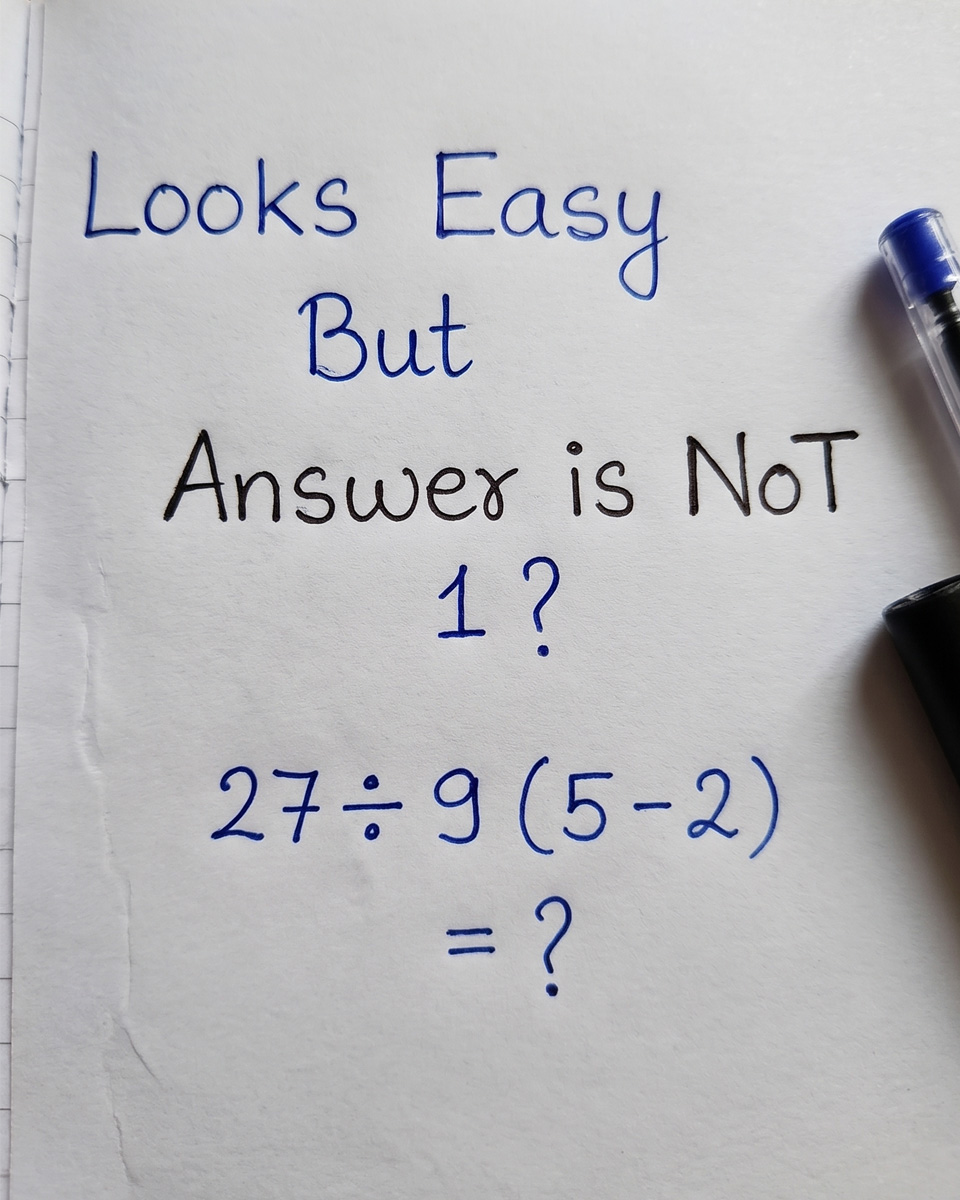
Math puzzles on the internet often look very simple at first glance.However, they frequently create huge debates among millions of people.Today, we are looking at a classic viral problem: 27 ÷ 9(5 – 2) = ?Many people immediately solve it and proudly declare that the answer is 1.The note in the picture even teases us with: “Looks easy, but answer is not 1?”So, why do so many people get 1, and what is the actual correct answer?Let us take a slow and clear journey through the basic rules of mathematics.In school, we all learned the order of operations, often known as PEMDAS or BODMAS.These acronyms stand for Parentheses (or Brackets), Exponents (or Orders), Multiplication and Division, and Addition and Subtraction.The very first rule of order of operations is always to solve what is inside the parentheses.Inside our parentheses, we have the simple subtraction: 5 minus 2.Five minus two equals three.Now, we can substitute that result back into our original expression.The math problem now looks like this: 27 ÷ 9(3).This is the exact moment where many people take the wrong turn.When a number sits right next to a parenthesis without a sign, it simply means multiplication.So, the expression 27 ÷ 9(3) is completely identical to 27 ÷ 9 × 3.Now, look closely at the operations we have left: one division and one multiplication.A very common misunderstanding comes from the letters in the acronym PEMDAS.Because the letter ‘M’ comes before the letter ‘D’, many people believe multiplication must always happen before division.That is actually an incorrect rule.In modern mathematics, multiplication and division have the exact same level of priority.They are equal partners in the hierarchy of arithmetic.When two operations have the equal priority, the universal rule is to calculate strictly from left to right.Let us see what happens if someone incorrectly multiplies first.They would multiply 9 by 3 to get 27.Then, they would calculate 27 divided by 27, which gives 1.That is why so many people mistakenly think the answer is 1.Now, let us follow the correct mathematical rule from left to right.Going from left to right, the first operation we meet is 27 divided by 9.Twenty-seven divided by nine equals three.Now, our entire expression becomes very simple: 3 × 3.Finally, three multiplied by three gives nine.Therefore, following the standard and modern rules of arithmetic, the correct answer is 9.

Nov 15, 2026
Rookie Cop's Bold First Move Leaves Veteran Partner Chuckling New

Rookie Cop's Bold First Move Leaves Veteran Partner Chuckling

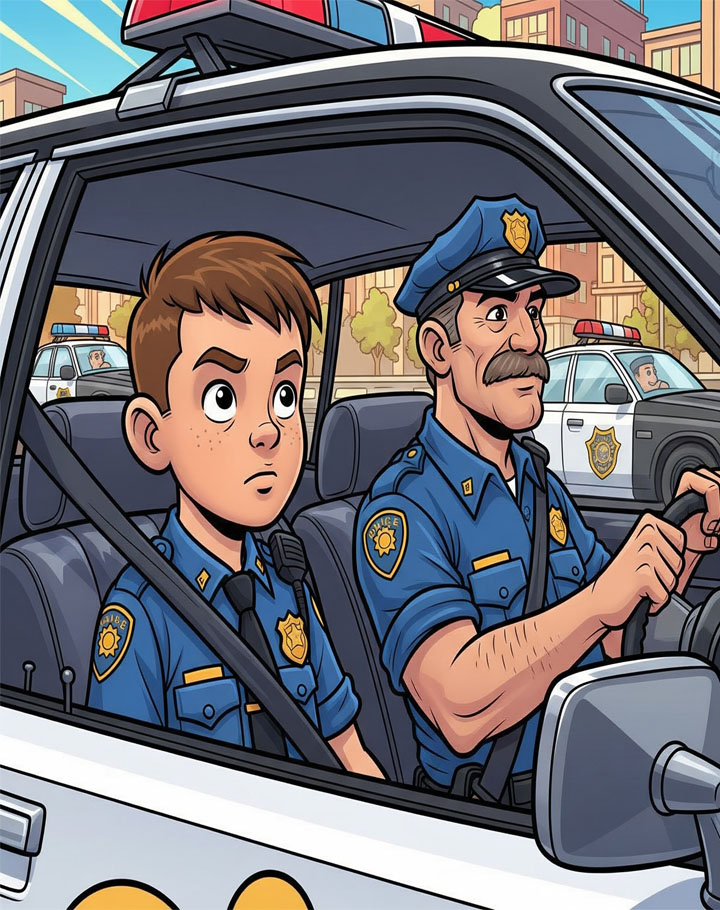
A rookie police officer was out for his first ride in a cruiser with an experienced partner.A call came in telling them to disperse some people who were loitering.The officers drove to the street and observed a small crowd standing on a corner.The rookie rolled down his window and said, “Let’s get off the corner, people!”After a few glances, no one moved, so he shouted again, “Let’s get off that corner… Now!” Intimidated, the group of people began to leave, casting puzzled stares in his direction.Proud of his first official act, the young policeman turned to his partner and asked, “Well, how did I do?”“Pretty good,” chuckled the veteran policeman, “especially since this is a bus stop!”================================A policeman was interrogating 3 guys who were training to become detectives.To test their skills in recognizing a suspect, he showed the first guy a picture for 5 seconds and then hid it. “This is your suspect. How would you recognize him?” The first guy answers, “That’s easy, we’ll catch him fast because he only has one eye!”The policeman says, “Well…uh…that’s because the picture I showed is his side profile.”Slightly flustered by this ridiculous response, he flashes the picture for 5 seconds at the second guy and asks him, “This is your suspect; how would you recognize him?” The second guy smiles, flips his hair, and says, “Ha! He’d be too easy to catch because he only has one ear!”The policeman angrily responds, “What’s the matter with you two?? Of course only one eye and one ear are showing because it’s a picture of his side profile! Is that the best answer you can come up with?”Extremely frustrated at this point, he shows the picture to the third guy and in a very testy voice, asks, “This is your suspect; how would you recognize him?” He quickly adds, “Think hard before giving me a stupid answer.”The third guy looks at the picture intently for a moment and says, “The suspect wears contact lenses.” The policeman is surprised because he really doesn’t know himself if the suspect wears contacts or not.“Well, that’s an interesting answer. Wait here for a few minutes while I check his file, and I’ll get back to you on that.”He leaves the room and goes to his office, checks the suspect’s file on his computer, and comes back with a beaming smile on his face. “Wow! I can’t believe it. It’s TRUE! The suspect does, in fact, wear contact lenses. Good work! How were you able to make such an astute observation?”“That’s easy,” the third guy replied.“He can’t wear regular glasses because he only has one eye and one ear.”

Nov 15, 2026
Why These Eskimos' Fiery Kayak Misadventure Is Making Waves New

Why These Eskimos' Fiery Kayak Misadventure Is Making Waves

Two Eskimos sitting, paddling along in a kayak,when one felt a little chilly so he made a little pile of sticks and lit a fire in the craft.His friend shouted at him to put it out, but the warning was ignored.Unsurprisingly, the kayak sank quite quickly and finding themselves in the cold water, the second Eskimo whacked his idiot mate over the head with a now redundant paddle.“Ouch!!” said the previously warm Eskimo, “what did you do that for?!?”“Because, you idiot,” said the second Eskimo, “Don’t you know that you can’t have your kayak and heat it too??”Three professors (a physicist, a chemist, and a statistician) are called in to see their dean.Just as they arrive the dean is called out of his office, leaving the three professors there.The professors see with alarm that there is a fire in the wastebasket.The physicist says, “I know what to do! We must cool down the materials until their temperature is lower than the ignition temperature and then the fire will go out.”The chemist says, “No! No! I know what to do! We must cut off the supply of oxygen so that the fire will go out due to lack of one of the reactants.”While the physicist and chemist debate what course to take, they both are alarmed to see the statistician running around the room starting other fires.They both scream, “What are you doing?!?”“Trying to get an adequate sample size!”While sports fishing off the Florida coast in Key West, a tourist capsized his boat.He could swim, but his fear of alligators kept him clinging to the overturned craft.Spotting an old beachcomber walking on the shore, the tourist shouted, “There wouldn’t by chance be any alligators in these waters?!”He asks in panic. “No,” the old man hollered back, “haven’t been any for years!”Feeling relieved, the tourist started swimming leisurely toward the shore.About halfway toward shore he asked the old man, “Say, how’d you get rid of the gators, anyway?”“We didn’t do anything,” the old man said. “The sharks got ’em.”Two blondes were driving along a road by a wheat field when they saw a blonde in the middle of the field rowing a row boat.The driver blonde turned to her friend and said, “You know,it’s blondes like that that give us a bad name!”To this, the other blonde replies, “I know it, and if I knew how to swim, I’d go out there and drown her.”

Nov 15, 2026
What Your Favorite Nurse Uniform Reveals About You New

What Your Favorite Nurse Uniform Reveals About You

Which Nurse Uniform Is Best for a Nurse?Your Choice Reveals Your Truest TraitEvery uniform tells a story. Some people value practicality, others professionalism, elegance, comfort, or tradition. The nurse uniform you choose may reveal the quality you admire most—not only in healthcare workers but also in yourself.Look at the six uniforms and pick the one you believe is the best choice for a nurse.Uniform #1 – The Efficient Problem SolverYou value practicality above everything else.You believe a nurse should be able to move quickly, work efficiently, and handle emergencies without restrictions. This suggests you’re someone who focuses on results rather than appearances. When challenges arise, you don’t panic—you immediately look for solutions.Your truest trait is resourcefulness.You excel at adapting to unexpected situations and finding the most effective path forward.Uniform #2 – The Dependable ProfessionalYou appreciate competence, order, and professionalism.This traditional medical uniform represents someone who takes their responsibilities seriously and earns trust through consistency. If you chose this outfit, you’re likely the type of person others rely on when something important needs to be done correctly.Your truest trait is reliability.People know they can count on you because you keep your promises and stay committed even when things become difficult.Uniform #3 – The Confident IndividualistYou aren’t afraid to challenge conventions.You believe confidence matters and that professionals can still express individuality. Choosing this outfit suggests that you prefer creating your own path rather than simply following what everyone else expects.Your truest trait is independence.You trust your own judgment and are comfortable making decisions without seeking constant approval from others.Uniform #4 – The Compassionate GuardianYou value care, dignity, and trust.This classic nurse dress symbolizes dedication to helping others. If this were your choice, you likely have a protective nature and often find yourself looking after friends, family, or coworkers.Your truest trait is compassion.You genuinely care about people’s well-being and often place their needs alongside your own.Uniform #5 – The Warm CommunicatorYou believe that healthcare is about people as much as procedures.This friendly and approachable style suggests you value human connection. You’re probably the person who can make strangers feel comfortable within minutes and who naturally puts others at ease.Your truest trait is empathy.You understand emotions quickly and know how to make people feel heard and understood.Uniform #6 – The Graceful TraditionalistYou respect tradition, values, and timeless standards.While others may focus on trends, you appreciate things that have lasting meaning. Choosing this uniform suggests you believe dignity, respect, and character are more important than convenience.Your truest trait is integrity.You stay true to your principles even when nobody is watching, and people admire your strong moral compass.What Your Choice Really MeansPsychologically, people often choose the uniform that reflects the quality they admire most. Whether you selected efficiency, professionalism, independence, compassion, empathy, or integrity, your choice may reveal the characteristic you value most deeply in both yourself and others.So, which uniform did you choose?

Nov 15, 2026
The Heartfelt Reunion That Revealed a Hidden Past New

The Heartfelt Reunion That Revealed a Hidden Past

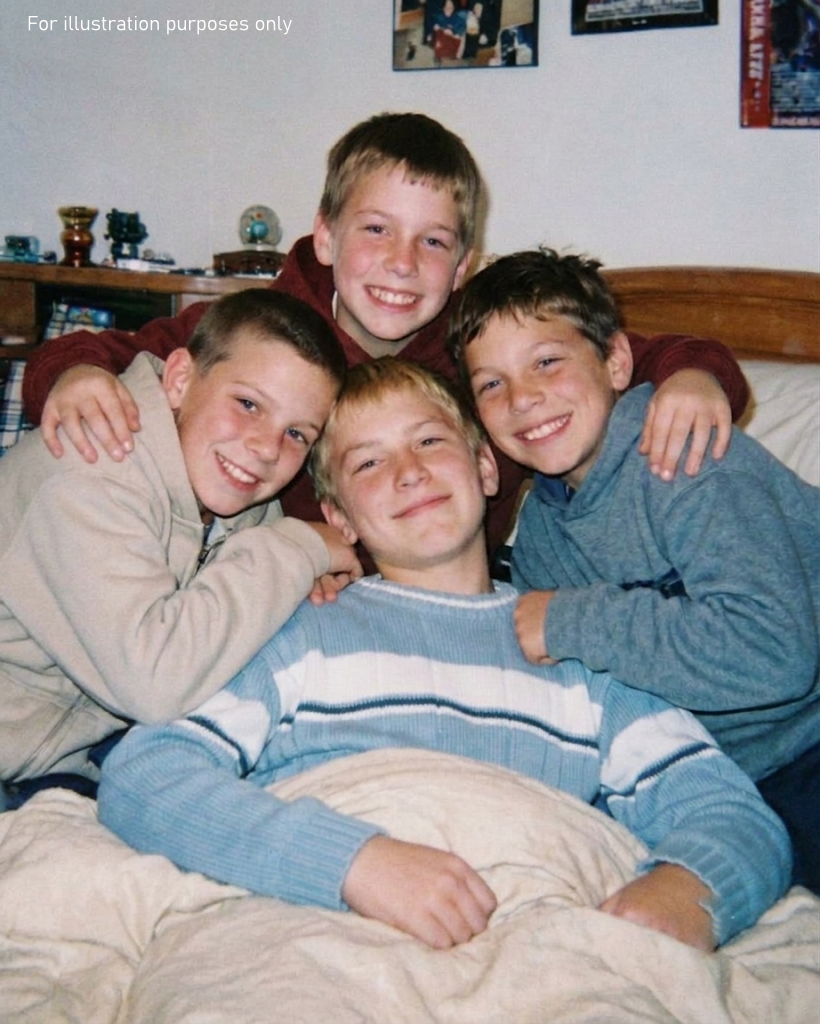
Seventeen years ago, my friends and I shaved our heads to support our classmate during chemotherapy. A few days ago, he invited us to his 30th birthday. When we arrived, there were only four of us, and the reason he’d brought us together left us in tears.We were just 13 when our classmate Simon was diagnosed with cancer.Before he got sick, Simon was the kind of boy who could turn an ordinary afternoon into an adventure. He loved baseball, hated math, and always carried extra snacks because he knew somebody would forget their lunch.But chemotherapy changed him. He missed months of school, grew painfully thin, and eventually lost every strand of his dark brown hair.His mother, Mrs. Keene, told us he was getting better, but he had started begging her not to send him back to school.“He thinks the other children will make fun of him,” she explained one afternoon. “He doesn’t want anyone looking at him differently.”That evening, my two best friends, Duncan and Reid, came over to my house.We sat on my bedroom floor, trying to figure out how to help Simon feel comfortable coming back.“We could all wear hats,” I suggested.Duncan shook his head.“He’d still know what we were hiding.”Reid, who had been unusually quiet, suddenly looked up.“Then let’s shave our heads.”I thought he was joking until he asked whether my father still had the electric clippers he used to cut his own hair.Twenty minutes later, we were crowded into our bathroom with an old towel, a wooden chair, and absolutely no idea what we were doing.Reid insisted on going first.“Come on, Elliot. Before I change my mind.”I switched on the clippers and carefully pushed them through his hair.I noticed something strange near the back of his head. A section had already been cut much shorter than the rest, but Reid quickly turned away when I looked at it.“Just keep going. You’re taking forever.”I assumed he’d tried cutting his own hair and made a mess of it.By the time we finished, all three of us were completely bald.My mother nearly dropped the laundry basket when she saw us.After we explained, she stood there for a moment before pulling us into a hug.The following morning, we walked to Simon’s house together.Mrs. Keene answered the door wearing her usual floral apron.“Good morning, boys. What brings you—”She stopped when she saw our heads.Her hand flew to her mouth, and her eyes filled with tears.For a moment, she couldn’t speak. Then she pulled all three of us into her arms.“You sweet boys,” she whispered. “You have no idea what this means.”Reid tried to make her laugh.“Careful, Mrs. Keene. We still need our heads attached.”She laughed through her tears and led us upstairs.Simon was sitting on his bed, reading a comic book.When he looked up, his mouth fell open.“What happened to your hair?”Duncan grinned.“We decided you shouldn’t be the only handsome bald guy in school.”Simon stared at us before slowly putting his comic book aside.“You really did that for me?”“Of course,” Reid replied. “Now hurry up and get better. We need our fourth player back.”Simon started crying.We were boys who barely knew what to do when somebody cried, so we just crowded around his bed and hugged him.Eventually, he began laughing too.That was the first time in months I’d heard him laugh like his old self.When Simon finally returned to school, the four of us walked through the front doors together.A few children stared, and one boy made a rude comment about our heads.Before Simon could react, Reid stepped forward.“You’re just jealous because we don’t have to waste time combing our hair.”The boy walked away, and Simon laughed so hard he had to sit down.Over the next few years, we became almost impossible to separate.We spent weekends at each other’s houses, celebrated Simon’s recovery, and somehow survived high school without getting into too much trouble.Reid was always the funniest of us.He could make Simon laugh during painful hospital appointments and turn even the most miserable school day into something worth remembering.Looking back, I realize how little we knew about his life outside school.Sometimes he arrived wearing the same clothes as the day before. He rarely invited us to his house, and whenever somebody mentioned his stepfather, his expression changed.But we were children.We noticed things without understanding what they meant.After graduation, our lives slowly took different directions.Duncan moved away for college. Simon eventually became a teacher. Reid found work in another state, and I started a family several hours from our hometown.At first, we called regularly.Then our conversations became occasional messages, holiday greetings, and promises to visit that none of us ever managed to keep.I hadn’t seen all three of them together in almost eight years when Simon’s invitation arrived.*I’m turning 30 next Saturday. Dinner at seven. I’ve reserved a private room. Please come. It’s important to me.*I immediately checked my calendar.Four hours was a long drive, but something about his message made me feel that I shouldn’t miss it.When I arrived at the restaurant, Duncan and Reid were already waiting.Duncan stood and hugged me.Reid looked me up and down.“Well, look at you. Still got a full head of hair. Some people have all the luck.”I laughed and hugged him.Then I noticed the table.Four chairs. Four plates. Four neatly folded napkins.“Are we really the only guests?” I asked.Duncan shrugged.“That’s what I was wondering.”Before we could discuss it further, the door opened.Simon walked in.He looked older, of course, but I recognized his smile immediately.He hugged each of us, holding on a little longer than I expected.“Thank you for coming,” he said quietly.“Wouldn’t miss your birthday,” I told him.Simon nodded, but instead of sitting down, he remained standing beside his chair.“Actually, there’s something I need to tell you.”His voice sounded strained.“I didn’t bring you here just to celebrate my birthday.”He glanced at our faces.“My mother passed away three months ago.”Nobody spoke.I felt a terrible heaviness settle in my chest.Mrs. Keene had always treated us like her own children. She’d fed us countless dinners, driven us to school, and welcomed us into her home whenever we needed somewhere to go.“Simon, I’m so sorry,” I whispered. “Why didn’t you tell us?”“I should have. Everything happened so quickly, and afterward I didn’t know how to talk about it.”Reid stood and embraced him.Soon, all four of us were standing together beside the table.When we finally sat down, Simon reached into his jacket and removed a worn photograph.It showed four bald boys standing shoulder to shoulder in his mother’s backyard.I immediately recognized it.“Good grief. Look at us.”Duncan laughed softly.“Your mother made us pose for about twenty pictures that day.”Simon turned the photograph over.In his mother’s handwriting were the words, *My four wonderful boys.*“She kept this on her bedroom dresser for seventeen years,” he said.He paused before continuing.“Before she died, she made me promise that I’d bring us together again. She said we’d spent too many years acting as if friendship could wait forever.”Reid lowered his head.Simon took a folded letter from his pocket.“I found this while sorting through her things. She wrote it during her final weeks.”He hesitated, then began reading.His mother had written about the morning we arrived at her door with our newly shaved heads.That morning, she had just returned from an appointment with Simon’s doctor.His treatment wasn’t producing the results they had hoped for, and the doctors were considering other options.She’d been terrified.“I never knew that,” Simon whispered.He continued reading.She wrote that she’d spent the drive home wondering how she could explain another frightening medical appointment to her little boy.Then she’d opened the front door and found three bald teenagers standing on her porch, grinning proudly.For the first time that morning, she’d felt something other than fear.I stared at the photograph.All those years, I’d believed she’d cried because she was touched by our gesture.I hadn’t understood how desperately she’d needed something hopeful that day.But Simon hadn’t finished.“There’s another part,” he said.He slowly turned toward Reid.“Mom left something for you, too.”Reid didn’t look surprised.Instead, he closed his eyes.Duncan glanced between them.“What’s going on?”Simon reached for a second envelope.“Reid and I spoke a few days ago. I told him what I’d found, and he agreed we could talk about it tonight.”Reid rubbed his forehead.“I almost didn’t come.”I leaned forward.“Reid, what is it?”He took a long breath.“Do you remember how I insisted on shaving my head first?”“Of course,” I said.“There’s something I’ve never told either of you.”He stared at the photograph.“My stepfather had cut my hair two days earlier.”I frowned.“What do you mean?”Reid swallowed.“We had an argument. He was yelling at my mother, and I tried to make him stop. He got angry, grabbed me, and cut a big chunk out of my hair with kitchen scissors.”My stomach tightened.“He told me that if I wanted to act like a grown man, I could walk around looking ridiculous like one.”Duncan stared at him.“Reid…”“I wore a baseball cap afterward because I didn’t want anyone seeing it. When you suggested shaving our heads, I realized nobody would notice what he’d done.”He looked at me.“That’s why I volunteered first.”I remembered the uneven patch I’d noticed beneath the clippers.Seventeen years had passed, but suddenly I could picture it clearly.“I saw it,” I whispered. “I noticed your hair was uneven.”Reid gave a small, uncomfortable smile.“Yeah. I was afraid you would.”“Why didn’t you tell us?”“Because I was embarrassed. And because he told me things would get worse for Mom if I talked.”His voice cracked.“I wanted to help Simon. I really did. But I also wanted to stop looking in the mirror and remembering what happened.”Nobody knew what to say.Then Reid picked up the envelope.“There’s more. Something I didn’t know until this week.”He carefully unfolded Mrs. Keene’s letter.The day after his stepfather cut his hair, Reid had gone to Simon’s house while Simon was resting upstairs.He’d found Mrs. Keene alone in the kitchen.For nearly an hour, he’d sat at her table, crying and telling her what had been happening at home.He was frightened for his mother, who had tried several times to leave but had nowhere safe to go.“I remember asking her whether she knew somebody who could help us,” Reid said.“She told me she’d see what she could do.”A week later, Reid and his mother moved into his aunt’s apartment.Eventually, his mother found work and rented a small place of their own.Reid had always believed his aunt had arranged everything.But the letter revealed something different.Mrs. Keene had contacted a local family support organization, helped Reid’s mother arrange a meeting with a counselor, and accompanied her while she learned what options were available.She’d also driven Reid to school while his mother attended appointments.“I remember those rides,” Duncan said quietly. “I thought she was just helping because your mom was busy.”“So did I,” Reid answered.His fingers trembled around the paper.“She wrote that my mother was terrified, but she kept going to those appointments anyway. She said Mom was the one who made the decision to leave. Mrs. Keene just made sure she didn’t have to figure everything out alone.”He stopped reading and wiped his eyes.“I spent years thinking Mom had suddenly found the courage to leave. I never realized how much help she’d needed.”Simon moved his chair closer.“There’s one more paragraph, isn’t there?”Reid nodded.He tried reading it aloud but couldn’t get past the first sentence.Finally, he handed the letter to me.I read Mrs. Keene’s words slowly.*”Reid, you once told me you weren’t brave because you couldn’t protect your mother. I hope you understand now that coming to my kitchen and asking for help was one of the bravest things a frightened boy could have done.”*My eyes blurred.I looked at the man sitting across from me.For years, I’d remembered Reid as the fearless boy who made everyone laugh.I had never imagined how much fear he’d been carrying.“I’m sorry,” I said. “We were your best friends. We should have noticed.”Reid shook his head.“We were thirteen, Elliot. You didn’t know what was happening.”“But you were always taking care of everybody else.”He looked toward Simon.“Making you guys laugh was the easiest part of my day.”Simon reached over and squeezed his shoulder.“Mom loved you, Reid. She talked about you all the time.”Reid covered his face.“I wish I’d known what she did for us. I would’ve thanked her.”“She knew you were grateful,” Simon said. “That’s why she kept writing to you, even when you stopped visiting.”For several minutes, we sat quietly.Then a waiter knocked and entered carrying Simon’s birthday cake.Thirty candles flickered above the frosting.The poor man looked confused when he saw our tear-streaked faces.“Should I come back?”Simon laughed softly.“No. I think my mom would’ve wanted us to eat the cake.”We sang happy birthday badly, just as we used to when we were teenagers.Afterward, we stayed at the restaurant for almost three hours.We talked about our families, our jobs, and everything we’d missed in one another’s lives.Reid told us his mother was doing well. She’d remarried a kind man several years earlier and had recently retired.“I think I’ll call her tomorrow,” he said. “There’s a lot I never understood.”When we finally walked outside, Reid stopped beside Simon’s car.“Could you take us to your mother’s grave?”Simon nodded.“Of course.”The cemetery was only a short drive away.We walked together through the quiet rows until Simon stopped before a modest headstone.Reid stepped forward and knelt.For a long time, he simply looked at Mrs. Keene’s name.Then he reached out and touched the stone.“You helped my mom when she had nobody,” he whispered. “And you never made me feel ashamed.”His shoulders began shaking.“I wish I could’ve thanked you properly.”Duncan knelt beside him, and Simon placed a hand on his back.I stood there remembering the woman who’d opened her front door seventeen years earlier and cried at the sight of three bald boys.I’d thought those tears belonged entirely to a frightened mother whose sick son had wonderful friends.Now I understood that she’d also recognized a little boy who was finally able to stop hiding what had been done to him.After a while, Reid stood.“I’m glad we came,” he said.Before leaving, Simon took out his phone.“One more picture?”We stood shoulder to shoulder, just as we had seventeen years earlier.This time, none of us was bald, and our faces showed the years we’d spent apart.Duncan put his arm around Reid. Simon stood between us, holding the old photograph against his chest.Later that night, as I drove home, my phone rang.It was Reid.“I called my mom,” he said.I pulled into a rest stop.“How did it go?”“She cried. She told me she’d wanted to leave for a long time, but she’d been scared of what would happen to us. Mrs. Keene helped her understand that we had somewhere safe to go.”He paused.“Mom said she always meant to tell me the whole story. She just didn’t know how.”We talked until I noticed the parking lot was nearly empty.Before hanging up, Reid asked whether we could all meet again next month.“With our families this time,” he added. “And maybe somewhere closer to your house, because four hours is ridiculous.”I laughed and promised I’d help arrange it.The next morning, Simon sent our new photograph to the group chat.Beside it, he placed the picture his mother had kept on her dresser.I looked at the two photographs for a long time.In the first, we were four boys who believed we’d done something extraordinary for a sick friend.In the second, we were four grown men who finally understood that the woman standing behind the camera had quietly helped save another family while fighting to keep her own son alive.I wish we’d known sooner.I wish we’d visited more often, asked better questions, and thanked her while we still could.But I was grateful Simon had invited us back.Because seventeen years after we stood together on his mother’s porch, we were finally learning what that day had meant to all of us.

Nov 15, 2026
Little Boy's Hilarious Reaction to His Mom's Pregnancy New

Little Boy's Hilarious Reaction to His Mom's Pregnancy

A little boy was so exited because his mom told him he is getting a baby brother.He repeated that to his techer every day, when he came to school, “I’m getting a brother.”One day his mom alllowed him to feel the baby’s kicks in her belly.The next day he came to school and didn’t say anything to his teacher, so the teacher asked him, what happend to his brother.He replyed, “I think mommy ate him.”A little boy was afraid of the dark.One night his mother told him to go out to the back porch and bring her the broom.The little boy turned to his mother and said: “Mama, I don’t want to go out there. It’s dark.”The mother smiled reassuringly at her son. “You don’t have to be afraid of the dark,” she explained. “Jesus is out there. He’ll look after you and protect you.”The little boy looked at his mother with a confused stare and asked: “Are you sure he’s out there?”“Yes, I’m sure. He is everywhere, and he is always ready to help you when you need him,” she said.The little boy thought about that for a minute and then went to the back door and cracked it a little.Peering out into the darkness, he called: “Jesus? If you’re out there, would you please hand me the broom?”A boy is writing his grandmother a letter.His friends sees it and asks him: “Who are you writing that letter?”“My grandma” The boy replies.“Why are you writing so slowly?” His friend asks him.“She can’t read very fast!”Dorothy, the little daughter of a tire salesman, had seen triplets for the first time.“Oh mother,” she cried out upon returning home, “what do you think I saw today?”“I can’t imagine, dear, what?”“A lady had twins, and a spare!”

Nov 15, 2026
Elderly Woman's Secret Gift Leaves Cleaner Stunned After Funeral New

Elderly Woman's Secret Gift Leaves Cleaner Stunned After Funeral

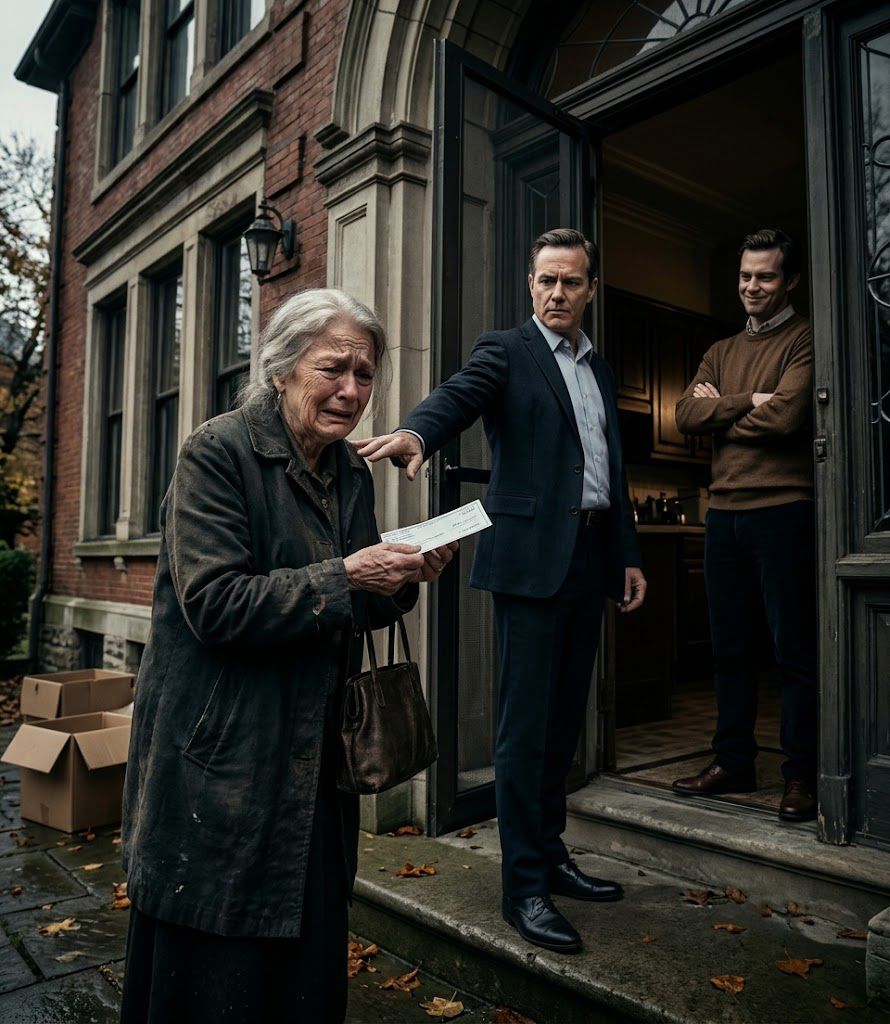
I cleaned an elderly woman’s house for 26 years. The morning after her funeral, her son fired me and handed me a $300 check. “Mother’s gone. We won’t be needing you anymore,” he said without even opening the door. I was 72, with no other job and barely enough money to pay my rent. I went home crying, thinking I’d been forgotten after all those years. But one week later, I received a phone call from the courthouse. A woman asked for my full name, then said, “Mrs. Bellamy left something for you. I need you to come see it. Bring your ID.”The first time I cleaned Helen Bellamy’s kitchen, I was forty-six and wearing shoes with cardboard beneath the insoles.Rain had soaked the ground, and I tried to scrape the mud from my heels before knocking.She opened the door holding a dish towel and looked at my shoes.“Come inside before you catch a chill, Mabel. Floors can be washed. People aren’t so easy to replace.”That was Helen. She could be particular about the silverware and the way the linen napkins were folded, but she never confused a spotless house with a happy one.My mother, Sarah Carter, had worked for the Bellamy family before me.She cooked their dinners, washed their sheets, and raised three children of her own in a small cottage beyond the apple trees.By the time her hands became too stiff to peel a potato, she’d spent nearly forty years working on that property.I knew every crooked step in the cottage and every place where the roof leaked.My brother and I played in the creek behind it, and my father taught me to tell when apples were ready by lifting one gently in my palm.We moved into town after I married Calvin, but the old place never stopped feeling familiar.Then my mother needed care, and I started working for Helen. I expected to stay a few months.Instead, Monday mornings became the kitchen and bathrooms, Thursdays belonged to the floors, and Friday afternoons usually ended with the two of us sitting at her table, drinking coffee long after my work was done.When Calvin passed away, she brought supper for three nights. When Angela had her first baby, Helen sent a handmade quilt.We were employer and employee, but sometimes she was kinder than people who shared my last name.Her sons were another matter. Richard, the oldest, was a real estate investor in Charlotte who spoke into his phone even while someone was speaking to him.Grant, the younger one, had moved from one business idea to another, usually with his mother’s money smoothing the way.They visited on holidays and whenever there were papers to sign. Richard liked to stand at the dining-room window and talk about how much the surrounding farmland would be worth if someone built houses on it.Grant nodded along, although I doubted he’d ever planted anything in his life.I never argued with her sons. I was there to work, and I needed the paycheck. Helen paid me two hundred dollars each Friday, tucked inside a plain envelope beside my coffee cup.After Calvin was gone, that money became the difference between paying my bills and deciding which one could wait.At seventy-two, my Social Security was seven hundred and ninety dollars a month, and rent was six hundred and forty. After utilities and medicine, I depended on those Friday envelopes.Helen knew I worried about money. She also knew I hated being pitied, so when she needed extra work done, she asked directly and paid fairly.Neither of us pretended the arrangement was charity.Her health grew weaker during her last winter. She started using a walker, and there were mornings when she couldn’t remember where she’d put her glasses.Yet she could still beat me at cards and correct the evening news when a reporter got a local name wrong.Helen passed peacefully in early October. Her nurse called Richard before sunrise, and he called me soon afterward. I sat on my bed for a long time after we hung up.At the funeral, the church was crowded with former neighbors, women from Helen’s garden club, and families who’d known the Bellamys for generations. I sat near the back.Angela offered to come with me, but she couldn’t get away from work, and I told her I’d be all right.After the service, I returned to the house and helped serve the food people had brought. I washed the good china, folded the tablecloths, and put the serving dishes where Helen liked them.It was nearly nine when I finished. Richard thanked me briefly and asked me to come back the following morning to help pack.I arrived at eight-thirty with empty boxes in my trunk. Richard met me at the screen door. His brother stood behind him in the kitchen, eating a piece of cake left from the reception.Richard didn’t unlatch the screen. He held out a check for three hundred dollars and told me they wouldn’t need me anymore.For a moment, I thought I’d misunderstood. I’d been asked to come back. There were closets full of clothes and a kitchen full of things only I knew how to find.“I can at least help you finish packing,” I said.“We’ve made other arrangements.”He kept his hand on the doorframe until I took the check. Behind him, Grant gave a small laugh, as if my confusion were something amusing.I walked to my car without asking another question. On the way home, I stopped at a traffic light beside the grocery store and cried so hard I almost missed the green.I wasn’t only grieving Helen. I was frightened of what would happen when the next rent payment came due.That evening, I called Angela. She and her husband were raising two teenagers, and his hours at the plant had recently been cut.She listened, then offered to send grocery money, but I could hear how worried she was about their own bills.“You can stay with us for a few nights, Mama, but I don’t know how we’d make it work much longer,” she said.“I didn’t call to ask you that, sweetheart. I just needed to hear your voice.”I spent the following days calling people who might need cleaning. Most didn’t. A woman at church promised to keep my number.I left the check under a refrigerator magnet because I couldn’t bear to look at Richard’s signature.The courthouse called the next Tuesday. The woman introduced herself as June Patterson from the register of deeds office.She knew my full name, including Louise, which hardly anyone used, and she said Mrs. Bellamy had left something for me.When I asked what it was, she told me she’d rather explain face-to-face.The courthouse smelled of floor polish and damp coats. June was waiting behind a wooden counter.She was a small woman with silver hair and kind eyes, and when she saw me clutching my purse, she came around to meet me.“You haven’t done anything wrong, Mrs. Carter,” she said. “Come sit down.”She led me into a records room and placed a folder on the table. Inside was a certified deed, signed and recorded six months before Helen passed. At the top I saw her name.Beneath it was mine.MABEL LOUISE CARTER.June waited while I read the first page. The document transferred twenty-seven acres on Apple Lane to me, including the old cottage, the orchard, and the narrow strip of land that connected them to the county road.“This can’t be right,” I whispered. “I only cleaned her house.”“The deed was recorded in April. Mrs. Bellamy signed it herself, and she asked me to contact you after her funeral.”I looked at the map attached to the back. The creek, the little bridge, the cottage where Mama had cooked our suppers, and the orchard where Daddy taught me about apples were all inside the marked boundary.I couldn’t understand why Helen would do such a thing without telling me. June opened a second envelope and slid a handwritten letter across the table.Helen had addressed it to me in the careful script I knew from years of grocery lists.She said she’d been sorting Edward’s old office when she found a packet of records tied with string. They belonged to his grandfather, Henry Bellamy.Among them was a loan paper from 1940 signed by my grandfather, Josiah Carter, and a separate deed transferring twenty-seven acres to Henry for sixty dollars.My grandfather had borrowed money when his wife needed an operation. He believed he’d signed a note promising repayment.Henry’s private correspondence told a different story: he had instructed his lawyer to prepare a transfer and let Josiah think the document was only security for the loan.The letter included a copy of Henry’s instructions. I read the short passage three times, trying to make the words mean something else. There was no mistaking them.A man with money and a lawyer had taken advantage of a man who trusted him, and our family had lived on that land as tenants afterward.Mama had told me her father once owned an orchard, but she never knew why he lost it. She believed he’d made a poor bargain during a difficult winter.She spent her life working for the family that benefited from it, without knowing what had really happened.Helen’s letter shook in my hands. She wrote that she couldn’t undo the years my family had lost or give my mother the chance to know the truth.But she could return the part of the farm that had belonged to us. She had paid for a survey and asked an independent attorney to prepare the transfer.“I should have looked into our family’s history sooner,” she’d written. “I am sorry I waited until I was old enough to understand how little time was left.”June handed me a tissue. I pressed it against my eyes and tried to picture Mama sitting beside me, hearing that the trees beyond her kitchen window had once been hers.“Do Richard and Grant know?” I asked.“Her attorney will explain the rest. She’s expecting your call.”The attorney’s name was Marisa Kent. She met me at my rented duplex that afternoon, carrying a leather folder and a copy of every recorded document.She spoke plainly, stopping whenever I needed a minute. Helen had paid her fees in advance, including the cost of defending the deed if anyone challenged it.“Your name is on the title, Mrs. Carter,” Marisa said. “This isn’t a promise in a will. The property was transferred while Mrs. Bellamy was alive.”Then she explained why the timing mattered. Richard was negotiating with a developer who wanted to buy most of the Bellamy farm for a new housing project.The planned entrance ran directly through the twenty-seven acres Helen had transferred to me.Marisa had warned Helen that the deed might upset her sons. Helen had asked her to proceed anyway.She’d also sat through an independent medical evaluation and recorded a video explaining her decision, in case anyone later claimed she was confused.I went to Apple Lane the next morning. The cottage had been empty since Mama moved into town, but the porch still stood, and a few late apples hung on the trees behind it.I walked slowly through the rooms, remembering where Daddy kept his boots and how Mama used to open the windows while cornbread cooled on the stove.I was sitting on the porch when Richard’s truck came up the drive. Grant climbed out behind him. Richard was holding his phone, and his face had gone blotchy with anger.“What have you done?” he demanded. “The title company says you own the road frontage.”“I only found out yesterday.”He didn’t believe me. He said I’d manipulated an old woman and promised his lawyers would have the deed overturned.Grant added that I couldn’t possibly afford the taxes on the land and should sign it back before I got myself into trouble.For twenty-six years, I’d answered those men politely, even when they spoke past me. Now I had the recorded deed in my handbag and a lawyer who’d already told me what it meant.“If you have questions, you can call Ms. Kent,” I said. “I won’t sign anything today.”Richard stepped toward the porch, then stopped when he saw Marisa’s business card in my hand. He read the name, muttered something to Grant, and drove away without another word.Their lawsuit arrived two weeks later. They claimed Helen had lacked the ability to understand what she was signing and that I had pressured her.I was frightened when a process server handed me the papers, but Marisa came over that evening and walked me through them. She’d expected this, and she was prepared.The hearing took place in February. Angela sat beside me in court, holding my hand beneath the table. Richard had two attorneys.Grant kept staring at me as though he could shame me into leaving, but I looked at the judge instead.Marisa submitted the survey, the deed, Helen’s medical report, and the original correspondence that explained how the land had changed hands.Then the court played Helen’s recorded statement.There she was on the screen, sitting in the parlor with a cardigan over her shoulders. She answered questions about her health, her family, and the transfer without hesitation.When the attorney asked whether I’d ever requested land or money, Helen almost laughed.“Mabel doesn’t know about this,” she said. “If I told her now, she’d spend six months trying to talk me out of it.”Then her expression became serious. She explained what she’d found in the old records and why she believed returning the land was her responsibility.She wasn’t trying to punish her sons, she said. She simply didn’t want them to inherit the benefits of something she knew had been wrong.I cried when the video ended. Not because of the land, although I knew what it meant for my future, but because I could hear Helen’s voice again, steady and familiar, speaking for me when I couldn’t find the words.The judge upheld the deed. He found no evidence that I’d pressured Helen and no reason to doubt her understanding of the transaction.Richard and Grant left before Marisa finished explaining the ruling to us.Without that road frontage, the developer changed its plans and eventually withdrew from the deal. Richard lost money he’d already spent on surveys and permits.He sent one more letter through his lawyer, offering to buy my acreage, but Marisa made certain I understood I had no obligation to sell.The offer was more money than I’d ever imagined seeing. Angela asked me to think carefully, and I did.I thought about the apartment I’d struggled to pay for, the repairs the cottage would need, and how nice it would be to put some money aside for the boys.But I also thought about Mama standing at the kitchen sink of that cottage after a twelve-hour workday, never knowing the ground beneath her feet had once belonged to her father.Selling it immediately felt like closing a door that had only just opened.I told Marisa I wanted to keep the land. She helped me arrange manageable repairs and a property-tax plan.Angela’s husband replaced the porch railings, and the boys carried boxes into the cottage during spring break.By April, I had moved out of the duplex and into the house where I learned to walk.The first summer, I hired a local man to help prune the trees and clear the overgrown rows. When the apples came in, Angela and I sold baskets at the Saturday market.We weren’t making a fortune, but the money covered expenses, and I loved watching people choose fruit from trees my father had known.One afternoon, my youngest grandson asked why I kept the $300 check in a frame above the kitchen table.He’d seen it hanging beside a copy of the deed, under a photograph of Mama smiling in the orchard.“Did that man ever pay you?” he asked.“He did,” I told him. “For the last day I worked there. But that check reminds me of the morning I thought I had nowhere left to go.”He looked from the check to the photograph and then out toward the trees.I told him about Josiah, about the mistake our family had been taught to accept, and about Helen deciding she would no longer look away from it.I still make coffee on Friday mornings. Sometimes I catch myself reaching for two cups, the way I did at Helen’s kitchen table, and I let the second one sit beside mine while I watch the orchard wake up.I miss her. I always will. What she did cannot return the years my family spent struggling, and it doesn’t erase the way her sons treated me at the screen door.But I no longer have to worry that a missed cleaning job will cost me my home.The old cottage has a new sign at the end of the lane. Angela’s husband made it from a piece of oak, and my grandsons helped paint the letters.It says CARTER ORCHARD, with the year Josiah first bought the land beneath it.Whenever I drive home from the market, I slow down to look at that sign. For most of my life, I thought belonging somewhere meant being useful enough that somebody would let me stay.Now I turn into the lane, park beneath the apple trees, and go through my own front door.

Nov 15, 2026
Why This Simple Math Puzzle Is Breaking the Internet New

Why This Simple Math Puzzle Is Breaking the Internet

Can you solve this simple math puzzle without using a calculator?A piece of paper, a pen, and your mind are all you need.Today’s viral challenge is: 6 + 4 ÷ 2 × 5 = ?At first glance, it looks like an easy exercise for elementary school kids.Yet, thousands of people on social media argue over the correct answer.Many people get 25.Others confidently announce that the result is 16.Some even end up with 10.Why does such a basic problem cause so much confusion?The answer lies in how we read math compared to how we read words.When we read a book, our eyes move strictly from left to right.Because of this natural habit, many people calculate the numbers in that exact sequence.They start by adding six and four to get ten.Then, they divide ten by two to get five.Finally, they multiply five by five and arrive at twenty-five.This seems completely smooth and intuitive.However, arithmetic does not follow the simple left-to-right rule when mixed operations are involved.Mathematics relies on a universal agreement called the Order of Operations.In English-speaking classrooms, this standard rule is often remembered as PEMDAS or BODMAS.These acronyms stand for Parentheses (Brackets), Exponents (Orders), Multiplication and Division, and Addition and Subtraction.The golden rule states that multiplication and division have equal priority.Similarly, addition and subtraction share equal priority.Crucially, multiplication and division must always be performed before any addition or subtraction.When operations have the same priority level, you must work them out from left to right.Now, let us revisit our equation carefully: 6 + 4 ÷ 2 × 5 = ?First, scan the entire expression for parentheses or exponents.There are none.Next, look for multiplication and division.We spot two terms: division (4 ÷ 2) and multiplication (× 5).Since division and multiplication rank equally, we must evaluate them from left to right.The division comes first on the left: four divided by two equals two (4 ÷ 2 = 2).Now, substitute this back into the problem: 6 + 2 × 5.We still have a multiplication step left to finish before touching the plus sign.Multiply two by five, which gives ten (2 × 5 = 10).Now, the entire equation reduces to a single, straightforward operation: 6 + 10.Finally, perform the addition: six plus ten equals sixteen.That is the entire logical journey.The common trap of getting 25 happens when people add before dividing.The trap of getting 10 happens when people multiply before dividing, ignoring the left-to-right rule for equal ranks.Only by respecting the strict hierarchy of operations do we reach the true answer.The only mathematically correct answer is 16.

Nov 15, 2026
The Letter From My Late Son That Unveiled Our Family's Hidden Truth New

The Letter From My Late Son That Unveiled Our Family's Hidden Truth

I thought burying my 19-year-old son was the worst thing I would ever experience. But at his funeral, a woman approached me, told me her daughter had just received a heart transplant, and handed me a letter written by my son. The first lines made my blood run cold: “Mom, there’s something you need to know about the girl I told you I wanted to help. For a long time, I thought she was Dad’s secret daughter.” What I discovered afterward shattered everything I believed about my late husband—and revealed a final act of kindness my son had kept hidden from me.My name is Meredith Price, and I was 46 when I lost my only child, Colin.My husband, Patrick, had died of a heart attack 4 years earlier. After 21 years of marriage, I thought I knew everything about him. He wasn’t perfect, but he’d been a loving father and a dependable husband. At least, that was what I believed.After his death, Colin and I became inseparable. He was intelligent, funny, and stubborn enough to argue with me over almost anything. He dreamed of becoming an engineer and had already begun studying toward that goal.Then, shortly after his 18th birthday, he collapsed in our kitchen.The doctors eventually diagnosed a rare, rapidly progressive neurological disease. Despite months of treatment and consultations with specialists, his condition continued to deteriorate.I spent everything I could trying to save him. I sold my car, used our savings, and borrowed against the house.But nothing stopped the disease.One evening, Colin asked me to sit beside his bed.“Mom, I want to register as an or:gan do:nor.”I immediately shook my head.“Don’t talk like that. We’re still fighting.”“I know,” he whispered. “But if things don’t work out, I want something good to come from this.”I started crying.He squeezed my hand.“Maybe somebody else can have the future I won’t get.”I eventually promised to respect his wishes, although I prayed I would never have to.Three months later, Colin suffered a catastrophic complication. Doctors confirmed that his brain had permanently lost all function.My beautiful boy was gone.After the medical team determined that his heart was suitable for do:nation, I honored the decision he’d made while he was alive.Several days later, the transplant coordinator informed me that his heart had been successfully transplanted into a critically ill young woman.She was only 18.I wasn’t told her name, but knowing another mother’s daughter had survived brought me a small measure of comfort.At Colin’s funeral, I was standing beside his coffin when an unfamiliar woman approached.“Mrs. Price? My name is Joanne Mercer.”I nodded weakly.She took my hand.“My daughter, Iris, is 18. She received a heart transplant the night Colin died.”My breath caught.“Are you saying she received my son’s heart?”Joanne’s eyes filled with tears.“The hospital hasn’t confirmed who her do:nor was. But Colin knew my daughter, and he told me about his decision to do:nate. I believe there’s a connection.”I stared at her.“Colin knew your daughter?”“Yes. And he asked me to give you something.”She removed an envelope from her purse.My name was written across it in Colin’s handwriting.“Please read it when you’re alone,” she whispered.Before I could ask another question, she added, “It concerns your husband, Patrick.”Then she quietly walked away.That evening, I sat at the kitchen table and opened the letter.Mom,I’m sorry I didn’t tell you this sooner.While going through Dad’s old documents, I found something strange. For years, he secretly sent money to a woman named Joanne Mercer.She has a daughter named Iris.At first, I thought Iris was Dad’s biological daughter.But the truth is much more complicated.Please don’t blame Iris or Joanne. And please talk to Joanne before you decide what kind of man Dad really was.I love you.Colin.Behind the letter were copies of bank transfers.I checked the dates.Patrick had been sending Joanne money for approximately 14 years, beginning when Iris was a small child and continuing until his death.Sometimes $300. Sometimes $800. Occasionally more than $1,000.I remembered all the times Patrick had insisted we couldn’t afford something.Vacations we’d canceled. Repairs we’d postponed. Summer programs Colin had wanted to attend.And all that time, my husband had been secretly supporting another family.I stared at our wedding photograph.“Did you have another daughter?” I whispered.The next morning, I searched Patrick’s old files.Eventually, I found his will.Near the bottom was a provision establishing a trust for Iris Mercer.I remembered noticing that name after Patrick died. His mother, Catherine, had told me Iris was a distant relative.Now I called her.“Who is Iris Mercer?”Catherine hesitated.“Meredith, this isn’t a good time.”“Was she Patrick’s daughter?”“I don’t know.”“Then why did you tell me she was his cousin?”A long silence followed.Finally, she whispered, “Patrick asked me not to discuss her.”“Why?”“Because of what happened with Simon.”“Who’s Simon?”“His former business partner.”I frowned.“Patrick told me his partner stole from him and died before we got married.”Catherine’s voice trembled.“That’s not exactly what happened.”Before I could demand an explanation, she ended the call.I immediately searched online.Within an hour, I found old articles about Patrick and a man named Simon Mercer.They had founded an investment consulting company together more than 20 years earlier.The business eventually collapsed after a financial scandal. Newspaper reports suggested Simon had authorized a disastrous investment, leaving the company heavily indebted.Then I found Simon’s obituary.He had died in a car accident 18 years earlier—several years after Patrick and I married.The obituary listed his surviving wife, Joanne, and their infant daughter, Iris.My heart pounded.Joanne had been Simon’s wife.Had Patrick been having an affair with his business partner’s wife? Had Simon discovered it before his death?I couldn’t bear another minute of guessing.Using an address I’d found in public records, I drove to Joanne’s house.When she opened the door, her expression changed.“Meredith?”“I need the truth.”She stepped aside and let me in.I placed the bank statements and a copy of Patrick’s will on her coffee table.“Was Iris Patrick’s daughter?”Joanne looked at the documents.“No.”“Please don’t lie to me.”“I’m not. Iris is Simon’s daughter.”“Then why did Patrick send you money for all those years?”Joanne’s eyes filled with tears.“Because your husband destroyed mine.”I froze.She opened a folder containing old correspondence, financial documents, and a handwritten letter from Patrick.“Patrick and Simon built their company together. But Patrick secretly invested company money in a risky venture Simon had refused to approve.”I stared at her.“When the investment failed, Patrick altered the records to make it appear that Simon had authorized it. Simon was blamed for everything.”“That can’t be true.”Joanne handed me Patrick’s letter.I recognized his handwriting immediately.Joanne,Simon was innocent. I made the investment, and I changed the records because I was afraid of losing everything.I should have told the truth while he was alive.I cannot undo the damage, but I want to make sure you and Iris are financially secure.I’m sorry.I felt the blood drain from my face.“Patrick framed him?”Joanne nodded.“Simon confronted Patrick and demanded that he admit what he’d done. They had a terrible argument.”She paused.“That evening, Simon drove away from Patrick’s office. It was raining, and he lost control of his car.”I covered my mouth.“He died that night?”“Yes.”“Did Patrick cause the accident?”“The police found no evidence that he did. But Simon was devastated by the argument, and Patrick knew it.”Joanne wiped away her tears.“After Simon died, Patrick let everyone continue believing he was responsible for the company’s collapse.”I stared at my husband’s confession.For years, Patrick had told me Simon was dishonest.He’d made himself the victim.And I’d believed every word.“Why didn’t you expose him?” I asked.“I wanted to. But I had an infant daughter, debts, and no reliable income. Patrick offered financial help and promised to make things right. He asked me to keep quiet.”She lowered her head.“I accepted the money because Iris needed it. But I never stopped regretting that I hadn’t fought harder to clear Simon’s name.”I suddenly understood the transfers and the trust.Patrick hadn’t been supporting a secret daughter.He’d been privately compensating the family of the man he’d betrayed, while refusing to accept responsibility publicly.“Did Colin know all this?” I whispered.Joanne nodded.“He found me about 5 months before he died.”I looked up.“What?”“He discovered the payments and initially believed Iris was his half sister. He came here demanding answers.”I could picture my stubborn boy standing on this very doorstep.“Eventually, I told him everything,” Joanne continued. “He was furious with Patrick. He couldn’t understand how his father had allowed an innocent man to carry that blame.”My eyes filled.“Then why didn’t he tell me?”“He said you were already exhausted from caring for him. He wanted to understand the whole story before putting you through more pain.”She hesitated.“Then he asked to meet Iris.”I stared at her.“He met your daughter?”“Yes. Iris had a serious heart condition and had been waiting for a transplant. Colin began visiting her whenever he felt well enough.”Joanne smiled sadly.“They became close friends. They watched movies, argued about music, and talked about all the things they wanted to do if they got better.”I pressed my hand against my mouth.Colin had never mentioned her.“One afternoon, he told Iris about his decision to become an or:gan do:nor,” Joanne continued. “He explained that nobody could guarantee whether his organs would be suitable or who would receive them. But he hoped somebody might benefit.”She swallowed.“Iris told him she didn’t want him thinking about dying because of her.”“What did he say?”Joanne’s voice broke.“He told her, ‘I’m not giving up on my life, Iris. I’m just hoping that if I can’t keep mine, someone else can keep theirs.'”I burst into tears.For months, I’d watched my son struggle to survive.And somehow, he’d found the strength to comfort another dying young person.Just then, a quiet voice came from the hallway.“Mom?”A young woman stood in the doorway.She was pale and thin, with dark hair falling around her shoulders. One hand rested gently against her chest.Joanne stood.“Iris, sweetheart, you should be resting.”The girl looked directly at me.“You’re Colin’s mom?”I nodded.She approached slowly.“I’m so sorry about him.”I couldn’t speak.“He talked about you all the time,” she continued. “He said you made the world’s best pancakes, even though you always burned the first one.”A laugh escaped through my tears.“That’s true.”She smiled.“He told me that when we both got better, he wanted us to go to the beach together.”I covered my face.Colin had always loved the ocean.Iris hesitated, then asked, “Can I hug you?”I pulled her gently into my arms.As I held her, I felt the warmth of her body and the faint movement of her breathing.I wondered whether Colin’s heart was beating inside her.But I still didn’t know for certain.The following week, Joanne and I contacted the transplant coordinator. Since we already knew each other, we both agreed to the necessary disclosures so the medical teams could confirm the do:nation.Several days later, we received the answer.Iris had indeed received Colin’s heart.Neither family had arranged or influenced the allocation. The transplant had happened because Colin’s heart was medically suitable and Iris had been selected under the transplant system’s established criteria.It was an extraordinary coincidence.My son had befriended the daughter of the man his father had wronged.He had comforted her during the darkest months of their lives.And after his death, his heart had given her another chance to live.I cried for hours after receiving that confirmation.Not because my grief had disappeared.But because, for the first time, I could see how much goodness Colin had managed to leave behind.Over the following months, Joanne and I worked with an attorney to preserve Patrick’s confession and the financial records. Although too much time had passed to undo every consequence of the business scandal, we made sure Simon’s family had the evidence needed to establish what had really happened.I confronted Catherine, too.She admitted that Patrick had eventually confessed his wrongdoing to her, but she’d agreed to keep it secret.“I thought I was protecting your marriage,” she cried.“You were protecting a lie,” I answered.I didn’t forgive her immediately.And I still struggle with what Patrick did.He was a loving father to Colin, but he had also destroyed another man’s reputation and hidden the truth for nearly 18 years.Both things were true.Six months after Colin’s death, Iris invited me to join her at a medical appointment.Her recovery was progressing well, although she still needed medication and regular checkups.Afterward, she turned to me.“Would you like to hear his heart?”I stared at her.“Are you sure?”She nodded.With the doctor’s help, I placed the stethoscope against her chest.Then I heard it.A steady heartbeat.Strong and unmistakably alive.Tears streamed down my face.For a moment, I remembered holding Colin as a newborn, listening to his tiny breaths as he slept against me.I remembered his first steps, his laughter, and all the things he’d dreamed of doing.Iris reached for my hand.“Are you okay?”I nodded.“Yes, sweetheart.”And for the first time in months, I almost believed it.Later that afternoon, Iris gave me a small notebook Colin had accidentally left at her house.Inside were drawings, unfinished engineering calculations, and a list titled Things I Want to Do When I Get Better.Take Mom to the ocean.Finish college.Build my own workshop.Learn to cook something besides pasta.I smiled through my tears.Then I reached the final entry.I can’t undo what Dad did to Simon. But maybe I can help his daughter believe she still has a future.Beneath it, he’d written one more sentence.Just because something is broken doesn’t mean we should stop trying to make it better.I pressed the notebook against my chest and cried.Patrick had spent years running from the consequences of his mistakes.Colin had done the opposite.He had discovered an ugly truth, but instead of allowing it to make him bitter, he’d reached out to someone who was suffering because of it.He couldn’t restore Simon’s reputation by himself.He couldn’t cure Iris’s illness.And he couldn’t save his own life.But he could offer friendship, kindness, and hope.And in the end, his do:nated heart had helped save hers.I still visit Colin’s grave every week.I still miss his terrible jokes, his ridiculous arguments, and the sound of his footsteps coming down the stairs.Nothing will ever make losing him fair.But when Iris calls to tell me about her classes, her plans, or something wonderful that happened during her day, I am reminded that Colin’s kindness continues to matter.She doesn’t owe me a remarkable life. She simply deserves the chance to live the one she chooses.My husband left behind a secret that caused years of pain.My son left behind a gift that gave someone else a future.And whenever I think about the difference between them, I remember something Colin once told me when he was a little boy:“Mom, you can’t always fix everything. But you can always try to make something better.”He lived by those words until the very end.And now, because of him, another young woman has the chance to keep living.That will never bring my son back.But it gives me one more reason to carry his love forward.

Nov 15, 2026