Browse

Latest Headlines

Fresh headlines, crisp visuals — faster reading.

Why Peanuts Are Making Headlines: The Surprising Health Debate New

Why Peanuts Are Making Headlines: The Surprising Health Debate

Skip to content Peanuts are a popular snack worldwide, known for their taste, affordability, and convenience. Beyond that, they offer a strong nutritional profile that makes them appealing to both consumers and health professionals. However, eating them every day can bring both benefits and drawbacks. Nutritionally, peanuts are rich in protein, healthy fats, fiber, and key vitamins and minerals. They support muscle growth, digestion, and overall body function. Despite being legumes, they share many qualities with tree nuts like almonds and walnuts.One of the main benefits of daily peanut consumption is improved heart health. Their healthy fats may help lower bad cholesterol and increase good cholesterol, potentially reducing the risk of cardiovascular problems when eaten in moderation. Peanuts can also help control appetite. Their combination of protein, fat, and fiber makes them filling, which may reduce unnecessary snacking and support weight management for some individuals.They also have a low glycemic index, meaning they do not cause sharp spikes in blood sugar. This can be beneficial for people managing diabetes or insulin resistance, especially when combined with other foods. However, eating peanuts daily is not without risks. Because they are calorie-dense, overeating them can easily lead to weight gain if portions are not controlled.Some individuals may also experience digestive discomfort, such as bloating or heaviness, especially if intake suddenly increases. In addition, peanut allergies can be severe and dangerous for those affected. In the end, peanuts can be a healthy daily habit when consumed in moderation. A small handful per day offers benefits, but balance and portion control remain essential for long-term health.READ MORE BELOW

Nov 12, 2026
Discover the Hidden Gem: 31-Acre Sanctuary with a Private Pond New

Discover the Hidden Gem: 31-Acre Sanctuary with a Private Pond

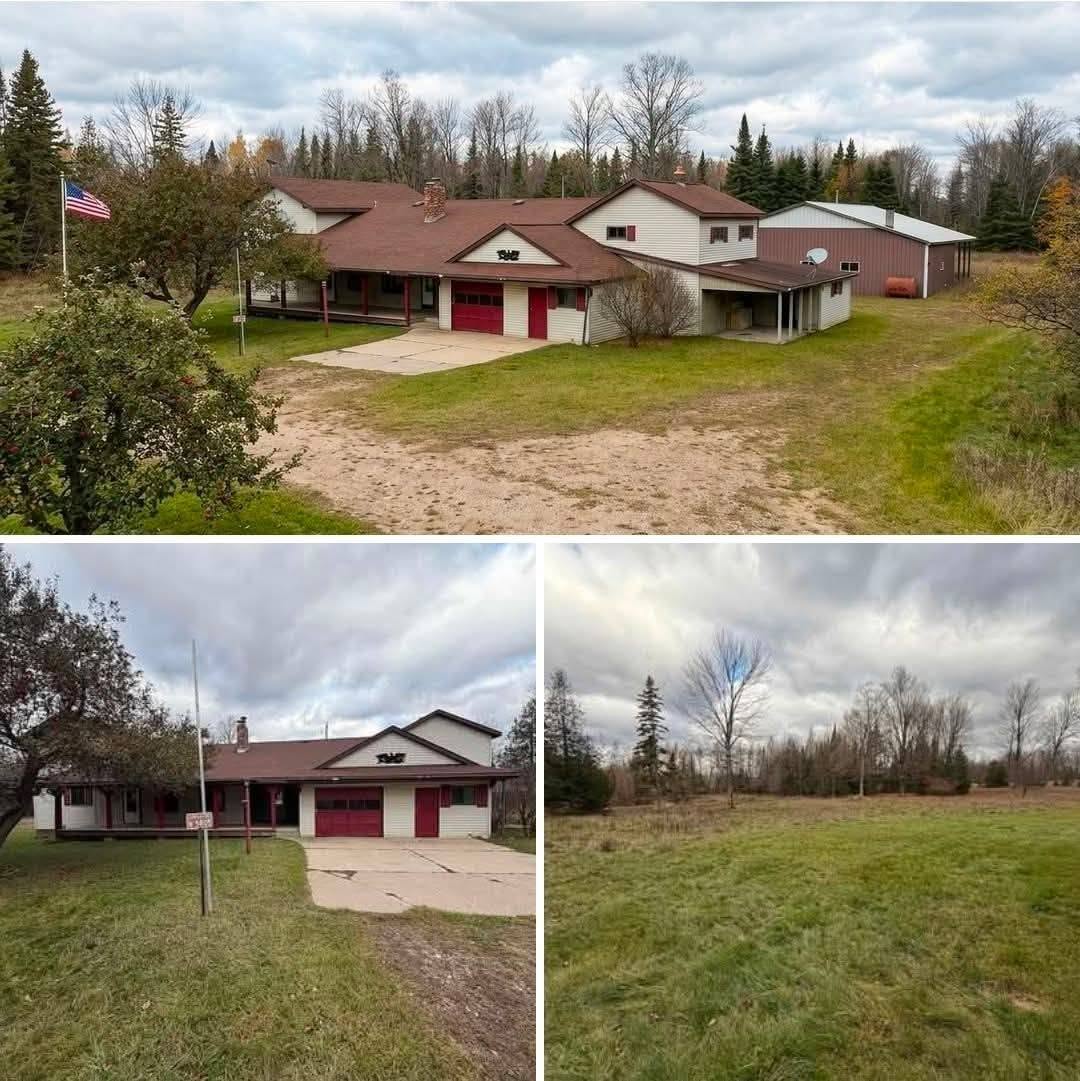
If privacy is your top priority, this 31.2-acre rural property offers a rare opportunity to enjoy space, seclusion, and nature while still being about 30 minutes from Escanaba and Iron Mountain. Set at the end of a quiet road and surrounded by wooded terrain, the land provides over 31 acres of mixed-use potential, including open areas, forest, and a private pond. It is well-suited for recreation, hobby farming, or a peaceful retreat lifestyle.The main home, built in 1984, offers over 2,000 square feet of finished living space (more than 3,200 total) with four bedrooms and five bathrooms. Two bedrooms, including the primary, are on the main level for convenience.Inside, the home features a traditional layout with a large living room centered around a wood-burning fireplace, an eat-in kitchen, and a separate dining room for gatherings. Upstairs includes additional bedrooms and a large flexible family room, while a bonus space above the garage with a bath adds options for guests, office use, or potential rental-style space. The property also includes a full unfinished basement, hardwood flooring, and a workshop area, along with multiple heating options including propane, forced air, and wood.Outside, the land features a covered porch, scenic views, and a private pond suitable for fishing, wildlife watching, or relaxation. Additional structures include a two-car garage, a large pole barn, and a four-stall lean-to, offering extensive storage for equipment, vehicles, and recreational gear.READ MORE BELOW

Nov 12, 2026
The Heartwarming Surprise That Left a 78-Year-Old Teacher Speechless New

The Heartwarming Surprise That Left a 78-Year-Old Teacher Speechless

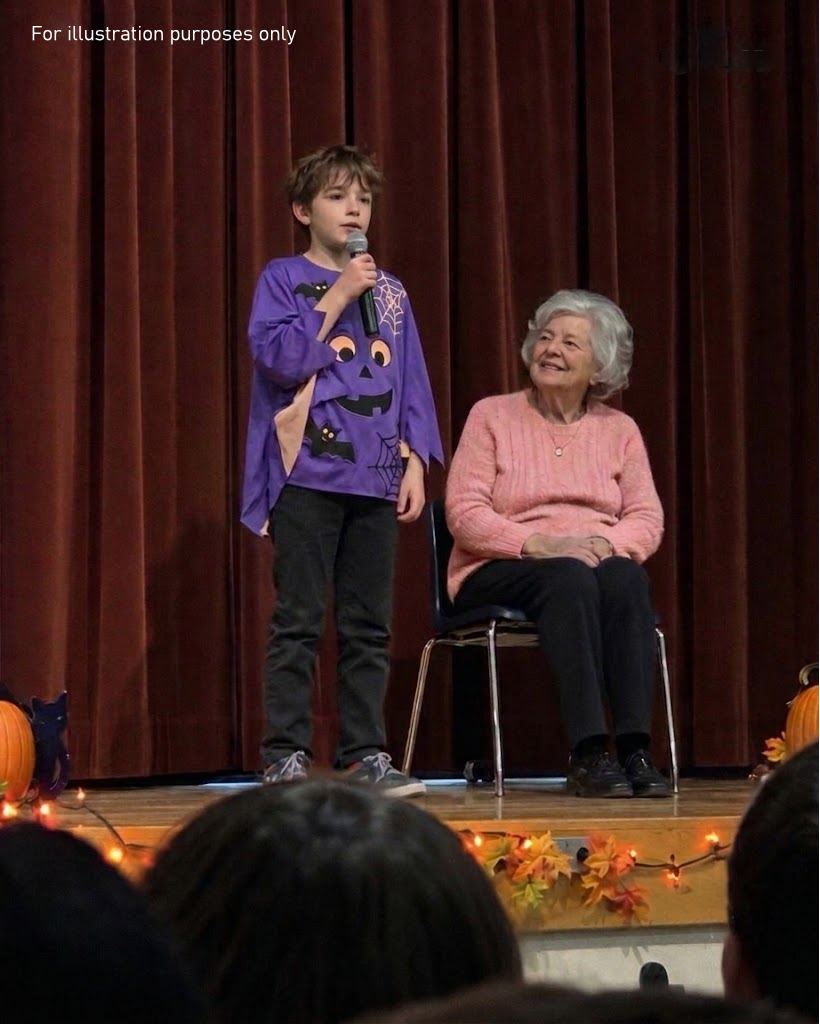
“Mom, can Mrs. Finch come to my Halloween concert?” my son, Graham, asked one morning while I was making breakfast.I looked up from the stove.“Of course, honey. But why Mrs. Finch?”“She used to teach at my school. She hasn’t been there in years, and I think she’d like to come back.”I smiled.Mrs. Finch lived two houses down from us. She was seventy-eight, had silver hair that she always pinned neatly behind her ears, and had spent more than thirty years teaching at Graham’s elementary school.She’d retired long before Graham was born, but he had somehow become one of her closest friends.It started the previous summer when he offered to help her pull weeds from her garden.At first, I thought he was simply being polite.But he began visiting her regularly, sometimes staying for an hour to help with the flowers or listen to her stories.Mrs. Finch had a wonderful memory. She could remember the names of students she’d taught twenty years earlier, along with the little things that had made each one special.Graham loved hearing about them.Sometimes she’d show him old photographs of school plays, science projects, and handmade decorations.I was glad they had each other.Mrs. Finch had been living alone since her husband passed away, and although her daughter, Lorna, visited whenever she could, she lived nearly three hours away.Lately, I’d noticed that Mrs. Finch was moving more slowly.She held the porch railing with both hands when she came down the steps, and she sometimes asked Graham to bring things from the garden shed because she didn’t feel steady enough to reach them.Still, she was determined to remain independent.When I stopped by with the concert invitation, she looked genuinely surprised.“Graham wants me to come?”“He certainly does. He’s been reminding me about it all week.”Her eyes filled with tears.“Oh, goodness. I haven’t stepped inside that school since my retirement party.”“Then it’s about time you visited.”She laughed and promised she’d be there.On the night of the concert, Graham was unusually nervous.He’d been practicing his songs for weeks, and we’d spent the previous weekend making his pumpkin costume.But instead of worrying about forgetting his lines, he kept asking about Mrs. Finch.“Mom, are you sure she’ll sit where she can see the stage?”“Yes, sweetheart.”“Not too far back?”“She’ll be right beside us.”My husband, Hugh, chuckled from the driver’s seat.“You’ve checked on her seat more than your own costume.”Graham didn’t laugh.He just looked out the window, tapping his fingers against his knees.I should have realized something was going on.The auditorium was packed with families when we arrived.Paper bats hung from the ceiling, orange lights decorated the stage, and children in costumes hurried around behind the curtains.Mrs. Finch wore a plum-colored cardigan and carried a small handbag.She seemed overwhelmed as soon as we entered.“Oh, my,” she whispered. “The old wooden doors are still here.”I helped her settle into a seat near the front.She kept looking around, pointing out things she remembered.“That clock used to be above the principal’s office. And those curtains were new the year I retired.”When Graham appeared onstage with his classmates, he immediately searched the audience.The moment he spotted Mrs. Finch, he smiled.The children sang several Halloween songs, performed a short comedy scene, and finished with a cheerful number about friendly monsters.Everyone applauded.I was preparing to help Mrs. Finch stand when the music teacher, Mr. Serrano, handed Graham a microphone.“Before everyone leaves,” Graham began, “there’s someone I’d like to ask to come up here.”He looked directly toward our row.“Mrs. Finch, would you please come onstage?”She turned to me in confusion.“Does he mean me?”I nodded, just as surprised as she was.“Apparently, he does.”With my help, she made her way up the steps.Graham took her hand and led her to the center of the stage, where Mr. Serrano had placed a chair.“Could you sit here for a minute?” Graham asked.She laughed nervously.“What have you been planning, young man?”Graham smiled but didn’t answer.He turned toward Mr. Serrano and gave him a small nod.The auditorium lights dimmed.Then the curtain slowly opened.Behind it stood an enormous midnight-blue dragon with silver wings that stretched across nearly the entire stage.Its body was covered in tiny painted stars, and its eyes glowed with soft yellow lights.Several children stepped out from behind it, carrying little paper lanterns.The audience gasped.Mrs. Finch gripped the arms of her chair.For a moment, she seemed unable to breathe.Then she covered her mouth.“Oh, Graham,” she whispered. “How did you know?”I looked at my son, completely confused.Graham took the microphone again.“Mrs. Finch wrote a school play called *The Lantern Dragon* when she was a teacher here. She told me nobody had performed it in years.”He looked toward the enormous dragon.“So I asked Mr. Serrano if we could bring it back.”A few adults emerged from behind the scenery.One of them was a former student of Mrs. Finch’s who now worked designing theater costumes.He explained that Graham had brought an old sketchbook to the school several months earlier.Inside were Mrs. Finch’s original drawings, along with notes about the music and costumes.With help from the teachers and several former students, they’d spent weeks rebuilding the dragon.Mrs. Finch stared at it with tears running down her cheeks.“I thought all those drawings had been forgotten.”Graham stepped closer.“They weren’t. And Mr. Serrano said we could perform your whole play at the winter showcase.”He hesitated.“But we’d need somebody to help us practice.”The auditorium grew quiet.“Would you teach us, Mrs. Finch?”She began crying.The audience applauded as Graham leaned forward and hugged her.I was wiping my own eyes when she suddenly pulled away.“Oh, sweetheart,” she said softly. “I would love to.”Then her expression changed.“But I don’t think I can.”Graham looked confused.“Why not?”Mrs. Finch glanced toward the audience, where her daughter, Lorna, was sitting several rows behind us.“Because I’m moving away next month.”Graham’s smile disappeared.I hadn’t known anything about it.After the concert, we gathered in a quiet corner of the school hallway.Lorna explained that her mother had been having increasing difficulty managing at home.She’d recently forgotten food cooking on the stove, and climbing the stairs had become a serious concern.“I can’t keep driving three hours every time something happens,” Lorna said. “I’ve found a place near my house where she’ll have help whenever she needs it.”Mrs. Finch looked down at her hands.“I know she’s right. I just wish I didn’t have to leave everything.”Graham stood beside her, still holding his pumpkin hat.“But what about the play?”Mrs. Finch tried to smile.“I’m sure Mr. Serrano can manage without me.”I could see how disappointed they both were.Before I’d properly thought things through, I said, “Maybe we can find a way for you to stay nearby.”Lorna turned toward me.“What do you mean?”“We have neighbors who care about her. Perhaps we could organize some help.”Mrs. Finch looked hopeful.Graham immediately brightened.“See? Mom always figures things out.”I smiled, although I wasn’t nearly as confident as he seemed to be.Over the next two weeks, I started making calls.Several neighbors offered to bring meals or help with groceries.A former student volunteered to drive Mrs. Finch to rehearsals.We arranged for a paid home aide to visit several mornings each week, and someone installed additional handrails near the front steps.Mrs. Finch was delighted.She began attending rehearsals twice a week, sitting near the stage with her old script open on her lap.Graham came home every afternoon with stories about the changes she’d suggested.“She made the dragon entrance better, Mom. Now the children have to follow the lights instead of running across the stage.”I loved seeing him so excited.But at home, things were becoming more difficult.My phone rang constantly with questions about schedules, transportation, and groceries.I started leaving work early to handle appointments.Hugh took over errands I’d usually managed, and several evenings we barely had time to sit down together.One night, while I was answering another message, he asked me to put my phone away.“Can we talk?”I looked up.“What’s wrong?”“I know you’re trying to help Mrs. Finch. But you’re taking on more than we agreed to.”I started explaining how much happier she’d become.Hugh listened patiently.“I’m glad she’s happy,” he said. “But you’ve missed two appointments this week, and I had to leave work early yesterday because nobody was available to take her home.”I felt guilty.“I thought we could manage.”“Maybe we can help. But we need to be honest about how much.”I promised we’d work out a better schedule.Unfortunately, we never got the chance.Three days later, Mrs. Finch fell while trying to carry a saucepan across her kitchen.The aide found her shortly afterward and called for help.Thankfully, she hadn’t broken anything, but the fall left her frightened and sore.A follow-up assessment confirmed that she now needed more assistance moving around safely.The biggest problem was her house.Her bedroom and only bathroom were upstairs, and she could no longer manage those stairs reliably.Lorna arrived the next morning.She was exhausted and visibly upset.“I told you this wouldn’t be enough,” she said when we met in her mother’s living room.I wanted to argue, but I knew she was right.Mrs. Finch sat quietly in her favorite armchair.Graham stood behind her, his face pale.“Can’t we just get more people to help?” he asked.Lorna shook her head.“Sweetheart, it’s wonderful that everyone wants to help. But someone bringing dinner doesn’t solve the problem when Mom needs to get to the bathroom at night.”Graham looked at me.“Mom, you said we’d find a way.”I felt terrible.“I know I did.”Mrs. Finch reached for his hand.“It’s all right, honey.”But it wasn’t all right.I’d made a promise because I wanted to see her happy, without understanding everything it would take to keep her safe.That evening, after Graham went to bed, I sat down with Hugh.Our house had a small guest room downstairs, next to a bathroom with a walk-in shower.It was currently my home office.“What if Mrs. Finch stayed with us temporarily?” I asked.Hugh stared at me.“For how long?”“Until the winter show is over. Maybe six weeks.”He rubbed his forehead.“You’re talking about having someone live here who needs daily assistance. We both work, and Graham has school.”“I know.”“Do you?”His question hurt, but I understood why he asked it.We spent the next hour discussing what we could reasonably offer.I agreed to move my office upstairs and rearrange my work hours.But we also agreed that Mrs. Finch would need professional help, and we couldn’t rely on neighbors or Lorna to cover essential care.The following day, we spoke with Mrs. Finch, Lorna, and her care coordinator.The coordinator assessed our downstairs room and bathroom and explained what support would be required.Mrs. Finch had funds available for paid assistance, and we worked out a clear schedule and an emergency plan.Lorna remained cautious.“What happens when the aide cancels?” she asked.“We’ll have backup arrangements,” I said. “And if we can’t provide the help she needs, we’ll have to change the plan.”Mrs. Finch listened to the entire discussion.Then she spoke.“Before everyone decides, may I say something?”We turned toward her.“I would like to stay close to the school until the play is finished. But I don’t want anyone making themselves miserable because of me.”She looked at Hugh.“And I especially don’t want to move into a home where I’m not truly welcome.”Hugh pulled his chair closer.“You’re welcome here, Mrs. Finch. We just need to know what we’re agreeing to.”She smiled faintly.“Then let’s agree to six weeks. After that, we’ll decide what makes sense.”Lorna finally nodded.She agreed to keep the assisted-living arrangement near her available while they explored other options.A week later, Mrs. Finch moved into our guest room.Graham spent an entire afternoon making a welcome sign for her door.The first few days were awkward.Mrs. Finch apologized whenever she needed something, and I kept reminding her that she was allowed to use the kitchen, invite visitors, and close her door whenever she wanted privacy.Gradually, we settled into a routine.The aide came each morning, and Mrs. Finch attended rehearsals whenever she felt well enough.On evenings when she was tired, Graham brought his script downstairs and practiced beside her chair.Sometimes they argued about the dragon’s movements until Hugh asked them to lower their voices.It was wonderful in many ways.But it wasn’t easy.One morning, the aide called to say she was ill, and the replacement couldn’t arrive until late afternoon.I had a paid photography appointment scheduled that day.The client couldn’t reschedule.Mrs. Finch heard me making calls and offered to stay alone.“I’ll be fine, dear. I can sit and read.”But she needed assistance that couldn’t safely be postponed.I canceled the appointment.Losing that income was painful, especially with Christmas approaching.That evening, I told Hugh what had happened.He didn’t pretend it was a small sacrifice.We went over our expenses and decided what we could put off until the following month.I also called Lorna and explained the situation.“Why didn’t you call me?” she asked.“Because we agreed that you’d be informed, but you wouldn’t automatically have to fix every problem.”There was a long silence.Then she quietly thanked me.By the time the winter showcase arrived, Mrs. Finch had become an important part of our household.But we’d also learned something about our limits.We could give her a comfortable room and enjoy her company.We couldn’t provide the level of assistance she’d need indefinitely.A week before the performance, Lorna found an assisted-living residence only fifteen minutes from our neighborhood.It had an accessible apartment available after the holidays, and Mrs. Finch’s pension and the proceeds from selling her house would help cover the cost.Unlike the first place Lorna had considered, this one would allow Mrs. Finch to remain near her school and friends.Mrs. Finch asked to visit.After touring the apartment and meeting the staff, she told us she’d like to move there.Graham was disappointed at first.“But you won’t live with us anymore.”“No,” she said gently. “But you can still visit me. And I’ll have a little patio where we can grow flowers.”That seemed to help.On the night of the winter showcase, Mrs. Finch wore her plum cardigan again.Graham helped her into the auditorium, carrying her script under one arm.When the curtain opened, the enormous dragon appeared beneath a sky of painted stars.The children performed the entire play she’d written so many years earlier.Mrs. Finch watched every moment, occasionally mouthing the words along with them.When the dragon finally spread its wings, the audience burst into applause.I turned toward her.She was crying quietly.Lorna sat on her other side, holding her hand.After the performance, the children invited Mrs. Finch onstage.This time, she knew what was coming.She accepted a bouquet of flowers and thanked everyone who had helped bring her work back to life.But the moment that affected me most happened afterward.Several former students approached her in the hallway.They told her about their families, their jobs, and the things they still remembered from her classroom.One man, now in his forties, explained that he’d become a carpenter because she’d once encouraged him to help build scenery for a school play.Mrs. Finch smiled through her tears.“I remember those crooked wooden trees,” she told him.He laughed.“I still can’t believe you let us put them onstage.”A few weeks later, we helped her move into her new apartment.Lorna came down for the weekend and stayed until everything was unpacked.Graham carried in a box of books and immediately started examining the small patio.“We could put the flowerpots over here,” he suggested.Mrs. Finch looked outside.“Only if you promise to come help me plant them.”“I will.”“And perhaps you could bring your schoolwork sometimes. I miss having someone to correct.”Graham groaned.“Mrs. Finch, you’re not my teacher.”She laughed.“That has never stopped me before.”We visited again the following Saturday.Mrs. Finch had already made a few friends, and the staff helped her get ready for our afternoon together.Graham brought the old sketchbook containing her dragon drawings.They spent nearly an hour at her little dining table, arguing over how the wings should look if the school performed the play again.I watched them from the kitchen area while I made tea.Mrs. Finch had lost the house where she’d spent so many years, and I knew that still hurt her.But she was safe, close to the school, and able to spend time with the people she loved.When it was time to leave, Graham gave her a hug.“Can I come back next weekend?”Mrs. Finch smiled and pointed toward the unfinished drawing on the table.“You’d better. We still haven’t fixed that dragon’s tail.”

Nov 12, 2026
The Viral Math Puzzle That's Dividing the Internet: Why the Answer Isn't 22 New

The Viral Math Puzzle That's Dividing the Internet: Why the Answer Isn't 22

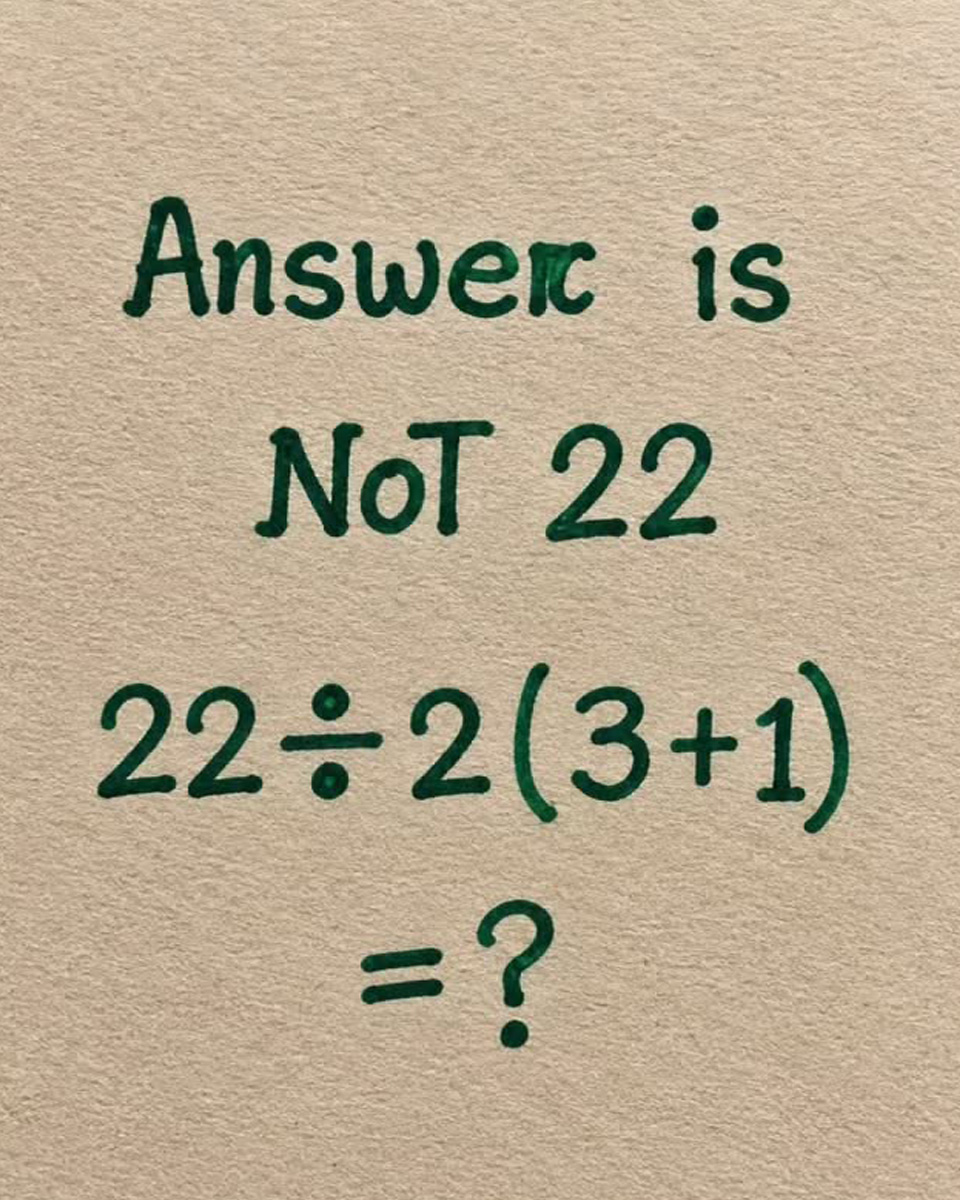
A simple scrap of brown craft paper and a handwritten math puzzle can easily capture everyone’s attention online.The note boldly claims that the answer is not 22, instantly sparking debate and curiosity among readers.At first glance, the equation 22 ÷ 2(3+1) looks like basic elementary school arithmetic that anyone can solve within seconds.However, social media puzzles like this become viral because they test our understanding of the fundamental order of operations.Many people arrive at completely different numbers because they misinterpret the priority between multiplication and division.To discover the true, logical result, we must break down the expression step by step using standard mathematical rules.The universal standard for solving math expressions is commonly known as PEMDAS or BODMAS.These acronyms stand for Parentheses or Brackets, Exponents or Orders, Multiplication and Division, and Addition and Subtraction.The very first rule is always to solve the operation located directly inside the parentheses.Inside our parentheses, we see a simple addition: 3 plus 1.Adding 3 and 1 gives us a clean sum of 4.Now, we can rewrite the original equation as 22 ÷ 2(4).At this point, many people make their biggest mistake by immediately multiplying 2 by 4.Some people believe that a number sitting right next to a parenthesis has a higher priority than ordinary multiplication.In standard arithmetic, however, writing 2(4) simply means 2 multiplied by 4, without any hidden special privilege.Therefore, our simplified expression is simply 22 divided by 2, multiplied by 4.Now, we must consider the core rule regarding division and multiplication.In both PEMDAS and BODMAS, multiplication and division share the exact same level of mathematical precedence.Neither operation is inherently superior to the other.When two operations have equal precedence, the rule states that you must solve them strictly from left to right.Looking at 22 ÷ 2 × 4 from left to right, the division comes first.We must divide 22 by 2 before doing any other operation.Dividing 22 by 2 yields exactly 11.Now, only one single operation remains in our math problem.We simply multiply 11 by the 4 that came from the original parentheses.Multiplying 11 by 4 gives us the final number 44.This simple calculation clearly confirms why the handwritten note is right: the answer is definitely not 22.The answer is also not 2.75, which would happen if you incorrectly calculated 2 times 4 first.Following strict and unambiguous mathematical rules leads directly to one indisputable conclusion.The only mathematically correct and logical answer to 22 ÷ 2(3+1) is 44.

Nov 12, 2026
The Puzzle Trick: Discover Which Rope Really Drops the Ball New

The Puzzle Trick: Discover Which Rope Really Drops the Ball

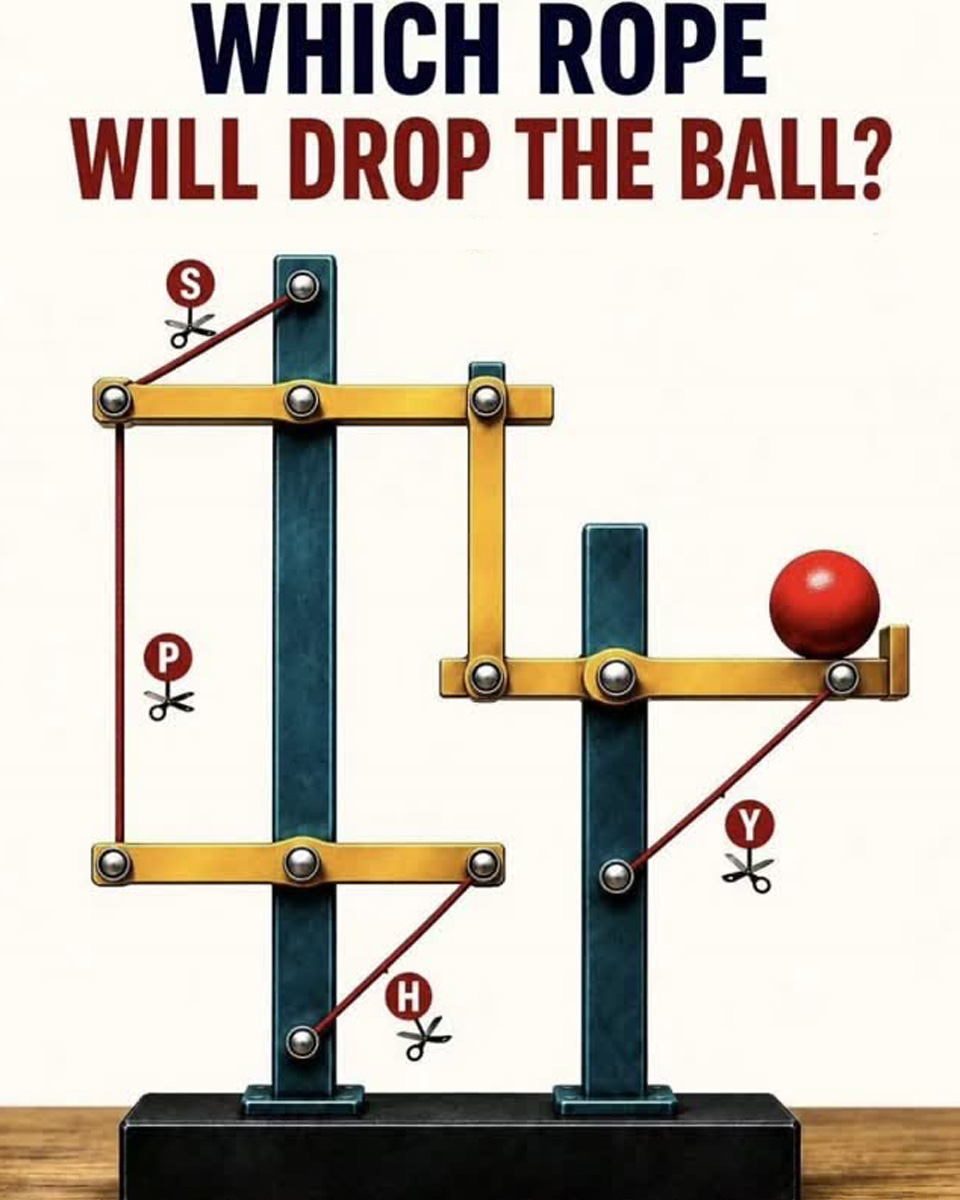
At first glance, this puzzle looks like a simple question about which rope is holding the ball.But there are several ropes, several moving bars, and more than one possible point of movement.That makes it easy to choose the wrong answer if you only look at which rope seems closest to the ball.The key is to follow the structure carefully and ask one simple question: Which rope is actually helping to keep the ball on the raised end of the bar?Let’s look at the puzzle step by step.The most important idea here is balance and pivot points.A bar can rotate around a fixed point, called a pivot.When one side of the bar is supported by a rope, that rope can prevent the bar from rotating.If the rope is cut, the force holding that side disappears.The bar may then rotate, causing anything resting on it to move.This is exactly what we need to look for in this puzzle.What About Rope S?Rope S is connected to the upper bar on the left side.It helps support that bar by connecting it to the higher point on the vertical structure.If S is cut, the upper bar can change its position.That movement may also affect the rope labeled P.However, this entire mechanism is on the left side of the puzzle.The ball is sitting on a completely different bar on the right.There is no direct connection that would make cutting S immediately release the ball.So S is not the answer.What About Rope P?Rope P connects the left side of the upper bar to the left side of the lower bar.It looks important because it connects two different moving pieces.If the upper bar moves, P may become loose or change its tension.But again, P belongs to the left-hand mechanism.The ball is not resting on either of those bars.Even if the left side moves, that does not directly remove the support underneath the ball.So P can also be eliminated.What About Rope H?Rope H is attached to the lower bar on the left side.Its job is to help support one end of that bar and prevent it from rotating freely around its pivot.Cutting H would allow the left mechanism to move.But the ball is still on the separate mechanism to the right.The important thing to remember is that movement in one part of a machine does not automatically make another part move.There must be a physical connection that transfers the movement.In this puzzle, H does not provide that connection to the ball.So H is not the answer either.Now Look Closely at Rope YRope Y is different.It is directly connected to the bar that is holding the ball.The right-hand bar has a pivot near its middle.One end of the bar carries the ball, while rope Y helps support the other side of the structure.As long as Y is holding its position, the bar can remain balanced.The ball stays on the raised end.But imagine cutting Y.The support from the rope suddenly disappears.The bar is no longer held in the same balanced position.Because the ball adds weight to the right side, gravity pulls that side downward.The bar rotates around its pivot.As the ball-carrying end moves downward, the ball loses its support and falls.That is the key to solving the puzzle.You do not need to follow every possible movement on the left side.You only need to identify which rope is directly supporting the mechanism carrying the ball.The Final AnswerSo, which rope should be cut to drop the ball?The correct answer is Y.Cutting Y removes the support from the right-hand lever, allowing it to rotate downward under the effect of gravity and causing the ball to fall.The other ropes control parts of the left-hand mechanism, but they do not directly release the ball.That is why this puzzle is a good reminder that when solving mechanical puzzles, the most important thing is not simply to look at what seems closest.Instead, follow the pivot, the support, and the direction of movement.Once you do that, the answer becomes much easier to see.

Nov 12, 2026
What Your Chair Choice Reveals About Your Personality New

What Your Chair Choice Reveals About Your Personality

We’ve all been there: you walk into a room, scan the seating options, and make a split-second decision about where to park your backside. But have you ever stopped to wonder why you chose that specific spot?As it turns out, our choice of chair says a whole lot more about us than just how tired our feet are! In fact, the way you choose to rest can reveal some of the most fascinating (and hilarious) aspects of your personality.Take a look at the five chairs lined up against the wall in the image above. From sleek and simple to plush and grand, each one has a totally different vibe. Imagine walking into this room right now. Which chair are you naturally drawn to?Got your number? Let’s find out what your choice says about the real you!Chair 1: The Reliable MinimalistIf your eyes went straight to the first chair, you are someone who appreciates the beauty of simplicity. This is a classic, no-nonsense wooden chair. It doesn’t have any fancy cushions, and it certainly isn’t trying to show off.If you chose Chair 1, you are the rock of your friend group. You’re practical, down-to-earth, and incredibly reliable. You don’t need a lot of fuss to be happy; you just want things to work the way they’re supposed to. You value honesty above everything else, and people always know they can count on you for straightforward, solid advice. You don’t need to be the center of attention—you’re just happy to be there, supporting everyone else with your grounded, “keep it simple” attitude.Chair 2: The Nostalgic RomanticLook at those beautiful, curved wooden arms and the lovely floral pattern! If you chose Chair 2, you are a soul with a deep appreciation for history, beauty, and maybe just a little bit of drama (the good kind!).You’re likely a natural-born storyteller who loves anything vintage, cozy, or sentimental. You have a warm, gentle spirit, and you’re probably the kind of person who remembers everyone’s birthday, keeps ticket stubs from concerts, and loves a good heartfelt chat over a cup of tea. You bring grace and a touch of old-world charm wherever you go. Your personality is just like this chair: comforting, unique, and full of beautiful stories.Chair 3: The Boss (or the Comfort Seeker!)Oh, hello, luxury! Chair 3 is the ultimate heavyweight here—a big, plush, tufted brown leather armchair. If you chose this one, you’re either someone who loves to be in charge, or you simply refuse to compromise on your personal comfort. (And honestly, why should you?)You are likely confident, ambitious, and someone who appreciates the finer things in life. You like to feel secure, grounded, and maybe a little bit powerful. When you walk into a room, you want to be seen, and you want to be comfortable while you do it. People are naturally drawn to your strong, warm presence. You’re the natural leader who knows exactly how to get things done, but you also know that the best work is done when you’re sitting in the most comfortable seat in the house.Chair 4: The Social ButterflyWith its vibrant floral pattern, light wood, and inviting look, Chair 4 practically screams, “Let’s have fun!” If this is your chair, you are the life of the party, or at least the one who brings the most color to any gathering.You have an energetic, optimistic, and highly expressive personality. You love meeting new people, starting lively conversations, and exploring creative ideas. You hate being bored, and you’re always looking for the next adventure or a new way to bring joy to those around you. You have an eye for beauty and a natural gift for making people feel welcome and happy just by being near you. Your heart is as bright and colorful as the pattern on this chair!Chair 5: The Quiet IntellectualFinally, we have Chair 5—a simple, functional wooden chair with a modest fabric seat. This is the choice of the thinker, the observer, and the independent spirit.If you chose this chair, you’re likely an introvert or someone who deeply values their quiet time. You don’t feel the need to shout to be heard; your quiet confidence speaks for itself. You’re observant, thoughtful, and highly observant, usually noticing the little things that everyone else misses. You prefer deep, one-on-one conversations over noisy crowds, and you’re perfectly content in your own company. You’re independent, wise, and you always keep a cool head when things get chaotic.So, which one are you?Whether you’re the rock-solid Chair 1 or the vivacious Chair 4, your choice shows that we all bring something unique and wonderful to the room. Share this with your friends and see if their choices match their personalities—you might just learn something new about them!

Nov 12, 2026
Why Florida's Alligators Are Disappearing: The Surprising Truth New

Why Florida's Alligators Are Disappearing: The Surprising Truth

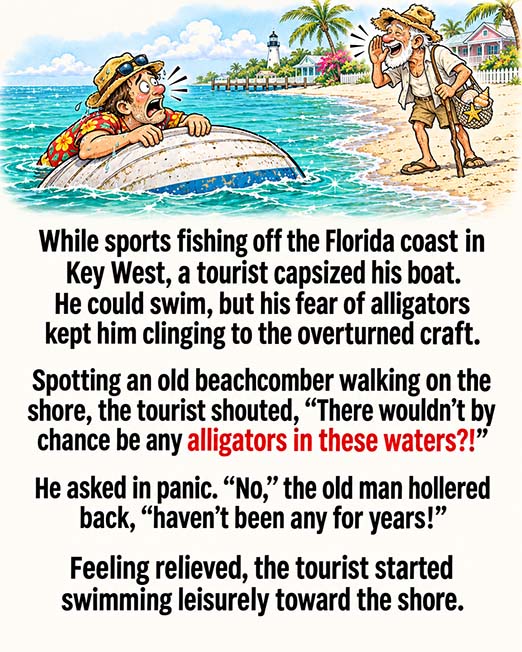
While sports fishing off the Florida coast in Key West, a tourist capsized his boat.He could swim, but his fear of alligators kept him clinging to the overturned craft.Spotting an old beachcomber walking on the shore, the tourist shouted, “There wouldn’t by chance be any alligators in these waters?!”He asks in panic. “No,” the old man hollered back, “haven’t been any for years!”Feeling relieved, the tourist started swimming leisurely toward the shore.About halfway toward shore he asked the old man, “Say, how’d you get rid of the gators, anyway?”“We didn’t do anything,” the old man said. “The sharks got ’em.”An elderly man in Florida had owned a large farm for several years.He had a large pond in the back, fixed up nicely: Picnic tables, horseshoe courts, a volleyball court, and some fruit trees.The pond was properly shaped and fixed up for swimming.One evening the old farmer decided to go down to the pond and look it over, as he hadn’t been there in a while.He grabbed a five-gallon bucket to bring back some fruit.As he neared the pond, he heard voices shouting and laughing with glee.As he came closer, he saw it was a bunch of young women skinny-dipping in his pond.He made the women aware of his presence and they all went to the deep end.One of the women shouted to him, “We’re not coming out until you leave!”The old man frowned, “I didn’t come down here to watch you ladies swim or make you get out of the pond.”Holding the bucket up he said, “I’m here to feed the alligator.”So one day, Grandma sent her grandson Little Johnny down to the waterhole to get some water for cooking dinner.As he was dipping the bucket in, he saw two big eyes looking back at him.He dropped the bucket and hightailed it for Grandma’s kitchen.“Well now, where’s my bucket and where’s my water?” Grandma asked him.“I can’t get any water from that water hole, Grandma” exclaimed Johnny. “There’s a BIG ol’ alligator down there!”“Now don’t you mind that ol’ alligator, Johnny. He’s been there for a few years now, and he’s never hurt no one. Why, he’s probably as scared of you as you are of him!”“Well, Grandma,” replied Johnny, “if he’s as scared of me as I am of him, then that water ain’t fit to drink!”

Nov 12, 2026
Why My Neighbor's Mercedes Was Trapped in Concrete New

Why My Neighbor's Mercedes Was Trapped in Concrete

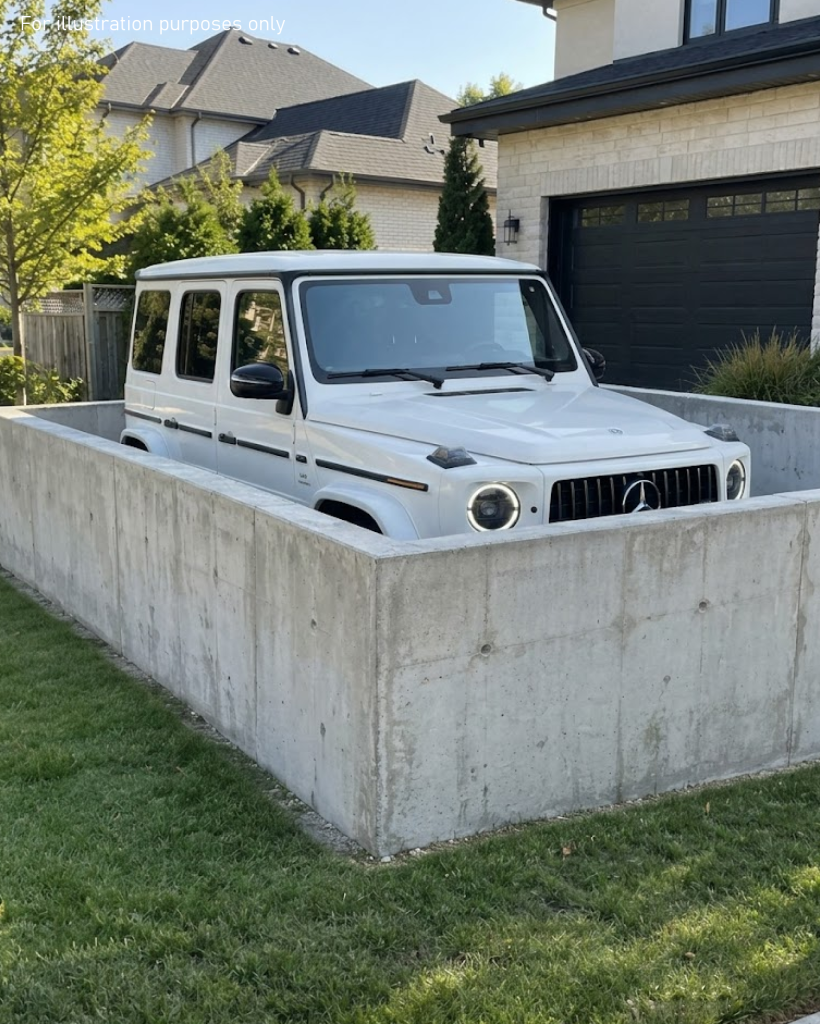
For six months, I’d been dealing with a man who seemed to believe that having more money than everyone else gave him the right to do whatever he pleased.I’m 49, and I’ve lived in the same house for nearly twenty years. My neighbor, Vaughn, moved in last spring. He owned a successful business, drove expensive cars, and had a driveway large enough to accommodate all three of them.Yet he insisted on parking his silver Mercedes right in the middle of my front lawn.The first time, I assumed he was expecting visitors. The second time, I walked over and politely asked him to move it.By the fifth time, there were deep tire tracks running through the grass.“Vaughn, could you please stop parking here? You’re tearing up my yard,” I told him one afternoon.He looked at the ground, then at his Mercedes, and laughed.“Come on, Duncan. It’s a patch of grass. Honestly, that car probably makes your place look more expensive.”I couldn’t believe what I was hearing.“That isn’t the point. This is my property.”“Then put up a sign,” he replied, climbing into his car. “Some people really have nothing better to worry about.”He drove away before I could respond.What Vaughn didn’t know was that the lawn meant more to me than he could imagine.My wife, Beth, had spent years taking care of it. Every spring, she’d kneel beside the flower beds, pulling weeds and complaining that I never remembered which plants needed the most water.She’d been gone for almost three years, but I’d kept the yard the way she liked it. Even the wooden porch swing she’d painted blue was still hanging in its usual spot.Maybe that was why Vaughn’s behavior hurt so much. Every time his tires crushed another section of grass, it felt as though he was deliberately ruining something I’d worked hard to preserve.I tried being reasonable. I left notes on his windshield, spoke to him several times, and even suggested that he move one of his other cars so the Mercedes would fit comfortably in his driveway.Nothing worked.One Saturday, I came home from the grocery store and found his car sitting directly over a flower bed I’d replanted the previous weekend.I knocked on his door.Vaughn opened it wearing a bathrobe and holding a coffee mug.“Your car is on my flowers again.”He glanced past me.“They’ll grow back.”“Not if you keep running them over.”He gave me an impatient look.“Duncan, I’m having a relaxing morning. If you’re that worried about your precious flowers, maybe you should build a fence.”Then he shut the door.I stood there for a moment, staring at the polished brass door handle.By the time I walked home, I’d made up my mind.My friend Leon had worked in construction for almost thirty years. When I called him that evening and explained what I wanted to do, he thought I was joking.“You want to put concrete barriers around his car?”“That’s exactly what I want.”“Duncan, just have the thing towed. Talk to the city. Do something normal.”“I’ve spent six months trying to handle this normally.”Leon sighed.“You’re going to turn a parking problem into something much bigger.”I should have listened.Instead, I convinced him to help me arrange several heavy, interlocking concrete barriers through a local equipment supplier. He agreed only after making me promise that we wouldn’t touch Vaughn’s vehicle or damage it.Late that night, with Leon and another friend helping, we positioned the barriers around the Mercedes.It took hours to get everything into place. By the time we finished, the car was surrounded by concrete sections too heavy to move by hand.There was enough space around the vehicle to avoid touching it, but nowhere near enough room to drive it out.I stood back and admired our work.After six months of being laughed at, I could hardly wait to see Vaughn’s face.I didn’t have to wait long.At eight the next morning, someone began pounding on my front door.“DUNCAN! GET OUT HERE!”I opened the door to find Vaughn standing at the bottom of my porch steps, his face red with anger.“What the hell have you done to my car?”I leaned against the doorframe.“Good morning, Vaughn.”“Don’t you dare play games with me! Take those things away right now!”“Why? They’re on my property.”“You’re trapping my car!”“And you’ve been parking it on my lawn for six months. I asked you to stop, remember?”He jabbed a finger toward my chest.“I’ll have you sued for every penny you’ve got.”“Then I suppose we’ll both have something to discuss with a lawyer.”For a moment, he looked as though he might hit me.Instead, he stormed back toward the Mercedes and began making phone calls.Within an hour, several neighbors had gathered outside.Some were openly laughing. Others shook their heads at the enormous concrete enclosure sitting in my front yard.Leon arrived shortly afterward.“I can get the equipment back here and remove a section,” he told Vaughn. “It won’t take long.”Vaughn stared at him.“Absolutely not. I’m not begging that man to let me have my own car.”He pointed at me.“You’re going to regret embarrassing me.”Then he walked away.By early afternoon, a massive crane truck was turning onto our street.I brought a lawn chair onto the porch because I couldn’t imagine missing what happened next.The operator, a gray-haired man named Curtis, spent nearly twenty minutes examining the Mercedes and the surrounding barriers.Finally, he approached Vaughn.“Sir, the angle isn’t good. We can assess a test lift, but I strongly recommend removing one of these barriers and recovering the vehicle normally.”Vaughn folded his arms.“I didn’t hire you to tell me to take down the wall.”“I’m telling you there’s a risk of damaging the vehicle or the surrounding property.”“Then be careful. I’ll pay whatever it costs.”Curtis looked thoroughly unhappy.He walked back to his crew, inspected the equipment again, and instructed everyone to remain well clear of the working area.I watched from the far side of my porch, feeling ridiculously pleased with myself.Across the street, Mrs. Greer was standing beside her mailbox.“Serves him right,” she called. “Maybe he’ll learn where his driveway is.”I raised my coffee cup toward her.Then the crane began lifting the Mercedes.Slowly, its tires left the grass.Vaughn watched from the sidewalk, his jaw clenched. I could practically see him calculating how much the operation was costing.The car rose several feet.For a moment, everything looked perfectly controlled.Then its rear end began turning.Curtis shouted something to his crew.The Mercedes rotated farther, and the suspended car started moving sideways.“STOP! EVERYBODY BACK!”I heard the warning, but I couldn’t immediately understand what was happening.Then I saw the Mercedes swinging toward my house.I jumped away from the porch railing just as an awful cracking sound filled the air.The rear corner of the car smashed into the wooden railing, tore through the porch swing, and struck one of the support posts.The impact shook the porch beneath my feet.I stumbled backward through the front door as broken wood and shattered glass scattered across the steps.Someone screamed from the sidewalk.Curtis managed to stabilize the vehicle and lower it back inside the concrete enclosure.For several seconds, I couldn’t move.Then I stepped outside and looked at what remained of my porch.The railing was gone. One support post had split near its base, and Beth’s blue swing lay in pieces on the ground.I felt sick.Vaughn came running toward the house.“Look what you’ve done to my Mercedes!”I stared at him.“Your car just hit my house!”“Because you trapped it behind that stupid wall!”“If you’d kept it off my lawn, none of this would’ve happened!”We were both shouting when Curtis stepped between us.“That’s enough. Nobody is lifting that car again today. Both of you need to stay away from that porch until someone checks the damage.”Vaughn opened his mouth to argue, but Curtis walked away before he could say another word.That evening, the Mercedes remained trapped, my porch was badly damaged, and several neighbors who’d been laughing that morning suddenly had very little to say.I barely slept.Every time I closed my eyes, I heard that horrible cracking sound again.The following morning, Leon came over to inspect the damage.He examined the broken support and looked at me with an expression I didn’t like.“Duncan, this is serious. You need a contractor out here.”“I already called one.”“Good.”He looked toward the concrete barriers.“I told you this could go wrong.”“I didn’t make him hire a crane.”“No, you didn’t. But you made sure there was no easy way for him to drive out.”I turned away.“He deserved what he got.”Leon was quiet for a moment.“Maybe he deserved to pay for your lawn. But did you deserve to lose your porch?”I had no answer.Two days later, the contractor gave me an estimate of nearly $19,000.The damaged support would have to be replaced, part of the porch floor needed reconstruction, and several connections to the house required inspection.He also warned me that the structure had to be secured before the next heavy rain.I contacted my insurance company immediately.The representative asked detailed questions about the concrete barriers, how the car had been trapped, and why a crane had been brought onto the street.By the end of the conversation, I understood that nobody was going to simply write me a check.The crane company’s insurer was investigating, Vaughn was demanding compensation for his Mercedes, and my own insurer needed more information before determining what would be covered.Then a city official came to inspect the damaged porch and asked about the barriers.I explained everything.He listened, took photographs, and told me the situation would require additional review. In the meantime, the porch couldn’t be used, and the concrete enclosure needed to be addressed safely.I watched him drive away and sat down at my kitchen table.For months, I’d imagined how satisfying it would be to make Vaughn pay for what he’d done.Now I was looking at repair bills I wasn’t sure I could afford.My daughter, Tessa, visited that afternoon with my seven-year-old grandson, Miles.I hadn’t told her exactly what had happened.She stood in the driveway, staring at the concrete wall and the damaged house.“Dad, what on earth happened here?”I explained the parking dispute, the barriers, and the crane.She listened without interrupting.When I finished, she looked toward the broken porch swing.“That’s Mom’s swing.”“I know.”“Is there any way to fix it?”“I don’t think so, honey.”Miles had been listening quietly. He walked closer to the porch, stopping where the safety tape had been placed.“Grandpa, where are we going to sit now?”I swallowed.Every Sunday, Miles and I used to sit on that swing while he told me about school. Sometimes, he’d ask questions about Beth, and I’d tell him stories about the grandmother he barely remembered.“We’ll find another place, buddy,” I said.But he kept looking at the broken pieces.Tessa came over and rested her hand on my shoulder.“Dad, I know that man treated you badly. But Mom loved this porch, and now it’s gone because you two couldn’t stop fighting.”I wanted to defend myself.Instead, I looked at Miles, who was carefully picking up a small piece of blue-painted wood.For the first time, I wished I’d never made that phone call to Leon.Three days later, Vaughn knocked on my side door.I almost didn’t answer.He was holding a folder.“I’ve spoken to my insurance company,” he said.“So have I.”He looked toward the porch.“There’s a contractor I’ve used before. He handles structural repairs. I asked him if he could come take a look.”I stared at him.“Why would you do that?”“Because your porch needs fixing.”“And you’re suddenly concerned about my house?”Vaughn looked irritated, but he didn’t raise his voice.“I’m not saying this was all my fault, Duncan. But my car hit your house, and I’m not pretending that didn’t happen.”I hesitated.“Is this some trick to get me to pay for your Mercedes?”“No. I’m still working that out with the insurers.”He handed me the contractor’s number.“You don’t have to use him. I just thought you might want another estimate.”I took the card.That night, a storm rolled through town.Around eleven, rain began blowing against the damaged side of the porch. Water was collecting near the exposed wood, and the temporary covering the contractor had installed was coming loose.I pulled on my boots and went outside to secure it from the ground.As I struggled with the edge of the tarp, I heard someone calling my name.It was Vaughn.He was standing at the property line in a raincoat, carrying a flashlight.“Do you need a hand?”I almost said no.Then another gust pulled the tarp away.“Grab that corner!” I shouted.He hurried over, and together we secured the covering from a safe position, keeping clear of the damaged structure.By the time we finished, we were both soaked.Vaughn stood beneath the overhang by my side door, breathing heavily.“That should hold until morning,” he said.“Thanks.”He nodded.For a while, neither of us spoke.Then he looked toward the broken swing.“My wife said you lost something important out there.”I glanced at him.“She heard from Tessa. They talked at the grocery store.”“Beth painted that swing herself,” I told him. “She died three years ago.”Vaughn lowered his eyes.“I didn’t know.”“You never asked.”He rubbed his wet hands together.“No. I suppose I didn’t.”A moment later, he said something I’d wanted to hear for six months.“I’m sorry I kept parking on your lawn. You asked me to stop, and I made a joke out of it.”I looked at him carefully.“Why? You had plenty of room in your driveway.”He gave a tired laugh.“At first, I parked there because the tree kept my car shaded. Then you told me to move, and I didn’t like being told what to do.”“That’s a ridiculous reason.”“I know.”I shook my head.“You ruined my yard because you didn’t want to listen to me?”He nodded slowly.“Pretty much.”I wanted to stay angry, but hearing him admit it made the whole dispute seem even more foolish.After a moment, Vaughn looked at the porch.“I should’ve listened the first time.”“And I should’ve called a towing company instead of building that wall,” I admitted.He glanced toward the Mercedes.“Would’ve been cheaper for both of us.”Despite everything, I laughed.The following week wasn’t easy.We still disagreed about money. Vaughn’s Mercedes needed extensive repairs, and my porch required more work than anyone had expected.But we finally began discussing the damage without shouting at each other.With our insurers reviewing the accident, we made a written arrangement covering the immediate work and the expenses we were each willing to accept.Vaughn agreed to pay for restoring the lawn and replacing the destroyed flower beds.I paid to have the concrete barriers removed, including the necessary equipment and labor.We also documented the porch repairs and agreed on how to handle urgent costs while the insurance questions were being resolved.Neither of us was entirely happy with the arrangement, but at least the house could be repaired.A recovery crew eventually removed one of the concrete sections and loaded Vaughn’s damaged Mercedes onto a flatbed truck.This time, no neighbors gathered to cheer or laugh.Vaughn watched silently as the truck pulled away.Before returning home, he walked over.“I won’t park on your property again, Duncan.”“I’d appreciate that.”He paused.“And I’m sorry about the swing.”I looked toward the porch.“Me too.”Over the next several weeks, carpenters replaced the damaged supports, rebuilt the railing, and repaired the flooring.I asked them to save whatever they could from Beth’s swing.Most of the wood was beyond repair, but one of the painted armrests was still intact.Leon helped me build a replacement using the old armrest and matching blue paint.When Tessa and Miles came over the following Sunday, the porch was finally ready.Miles ran straight toward the new swing.“Grandpa! It’s back!”“Mostly,” I said, smiling.He climbed onto the seat, and Tessa sat beside him.For a moment, I could almost picture Beth sitting there with them, telling Miles not to swing too high.Later that afternoon, Vaughn came outside while I was watering the newly planted grass.He stopped beside his driveway.“Looks good,” he called.“Thanks.”He hesitated, then pointed toward the flower bed.“My wife wanted to know what kind of flowers those are.”“Hydrangeas. Beth’s favorites.”He nodded.“She said they were beautiful.”I thanked him, and we went back to what we were doing.We never became close friends. I still remembered every insulting thing he’d said, and I suspected he hadn’t forgotten the morning he found his Mercedes surrounded by concrete.But he kept his cars in his driveway, and when one of his guests accidentally parked too close to my lawn, Vaughn came outside and asked them to move before I even noticed.A month later, Leon stopped by to return some tools.He stood beside the porch and looked across the fresh grass.“Hard to believe all this started over a parking spot.”I shook my head.“Tell me about it.”He glanced at the new swing.“Would you still build that wall if you could go back?”I looked at the porch, remembering how frightened I’d been when the Mercedes came crashing toward it.Then I thought about Beth’s flowers, the repair bills, and the expression on Miles’s face when he’d seen her swing in pieces.“No,” I admitted. “I’d still make him get his car off my property. But I wouldn’t put my own home at risk just to watch him lose his temper.”Leon nodded and picked up his tools.That evening, after everyone had gone home, I sat on the porch swing with a cup of coffee.Across the street, Vaughn pulled into his driveway, parked his car, and went inside without looking my way.There was nothing remarkable about it.Six months earlier, though, I would have given almost anything for an ordinary evening like that.I rested my hand on the old blue armrest, the one piece of Beth’s swing we’d managed to save, and gently pushed myself back and forth.The lawn was green again. The porch was repaired. And for the first time in months, I could sit outside without wondering whether I’d find another Mercedes parked among my wife’s flowers in the morning.


Nov 12, 2026
How a Forgotten Friendship Turned a Bitter Encounter into a Heartwarming Reunion New

How a Forgotten Friendship Turned a Bitter Encounter into a Heartwarming Reunion

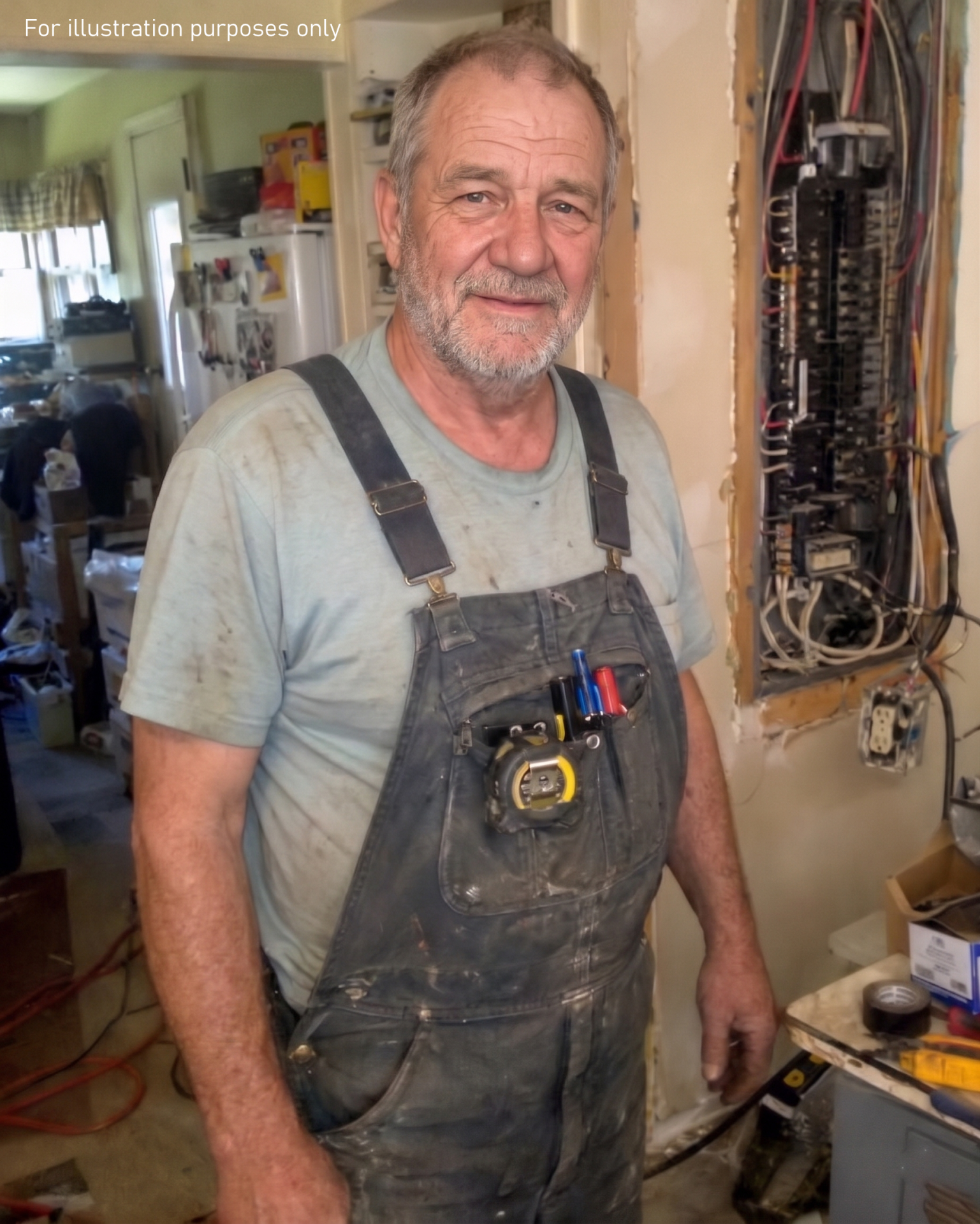
A wealthy couple mocked my worn-out toolbox and refused to pay me $100—but one small detail in their mansion helped me teach them a lesson.I’m 64. I’ve been an electrician for 38 years. Since my wife’s stroke, I take every job I can get.Last Thursday, I was called to a huge mansion. The flooring in that house alone probably cost more than I made in a month.Half the outlets downstairs had stopped working.The homeowner barely looked up from his phone.“Try not to make a mess,” he said, eyeing my worn-out boots. “We don’t want to have to clean up after you.”I laid down a drop cloth, traced the fault, replaced a damaged outlet, and checked every connection twice. I was confident in my work.While I was working, a woman walked into the room. I figured she was the homeowner’s wife.I could feel their eyes boring into my back.Then they started speaking Russian.Years ago, I had been friends with a guy from the Soviet Union who taught me quite a bit of the language. I couldn’t really speak it, but I understood enough.“Look at those clumsy hands,” the wife snickered in Russian. “He doesn’t know what he’s doing.”“People like him deserve to spend their whole lives at the bottom, serving people like us. What a disgrace. Should’ve gone to college,” the husband replied.My ears burned, but I didn’t say a word.They had no idea I understood most of what they were saying.Then the woman laughed.“Why don’t we just say he broke something or stole something? Then we won’t have to pay him.”The husband laughed and agreed.I stood up and told them the job was done. Every outlet was working perfectly.As I turned to pack up my tools, the husband muttered in Russian, “What an idiot.”I reached for my tester, but something in the living room caught my eye.A tiny detail I hadn’t noticed before.I looked closer.And for the first time that afternoon, I smiled.While they were laughing in the kitchen, I quietly did one small thing.Then I picked up my toolbox and walked back to them.The husband folded his arms as soon as he saw me.“Bad news. You did a lousy job. We’re not paying you $100 for that,” he said in English.His wife gave me a pitying smile.“You understand, don’t you?”I smiled back.I wasn’t even going to argue.Because just a second later, a sharp sound came from the living room.The husband whipped around, his face turning pale.Then his wife screamed, “What happened in here?! What have you done?!”The sound was coming from their security system.A loud, piercing alarm filled the downstairs rooms, followed by a recorded voice announcing a system test.The husband, who had introduced himself as Anton, nearly knocked over his coffee as he hurried into the living room.His wife, Elena, followed him, still shouting.I walked behind them with my toolbox.The security panel beside the bookshelf was flashing red. Anton stared at it, then turned toward me.“Did you touch this?”“Yes, sir. The panel was showing a power fault after I repaired the circuit. I ran its built-in test to make sure everything was working.”“You had no right to touch our security system!”He was right that I should have asked first, and I told him so. But I also knew the difference between testing a system and damaging one.“The test will finish in a moment,” I explained. “Nothing has been disconnected.”Elena wasn’t listening.She had noticed the framed photograph sitting on the shelf.“Anton, I saw him standing over here before he went into the kitchen!”She pointed at me.“He was touching our things!”Anton’s expression changed.“Is that what you were doing? Looking for something to steal?”I felt my stomach tighten.I’d heard them discussing that exact accusation in Russian less than fifteen minutes earlier. Now they were saying it to my face.“I haven’t taken anything,” I answered.“Then explain why you were looking through our belongings.”“I picked up a photograph. I recognized someone in it.”Elena gave a sharp laugh.“Oh, please. You expect us to believe that?”Anton pulled out his phone.“I should call the police. Maybe they’ll find something interesting in that toolbox.”I looked at the man standing in front of me, wearing a watch that probably cost more than my truck.For a moment, I thought about the $100.That morning, my wife Clara had been sitting at our kitchen table, sorting her medications into a plastic organizer. Her left hand still shook when she tried to pick up the smaller pills.She’d looked embarrassed when she dropped two onto the floor.“Leave them, sweetheart,” I’d told her. “I’ll get them.”After her stroke two years earlier, there were things she’d had to learn all over again. Some days were better than others, but she still needed regular physical therapy.The money I earned from that job would have covered another appointment.It wasn’t a fortune, but it mattered to us.And these two people had laughed about taking it from me.“Go ahead and check my toolbox,” I told Anton. “But I’d appreciate it if you’d stop accusing me of things I haven’t done.”He looked irritated that I wasn’t frightened.Elena folded her arms.“We know exactly what kind of people come into houses like ours.”That hurt more than I wanted to admit.I’d spent nearly four decades crawling under houses, repairing dangerous wiring, and answering emergency calls in the middle of the night. I’d worked in beautiful homes and places where families could barely afford groceries.I’d never imagined that, at 64, someone would look at my worn-out boots and decide I was a thief.The alarm finally stopped.I stepped toward the panel and showed Anton the display.“See? The test is complete. Your system is back to normal.”He barely looked.“That doesn’t change the fact that you did a terrible job.”“Then show me which outlet isn’t working. I’ll check it again.”Anton hesitated.“The one near the dining room.”I took my tester from the toolbox and walked over.The outlet worked perfectly.I checked the other one beside it.That worked too.“There you go,” I said. “Would you like me to check the rest?”Elena rolled her eyes.“We’re not spending our afternoon arguing with a repairman.”“Neither am I, ma’am. I’d just like to be paid for the work I completed.”Anton stepped closer.“Listen carefully. You’re getting nothing. And if you keep bothering us, I’ll make sure every person in this neighborhood knows what kind of electrician you are.”I looked at him for a moment.Then I set my toolbox down.“All right. Before I leave, there’s someone I’d like to call.”Anton smirked.“Your lawyer?”“No. An old friend.”I took out my phone and searched through my contacts.I hadn’t seen this man in almost six years, although we’d exchanged Christmas greetings and spoken occasionally over the phone.His name was Lev Arsenyev.We’d met in the late 1980s when he came to America from the Soviet Union with little money and hardly any English.At the time, I was working for a small electrical company. Lev had started a job at a nearby machine shop, and one afternoon, I found him standing beside his broken-down car in a grocery store parking lot.I stopped to help.That small favor turned into years of friendship.He taught me Russian over countless dinners, laughing whenever I butchered a word. I helped him practice English and later repaired the wiring in the tiny business he opened with his savings.Life eventually took us in different directions, but I’d never forgotten him.And there he was in the photograph I’d noticed on Elena’s bookshelf.A much younger Lev, standing outside his first shop, smiling beside a familiar-looking electrician.Me.I recognized the photograph immediately because I’d given him a copy nearly 35 years earlier.The phone rang.Once.Twice.On the third ring, someone answered.A familiar face appeared on my screen.“Hello?”“Lev? It’s Russell.”For a moment, he stared at me.Then his face broke into a grin.“Russell Hale! Where have you been hiding?”I laughed.“Still working. Still fixing things that other people break.”“You look exactly the same!”“Now I know you’re lying.”Lev laughed so loudly that I had to move the phone away from my ear.Behind me, Anton made an impatient noise.“Are you going to stand here talking all day?”But Elena had stopped moving.She was staring at my screen.“Dad?”Lev’s smile faded slightly.“Elena?”She stepped closer.“Dad, why is this man calling you?”I turned the phone so they could see each other clearly.Lev looked confused.“Russell? What are you doing at my daughter’s house?”“Your daughter?” I repeated, although I’d already suspected as much.That photograph had told me enough to make the call.Elena looked from her father to me.“How do you know him?”Lev seemed genuinely surprised by the question.“Elena, I’ve known Russell since before you were born. He’s one of the first friends I made when I came to this country.”He smiled at me.“Remember that awful little shop I rented? The one with the leaking roof?”“Hard to forget. I spent three weekends fixing your wiring.”“And you wouldn’t let me pay you properly!”I chuckled.“You barely had money for groceries.”Lev shook his head, smiling at the memory.Then he noticed that nobody else was laughing.“What’s going on?”I hesitated.I hadn’t called to embarrass his daughter in front of him. I’d wanted someone who knew me to hear what had happened before Anton followed through on his threats.But Lev was waiting for an answer.“I came to repair some outlets,” I explained. “The work is finished, but there’s been a disagreement about payment.”“A disagreement?”Anton immediately stepped forward.“Sir, your friend interfered with our security system without permission.”“I ran a test after restoring the power,” I said. “I should have asked first, and I apologized. But that’s not why they refused to pay me.”Lev looked at Elena.“Then why?”She didn’t answer.I took a breath.“They told me the work was bad, even though every outlet is working. Then they accused me of stealing.”Lev frowned.“Stealing?”“And before that, they spent quite a while discussing me in Russian.”Elena’s face drained of color.I looked at her.“I understood more than you realized.”She pressed a hand against her mouth.Anton stared at me.“You speak Russian?”“Not particularly well,” I replied. “But I understood enough to hear you call me stupid. And I understood when your wife suggested accusing me of stealing so you wouldn’t have to pay.”Nobody spoke.Lev slowly removed his glasses.“Elena. Tell me that isn’t true.”“Dad, we didn’t know—”“Didn’t know what?”She swallowed.“That he was your friend.”Lev stared at her.Then he asked a question that made her look down.“Would you have treated him differently if he weren’t?”Elena said nothing.“Russell helped me when I had nobody,” Lev continued. “He worked on my first shop when I couldn’t afford to hire anyone. When your mother was in the hospital, he drove me there because my car wouldn’t start.”His voice grew quieter.“I thought you’d remember the stories I told you about him.”Elena glanced toward the photograph.For the first time since I’d arrived, she looked genuinely ashamed.Anton reached into his pocket.“Fine. Here’s the hundred dollars.”He held out a bill.I took it, but Lev wasn’t satisfied.“Anton, you owe him an apology.”Anton looked uncomfortable.“I’m sorry about the misunderstanding.”“What misunderstanding?” Lev asked.Anton shifted his weight.“About the work.”“And accusing him of stealing?”A long silence followed.Finally, Anton looked at me.“I’m sorry, Russell. I shouldn’t have said that.”Elena stepped forward.Her eyes were wet.“I’m sorry too. What we said was cruel.”I nodded.“Thank you.”Lev looked troubled.“Russell, I want them to give you another $400 for what you’ve been put through.”“Dad!” Elena protested.I shook my head.“No, Lev. I don’t want their money for that.”“Russell—”“The hundred dollars is what I earned. That’s all I came here for.”I glanced at Anton and Elena.“I don’t need anyone to feel sorry for me because I work with my hands. I’ve made an honest living for 38 years, and I’m proud of it.”Elena wiped at her cheek.“My father has told me about you,” she said quietly. “I just never connected the stories to the man standing in my house.”I looked toward the old photograph.“You were a little girl the last time I saw you. You probably wouldn’t have recognized me.”She gave a small, embarrassed nod.Lev leaned closer to his camera.“Russell, how is Clara? I haven’t seen her in forever.”“She’s had a difficult couple of years,” I admitted.I explained about the stroke, her recovery, and the therapy appointments.Lev listened without interrupting.When I finished, he sighed.“Why didn’t you tell me?”“You’ve got your own life, Lev. And we’ve been managing.”“Managing doesn’t mean you have to do everything alone.”For a moment, I couldn’t think of what to say.Then he asked for our address, insisting that he wanted to visit that weekend.I promised to send it.Before ending the call, he turned to his daughter.“Elena, we’ll talk later.”She nodded.“Yes, Dad.”I put my phone away and picked up my toolbox.Elena followed me to the door.“Russell?”I turned.She looked at my worn-out boots, then at the toolbox in my hand.“Would you like some help carrying that?”I almost smiled.“No, thank you. I’ve carried it a long time.”She opened the front door.“I’m really sorry.”This time, there was no smugness in her voice.“I believe you,” I said.Then I walked to my truck.When I got home, Clara was sitting in her favorite chair by the window.She looked up as I entered.“Long day?”I set my toolbox beside the door.“You wouldn’t believe it.”I sat next to her and told her everything, from the insults to the alarm and the unexpected reunion with Lev.When I got to the part about Elena recognizing her father on my phone, Clara laughed so hard she had to wipe her eyes.“Oh, Russell. I wish I’d seen their faces.”“Trust me, sweetheart. They weren’t happy.”Then I told her Lev was coming over on Saturday.Her expression softened.“Really? After all these years?”“Really.”She reached for my hand.“That’ll be nice.”On Saturday afternoon, Lev arrived carrying enough food to feed our entire street.He hugged me at the door, then sat with Clara for nearly an hour, asking about her therapy and listening patiently when she struggled to find a word.Later, while she rested, he helped me wash the dishes.We talked about old friends, the little shop that had closed years ago, and how quickly our lives had changed.Before leaving, Lev mentioned that Elena had called him several times since Thursday.“She’s ashamed of herself,” he said. “I think she finally understands what she did.”I dried a plate and put it away.“I hope so.”He paused.“She asked if she could come apologize to Clara too.”I looked toward the living room, where my wife was sleeping peacefully.“Maybe another time. Clara’s had enough excitement this week.”Lev smiled.“Fair enough.”After he left, I found a handwritten card tucked inside the bag he’d brought.It was from Elena.She apologized again, without making excuses, and thanked me for the work I’d done.I placed it on the kitchen counter, beside the receipt for Clara’s next therapy appointment.I couldn’t say whether Elena and Anton would treat the next repairman any better. I hoped they would.But I knew I’d remember that afternoon for a long time.I’d driven to that mansion worried about earning enough to help my wife.I’d come home with the money I’d worked for, a visit from an old friend to look forward to, and a story that made Clara laugh harder than she had in months.That evening, as I put my tools away, she called from the kitchen.“Russell, the hallway light is flickering again.”I looked up at the ceiling.After everything I’d dealt with that week, the last thing I wanted to see was another faulty light.But Clara was standing beneath it, smiling at me.I reached for my toolbox.“All right, sweetheart. Let me take a look.”

Nov 12, 2026
Bricklayer's Lunch Surprise Sparks Office Laughter New

Bricklayer's Lunch Surprise Sparks Office Laughter

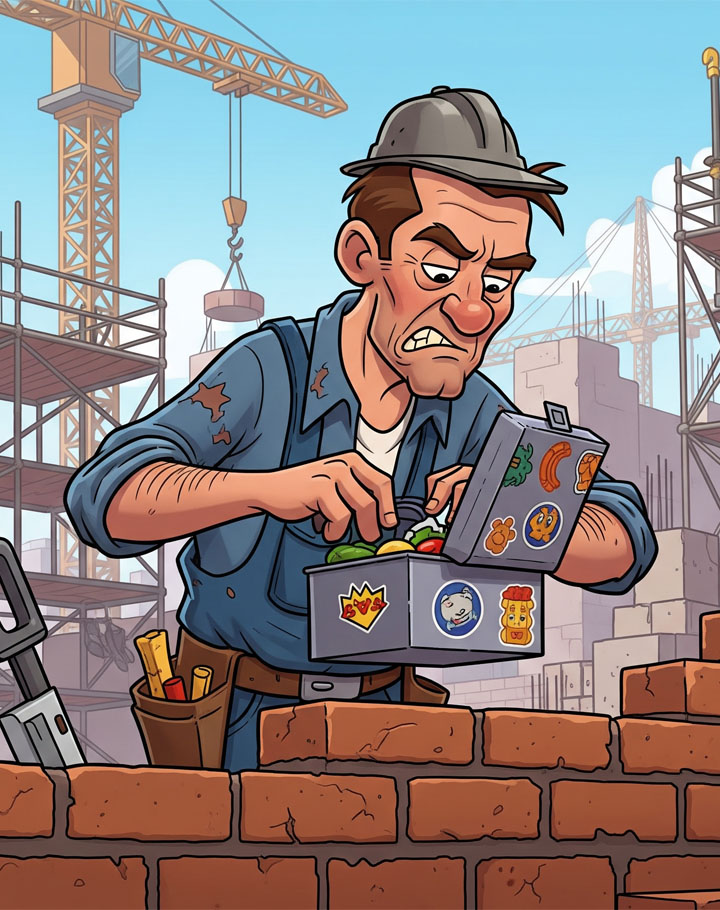
A bricklayer at my husband’s construction job routinely complained about the contents of his lunch box.“I’m sick and tired of getting the same old thing!” he shouted one day. “Tonight I’ll set my wife straight.”The next day the men could hardly wait until lunchtime to hear what happened.“You bet I told her off,” the bricklayer boasted. “I said, ‘No more of the same old stuff. Be creative!’ We had one heck of a fight, but I got my point across.”He had indeed. In front of an admiring audience, he opened his lunch box to find that his wife had packed a coconut and a hammer.================================A man is at work one day when he notices that his co-worker is wearing an earring.This man knows his co-worker to be a normally conservative fellow, and is curious about his sudden change in “fashion sense.”The man walks up to him and says, “I didn’t know you were into earrings.”“Don’t make such a big deal out of this, it’s only an earring,” he replies sheepishly.His friend falls silent for a few minutes, but then his curiosity prods him to say: “So, how long have you been wearing one?”“Ever since my wife found it in my truck.”================================A lawyer defending a man accused of burglary tried this creative defence:“My client merely inserted his arm into the window and removed a few trifling articles. His arm is not himself, and I fail to see how you can punish the whole individual for an offence committed by his limb.”“Well put,” the judge replied.“Using your logic, I sentence the defendant’s arm to one-year imprisonment. He can accompany it or not, as he chooses.”The defendant smiled. With his lawyer’s assistance, he detached his artificial limb, laid it on the bench, and walked out.

Nov 12, 2026